To clamp without denting your wood, use soft or padded clamps and place buffer materials like scrap wood, cloth, or cardboard between the clamp and surface. Distribute pressure evenly by applying clamps at proper intervals and tighten them gradually, ensuring consistent force. For delicate pieces, consider using cauls—flat wooden strips—to spread pressure across larger areas. Keep practicing gentle, balanced tightening to protect your wood’s finish and avoid unwanted dents. Exploring these tips further will help you master dent-free clamping.
Key Takeaways
- Use soft-jawed or padded clamps, or wrap clamp pads with cloth or scrap wood to cushion contact points.
- Distribute pressure evenly with cauls or multiple clamps placed at proper intervals.
- Place buffer materials like cardboard or folded cloth between the clamp and the wood surface.
- Tighten clamps gradually and check frequently to avoid applying excessive force.
- Apply gentle, consistent pressure rather than tightening clamps excessively to prevent dents.
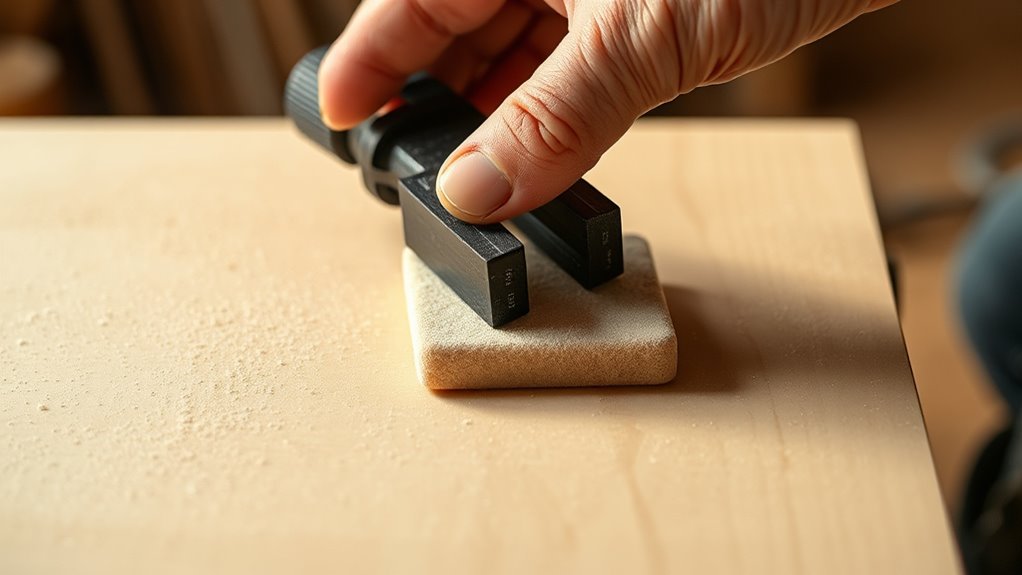
Clamping is essential for woodworking projects, but if you’re not careful, it can leave unwanted dents or indentations on your wood. The key to avoiding these marks lies in understanding proper clamping techniques and ensuring even pressure distribution. When you clamp, you’re applying force to hold pieces securely together, but too much or uneven pressure can cause deformation or dents. To prevent this, start by selecting the right clamps for your project—soft-jawed or padded clamps are preferable because they help cushion the contact points. Wrap the clamp pads with scrap wood or cloth if necessary, creating a buffer that absorbs excess pressure and prevents dents.
Next, focus on pressure distribution. Rather than tightening clamps excessively at a single point, distribute pressure evenly across the surface. This means placing your clamps at appropriate intervals—spacing them out so that force is spread uniformly—rather than bunching them tightly in one spot. When you tighten, do so gradually, tightening each clamp a little at a time, alternating between them, to allow pressure to spread evenly. This technique helps avoid localized stress that can cause indentations. Additionally, consider using cauls—straight, flat strips of wood placed across your workpiece—secured with clamps. Cauls help distribute pressure across a broader area, reducing the risk of dents on delicate surfaces.
Another effective approach is to use softer materials as a buffer between the clamp and your workpiece. For example, placing a piece of scrap hardwood, cardboard, or even a folded cloth between the clamp and the wood can soften the impact of the clamp’s pressure. This method is particularly useful when working with softer woods or veneered surfaces that are more prone to denting. Remember, the goal is to apply enough pressure to hold your project firmly without pressing so hard that it leaves an impression. Check your work frequently as you tighten, ensuring the pressure remains gentle and even.
padded woodworking clamps
As an affiliate, we earn on qualifying purchases.
As an affiliate, we earn on qualifying purchases.
Frequently Asked Questions
What Types of Clamps Are Safest for Delicate Wood Surfaces?
You should use clamps with soft jaw pads or protectors made from rubber or cork, which are safe for delicate wood surfaces. Choose clamps with adjustable pressure to avoid over-tightening, and pay attention to the wood grain direction to prevent dents. Using the right clamp material and aligning the clamps along the wood grain helps distribute pressure evenly, ensuring your project stays undamaged and looks professional.
Can Using Padding Prevent Dents When Clamping?
Think of padding as a gentle shield for your delicate wood. Yes, using padding can prevent dents when clamping by distributing clamping pressure evenly along the wood grain direction. It acts like a soft cushion, absorbing excess force and keeping your surface smooth. When you clamp with care and padding, you protect your project from unwanted marks, ensuring your craftsmanship remains flawless and your wood stays pristine and dent-free.
How Tight Should Clamps Be to Avoid Damaging Wood?
You should apply just enough clamp pressure to hold the wood firmly without causing dents. Pay attention to the wood grain orientation, and avoid tightening too much, which can crush the fibers. Use a gentle, even pressure, and check regularly to prevent over-tightening. Incorporate padding if needed, and remember that less is more when it comes to clamping pressure to protect your wood’s surface.
Are There Specific Techniques for Clamping Curved or Irregular Wood?
A stitch in time saves nine, especially when clamping curved or irregular wood. You should use flexible cauls or pads to distribute clamping pressure evenly, ensuring the wood’s contours are supported. Align the wood grain carefully, and apply gentle, even pressure, adjusting as needed. Using multiple clamps along the curve helps prevent dents and maintains a smooth surface, making your project both durable and professional-looking.
How Do Temperature and Humidity Affect Clamping Pressure?
Temperature and humidity directly impact clamping pressure because wood expands with moisture absorption and contracts when it’s dry. If it’s too humid, the wood may swell, requiring less pressure to avoid dents, while dry conditions cause it to shrink, needing more clamping force. Keep the environment stable, and adjust your pressure accordingly to prevent damage, ensuring the wood’s natural expansion and contraction are accommodated during clamping.
cauls for woodworking
As an affiliate, we earn on qualifying purchases.
As an affiliate, we earn on qualifying purchases.
Conclusion
Now that you know how to clamp without denting your wood, you’ll safeguard your project’s beauty and strength. It’s a gentle touch in a world that often pushes hard for quick results. While clamping might seem simple, handling it with care shows respect for your craftsmanship. Remember, sometimes the softest approach leaves the strongest impression. With patience and precision, you ensure your woodwork remains flawless—proof that kindness and skill truly go hand in hand.
buffer materials for clamping
As an affiliate, we earn on qualifying purchases.
As an affiliate, we earn on qualifying purchases.
soft jaw clamps for delicate wood
As an affiliate, we earn on qualifying purchases.
As an affiliate, we earn on qualifying purchases.