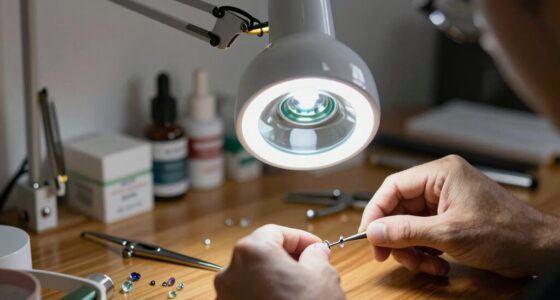
The best microscope for jewelry making depends on whether you need hands-free depth perception for setting stones or a portable loupe for quick inspections. I rank the VEVOR Multi-Directional Microscope first for its 7x–45x range and adjustable positioning, which suit detailed bench work better than a handheld magnifier. The DZQ microscope with ball vise is a standout for holding small pieces steady, while the TOMLOV DM4W is a practical choice for screen-based inspection and documentation. The main tradeoff is between comfortable binocular viewing and compact, lower-cost options that offer less working control. Read on for the full comparison and help matching a microscope to your work.

Get business pricing on tools and workshop supplies
- Business-only prices and quantity discounts
- Tax-exempt purchasing
- Multiple users, one account, clear invoices
Complete the kit


Key Takeaways
- Bench control matters more than headline magnification: the VEVOR and DZQ stereo microscopes offer zoom and hands-free viewing suited to tasks such as stone setting and engraving.
- A ball vise changes the work setup: the DZQ’s included holding approach can help keep small pieces steady, while a loupe or digital screen model leaves more of that control to the user.
- Digital models prioritize viewing and sharing: the TOMLOV DM4W and Elikliv provide built-in screens, but they do not replace the depth perception of a binocular stereo microscope.
- Loupe bundles suit inspection, not extended bench work: JARLINK and two-piece loupe options are portable and offer multiple magnifications, but handheld viewing can be tiring and less steady.
- Specs need context: a stated magnification range alone does not reveal working distance, lighting quality, or whether the optics leave room for tools beneath the lens.
| TOMLOV DM4W Digital Coin Microscope with Built-in Scale, 4.3″ IPS Screen, LED Lighting, and USB Output |  | Best for Inspection Plus Weighing | Display: 4.3-inch IPS True Color screen | Magnification: 10X–200X | Weight units: g, oz, ct | VIEW ON AMAZON | See Our Full Breakdown |
| JARLINK 3 Pack Jewelers Loupe with 30X, 60X, 90X Magnification, LED and UV Black Light |  | Best Portable Loupe Set | Magnification levels: 30X, 60X, and 90X | Lighting: LED and UV black light | Materials: Aluminum alloy, ABS plastic, and acrylic glass | VIEW ON AMAZON | See Our Full Breakdown |
| Elikliv LCD Digital Coin Microscope 1000x with 8 LED Lights, 4.3-Inch Screen, PC Compatibility |  | Best for Screen-Based Detail | Display: 4.3-inch LCD | Image resolution: 720P HD | Magnification: Up to 1000X | VIEW ON AMAZON | See Our Full Breakdown |
| 60X Pocket Microscope Portable Mini Microscope Handheld Jewelry Magnifier Loupe Glass LED Light |  | Best Compact Pick | Magnification: 60X | Lighting: Dual adjustable LEDs | Weight: 3.2 oz | VIEW ON AMAZON | See Our Full Breakdown |
| VEVOR Multi-Directional Microscope with Spring Bracket, 7x–45x Magnification |  | Best for Hands-On Bench Work | Magnification: Continuous 7X–45X zoom | Working distance: 13.2–30.7 inches (335–780 mm) | Operating height: 0–15.7 inches (0–400 mm) | VIEW ON AMAZON | See Our Full Breakdown |
| 2 Pieces Jewelers Loupe 30X 60X 90X Illuminated Eye Loupe Magnifier with UV Black Light and LED Light |  | Best Portable Inspection Set | Magnifications: 30X, 60X, 90X | Lens sizes: 30 × 25 mm, 60 × 12 mm, 90 × 8 mm | Lighting: Built-in LED and UV black light | VIEW ON AMAZON | See Our Full Breakdown |
| Jewelry Microscope for Diamond Setting Jewelry Making Engraving |  | Best for Adjustable Bench Work | Magnification: 7X-45X continuous zoom | Working distance: 95-300 mm | Lighting: 60-LED ring light | VIEW ON AMAZON | See Our Full Breakdown |
| 7X-45X Jewelry Stereo Microscope with LED Ring Light |  | Best for Long-Reach Inspection | Magnification: 7X-45X | Working distance: 165 mm | Lighting: 56-LED ring light | VIEW ON AMAZON | See Our Full Breakdown |
| DZQ Jewelers Microscope with Ball Vise, 7X–45X Zoom |  | Best for Engraving and Setting | Brand: DZQ | Model: RM | Magnification: 7X-45X | VIEW ON AMAZON | See Our Full Breakdown |
| JARLINK 30X 60X Illuminated Jewelers Loupe Magnifier with LED Light |  | Best Simple Handheld Loupe | Magnification: 30X and 60X | Lens sizes: 30 × 22 mm and 60 × 12 mm | Lighting: LED | VIEW ON AMAZON | See Our Full Breakdown |
| White 7X-90X Binocular Jewelry Microscope Head |  | Best for Broad-Magnification Bench Work | Magnification: 7X–90X continuous zoom | Working distance: 95–300mm (3.74–11.81 in) | Lighting: Adjustable LED ring light | VIEW ON AMAZON | See Our Full Breakdown |
| microscope for jewelry making | Lighting | Magnification |
|---|---|---|
| TOMLOV DM4W Digital Coin Micro | Built-in LED | 10X–200X |
| JARLINK 3 Pack Jewelers Loupe | LED and UV black light | — |
| Elikliv LCD Digital Coin Micro | Eight adjustable LED lights | Up to 1000X |
| 60X Pocket Microscope Portable | Dual adjustable LEDs | 60X |
| VEVOR Multi-Directional Micros | Integrated 144-LED ring light | Continuous 7X–45X zoom |
| 2 Pieces Jewelers Loupe 30X 60 | Built-in LED and UV black light | — |
| Jewelry Microscope for Diamond | 60-LED ring light | 7X-45X continuous zoom |
| 7X-45X Jewelry Stereo Microsco | 56-LED ring light | 7X-45X |
| DZQ Jewelers Microscope with B | 60-LED ring light with 0-100% dimmer | 7X-45X |
| JARLINK 30X 60X Illuminated Je | LED | 30X and 60X |
| White 7X-90X Binocular Jewelry | Adjustable LED ring light | 7X–90X continuous zoom |
More Details on Our Top Picks
TOMLOV DM4W Digital Coin Microscope with Built-in Scale, 4.3″ IPS Screen, LED Lighting, and USB Output
The TOMLOV DM4W suits jewelry makers who want to inspect a small piece and weigh it without switching devices. Its built-in scale reads grams, ounces, and carats, while the 4.3-inch IPS screen makes shared viewing easier than looking through a handheld loupe such as the JARLINK 3 Pack Jewelers Loupe. The 10X–200X range is useful for close inspection, though the stated scale accuracy of ±0.5g may not satisfy makers weighing very small, high-value stones or components. Compared with the Elikliv LCD Digital Coin Microscope, this model trades a higher maximum magnification for the scale and a more viewing-angle-friendly display. Its rechargeable battery and USB output add flexibility, but it is still a tabletop tool for small objects, not a working microscope for larger pieces or hands-on setting work.
Pros:- Combines digital magnification with weight readings in grams, ounces, and carats
- IPS display offers a broad 178-degree viewing angle for shared inspection
- Rechargeable battery supports portable use away from a fixed workstation
- USB output allows connection to Windows and Mac computers
Cons:- Scale accuracy of ±0.5g is limited for weighing small gemstones or fine components
- 200X maximum magnification is lower than the Elikliv model’s stated 1000X
- Small-object format and stand do not provide the open working space of a stereo microscope
Best for: Jewelers and gem hobbyists who inspect small pieces on a screen and also want a built-in, basic carat-weight readout.
Not ideal for: Stone setters needing precise micro-weight measurements or a wide, unobstructed workspace for active bench work.
- Display:4.3-inch IPS True Color screen
- Magnification:10X–200X
- Weight units:g, oz, ct
- Scale resolution and accuracy:0.1g resolution; ±0.5g accuracy
- Lighting:Built-in LED
- Connectivity:USB output for Windows and Mac
- Power:Built-in rechargeable battery
- Stand height:8 inches
Our verdict“Choose the TOMLOV if a screen-based inspection tool with a built-in carat readout matters more than maximum magnification or bench access.”
JARLINK 3 Pack Jewelers Loupe with 30X, 60X, 90X Magnification, LED and UV Black Light
The JARLINK 3 Pack is the most portable choice here for quick checks at a market, trade show, or away from the bench. Its 30X, 60X, and 90X options let a buyer switch between a broader view and finer surface detail, while LED illumination helps when examining a stone in dim surroundings. The UV light adds a specialized check, but it is not a substitute for a dedicated gem-testing instrument and may go unused by many jewelry makers. Unlike the screen-based Elikliv LCD Digital Coin Microscope, these loupes need no stand, charging workflow, or computer connection; the tradeoff is a much smaller viewing window and the need to hold the lens close and steady. I would choose this set for portability and simple inspection, not for extended precision work such as setting or engraving.
Pros:- Three magnification levels offer more flexibility than a single-power pocket loupe
- LED lighting supports inspection in dim settings
- UV black light provides an extra inspection option for users who need it
- Compact set includes batteries, a cleaning cloth, and a key
Cons:- Close working distance and careful lens positioning can make viewing fiddly
- Handheld use is less stable and comfortable for long inspection sessions than the Elikliv screen microscope
- UV illumination may have little practical value for many jewelry-making tasks
Best for: Bench jewelers, collectors, and gem hobbyists who want several magnification choices in a compact kit for occasional close inspection.
Not ideal for: Makers who need hands-free viewing, a large shared display, or a stable microscope position while working on a piece.
- Magnification levels:30X, 60X, and 90X
- Lighting:LED and UV black light
- Materials:Aluminum alloy, ABS plastic, and acrylic glass
- Included accessories:Batteries, cleaning cloth, and key
- Format:Portable handheld jewelers loupe set
- Intended inspection:Jewelry, gems, coins, and other small objects
Our verdict“Pick the JARLINK set for portable, occasional checks across several magnifications, but choose a stand-mounted microscope for sustained bench work.”
Elikliv LCD Digital Coin Microscope 1000x with 8 LED Lights, 4.3-Inch Screen, PC Compatibility
The Elikliv LCD Digital Coin Microscope is aimed at makers who want close-up surface detail on a built-in screen, rather than a stereo view with room to work beneath the lens. Its 4.3-inch display and adjustable eight-LED lighting make it easier to inspect scratches, inclusions, or finish than a handheld loupe like the JARLINK 3 Pack Jewelers Loupe. The advertised 1000X maximum can reveal very fine detail, but digital magnification varies with screen size and object distance; it does not mean the whole piece remains visible at that setting. Compared with the TOMLOV DM4W, Elikliv offers higher stated magnification and PC viewing, but lacks the built-in scale. The rechargeable battery runs for up to three hours, and the missing memory card may add a separate step for capturing or saving images.
Pros:- 4.3-inch screen provides a more comfortable shared view than a handheld loupe
- Eight adjustable LEDs help tailor illumination to reflective jewelry surfaces
- Windows and MacBook compatibility allows viewing on a larger computer screen
- Adjustable stand supports positioning small objects for inspection
Cons:- Up to 1000X is screen- and distance-dependent, not a guarantee of useful full-object detail
- Battery life is limited to up to three hours
- Memory card is not included, unlike a ready-to-use inspection setup with storage
Best for: Jewelry hobbyists and repairers who want a displayed close-up for examining surface flaws and sharing details with a computer.
Not ideal for: Stone setters or engravers who need a stereoscopic view, comfortable clearance for tools, or long untethered sessions.
- Display:4.3-inch LCD
- Image resolution:720P HD
- Magnification:Up to 1000X
- Lighting:Eight adjustable LED lights
- Computer compatibility:Windows and MacBook
- Battery life:Up to 3 hours
- Included:Rechargeable battery and adjustable stand
Our verdict“Choose Elikliv for screen-based close inspection and computer viewing, but opt for a stereo microscope when you need working room beneath the optics.”
60X Pocket Microscope Portable Mini Microscope Handheld Jewelry Magnifier Loupe Glass LED Light
This 60X pocket microscope favors quick, simple checks over the flexibility of a multi-power loupe or a mounted digital microscope. Its fixed magnification and dual adjustable LEDs keep operation straightforward, while the included pouch makes it easy to carry in a tool bag. At 3.2 ounces, it is more convenient for spot inspections than the tabletop TOMLOV DM4W, but it offers no screen, computer connection, or magnification range. The single 60X setting can be handy for examining a small hallmark or surface feature; it can also feel too tight when you want context around a larger piece. Compared with the JARLINK 3 Pack, it gives up multiple magnification choices and UV illumination in exchange for a simpler single-tool format. I would treat it as a portable backup, not a primary microscope for detailed bench work.
Pros:- Compact 3.2-ounce body and pouch are easy to carry
- Dual adjustable LEDs help illuminate small details
- Instant on/off switch supports quick spot checks
- Fixed 60X power avoids choosing among multiple settings
Cons:- Single magnification level is less adaptable than the JARLINK loupe set
- Handheld viewing can be tiring and less stable during detailed work
- Small viewing area limits usefulness on larger jewelry pieces
Best for: Traveling jewelers and hobbyists who want a lightweight illuminated magnifier for brief checks of small details.
Not ideal for: Makers who need adjustable magnification, hands-free positioning, a broad field of view, or repeatable inspection at a bench.
- Magnification:60X
- Lighting:Dual adjustable LEDs
- Weight:3.2 oz
- Included accessory:PU leather pouch
- Operation:Instant on/off switch
- Format:Handheld pocket microscope
Our verdict“Choose this pocket microscope as a light, grab-and-go magnifier for short inspections, not as a hands-free bench microscope.”
VEVOR Multi-Directional Microscope with Spring Bracket, 7x–45x Magnification
The VEVOR Multi-Directional Microscope is the strongest fit here for jewelry making that involves active bench work. Its 7X–45X continuous zoom and spring-mounted, multi-directional support let the maker reposition the optics around a piece, while the stereo-style working space is more practical for manipulating jewelry than the screen-only Elikliv LCD Digital Coin Microscope. A USB-powered ring light with 144 LEDs supplies broad illumination, and adjustable diopter and lens distance help tailor the view. The long stated working-distance range gives positioning options, though the actual field of view is narrow and varies with setup. Unlike the portable TOMLOV, this is a larger station that needs manual adjustment and a USB power source. It makes the most sense for a dedicated bench, not quick inspections or users who need a compact device.
Pros:- Continuous 7X–45X zoom offers a practical range for bench inspection
- Multi-directional spring bracket helps position the optics around the work
- 144-LED ring light provides integrated illumination
- Adjustable diopter and lens distance support individual viewing setup
Cons:- Requires a USB power source rather than operating as a self-contained portable unit
- Bracket and microscope need manual repositioning during use
- Larger assembly takes more bench space than the TOMLOV or handheld loupes
Best for: Jewelry makers who need magnified, hands-on access for setting, repair, or detail work at a dedicated bench.
Not ideal for: Traveling jewelers, casual users with limited workspace, or anyone seeking a self-contained screen-based microscope.
- Magnification:Continuous 7X–45X zoom
- Working distance:13.2–30.7 inches (335–780 mm)
- Operating height:0–15.7 inches (0–400 mm)
- Field of view:0.2–1.3 inches (5.1–33 mm)
- Lighting:Integrated 144-LED ring light
- Power:USB
- Real angle of view:360 degrees
- Dimensions:18.3 × 6.9 × 18.7 inches
- Model:JH-1A
Our verdict“Choose the VEVOR for adjustable, hands-on magnification at a permanent jewelry bench, and skip it if portability or a compact footprint matters more.”
2 Pieces Jewelers Loupe 30X 60X 90X Illuminated Eye Loupe Magnifier with UV Black Light and LED Light
For checking a stone or small detail away from a bench, this two-loupe set offers more flexibility than the JARLINK 30X 60X Illuminated Jewelers Loupe: it adds a 90X option and UV lighting alongside LEDs. That range can help with quick checks of fine surface details, while the compact format is easy to carry between work areas. It is still a handheld loupe, not a bench microscope; the short viewing distance and small lenses make it less comfortable for prolonged setting or engraving work than the 7X-45X stereo microscopes in this roundup. The lights also switch on automatically, which may be inconvenient during repeated handling. I’d choose it for portable inspection and keep a stereo model for work that needs tool clearance and steady viewing.
Pros:- Three magnifications, including 90X, offer more inspection options than the JARLINK 30X 60X loupe.
- LED and UV illumination support different kinds of close inspection.
- Two compact loupes make the set practical to carry between work areas.
- Aluminum alloy construction is specified for the loupe body.
Cons:- Requires close positioning, limiting space for hands and tools.
- Automatic light activation may be awkward during repeated use.
- Small viewing area is less suited to prolonged bench work than a stereo microscope.
Best for: Jewelry makers who need a pocketable tool for occasional stone, setting, or surface checks at different magnifications.
Not ideal for: Bench jewelers doing extended setting or engraving who need hands-free viewing, a longer working distance, and room for tools.
- Magnifications:30X, 60X, 90X
- Lens sizes:30 × 25 mm, 60 × 12 mm, 90 × 8 mm
- Lighting:Built-in LED and UV black light
- Housing materials:Aluminum alloy and plastic
- Included:Two loupes and lens cloth
- Format:Compact handheld loupe set
Our verdict“Choose this set for portable, magnified checks; choose a stereo microscope instead for sustained jewelry making at the bench.”
Jewelry Microscope for Diamond Setting Jewelry Making Engraving
The defining advantage here is its combination of a 7X-45X continuous zoom and a stated 95-300 mm working distance. Compared with the 7X-45X Jewelry Stereo Microscope with LED Ring Light, that extended distance range gives more flexibility for setting the head over a project and making room for hand tools. The spring-supported arm and adjustable headrest are aimed at a steadier, more comfortable bench position, while the dimmable 60-LED ring light lets me tune illumination to the surface. This is a larger, more involved setup than either handheld loupe in this roundup, and the product details do not specify a ball vise, so it lacks the DZQ model’s built-in workpiece positioning. I’d favor it when working distance and adjustable support matter more than an included vise.
Pros:- Continuous 7X-45X zoom supports both broader inspection and close detail work.
- 95-300 mm stated working distance allows room to position tools.
- Dimmable 60-LED ring light offers adjustable illumination.
- Spring arm and headrest support a customizable bench posture.
Cons:- Bench-mounted form is less portable than either loupe option.
- No ball vise is listed, unlike the DZQ Jewelers Microscope with Ball Vise.
- The number of adjustments may take more setup than a simple handheld magnifier.
Best for: Bench jewelers and setters who want continuous zoom, an adjustable support arm, and a long stated working-distance range.
Not ideal for: Traveling makers or buyers who want a compact tool, a simple handheld loupe, or a supplied ball vise for positioning work.
- Magnification:7X-45X continuous zoom
- Working distance:95-300 mm
- Lighting:60-LED ring light
- Light control:0-100% dimmer
- Stand:Multi-directional spring arm
- Optical format:Binocular stereo microscope
- Power:Corded electric
Our verdict“Pick this microscope if adjustable working distance and bench support matter more than portability or an included vise.”
7X-45X Jewelry Stereo Microscope with LED Ring Light
This stereo microscope’s most useful distinction is its specified 165 mm working distance: it gives a jewelry maker room to bring tools beneath the lens while keeping a broad 7X-45X zoom range available. The 56-LED ring light dims from 0-100%, so brightness can be adjusted for reflective metal or stones rather than left at one fixed level. Compared with the DZQ Jewelers Microscope with Ball Vise, this model lists a flexible spring stand but no ball vise, so buyers who engrave or set stones may need separate workholding. The DZQ also lists a wider 95-300 mm working-distance range. This option makes more sense for general inspection and repair when a defined reach and adjustable illumination are priorities, though the stand and zoom controls may feel less straightforward than a loupe.
Pros:- 7X-45X zoom covers a range of inspection and close-work magnifications.
- 165 mm working distance leaves space beneath the lens for tools.
- 56-LED ring light dims across a 0-100% range.
- Adjustable spring stand helps position the microscope over the work.
Cons:- No ball vise is specified, unlike the DZQ model.
- More involved to set up and position than a handheld loupe.
- No digital display or camera connection is listed.
Best for: Jewelry repairers who want hands-free stereo viewing, tool clearance under the lens, and adjustable ring-light brightness.
Not ideal for: Engravers or setters who need an included rotatable ball vise, or beginners seeking a minimal, handheld magnifier.
- Magnification:7X-45X
- Working distance:165 mm
- Lighting:56-LED ring light
- Light dimming:0-100%
- Stand:Adjustable spring stand
- Optical format:Stereo microscope
Our verdict“Choose this for stereo inspection with useful tool clearance, but look to the DZQ if integrated workpiece positioning is a priority.”
DZQ Jewelers Microscope with Ball Vise, 7X–45X Zoom
The DZQ earns its place through the pairing of a 7X-45X stereo zoom with a 360° rotatable ball vise. That vise gives setters and engravers a built-in way to turn the workpiece under magnification, a practical difference from the 7X-45X Jewelry Stereo Microscope with LED Ring Light, which lists a flexible stand but no vise. Its 95-300 mm working-distance range and dimmable 60-LED ring light also suit close bench tasks where tool access and controlled illumination matter. The tradeoff is a more specialized, corded setup; it is not a portable inspection tool like the JARLINK loupe. The listed 240 V power specification deserves a check against the buyer’s local electrical supply before choosing it. I’d put this first for buyers who will use the vise regularly.
Pros:- 360° ball vise supports repositioning work under the microscope.
- 7X-45X continuous zoom covers general inspection through close detail work.
- 95-300 mm working-distance range leaves room for hands and tools.
- Dimmable 60-LED ring light provides adjustable illumination.
Cons:- Corded operation limits portability around the workshop.
- The listed 240 V voltage should be checked for compatibility before purchase.
- The vise-focused setup may be unnecessary for buyers who only inspect finished jewelry.
Best for: Bench jewelers who engrave, set stones, or need to rotate a secured piece while inspecting it under stereo magnification.
Not ideal for: Makers who need a portable magnifier, do not need a ball vise, or cannot use the listed 240 V electrical specification.
- Brand:DZQ
- Model:RM
- Magnification:7X-45X
- Working distance:95-300 mm
- Ball vise rotation:360°
- Lighting:60-LED ring light with 0-100% dimmer
- Power:Corded electric; listed voltage 240 V
- Weight:4.9 lbs
- Objective:Achromatic
Our verdict“Choose the DZQ for bench setting or engraving where a rotatable ball vise is more useful than a compact, simple inspection tool.”
JARLINK 30X 60X Illuminated Jewelers Loupe Magnifier with LED Light
For quick checks without setting up a bench instrument, this foldable 30X/60X loupe is the simplest choice among the microscope-style options here. Its aluminum-and-plastic body and small format make it easy to keep near a workbench or carry for gem inspection. Compared with the 2 Pieces Jewelers Loupe 30X 60X 90X Illuminated Eye Loupe, it gives up the 90X setting and UV black light, but its two magnifications cover routine close inspection without the extra options. The tradeoff is inherent to handheld viewing: the loupe must sit close to the object, leaving little room for tools and making sustained diamond setting less comfortable than with the DZQ microscope. LED lighting helps illuminate the detail, but the three LR1130 batteries will need replacement over time.
Pros:- 30X and 60X options suit quick close inspection.
- Foldable design is easy to store and carry.
- Built-in LED provides direct illumination.
- Aluminum and plastic construction keeps the format portable.
Cons:- Close viewing distance leaves little room for jewelry tools.
- Uses three LR1130 button batteries that require replacement.
- Does not include the 90X option or UV light found in the two-loupe set.
Best for: Jewelry makers who want a straightforward, foldable loupe for brief gem, metal, and finished-piece inspections.
Not ideal for: Setters and engravers who need hands-free viewing, working room for tools, or more magnification and UV capability.
- Magnification:30X and 60X
- Lens sizes:30 × 22 mm and 60 × 12 mm
- Lighting:LED
- Materials:Aluminum and plastic
- Batteries:Three LR1130 button batteries
- Format:Foldable handheld loupe
Our verdict“Choose this foldable loupe for portable, occasional inspection, not for extended hands-free bench work.”
White 7X-90X Binocular Jewelry Microscope Head
This microscope head’s defining advantage is its continuous 7X–90X zoom: lower magnification gives you room to position tools around a setting, while higher magnification helps with close inspection. That wider span makes it more adaptable than the VEVOR Multi-Directional Microscope, which tops out at 45X, but it also calls for a stand that can support its heavy-duty metal construction. The stated 95–300mm working distance offers flexibility for jewelry and small electronics, and the adjustable LED ring light is intended to keep the viewing area bright without harsh shadows. This is a microscope head, not a complete digital setup; unlike the TOMLOV DM4W, it has no listed screen or camera connection. Choose it for binocular bench viewing and a broad zoom range, not image capture.
Pros:- Continuous 7X–90X zoom covers a broader magnification range than the VEVOR 7x–45x model.
- 95–300mm working distance provides flexibility for tool access and different work positions.
- Adjustable LED ring light is designed to illuminate the work area with reduced shadows.
- Compatible with most standard microscope stands.
Cons:- Heavy-duty metal construction may require a sturdier stand than a lighter microscope head.
- The listing describes a specialized head rather than a complete stand-and-microscope package.
- No digital display or camera integration is specified.
Best for: Jewelers and watchmakers who already have a compatible, sturdy microscope stand and want a wide continuous zoom range for both setting work and close inspection.
Not ideal for: Buyers seeking a complete microscope package, built-in display, or documented camera integration, and anyone whose stand may not support a heavy metal head.
- Magnification:7X–90X continuous zoom
- Working distance:95–300mm (3.74–11.81 in)
- Lighting:Adjustable LED ring light
- Optical system:High-definition wide-field
- Compatibility:Most standard microscope stands
- Construction:Heavy-duty metal
Our verdict“Choose this head if you have a sturdy compatible stand and want more zoom range than the 7x–45x VEVOR, but skip it if you need a ready-to-use digital system.”

How We Picked
I compared these 11 options for jewelry-making tasks rather than treating every magnifier as a microscope. The main criteria were usable magnification, working distance, stable positioning, lighting, viewing comfort, and suitability for hands-on bench work. For close setting, engraving, and repair, I favored stereo microscopes that leave room to work and provide a steady binocular view. Digital microscopes were judged for screen convenience and documentation, while loupes were assessed as portable inspection tools rather than substitutes for a bench setup.
The ranking gives priority to tools that support precise work over longer sessions, then accounts for included accessories and flexibility. That places the VEVOR and DZQ stereo models above screen-based coin microscopes and handheld loupes for most jewelry-making tasks. The TOMLOV ranks as the strongest digital option in this group, while simpler loupe and pocket models remain useful for quick checks or tight budgets. Product descriptions do not provide every detail a jeweler may need, so I call out tradeoffs and advise confirming working distance, mount compatibility, and included components before buying.
Factors to Consider When Choosing Microscope For Jewelry Making
Before choosing a microscope, match its viewing style to the work you do most. A microscope for inspecting a finished piece has different demands from one used while setting a stone or engraving. I would compare the setup around the optics—not just the magnification claim—because comfort, tool access, and how securely the work is held shape day-to-day usefulness.
Choose stereo viewing for hands-on bench work
For setting, soldering preparation, and engraving, binocular stereo viewing usually gives a more natural sense of depth than looking at a flat screen. That depth helps judge where a bur or setting tool sits relative to the piece. A digital microscope can still be useful for inspection or showing details to another person, but screen viewing may feel less direct during coordinated hand movements. Avoid choosing solely by a large magnification number; high power can make it harder to see the surrounding work area. If you use tools beneath the optics, check that the microscope leaves enough space for both the piece and your hands.
Check working distance before magnification
Working distance is the space between the lens and the jewelry, and it determines whether your tools can reach the piece comfortably. A model with a broad zoom range may still frustrate you if its lens sits too close to the work. Think about the tallest setting, stone, or tool you expect to place under the microscope, not just a flat sample. A common mistake is buying for maximum magnification and then finding there is too little room to maneuver. When product information does not state working distance clearly, ask the seller or consult the manufacturer’s specifications before committing.
Treat lighting as part of the optical system
Jewelry reflects light, so bright, adjustable illumination is often more useful than simply adding more magnification. Ring lights can reveal the surface evenly, while directional lighting can help show facets, scratches, and texture; either can also create distracting glare on polished metal. Consider whether brightness can be adjusted and whether the light position suits the jobs you do. Do not assume a built-in LED will replace all bench lighting, especially when examining reflective stones. A small, repositionable task light may be a useful addition if the microscope’s lighting is fixed.
Decide whether the piece needs a vise or another support
Stable work is easier to inspect and manipulate, but not every jeweler needs a microscope bundle with a ball vise. A vise can help keep a small component in place during setting or engraving, while larger or irregular pieces may call for a different holder. Check whether the vise is included, compatible with the microscope stand, and suited to the size of your work. Buyers sometimes focus on optics and overlook the cost and space required for holding equipment. If you already own a bench vise or fixture, confirm that it can be positioned beneath the microscope before paying for a duplicate accessory.
Pick a viewing format that fits your sessions
A binocular eyepiece is generally better suited to longer periods of detailed work, while a digital display can be easier for shared viewing, teaching, or capturing images. Handheld loupes are convenient for quick checks away from the bench, but holding one steady for extended work can strain your hand and neck. Screen-based models also need a stable surface and may depend on a computer connection for some tasks. Consider how long each session lasts and whether you need to keep both hands free. A portable option is a useful companion, but it may not be a comfortable primary tool for prolonged repair work.
Confirm what is included and what fits your bench
Microscope listings can describe a head, stand, light, or complete working setup, and those are not interchangeable purchases. Before ordering, check for the stand, mount, power supply, illumination, and any required adapters, as well as the microscope head’s compatibility with equipment you already own. A head-only model may suit a bench with an existing compatible stand but create extra work for a first-time buyer. Also measure the available bench space and consider whether the arm can reach the area where you normally work. Spending more makes sense when it buys a better-fitting setup, not when it adds accessories you will leave unused.
Frequently Asked Questions
Is a digital microscope suitable for setting stones?
A digital microscope can help you inspect details on a screen, but it is not automatically the best choice for setting stones. The flat display may provide less direct depth perception than a binocular stereo view, which can make hand-tool coordination less natural. Models such as the TOMLOV DM4W are better suited to screen-based inspection, viewing with others, or recording details. If setting is your main task, compare a stereo microscope’s working distance and tool clearance before choosing a digital unit. You may still find a digital model useful as a secondary inspection tool.
Do I need a ball vise with a jewelry microscope?
A ball vise is useful when you need to rotate or hold a small piece steadily while working under magnification, but it is not required for every jewelry task. It can make setting or engraving more controlled, especially when the work would otherwise shift under tool pressure. Larger pieces, delicate items, and unusual shapes may need another fixture or a custom support. Check whether a vise is included and whether it leaves enough clearance beneath the microscope. If you already have a compatible holding system, prioritize microscope fit and positioning rather than buying a second one.
Should I buy a stereo microscope or a loupe first?
Choose a stereo microscope first if you expect to do extended, hands-on bench work and need both hands available. A loupe is a simpler fit for occasional inspections, travel, or checking a piece away from the bench. The JARLINK multi-magnification loupes offer portability, but handheld viewing is less stable than a mounted microscope. A loupe may also be a sensible starting tool if you are still learning which magnification suits your work. For regular setting or engraving, plan around a stable stand and adequate working distance instead of treating a loupe as a long-session substitute.
What should I check if a microscope listing gives magnification but not working distance?
Ask the manufacturer or seller for the working distance at the magnification you expect to use, along with the usable space beneath the lens. Check whether the stated range depends on optional eyepieces or auxiliary lenses, since those can change both magnification and clearance. Compare the available space with the height of your workpiece and the tools you plan to use under the microscope. If those details remain unclear, a high magnification claim is not enough to judge suitability for bench work. A microscope with less headline magnification but adequate access may be the more practical choice.
Can a microscope head-only model work for a beginner?
It can, but a head-only microscope is usually a better fit for someone who already has a compatible stand, mount, and lighting arrangement. A beginner may need to buy several additional parts before the microscope is ready for jewelry work. Confirm the tube or mount standard, stand compatibility, and whether eyepieces and illumination are included. A complete setup is often simpler when you are choosing your first bench microscope, even if it offers fewer customization options. The white 7X–90X binocular head makes the most sense when its specifications match equipment already on your bench.
Conclusion
For most bench jewelers, I would start with the VEVOR Multi-Directional Microscope as the best overall pick: its stereo zoom and adjustable positioning fit hands-on work better than a screen-first model or handheld loupe. The JARLINK loupe options are the best value for portable checks and occasional inspection, though they are not my choice for prolonged setting or engraving. For a premium-style bench setup focused on holding small pieces steady, the DZQ microscope with ball vise is the strongest match in this group. Beginners who want an easier screen-based way to inspect details should look at the TOMLOV DM4W, while jewelers who need a pocket tool can choose the 60X handheld microscope. If you mainly share or document views, choose a digital model; if you work under magnification every day, prioritize stereo depth, working distance, and a stable stand.