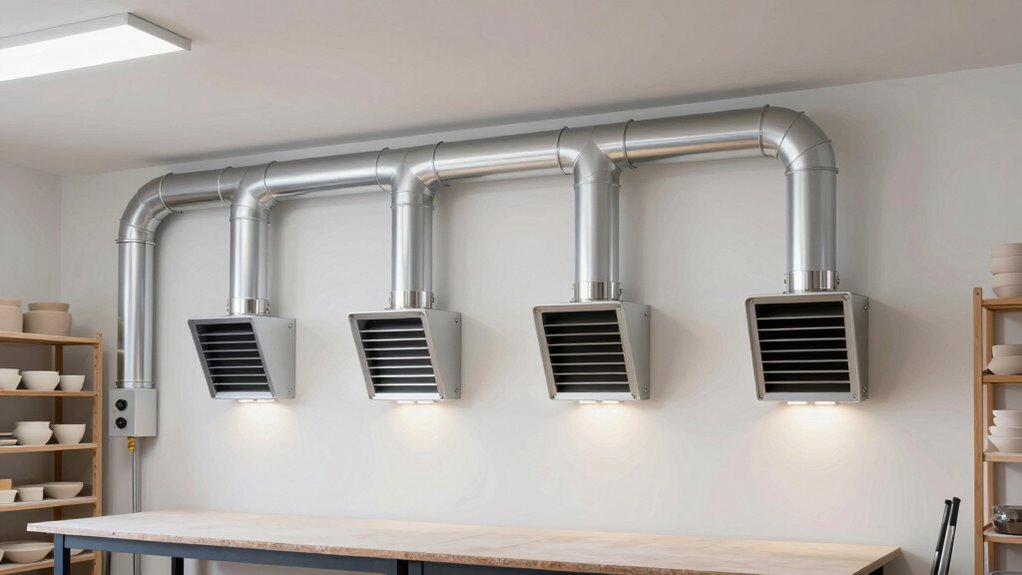

Choosing the right kiln vent system is essential for maintaining a safe, clean indoor studio environment. The Skutt Envirovent stands out for its reliable fumes removal and compatibility with popular kilns, making it ideal for those firing metallics and sulfur-rich clays. Meanwhile, the Orton VentMaster M9 offers versatility and ease of installation, especially suited for studios with multiple kilns or space constraints. Both systems have their tradeoffs: the Envirovent is more specialized, while the VentMaster offers broader application but requires more setup effort.

Get business pricing on tools and workshop supplies
- Business-only prices and quantity discounts
- Tax-exempt purchasing
- Multiple users, one account, clear invoices
Complete the kit


Key Takeaways
- The Skutt Envirovent excels at removing fumes specifically during metallics and high sulfur firing, with a tight seal that prevents fumes from escaping.
- The Orton VentMaster M9 is more adaptable for multiple kilns and easier to mount, making it practical for larger studios.
- Both systems require proper installation for optimal performance, but the Envirovent’s setup is less documented.
- Noise levels and energy consumption details are limited for both, so studio noise considerations might impact your choice.
- The choice hinges on studio size, kiln type, and how much installation effort you’re willing to undertake.
| Skutt Envirovent Kiln Vent System |  | Best for Fume Removal during Metallics and High Sulfur Firing | Package Dimensions: 21 x 20 x 10 inches | Item Weight: 20 pounds | ASIN: B00S72NFGO | VIEW ON AMAZON | See Our Full Breakdown |
| Orton VentMaster M9 110-120V Kiln Vent |  | Best for Versatility and Multi-Kiln Setup | Package Dimensions: 14 x 12 x 9 inches | Voltage: 110-120V | Includes: Motor, housing, 4 ft. hose, collection cup, gasket, manual, vent cap | VIEW ON AMAZON | See Our Full Breakdown |
| kiln vent system for indoor studio | Package Dimensions | Item Weight | ASIN | Category |
|---|---|---|---|---|
| Skutt Envirovent Kiln Vent Sys | 21 x 20 x 10 inches | 20 pounds | B00S72NFGO | Arts & Crafts |
| Orton VentMaster M9 110-120V K | 14 x 12 x 9 inches | — | — | — |
More Details on Our Top Picks
Skutt Envirovent Kiln Vent System
The Skutt Envirovent is a downdraft vent designed to effectively extract fumes, odors, and vapors during kiln firing. It features a spring-loaded collection cup that maintains a tight seal on the kiln, allowing it to expand and contract without stressing the kiln bottom. This design makes it particularly well-suited for firing metallics and high sulfur clays, where fumes can be more pungent. Compared to systems that rely on external fans or less adaptable seals, the Envirovent offers a reliable solution for studios that prioritize fumes control without extensive setup. However, details about installation are limited, and noise or energy use are not specified, which could be a concern for noise-sensitive spaces or energy-conscious studios.
Pros:- Effectively removes fumes, odors, and vapors during firing
- Spring-loaded collection cup ensures a tight seal and accommodates kiln expansion
- Fits popular kiln models and ideal for metallics and sulfur-rich firings
Cons:- Limited information on installation process
- No specified noise level or energy consumption
- Requires proper setup for optimal performance
Best for: Artists firing metallics or sulfur-rich clays who need a dedicated, reliable venting solution.
Not ideal for: Studios seeking a versatile system for multiple kiln types or those concerned about noise levels and detailed installation guidance.
- Package Dimensions:21 x 20 x 10 inches
- Item Weight:20 pounds
- ASIN:B00S72NFGO
- Category:Arts & Crafts
- Manufacturer:Skutt
- Date First Available:January 11, 2015
Our verdict“A specialized solution best suited for metallic and high sulfur firings, offering reliable fumes extraction with a simple seal design.”
Orton VentMaster M9 110-120V Kiln Vent
The Orton VentMaster M9 is designed for users who want a straightforward, versatile kiln venting system that can handle fumes from multiple kilns. It is easy to install, with a fan and housing that can be mounted on the floor or wall, saving space in crowded studios. Its inclusion of a 4-foot high-temperature hose, cast aluminum collection cup, and gasket makes it suitable for a variety of kiln sizes and configurations. Compared to the Envirovent, the VentMaster is more adaptable to different studio layouts and allows for multiple kilns to be vented with an optional splitter. The main tradeoff is that setup and installation can be more involved, and noise levels are not well documented, which might be a concern in noise-sensitive environments.
Pros:- Effective at removing fumes and improving air quality
- Can be mounted on the floor or wall for space efficiency
- Suitable for multiple kilns with optional splitter
- Easy to operate once installed
Cons:- Requires effort for installation and setup
- Limited info on noise levels
- Specific to certain kiln sizes and configurations
Best for: Studios with multiple kilns or limited space needing a flexible, space-saving venting solution.
Not ideal for: Small single-kiln studios or those unwilling to undertake more complex installation and setup processes.
- Package Dimensions:14 x 12 x 9 inches
- Voltage:110-120V
- Includes:Motor, housing, 4 ft. hose, collection cup, gasket, manual, vent cap
Our verdict“A flexible, multi-kiln compatible venting system that balances ease of operation with more involved setup requirements.”

How We Picked
Our selection process prioritized systems that are specifically designed for indoor kiln venting, balancing effectiveness, ease of installation, and versatility. We examined product specifications, compatibility with common kiln models, and user feedback on performance and durability. Special attention was given to systems that can handle fumes from metallic and sulfur-rich firings, as well as those suitable for multi-kiln setups. Cost was not a primary factor; instead, we focused on features that deliver reliable, safe operation in an indoor environment.
Factors to Consider When Choosing Kiln Vent System For Indoor Studio
Selecting the right kiln vent system for your indoor studio depends on several factors, including your firing materials, studio size, and how many kilns you operate. A good vent system should effectively remove fumes without creating excessive noise or requiring complicated installation. Understanding these core needs will help you choose between specialized, dedicated systems like the Envirovent or more versatile options like the VentMaster.
Fume Removal Effectiveness
If you’re firing metallics or sulfur-rich clays, look for a system with a sealed, tight-fitting collection cup like the Skutt Envirovent. For studios with multiple kilns or varied firing needs, the VentMaster’s ability to vent several kilns with an optional splitter offers better scalability. Consider the specific fumes you encounter most often.
Ease of Installation and Space
For small studios or those with limited space, the VentMaster offers mounting flexibility and easier setup once you have the necessary space. The Envirovent, however, may require less setup but is more limited to a single kiln. Think about your studio layout and how much effort you’re willing to invest in installing the system.
Noise and Energy Considerations
Both products lack detailed noise and energy consumption data, but in general, systems with larger fans or more complex setups tend to generate more noise and use more power. If quiet operation is important, additional research or user feedback may be needed post-purchase.
Compatibility and Maintenance
Ensure the system you select fits your kiln model and firing style. Regular maintenance, like cleaning filters or collection cups, is essential for continued effectiveness. The Envirovent’s spring-loaded seal reduces stress on the kiln, potentially extending its lifespan, while the VentMaster’s modular design makes cleaning easier for multiple units.
Frequently Asked Questions
How does a kiln vent system improve indoor air quality?
A kiln vent system actively pulls fumes, vapors, and odors generated during firing away from the kiln chamber and exhausts them outside the studio. This process helps prevent harmful fumes from accumulating indoors, creating a safer environment for artists and reducing lingering odors.
Is installation difficult for these vent systems?
Installation complexity varies between models. The Skutt Envirovent typically requires attaching a collection cup and sealing it properly, which may be straightforward for those familiar with kiln setups. The VentMaster system involves mounting a fan and ducting, which can be more involved but offers greater flexibility for multiple kilns. Reading installation instructions carefully and planning your space ahead can make the process smoother.
Can these systems be used with any kiln?
Both systems are compatible with many popular kiln models, but it’s important to check dimensions and sealing requirements. The Envirovent is designed for specific kiln types with compatible openings, while the VentMaster’s flexible mounting options make it suitable for various kiln sizes and configurations, especially when venting multiple units.
Will these vent systems make a lot of noise?
Information about noise levels is limited for both models. Generally, larger fans or more powerful units tend to generate more noise, which could impact studio comfort. If noise is a concern, consider positioning the vent system away from work areas or look for user reviews on noise performance after purchase.
How do I maintain these vent systems?
Regular maintenance involves checking and cleaning collection cups, replacing filters if applicable, and inspecting ducting for blockages. The Envirovent’s sealed design minimizes debris buildup, while the VentMaster’s modular setup makes cleaning and servicing more accessible. Proper maintenance ensures the system remains effective and prolongs its lifespan.
Conclusion
For studios firing metallics or sulfur-rich clays, the Skutt Envirovent offers a dedicated, effective solution with minimal installation hassle. If you operate multiple kilns or need a flexible, space-saving system, the Orton VentMaster M9 provides a versatile option despite a potentially more involved setup. Smaller studios focused solely on fumes removal from a single kiln should prioritize the Envirovent, while larger, more complex spaces might benefit from the VentMaster’s scalability.
Fall Picks
fall essentials
As an affiliate, we earn on qualifying purchases.