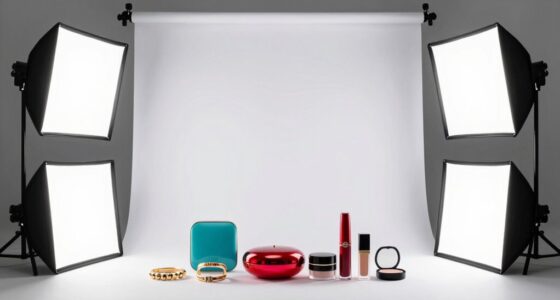
The best camera for photographing crafts and products depends on whether you need more control over the image or a simpler way to light small items. My best overall pick is the 5K Digital Camera with 80MP, which pairs a flip screen and WiFi with more listed resolution than the 4K camera options. For repeatable shots of small goods, the DUCLUS 12×12 Inch Light Box offers a larger shooting space and dimmable LEDs, while the PULUZ Mini Photo Studio Light Box suits compact items and tight workspaces. The main tradeoff is between camera features for framing and sharing, and controlled lighting that can make product photos more consistent. Read on for how all 10 options differ and which setup fits your products.

Get business pricing on tools and workshop supplies
- Business-only prices and quantity discounts
- Tax-exempt purchasing
- Multiple users, one account, clear invoices
Complete the kit



Key Takeaways
- The 5K 80MP camera ranks first among the camera options for its combination of listed resolution, flip screen, WiFi, and zoom, though those specs alone do not establish real-world image quality.
- The DUCLUS light box is the strongest lighting-focused pick for sellers who need room for larger small products, adjustable LED brightness, and multiple backdrops.
- The PULUZ box favors portability over space; its 10×10-inch interior is better suited to jewelry and small crafts than bulky or tall items.
- Several camera listings share similar feature sets, including 4K recording, 16X zoom, and flip screens, so buyers should compare included accessories and connectivity rather than assume the headline megapixel count settles the choice.
- The 8K 88MP camera has the most feature-heavy bundle, including a touchscreen, dual lens, two batteries, and a memory card, but added features do not automatically make it a better still-photo choice for a fixed tabletop setup.


| camera for photographing crafts and product | Screen | Photo resolution | Video resolution | Zoom |
|---|---|---|---|---|
| 4K Digital Camera for Photogra | 3-inch, 180° flip screen | 56MP | 4K at 30FPS | 16X digital |
| PULUZ Mini Photo Studio Light | — | — | — | — |
| 4K Digital Camera for Photogra | 3-inch, 180° flip screen | 64MP | 4K | 16X digital |
| 5K Digital Camera with 80MP | 3-inch IPS flip screen | 80MP | 5K Ultra HD | 18X |
| 4K Digital Camera for Photogra | 3-inch, 180° flip screen | 56MP | 4K UHD | 16X digital |
| DUCLUS 12×12 Inch Light Box Ph | — | — | — | — |
| Camtryzine 6K Digital Camera w | 3-inch IPS touchscreen | — | — | — |
| Lightdow 12x12x12 Inch Photo S | — | — | — | — |
| 4K Digital Camera for Photogra | 3-inch screen with 180-degree flip | 64MP | 4K | 16x digital zoom |
| 8K Digital Camera with 88MP | 3.2-inch touchscreen | 88MP | 8K | 16x |
More Details on Our Top Picks
4K Digital Camera for Photography and Vlogging with 56MP, 16X Zoom, and Flip Screen
For a craft seller who wants one camera for product photos and occasional behind-the-scenes video, this is a straightforward starter pick. Its 56MP stills, autofocus, and 3-inch flip screen cover basic tabletop shooting as well as self-recording, while the included 32GB card means you can start without sourcing storage separately. Compared with the 64MP WiFi camera in this roundup, it gives up wireless sharing and some photo resolution, but its stated 3-year product support may appeal to buyers who value ongoing assistance. The 16X zoom is digital, not optical, so it should not be treated as a substitute for moving closer or choosing a suitable lens. Battery life is not specified, another limitation for long product-shooting sessions. I’d choose it for casual craft photography, not demanding detail work or a professional workflow.
Pros:- 56MP photo and 4K video capture cover stills and basic promotional clips
- 180° flip screen helps frame overhead demonstrations and self-recorded content
- Fast autofocus is useful when switching between products and presenters
- Includes a 32GB card and lists 3 years of product support
Cons:- 16X zoom is digital, with no optical zoom specified
- Battery life is not provided, making session planning harder
- Beginner-oriented feature set may not suit detailed or professional product work
Best for: New craft sellers who want a simple camera for occasional product photos, short videos, and self-recorded demonstrations
Not ideal for: Sellers who need wireless file transfer, dependable all-day battery life, or high-quality close-up detail at maximum zoom
- Photo resolution:56MP
- Video resolution:4K at 30FPS
- Zoom:16X digital
- Screen:3-inch, 180° flip screen
- Included storage:32GB card
- Connectivity:USB transfer, webcam mode
- Product support:3 years
Our verdict“Choose this as a simple first camera for craft photos and casual video, but look to a WiFi-equipped option if quick file sharing matters.”
PULUZ Mini Photo Studio Light Box, 10×10 inches, Portable Folding Photography Lightbox with 104 LEDs and Double-Sided Backgrounds
Unlike the cameras in this roundup, the PULUZ is a lighting setup rather than a camera, and that distinction matters for product photography: controlled, repeatable light can do more for a small item’s appearance than a higher-resolution camera alone. Its 104 LEDs with CRI above 95 are intended to render colors accurately, useful when photographing jewelry, charms, or small accessories for an online listing. Six double-sided backgrounds offer variety without needing a full tabletop backdrop collection. The 10×10-inch interior is much smaller than the 12×12-inch DUCLUS and Lightdow boxes also listed, so larger crafts may not fit comfortably. It assembles quickly and packs away easily, but the product information notes that a diffuser may be needed to control shadows. Pick this for small, repeatable setups—not oversized or varied product lines.
Pros:- High-CRI LED lighting is designed to support accurate product color
- Six double-sided backgrounds provide several tabletop styling options
- Quick assembly and portable folding design suit compact workspaces
- Multiple shooting angles allow varied views of small items
Cons:- 10×10-inch size restricts the products that can fit inside
- A separate diffuser may be needed for better shadow control
- Tabletop design is not suited to larger product scenes
Best for: Makers photographing jewelry, miniature crafts, small accessories, or other items that fit within a 10×10-inch tabletop light box
Not ideal for: Sellers with larger products or bulky crafts who need more working room than a 10×10-inch enclosure provides
- Light box size:10×10 inches
- LED count:104
- Color rendering:CRI greater than 95
- Backgrounds:6 double-sided backgrounds
- Assembly:Approximately 3 seconds
- Use:Small-item tabletop photography
Our verdict“Choose the PULUZ when your craft inventory is small enough for its compact enclosure and consistent tabletop lighting is the priority.”
4K Digital Camera for Photography with 64MP, Autofocus, 16X Zoom, Flip Screen, WiFi, and Accessories
This camera’s strongest practical advantage for a craft seller is built-in WiFi: it can make moving product images to a phone easier than relying on the USB transfer listed for the 56MP beginner camera. The 64MP photos, autofocus, and 180° screen also cover basic catalog shots and self-filmed making videos, while time-lapse and slow-motion add options for process content. Compared with the 80MP 5K camera in this group, it has lower stated still resolution and video resolution, but its two included batteries give it a useful backup for a shoot. The 16X zoom is digital, so it is better treated as framing flexibility than a way to capture fine detail from far away. Its beginner-focused controls and 32GB card may also feel limiting as a catalog grows. I’d favor it when sharing speed matters more than advanced camera control.
Pros:- Built-in WiFi supports easier image sharing with compatible devices
- 64MP photos and autofocus suit casual product and craft photography
- Two included batteries provide a spare during a shooting session
- Time-lapse and slow-motion add options for documenting craft processes
Cons:- 16X zoom is digital rather than specified optical zoom
- The included 32GB card may be restrictive for frequent high-resolution shooting
- Beginner-oriented design offers limited appeal for advanced workflows
Best for: Solo makers who photograph products and want to send images to a phone quickly for listing or social-media updates
Not ideal for: Experienced product photographers seeking advanced controls, optical zoom, or substantial included storage for large shoots
- Photo resolution:64MP
- Video resolution:4K
- Screen:3-inch, 180° flip screen
- Zoom:16X digital
- Connectivity:WiFi
- Batteries:2 included
- Memory card:32GB included
- Additional modes:Time-lapse, slow-motion, face detection
Our verdict“Pick this over the USB-focused 56MP model if moving product images to your phone is a regular part of your workflow.”
5K Digital Camera with 80MP, WiFi, 3″ Flip Screen, and 18X Zoom for Vlogging and Photography
Among the camera options here, this model has the highest stated still resolution: 80MP photos paired with 5K video. That makes it the pick for a beginner who wants room to crop product images or capture detailed views of handmade work, though resolution alone does not guarantee better color, focus, or lighting. Compared with the 64MP WiFi camera, it adds stated photo resolution, 5K recording, and an 18X zoom; both offer WiFi and a flip screen. The zoom type is not specified, so I would not assume it is optical or rely on it for close detail. Its stated battery life is about 120 minutes, and the included 32GB storage may fill quickly with large files. This is the more ambitious spec sheet, but the PULUZ light box may improve small-item consistency more than extra pixels if lighting is the main issue.
Pros:- 80MP still resolution provides substantial cropping flexibility
- 5K video supports detailed promotional and process footage
- WiFi and USB offer options for transferring files
- Includes a 32GB memory card and accessories
Cons:- Listed battery life is approximately 120 minutes
- 32GB storage may be limiting for 80MP and 5K files
- Zoom type is not specified, so the 18X figure does not establish optical detail
Best for: Beginner sellers who want high-resolution files for cropping and also plan to record product demonstrations or promotional video
Not ideal for: Makers who need long uninterrupted shoots, large included storage, or clear confirmation of optical zoom performance
- Photo resolution:80MP
- Video resolution:5K Ultra HD
- Sensor type:CMOS
- Screen:3-inch IPS flip screen
- Zoom:18X
- Battery:2000mAh; approximately 120 minutes of battery life
- Storage:32GB
- Connectivity:WiFi, USB
- File formats:JPEG, MP4
Our verdict“Choose this over the 64MP camera when higher stated resolution and 5K video matter more than longer shooting time or ample storage.”
4K Digital Camera for Photography, 56MP Autofocus Vlogging Camera with 3″ Flip Screen & 16X Zoom, Includes 32GB SD Card
This is the most clearly specified starter package among the 56MP camera picks: it includes a 32GB SD card and a stated 2000mAh rechargeable battery, which gives a new craft seller more concrete setup details than the otherwise similar B0GV8KY7JH, whose battery life is unspecified. Its 4K video, autofocus, and 180° flip screen support both product images and self-recorded tutorials. The 16X digital zoom can help adjust framing, but pushing it to its limit may reduce image quality—a concern when photographing fine textures or small details. The included battery is listed for about five hours of recording, but recording time is not the same as still-photo shooting life. This remains a beginner camera rather than a professional tool, and buyers who value wireless transfer should compare it with the WiFi-equipped 64MP model.
Pros:- 56MP photos and 4K UHD video cover basic product listings and promotional clips
- 180° flip screen supports self-recording and flexible framing
- Includes a 32GB SD card and a 2000mAh rechargeable battery
- Autofocus helps keep casual product and demonstration shots straightforward
Cons:- 16X digital zoom can reduce image quality at its maximum setting
- Approximately five hours of recording does not establish still-photo battery life
- Beginner-focused features may not meet professional product-photography needs
Best for: First-time craft sellers who want a 4K camera with a memory card and clearly listed battery capacity for casual photos and video
Not ideal for: Product photographers who need wireless sharing, professional-level controls, or crisp detail from maximum digital zoom
- Photo resolution:56MP
- Video resolution:4K UHD
- Screen:3-inch, 180° flip screen
- Zoom:16X digital
- Autofocus:Yes
- Battery:2000mAh rechargeable; approximately 5 hours of recording
- Included storage:32GB SD card
Our verdict“Choose this starter kit over the similar 56MP option if you want battery capacity stated up front, but pick the 64MP WiFi model for easier sharing.”
DUCLUS 12×12 Inch Light Box Photography Kit with 120 Dimmable LED Lights and 8 Backdrops
For jewelry, watches, and other objects that fit within a 12-inch space, the DUCLUS light box addresses a problem a camera alone cannot solve: inconsistent lighting. Its 120 dimmable LEDs and CRI above 95 are intended to help colors look more faithful, while adjustable light angles give sellers some control over reflections and shadows. Compared with the Lightdow 12x12x12 Photo Studio Light Box, DUCLUS supplies two more backdrops, but the Lightdow specifies adjustable color temperatures and USB or mobile-battery power. DUCLUS is the stronger fit when backdrop variety and daylight-balanced illumination matter more than changing the light’s color. Its tradeoff is the fixed, small shooting space: it won’t suit larger crafts, and USB power is required. I’d pair it with a camera that supports manual exposure or consistent white balance.
Pros:- High-CRI lighting is designed to reproduce product colors more faithfully.
- Dimmable LEDs and adjustable angles offer control over brightness and shadows.
- Eight included backdrops provide more options than the six supplied with the Lightdow box.
- Portable design suits a small home workspace or on-location product shoots.
Cons:- The 12×12-inch shooting area excludes many larger handmade products.
- Requires a USB power source rather than offering a stated built-in battery.
- No remote or app control is specified.
Best for: Online sellers photographing jewelry, watches, and other small items who want controlled, daylight-balanced lighting and several background choices.
Not ideal for: Makers shooting larger crafts or needing a self-powered setup; the 12×12-inch enclosure is restrictive and depends on a USB power source.
- Size:12 x 12 inches
- Lighting:120 dimmable LEDs
- CRI:Greater than 95
- Color temperature:5500K daylight
- Backdrops:8: 2 matte and 6 waterproof PVC
- Power:USB-powered
Our verdict“Choose DUCLUS for color-conscious photos of small products when its extra backdrops matter more than variable color temperature or a larger shooting area.”
Camtryzine 6K Digital Camera with Wi-Fi
The Camtryzine is better suited to makers who need one camera for basic product photos and video content than to those chasing fine detail in still images. Its autofocus and 3-inch touchscreen make framing straightforward, and Wi-Fi, an external microphone, and a fill light add useful tools for demonstrations or social posts. The included two batteries and 64GB card also let a beginner start recording without assembling those essentials separately. But the headline 64MP photo and 6K video figures are interpolated, and its 1/3-inch sensor is a limiting factor for close-up texture and challenging light. Compared with the 4K Digital Camera with 64MP and flip screen in this roundup, this model’s stated advantage is its bundled audio and lighting gear, not a proven still-image advantage. Digital zoom won’t replace a macro lens.
Pros:- Autofocus and a touchscreen make basic framing accessible to beginners.
- Includes two batteries and a 64GB memory card.
- Bundled external microphone and fill light support product demonstrations and video.
- Wi-Fi, USB, and HDMI provide multiple connection options.
Cons:- The 64MP photo and 6K video specifications are interpolated.
- The 1/3-inch sensor is a constraint for fine detail and low-light shooting.
- 16x zoom is digital, and digital stabilization is specified.
Best for: New craft sellers who want a simple camera package for product snapshots, process videos, and occasional social-media vlogging.
Not ideal for: Makers who need highly detailed, color-critical close-ups or genuine optical reach; the small sensor and digital zoom limit those uses.
- Sensor:13MP CMOS, 1/3-inch
- Interpolated photo resolution:64MP
- Video:6K at 30 fps
- Screen:3-inch IPS touchscreen
- Focus and zoom:Autofocus; 16x digital zoom
- Connectivity:Wi-Fi, USB, HDMI
- Battery and storage:Two 1500mAh batteries; 64GB TF card included
- Included accessories:External microphone, fill light, USB cable, wrist strap, lens cover, lens hood, and direct view mirror
Our verdict“Pick the Camtryzine for an all-in-one beginner content kit, not for the most dependable detail in close-up product photography.”
Lightdow 12x12x12 Inch Photo Studio Light Box with 120 LEDs, 6 Backdrops, Desktop Tripod, Dimmable & Portable
The Lightdow stands out for makers who need to tune the light as well as choose a background. Its three color temperatures and 10 brightness levels give more adjustment than the DUCLUS box, whose listed lighting is fixed at 5500K daylight. That flexibility can help when a product’s surface or surrounding room makes a single lighting tone less suitable. The Lightdow also has several shooting openings and a collapsible design, so it can work in a compact home studio or travel kit. Its six PVC backdrops are fewer than DUCLUS’s eight, and the 12-inch cube still limits product size. USB or mobile-battery power is convenient, but the instructions warn about careful handling to avoid overcurrent use. I’d choose this for adjustable light settings, not for large objects or a set-and-forget power setup.
Pros:- High-CRI LEDs are designed to support accurate color reproduction.
- Ten brightness levels and three color temperatures offer more lighting adjustment than the DUCLUS box.
- Six washable PVC backdrops cover several common product-photo looks.
- Collapsible construction and USB or mobile-battery power support portable setups.
Cons:- The 12 x 12 x 12-inch enclosure is too small for many larger crafts.
- Power options are limited to USB or a mobile battery, with a warning about overcurrent use.
- Six backgrounds provide fewer choices than the eight included with DUCLUS.
Best for: Craft sellers photographing small products who want to change brightness and light tone to suit different materials and backgrounds.
Not ideal for: Makers with larger products or anyone wanting a mains-powered, larger studio enclosure; this compact box relies on USB or a mobile battery.
- Size:12 x 12 x 12 inches
- Lighting:120 SMD2835 LEDs
- CRI:At least 95
- Brightness:10 levels
- Color temperatures:White, soft, and warm
- Backdrops:6 PVC backgrounds: black, white, red, blue, green, and orange
- Power:USB or mobile battery
- Cable length:70 inches (1.8 m)
Our verdict“Choose Lightdow if adjustable light tone and brightness matter more than a larger enclosure or the extra backdrops in the DUCLUS kit.”
4K Digital Camera for Photography, 64MP Autofocus WiFi Vlogging Camera with 16X Zoom, 3” Flip Screen, 32GB Card, White
This compact camera’s clearest benefit for craft sellers is its 180-degree flip screen: it can help frame a talking-head demonstration or check a self-facing shot without an external monitor. Autofocus, Wi-Fi, USB-C, and included storage make it approachable for casual product images and quick sharing. Compared with the Camtryzine 6K, this model lists 4K video and a 64MP resolution but does not bundle a microphone, fill light, or spare batteries. Its 16x zoom is digital, so it should not be mistaken for a macro solution; close-up detail will depend on focus capability and lighting, neither of which is specified beyond autofocus. The 3-inch screen and beginner-focused features suit simple setups, while the unspecified battery life and lack of stated rugged protection make it less reassuring for long shoots or travel in rough conditions.
Pros:- The 180-degree flip screen helps frame self-facing tutorials and vlogs.
- Autofocus and built-in creative features suit casual shooting.
- Wi-Fi and USB-C offer convenient transfer options.
- A 32GB micro SD card is included.
Cons:- 16x zoom is digital rather than optical.
- Battery life is not specified, making long product-shoot sessions harder to plan.
- No rugged or waterproof protection is listed.
Best for: Beginner makers who shoot casual product photos alongside selfie-framed tutorials and want Wi-Fi transfer and an included memory card.
Not ideal for: Sellers needing dependable macro detail, long-session battery planning, or a camera kit with bundled lighting and audio accessories.
- Photo resolution:64MP
- Video resolution:4K
- Focus:Autofocus
- Zoom:16x digital zoom
- Screen:3-inch screen with 180-degree flip
- Storage:32GB micro SD card included
- Connectivity:Wi-Fi and USB-C
Our verdict“Choose this camera for beginner-friendly product snapshots and flip-screen video, but look elsewhere if close-up detail or a fuller accessory kit is the priority.”
8K Digital Camera with 88MP, WiFi, Touchscreen, 16X Zoom, Dual Lens, Vlogging, 2 Batteries, 64GB Card
The dual-lens design and 3.2-inch touchscreen give this camera a creator-oriented setup for switching between product shots and self-facing video. It also comes with two batteries and a 64GB card, a more complete starting kit than the 32GB-card package supplied with the 4K 64MP flip-screen camera. The listed 88MP photos and 8K video may appeal to shoppers seeking high headline resolution, but the specs do not establish sensor size or whether those figures are interpolated, so I wouldn’t rank it on resolution alone for craft detail. Its 10 cm minimum focusing distance and lack of a macro lens make tiny objects and fine textures a poor match; the Camtryzine also has a small-sensor limitation, but at least specifies its sensor size. No external microphone is included, which matters for polished demonstrations.
Pros:- Dual lenses support both product-facing and self-facing content creation.
- The 3.2-inch touchscreen provides a larger listed display than the 3-inch screens on the Camtryzine and 4K 64MP models.
- Two rechargeable batteries and a 64GB SD card are included.
- Wi-Fi and HDMI support sharing and connection to external displays.
Cons:- A 10 cm minimum focusing distance and no included macro lens limit close-up craft photography.
- No external microphone is included for better recorded audio.
- Sensor size and whether the stated photo and video resolutions are interpolated are not specified.
Best for: Content creators who want a dual-lens camera for product imagery, self-facing video, and general travel use, with spare battery and storage included.
Not ideal for: Jewelry sellers and makers who need close macro detail, or video creators who need an external microphone included in the package.
- Photo resolution:88MP
- Video resolution:8K
- Lenses:Dual lens
- Minimum focusing distance:10 cm
- Screen:3.2-inch touchscreen
- Zoom:16x
- Battery and storage:Two rechargeable batteries; 64GB SD card included
- Connectivity:Wi-Fi and HDMI
Our verdict“Pick this model for a dual-lens, general-purpose creator kit, but skip it if your product work depends on true macro close-ups.”
How We Picked
I ranked the 10 options for the needs of craft makers and small-product sellers: clear framing, repeatable lighting, practical workspace fit, and a setup that supports consistent photos. For cameras, I compared the listed screen design, autofocus, zoom, connectivity, video capability, and included accessories, while treating resolution labels as one factor rather than a guarantee of image quality. For light boxes, I prioritized interior size, dimmable lighting, backdrop selection, portability, and how well the kit suits tabletop products.
The order reflects each option’s usefulness for the stated job, not a claim that camera bodies and light boxes are substitutes. The 5K camera leads the camera group for its mix of listed features; the 8K model ranks as a premium-feature alternative, while the more similar 4K cameras are separated by their stated autofocus, WiFi, and included items. The light boxes rank according to space and lighting flexibility: the 12-inch DUCLUS and Lightdow kits favor a roomier setup, while PULUZ is the compact choice. Product names and specifications alone do not establish tested image quality, color accuracy, or long-term durability.
| camera for photographing crafts and product | Connectivity |
|---|---|
| 4K Digital Camera for Photogra | USB transfer, webcam mode |
| PULUZ Mini Photo Studio Light | — |
| 4K Digital Camera for Photogra | WiFi |
| 5K Digital Camera with 80MP | WiFi, USB |
| 4K Digital Camera for Photogra | — |
| DUCLUS 12×12 Inch Light Box Ph | — |
| Camtryzine 6K Digital Camera w | Wi-Fi, USB, HDMI |
| Lightdow 12x12x12 Inch Photo S | — |
| 4K Digital Camera for Photogra | Wi-Fi and USB-C |
| 8K Digital Camera with 88MP | Wi-Fi and HDMI |
Factors to Consider When Choosing Camera For Photographing Crafts And Products
Choosing a setup for craft and product photography is less about chasing the largest resolution number and more about making images easy to repeat. I’d start with the size and finish of the objects, then decide whether camera controls, controlled lighting, or both will solve the biggest problem in your current workflow.
Match the Setup to Your Largest Product
Measure the widest and tallest items you plan to photograph, then leave extra room around them for framing and backdrop changes. A compact light box can make tiny products easier to isolate, but it may force larger crafts close to the walls or out of the scene. That can create awkward crops and limit how much of the background appears. A larger box takes up more storage space, so it is a poor trade if you photograph only small jewelry or components. If your products vary in size, choose for the largest common item rather than the smallest one you sell. Check the usable interior dimensions, not only the exterior measurements.
Prioritize Light Control Over Resolution Claims
Reflections, shadows, and uneven color often affect a product listing more than a jump in a camera’s advertised megapixels. Dimmable LEDs give you room to adjust brightness for pale, dark, glossy, or translucent items, but brightness control does not by itself guarantee accurate color. Shiny metal and glazed ceramics may reflect the light panels, so they can still need careful positioning or diffusion. A light box can make repeatable tabletop lighting easier, while a camera upgrade cannot correct a harsh reflection on its own. If colors need to match the physical item closely, plan to check sample images under the lighting you will actually use. Avoid assuming that more LEDs always mean better-looking photos.
Choose a Camera for Framing and Focus, Not Just Megapixels
A flip screen can help when the camera sits low on a tabletop tripod, since you can check composition without crouching. Autofocus is useful for quick changes between products, though small close-up subjects can still challenge a camera’s focus system. Zoom specifications are not a substitute for a suitable close-focus distance; check whether the camera can focus on the size of detail you need to show. High resolution may give you more room to crop, but it cannot recover focus or fine detail that the lens did not capture. For fixed product work, a stable position and repeatable focus can matter more than advanced video features. Decide which controls you will use regularly before paying attention to a long feature list.
Plan for Color, Backgrounds, and Consistency
Product photos work best as a consistent set, especially when buyers compare several listings from the same shop. Multiple included backdrops can make it easier to vary the scene, but frequent background changes may also produce a less uniform storefront. White backgrounds are common, yet they can wash out pale handmade items unless lighting and exposure are managed carefully. Dark or colored materials may need a contrasting backdrop to show their edges and texture. Before photographing a full collection, make a few sample frames with the same camera position, lighting, and background. This small check can reveal whether your setup suits the actual finish and color of your products.
Decide Whether You Need a Camera, a Light Box, or Both
A camera and a light box solve different parts of the job: one captures the image, while the other helps shape the scene’s lighting and background. If your current phone or camera already produces sharp images but lighting varies from shot to shot, a light box may address the bigger problem. If your photos are consistently out of focus or awkward to frame, a camera with useful screen and autofocus features may be the better first purchase. A light box will not create extra workspace for styled scenes outside its interior, and a camera alone will not give you repeatable illumination. Buyers who sell varied products may eventually benefit from both, but can start with whichever limitation appears most often in their current photos. That approach avoids buying features that do not improve the final listing.
Treat Accessories and Workflow as Part of the Choice
Included memory cards and spare batteries can reduce setup friction, but they should not outweigh the features that affect your images. WiFi may help move files to a phone or computer, although a cable or card reader may fit a batch-editing workflow better. A tripod is useful for keeping framing consistent and reducing movement, especially when photographing the same product in several views. Think about where files will be stored and how you will name and edit them before choosing based on wireless sharing alone. For a small shop, repeatable camera placement and organized files can save more time than a longer list of built-in modes. Check exactly which accessories are listed for the specific version you plan to buy.
Frequently Asked Questions
Should I buy a light box before upgrading my camera?
If your current images are sharp but show changing shadows, reflections, or background brightness, a light box may address the more visible problem. If the subject is routinely soft, poorly framed, or difficult to focus on, improving the camera setup may help more. The products in this roundup cover both needs, but a light box does not replace camera controls and a camera does not provide controlled lighting by itself. Compare a few images of the same item under your current setup before deciding. That makes it easier to identify whether lighting or capture is the main limitation.
Is a 10-inch or 12-inch light box better for handmade products?
The right size depends on the largest item you photograph and the amount of space you need around it. A 10-inch box like PULUZ is a better fit for very small goods and limited storage, while a 12-inch option gives more room for larger crafts and framing. A tight interior can make products appear cramped or limit the backdrop visible in the image. A larger box takes more room to store and set up, so it may be unnecessary if your catalog is mostly tiny pieces. Measure actual products and leave room for the angle you want to shoot from.
Do higher megapixel numbers mean better product photos?
Not on their own. Resolution can provide room to crop, but focus, lighting, lens performance, and steady camera placement all affect how much detail the final image shows. The camera listings here advertise different megapixel counts, but those figures do not establish comparative image quality. For shop photos displayed at modest sizes, a clean, well-lit image may be more useful than extra resolution that is never visible to buyers. Look for a setup that can focus on your products and produce consistent framing before choosing by the largest number.
Will a light box photograph shiny or reflective crafts well?
A light box can make a controlled tabletop scene easier, but reflective surfaces can mirror the LED panels or surrounding shapes. Dimming the lights and changing the product or camera angle may reduce harsh glare, though results depend on the object’s finish. Small metallic or glossy pieces may need extra diffusion or a more carefully arranged lighting setup. Try a sample image before photographing a whole batch, since one adjustment can change the appearance of the item’s texture and color. Do not assume that a brighter box will solve reflections.
Which features matter most if I mainly sell products online?
Prioritize repeatable framing, dependable focus, controlled light, and a background that keeps the product easy to see. WiFi and included storage can make file transfer more convenient, but neither improves the captured image by itself. A flip screen can help with tabletop compositions, while a roomier light box can support consistent views of products that do not fit in a compact setup. Consider how you photograph a full listing: front, side, detail, and scale views may call for more flexibility than one polished hero image. Choose the features that reduce friction in that routine rather than paying attention only to video labels or bundled accessories.
Conclusion
For the best overall camera-focused choice, I’d start with the 5K 80MP Digital Camera for its listed combination of a flip screen, WiFi, and zoom. The best value depends on what your setup lacks: choose the PULUZ Mini Photo Studio Light Box for small products and limited space, or consider a 4K camera with the features you will actually use rather than paying for a longer spec sheet. For a premium-feature camera, the 8K 88MP model brings a touchscreen, dual lens, and bundled accessories, though those extras may be unnecessary for static tabletop shots. Beginners who want a straightforward way to control small-product lighting can start with the PULUZ box; those who need more room should look at the DUCLUS 12×12 kit. For larger small crafts and adjustable lighting, DUCLUS is my specific-use pick, while the Lightdow kit offers another 12-inch option with a desktop tripod. Match the purchase to your biggest recurring problem: camera handling, light consistency, or workspace size.