For most woodworkers, I’d start with the DEWALT DW735X: its three-knife cutterhead and two feed speeds make it a versatile choice for regular stock preparation. The WEN PL1326 stands out for buyers drawn to a spiral cutterhead, while the DEWALT DW734 offers a simpler alternative with a three-knife head. The main tradeoffs are cutterhead finish and knife upkeep, available width and capacity, and how much space and dust collection your shop can support. A benchtop planer can flatten and size stock, but it does not replace a jointer for correcting a twisted board. Read on for how these 15 models differ and which type of woodworker each one suits.

Get business pricing on tools and workshop supplies
- Business-only prices and quantity discounts
- Tax-exempt purchasing
- Multiple users, one account, clear invoices
Complete the kit

Key Takeaways
- The DW735X earns the strongest all-around case in this lineup through its three-knife cutterhead, two feed speeds, and 13-inch width; it is a versatile choice for frequent stock preparation.
- Spiral and helical cutterheads define the main alternative: the WEN PL1326, WEN PL1337, FindBuyTool, WOODERS spiral model, and VEVOR 24-insert model put more emphasis on cutterhead design than conventional knife setups.
- Two-speed feed is a useful differentiator on models such as the DW735X and VEVOR three-blade options, since a slower feed can favor finish quality while a faster feed can move routine work along.
- Most listed machines offer either 12½-inch or 13-inch capacity, so the extra half inch on a 13-inch model may matter for wide panels, but it does not replace checking actual board width and depth capacity.
- The lineup spans very different maintenance approaches: conventional two- and three-knife models call for knife care, while insert-style cutterheads shift upkeep toward rotating or replacing individual cutters.
| VEVOR 13″ Two-Blade Benchtop Thickness Planer, 15-Amp 2000W Motor |  | Best Budget Workhorse | Motor: 15-Amp, 2000W | Cutter Speed: 23,500 rpm | Max Cutting Width: 13 in | VIEW LATEST PRICE | See Our Full Breakdown |
| VEVOR 13-Inch Two-Blade Benchtop Thickness Planer, 1800W Motor, 23500 RPM |  | Best for Occasional DIY Thicknessing | Motor Power: 1800W | Speed: 23,500 RPM | Cut Rate: 16,000 CPM | VIEW LATEST PRICE | See Our Full Breakdown |
| DEWALT DW734 12-1/2-Inch Benchtop Planer |  | Best Finish Quality Under $500 Class | Power: 15 amp, corded | Motor Speed: 20,000 RPM | Cutter-Head Speed: 10,000 RPM | VIEW LATEST PRICE | See Our Full Breakdown |
| FindBuyTool 13″ Benchtop Wood Thickness Planer with Helical Cutterhead |  | Best Helical Cutterhead Value | Cutting Width: 13 inches | Motor: 120V, 15 amp, 20,000 RPM | Cutterhead: 4-row helical, 40 tungsten carbide inserts | VIEW LATEST PRICE | See Our Full Breakdown |
| VEVOR 13″ Benchtop Thickness Planer, Three-Blade, Two-Speed, 2000W Motor |  | Best Value Two-Speed Pick | Motor Power: 2000W | Motor Speed: 23,500 rpm | Feed Speeds: 15 and 24 ft/min | VIEW LATEST PRICE | See Our Full Breakdown |
| CRAFTSMAN 15 Amp Benchtop Planer with Two-Knife Solid Steel Cutter Head (CMEW320) |  | Best for Straightforward Maintenance | Motor: 15 amp | Mounting: Benchtop | Cutterhead: Two-knife, quick-change solid steel | VIEW LATEST PRICE | See Our Full Breakdown |
| VEVOR 13-Inch Benchtop Thickness Planer |  | Best Ready-to-Set-Up Package | Motor: 15 A, 1800 W | Blade speed: 8000 rpm | Feed speed: 6 m/min (236 in/min) | VIEW LATEST PRICE | See Our Full Breakdown |
| Triton TPT125 Benchtop Planer, 12-1/2″ Cutting Width | 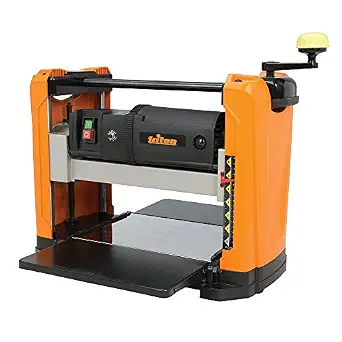 | Best for Controlled Thickness Adjustments | Cutting width: 12-1/2 in (317 mm) | Cutter height range: 1/8–5.9 in | Cutting rate: 17,500 cuts per minute | VIEW LATEST PRICE | See Our Full Breakdown |
| WOODERS 13-Inch Spiral Cutterhead Thickness Planer |  | Best for Tear-Out-Prone Stock | Planing width: 13 in | Material height range: 1/4–6-1/4 in | Maximum cutting depth: 1/8 in per pass | VIEW LATEST PRICE | See Our Full Breakdown |
| VEVOR 13-Inch Spiral Thickness Planer, Benchtop Woodworking Planer with 2000W Motor and 24-Insert Spiral Cutterhead |  | Best for Long-Board Support | Cutting width: 13 in | Maximum planing height: 6 in | Table length: 28.2 in | VIEW LATEST PRICE | See Our Full Breakdown |
| WEN PL1326 15-Amp 13-Inch Spiral Benchtop Thickness Planer |  | Best Value Spiral Cutterhead | Motor: 15 Amp | Cutterhead Speed: 10,000 RPM | Cutterhead Type: Spiral with 26 staggered HSS blades | VIEW LATEST PRICE | See Our Full Breakdown |
| DEWALT DW735X 13-Inch Three-Knife Two-Speed Thickness Planer, 15 Amp |  | Best Overall | Motor: 15 Amp, 20,000 RPM | Cutterhead Speed: 10,000 RPM | Knives: Three-knife cutter head | VIEW LATEST PRICE | See Our Full Breakdown |
| WOODERS 13-Inch Benchtop Thickness Planer, 15A / 2000W with 4 HSS Blades |  | Best for Beginners on a Budget | Motor: 15A / 2000W all-copper | Cutterhead Speed: 10,000 RPM | Max Cutting Width: 13 inches | VIEW LATEST PRICE | See Our Full Breakdown |
| VEVOR 13-Inch Two-Speed Benchtop Thickness Planer with Three HSS Blades |  | Best for Long Boards | Motor Power: 2000W | Speed: 23500 RPM | Cutting Rate: 24000 CPM | VIEW LATEST PRICE | See Our Full Breakdown |
| WEN PL1337 13-Inch Two-Speed Benchtop Thickness Planer with Spiral Cutterhead | 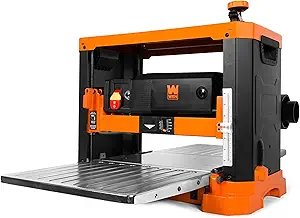 | Best Finish Quality Under the Top Tier | Motor: 15 Amp | Cutterhead Type: Spiral with 26 staggered rotatable HSS blades | Cutterhead Speed: 10,000 RPM | VIEW LATEST PRICE | See Our Full Breakdown |
| benchtop planers for woodworking | Motor |
|---|---|
| VEVOR 13" Two-Blade Benchtop T | 15-Amp, 2000W |
| VEVOR 13-Inch Two-Blade Bencht | — |
| DEWALT DW734 12-1/2-Inch Bench | — |
| FindBuyTool 13" Benchtop Wood | 120V, 15 amp, 20,000 RPM |
| VEVOR 13" Benchtop Thickness P | — |
| CRAFTSMAN 15 Amp Benchtop Plan | 15 amp |
| VEVOR 13-Inch Benchtop Thickne | 15 A, 1800 W |
| Triton TPT125 Benchtop Planer | — |
| WOODERS 13-Inch Spiral Cutterh | 15 A, 2000 W |
| VEVOR 13-Inch Spiral Thickness | — |
| WEN PL1326 15-Amp 13-Inch Spir | 15 Amp |
| DEWALT DW735X 13-Inch Three-Kn | 15 Amp, 20,000 RPM |
| WOODERS 13-Inch Benchtop Thick | 15A / 2000W all-copper |
| VEVOR 13-Inch Two-Speed Bencht | — |
| WEN PL1337 13-Inch Two-Speed B | 15 Amp |
More Details on Our Top Picks
VEVOR 13″ Two-Blade Benchtop Thickness Planer, 15-Amp 2000W Motor
For woodworkers who want full-size 13-inch capacity without paying for a helical cutterhead, this VEVOR delivers the fundamentals: a 2000W motor that holds up through hardwood passes, a 35-inch table with pull-out extensions that genuinely helps on long stock, and a quick-change two-knife head that keeps downtime low. Compared with the DEWALT DW734, you give up the third knife and the finer 96-cuts-per-inch finish, but you gain extra cutting width at a lower tier of the market. The cast iron bed is the standout here — most planers at this level use stamped steel, and the added rigidity shows in reduced chatter. The tradeoff is real, though: a two-blade head leaves more visible knife marks, so expect light sanding after planing, and single-speed feed limits your finish options on figured wood.
Pros:- Cast iron bed with 35-inch total support reduces chatter and snipe on long boards
- 15-Amp 2000W motor powers through hardwoods without bogging down
- Quick-change hardened two-knife cutter head minimizes maintenance downtime
- Built-in 20A over-current protector prevents motor damage during aggressive passes
Cons:- Two-knife head leaves visible knife marks requiring sanding afterward
- Single feed speed offers no slow-speed option for delicate finishes
Best for: Hobbyists and small workshops that need wide hardwood capacity on a tight budget and don’t mind sanding after planing
Not ideal for: Finish-focused woodworkers working with figured or tearout-prone stock — the two-blade head and single feed speed will frustrate them
- Motor:15-Amp, 2000W
- Cutter Speed:23,500 rpm
- Max Cutting Width:13 in
- Max Cutting Thickness:6 in
- Table Total Length:35 in
- Cutter Head:Two-knife solid steel, HRC55-60
- Dust Collection:Vacuum port
Our verdict“This is the pick if capacity and motor strength matter more to you than surface finish quality.”
VEVOR 13-Inch Two-Blade Benchtop Thickness Planer, 1800W Motor, 23500 RPM
This model plays a different role from its VEVOR sibling above: it’s the lighter-duty 13-inch option for people who plane boards only occasionally. The dual-roller feeding system is the differentiator — it grips stock more consistently than single-roller designs, which translates to steadier feeds and fewer stall-outs on oak or maple. The 1800W motor is a step down from the 2000W units in this lineup, so deep passes in dense hardwood will require more patience. Unlike the FindBuyTool FB131H, it uses straight HSS blades rather than carbide inserts, so blade costs are low but edge life is shorter. The 28.2-inch table is shorter than the 35-inch setups on other VEVOR models, meaning less support at the ends of long boards — a real source of snipe if you’re not supporting the stock yourself.
Pros:- Dual-roller feed system reduces vibration and improves cut consistency on hardwoods
- 1/8-inch depth adjustment increments make it easy to dial in repeatable passes
- Fits both 2-inch and 4-inch dust hoses for flexible shop-vac or collector hookup
Cons:- 1800W motor requires lighter passes than the 2000W models in this lineup
- 28.2-inch table offers less snipe protection on long stock than extended-table rivals
Best for: Weekend DIYers and occasional project builders who want 13-inch width capacity for flattening rough lumber a few times a month
Not ideal for: Frequent hardwood users or anyone planing long boards regularly — the smaller motor and shorter table will hold them back
- Motor Power:1800W
- Speed:23,500 RPM
- Cut Rate:16,000 CPM
- Width Capacity:13 in
- Max Cutting Height:6 in
- Worktable Length:28.2 in
- Blades:2 HSS blades
Our verdict“A sensible entry point for intermittent planing, as long as your stock isn’t extra wide, long, or hard.”
DEWALT DW734 12-1/2-Inch Benchtop Planer
The three-knife cutter head is what separates the DW734 from every two-blade VEVOR in this roundup: at 96 cuts per inch, it produces a noticeably finer surface that often skips the sander entirely. The reversible disposable knives effectively double edge life, and the four-column carriage lock addresses snipe more directly than the fixed-table designs on the budget models — you lock the cutterhead in place at the end of a pass and the dreaded lifted end-cut largely disappears. You do sacrifice half an inch of width compared with the 13-inch machines, which matters if you mill wider boards. And unlike the FindBuyTool FB131H with its carbide inserts, the DW734’s disposable knives are an ongoing consumable cost. Still, for finish quality per dollar in a straight-knife machine, this is the machine to beat here.
Pros:- Three-knife head at 96 cuts per inch delivers a sand-ready finish
- Reversible disposable knives extend edge life about 30% versus single-edge blades
- Four-column carriage lock markedly reduces snipe
- 33-1/2 inches of material support handles longer stock confidently
Cons:- Disposable knives mean ongoing replacement costs that insert-head rivals avoid
- 12-1/2-inch capacity is narrower than the 13-inch machines in this roundup
Best for: Woodworkers who prioritize a ready-to-finish surface and repeatable results over maximum cutting width
Not ideal for: Anyone planing boards wider than 12-1/2 inches or those wanting to avoid recurring disposable-knife costs
- Power:15 amp, corded
- Motor Speed:20,000 RPM
- Cutter-Head Speed:10,000 RPM
- Cutting Width:12-1/2 inches
- Cutter Head:Three knives, reversible
- Cuts per Inch:96
- Material Support:33-1/2 inches
Our verdict“The straight-knife choice when surface finish is the priority and 12-1/2 inches of width is enough.”
FindBuyTool 13″ Benchtop Wood Thickness Planer with Helical Cutterhead
Helical cutterheads usually command a serious premium, which is why this FindBuyTool stands out: you get 40 tungsten carbide inserts pre-installed at a price point where most rivals ship straight knives. The payoff is tear-free planing on figured wood — where the VEVOR two-blade model would leave chewed grain on curly maple, the shearing action of the spiral rows slices cleanly. When an insert dulls, you rotate it 90 degrees rather than replacing or sharpening a whole knife. The 8-position depth stop also makes batch thicknessing repeatable in a way none of the single-pass budget models match. The catch is power delivery: the 1/8-inch max depth per pass and residential-grade build mean you’ll take lighter cuts than the 2000W VEVORs can handle, so thick rough stock takes longer to bring down. Noise, however, is noticeably lower than straight-knife machines.
Pros:- 40-insert carbide helical cutterhead produces tear-free finishes on difficult grain
- Rotating inserts replace knife sharpening entirely
- Under 0.1mm thickness tolerance with a rigid 4-column, anti-wobble frame
- 8-position repeat depth stop speeds up batch work
Cons:- Max 1/8-inch planing depth per pass forces multiple passes on thick stock
- Residential-duty motor and frame aren’t built for continuous production runs
Best for: Woodworkers who regularly plane figured, curly, or tearout-prone lumber and want insert-knife economics without a premium price
Not ideal for: Production-minded users removing lots of material from thick rough stock — the limited 1/8-inch depth capacity slows the work
- Cutting Width:13 inches
- Motor:120V, 15 amp, 20,000 RPM
- Cutterhead:4-row helical, 40 tungsten carbide inserts
- Feed Rate:27.5 FPM
- Max Planing Depth:1/8 inch
- Thickness Tolerance:Under 0.1mm
- Depth Stop:8 positions
Our verdict“The smartest path to helical-head results if your priority is finish quality on difficult wood rather than fast stock removal.”
VEVOR 13″ Benchtop Thickness Planer, Three-Blade, Two-Speed, 2000W Motor
Think of this as the upgraded version of the two-blade VEVOR that opens this roundup — same 2000W motor, same 35-inch extended table, but with two additions that matter: a third hardened knife for a finer finish, and two feed speeds (15 and 24 ft/min) that let you slow down for figured stock or speed up for dimensioning. That flexibility is something neither the single-speed VEVORs nor the DEWALT DW734 offer, and it’s usually reserved for pricier machines like the DW735X. The 15 ft/min setting is where this machine earns its keep — slower feed per revolution means fewer knife marks and less tearout on tricky grain. Tradeoffs remain: it’s still a straight-knife head requiring periodic sharpening or replacement rather than rotating inserts, and like every benchtop here, dust collection only works if you supply your own vacuum.
Pros:- Two feed speeds let you choose between fast dimensioning and fine finishes
- Three-knife hardened cutter head improves surface quality over two-blade rivals
- 35-inch extended table supports long boards and limits snipe
- 20A over-current protector guards the motor during heavy cuts
Cons:- Straight knives need periodic sharpening or replacement, unlike insert heads
- Dust collection depends entirely on supplying an external vacuum
Best for: Value-driven woodworkers who want finish flexibility on varied grain without stepping up to premium pricing
Not ideal for: Those wanting minimal blade maintenance — straight knives still require sharpening or replacement unlike carbide-insert heads
- Motor Power:2000W
- Motor Speed:23,500 rpm
- Feed Speeds:15 and 24 ft/min
- Max Planing Width:13 in
- Max Planing Thickness:6 in
- Table Total Length:35 in
- Cutter Head:Three-knife solid steel, HRC55-60
Our verdict“The best balance of power, finish quality, and flexibility for budget-conscious woodworkers who plane a variety of woods.”
CRAFTSMAN 15 Amp Benchtop Planer with Two-Knife Solid Steel Cutter Head (CMEW320)
The CRAFTSMAN earns a place for woodworkers who want a capable planer with simple knife maintenance. Its 15-amp motor is specified for both hard and soft woods, while the two high-carbon steel knives are reversible, giving you another cutting edge before replacement. The quick-change cutterhead and ball bearings also favor routine upkeep and smooth operation. Compared with the WOODERS 13-Inch Spiral Cutterhead Planer, this model uses conventional knives rather than carbide inserts, so it may be less suited to minimizing tear-out on figured grain. Its vacuum port gives dust collection a clear connection point, though you still need to supply the collector. The two-knife head can leave more visible feed marks than multi-knife designs, and this benchtop format needs a stable support surface.
Pros:- 15-amp motor is specified for hard and soft woods
- Reversible, double-edged knives extend usable cutting life
- Quick-change cutterhead supports simpler knife replacement
- Vacuum port provides a direct dust-collection connection
Cons:- Two-knife cutterhead may leave more visible feed marks than three- or four-knife designs
- Requires a stable benchtop and is not suited to large stationary shop work
Best for: Woodworkers who want reversible knives and accessible cutterhead maintenance for regular shop projects
Not ideal for: Furniture makers focused on highly figured or tear-out-prone boards who would benefit from a spiral cutterhead
- Motor:15 amp
- Mounting:Benchtop
- Cutterhead:Two-knife, quick-change solid steel
- Bearings:Ball bearings
- Knives:High-carbon steel, double-edged and reversible
- Drive:Poly-V cutterhead drive
- Dust collection:Vacuum port
Our verdict“Choose the CRAFTSMAN if reversible knives and straightforward maintenance matter more than spiral-head finish refinement.”
VEVOR 13-Inch Benchtop Thickness Planer
This VEVOR stands out for pairing a 13-inch capacity with a supplied heavy-duty stand and foldable extension plates. That package may suit a shop assembling a planer station from scratch, while the automatic feed and metal return rollers help keep stock moving through routine thicknessing jobs. Its 15-amp, 1800-watt motor and double HSS blades make it a conventional two-blade option. Compared with the WOODERS 13-Inch Spiral Cutterhead Planer, it gives up the spiral head’s carbide inserts, but includes a stand and extension plates in the described package. The tradeoff is that dust collection equipment is not included; the exhaust interface only provides a connection. The product data also gives an 1800-watt motor rating, so I would use that figure rather than the conflicting 2000-watt title claim when comparing power.
Pros:- 13-inch maximum cutting width handles broad stock
- Heavy-duty stand and foldable extension plates are included
- Automatic feeding and metal return rollers support steady stock handling
- Dust exhaust interface accepts a collection hookup
Cons:- Dust collector is not included
- Two HSS blades do not offer the tear-out reduction associated with spiral inserts
Best for: Woodworkers setting up a first planer station who want a stand, extensions, and automatic feeding in the package
Not ideal for: Shops prioritizing reduced tear-out or quieter finishing from a spiral cutterhead, or buyers expecting a dust collector
- Motor:15 A, 1800 W
- Blade speed:8000 rpm
- Feed speed:6 m/min (236 in/min)
- Maximum cutting width:13 in (330 mm)
- Cutting thickness:0.2–6.3 in (6–160 mm)
- Blades:Two double HSS cutter blades
- Dust exhaust interface:1.8 in (45 mm) inner diameter; 2 in (50 mm) outer diameter
- Included components:Planer, stand, accessories, and two blades
Our verdict“Pick this VEVOR for its stand-and-extension package if you can provide dust collection and are comfortable with a two-blade cutterhead.”
Triton TPT125 Benchtop Planer, 12-1/2″ Cutting Width
The Triton TPT125 is a fit for woodworkers who value measured depth changes and support for longer boards. Its graduated crank adjusts depth in 1/16-inch steps, and the 4-post column design is intended to keep the cutterhead aligned as it moves. At 12-1/2 inches wide, it accepts slightly narrower stock than the 13-inch VEVOR and WOODERS options, a modest capacity tradeoff for a machine with large infeed and outfeed tables. The specified 17,500 cuts per minute points toward a smooth finish, while the reversible dust chute lets you route extraction from either side of the planer. Compared with the WOODERS spiral-head model, the Triton uses no listed carbide insert system, and its dust chute still needs a separate vacuum or chip collector.
Pros:- 1/16-inch depth increments support controlled thickness changes
- Graduated crank handle and thickness scale make adjustments easier to track
- 4-post column design supports cutterhead rigidity
- Large infeed and outfeed tables help support longer workpieces
Cons:- 12-1/2-inch cutting width is narrower than the 13-inch models in this batch
- Requires a separate vacuum or chip-collection system
Best for: Woodworkers who make repeatable thickness adjustments and need table support for longer boards
Not ideal for: Buyers who need a full 13-inch capacity or want dust collection equipment included
- Cutting width:12-1/2 in (317 mm)
- Cutter height range:1/8–5.9 in
- Cutting rate:17,500 cuts per minute
- Depth adjustment:1/16 in (1.6 mm) increments
- Cutterhead support:4-post column design
- Electrical safety:Circuit breaker
- Dust extraction:Reversible dust chute, left or right side
Our verdict“Choose the Triton if incremental depth control and long-board support matter more than an extra half-inch of width.”
WOODERS 13-Inch Spiral Cutterhead Thickness Planer
The WOODERS earns its role through a spiral cutterhead with tungsten carbide inserts, a design aimed at cleaner results on grain that can challenge conventional knives. Its micro-adjustable depth controls support repeatable setups, and the 13-inch width accommodates boards wider than the Triton TPT125’s 12-1/2-inch capacity. The maximum cut is 1/8 inch per pass, which means deeper stock removal takes multiple passes; that measured approach can suit finish-focused work but slows rough dimensioning. At 62 pounds, this planer is also less convenient to move between jobs. Compared with the VEVOR 13-Inch Spiral Thickness Planer with 24 inserts, the WOODERS lists a dust collector, four extra inserts, and a lifting handle among its included components. Its stated cutterhead speed is 10,000 RPM, and the supplied data does not specify a feed rate.
Pros:- Tungsten carbide spiral inserts are designed to reduce tear-out
- Micro-adjustable depth controls support repeatable settings
- 13-inch width handles broad boards
- Includes a dust collector, four extra inserts, and a lifting handle
Cons:- 62-pound weight makes frequent repositioning more difficult
- Maximum 1/8-inch cut per pass can make heavy stock removal slower
Best for: Small-shop furniture makers who plane figured or tear-out-prone boards and want carbide inserts with a listed dust collector
Not ideal for: Woodworkers who frequently move their planer or need to remove substantial material quickly in each pass
- Planing width:13 in
- Material height range:1/4–6-1/4 in
- Maximum cutting depth:1/8 in per pass
- Motor:15 A, 2000 W
- Cutterhead speed:10,000 RPM
- Cutterhead:Spiral helical with tungsten carbide inserts
- Dimensions:22.4 x 14.2 x 17.9 in
- Weight:62 lb
- Included components:Dust collector, four extra cutter inserts, lifting handle
Our verdict“Choose the WOODERS for finish-focused work on difficult grain if its weight and shallow maximum cut fit your shop routine.”
VEVOR 13-Inch Spiral Thickness Planer, Benchtop Woodworking Planer with 2000W Motor and 24-Insert Spiral Cutterhead
The standout here is its 28.2-inch worktable, which gives longer boards more support as they pass through the planer. Paired with a spiral-style head carrying 24 alloy inserts and a 13-inch width, that makes this VEVOR suited to broad, longer stock when a compact shop machine is the goal. Its 2000-watt motor and dual-roller feed system are described as supporting cuts in hard and soft woods. Compared with the WOODERS 13-Inch Spiral Cutterhead Planer, the VEVOR specifies a longer table and compatibility with both 2-inch and 4-inch dust hoses; WOODERS lists a dust collector in its included components. VEVOR’s depth adjustment moves in 1/8-inch increments and offers only one speed, limiting fine adjustment and feed flexibility. The data lists 8,000 cuts per minute.
Pros:- 28.2-inch worktable provides support for longer stock
- 13-inch capacity accommodates broad boards
- 24-insert spiral-style cutterhead is designed for smooth cutting
- Accepts both 2-inch and 4-inch dust hoses
Cons:- Single-speed operation limits feed-rate flexibility
- 1/8-inch depth increments offer less adjustment granularity than the Triton TPT125
Best for: Woodworkers who regularly plane long, wide boards and already have dust hoses in a compatible size
Not ideal for: Users who need multiple feed speeds or finer-than-1/8-inch depth adjustments for delicate finishing passes
- Cutting width:13 in
- Maximum planing height:6 in
- Table length:28.2 in
- Motor power:2000 W
- Spindle speed:23,500 RPM
- Cutting rate:8,000 cuts per minute
- Cutterhead:Spiral-style with 24 alloy inserts
- Depth adjustment:1/8 in increments
- Dust hose compatibility:2 in and 4 in
Our verdict“Pick this VEVOR when long-board support and hose flexibility outweigh the need for variable speeds or finer depth steps.”
WEN PL1326 15-Amp 13-Inch Spiral Benchtop Thickness Planer
This model stands out for putting a 26-blade spiral cutterhead into a budget-friendly package, something most planers at this tier don’t attempt. Compared with straight-knife rivals like the VEVOR Two-Blade 15-Amp, the staggered blade layout leaves far fewer knife marks, which means less sanding after dimensioning. The cast iron base is a genuine differentiator here — competing WOODERS and VEVOR units rely on lighter housings, and that extra mass keeps chatter down on figured hardwood. The tradeoff is that the blades are HSS rather than carbide, so they’ll dull faster and need rotation or replacement sooner. It also lacks the two-speed gearbox of its sibling, the WEN PL1337, so buyers who want a dedicated slow finishing pass should step up to that model.
Pros:- Spiral cutterhead with 26 staggered blades delivers a noticeably smoother finish than straight-knife planers
- Cast iron base absorbs vibration and keeps the machine planted
- Height-adjustable infeed and outfeed tables actively reduce snipe
- 15-amp motor powers through both hard and soft woods
Cons:- Requires mounting to a bench or stand, which is sold separately
- HSS blades dull faster than carbide inserts and add long-term running cost
Best for: Hobbyist woodworkers who want spiral-cutterhead finish quality without paying premium prices
Not ideal for: Production-oriented makers running dense exotics daily — the HSS blades will need frequent attention compared with carbide-insert heads
- Motor:15 Amp
- Cutterhead Speed:10,000 RPM
- Cutterhead Type:Spiral with 26 staggered HSS blades
- Max Cutting Width:13 inches
- Max Cutting Thickness:6 inches
- Feed Rate:26 feet per minute
- Max Depth of Cut per Pass:1/8 inch
- Base:Heavy duty cast iron
Our verdict“This pick makes the most sense for hobbyists who prioritize finish quality on a budget and don’t mind the maintenance schedule of HSS blades.”
DEWALT DW735X 13-Inch Three-Knife Two-Speed Thickness Planer, 15 Amp
The DW735X remains the benchmark other benchtop planers are measured against, and its two-speed gearbox is the reason. At 96 CPI it rips through rough stock; flip to 179 CPI and the finish rivals spiral-head output without a blade swap. Compared with the WEN PL1337, the DEWALT’s straight knives can’t match a spiral head for glass-smooth results, but its automatic carriage lock beats the WEN’s manual table adjustments for snipe control — no extra steps, no forgetting. The fan-assisted chip ejection also outpaces passive dust ports on the VEVOR and WOODERS models, keeping the cutterhead clear during heavy cuts. The real cost is weight and bulk: this is the least portable machine in this batch, and knife changes, while quicker than older designs, remain a periodic chore.
Pros:- Two-speed gearbox lets you choose fast stock removal or a fine 179 CPI finish pass
- Automatic carriage lock reduces snipe without any manual engagement
- Fan-assisted chip ejection keeps the cutterhead clear during aggressive cuts
- Bundled extra knife set and infeed/outfeed tables add out-of-box value
Cons:- Heavy and bulky compared with other benchtop planers in this lineup
- Straight knives require periodic changes and can’t match spiral heads for tearout on figured stock
Best for: Serious hobbyists and small professional shops that plane stock regularly and want one machine for both dimensioning and finishing
Not ideal for: Woodworkers with limited shop space or those who move tools between job sites — it’s heavy and awkward to transport
- Motor:15 Amp, 20,000 RPM
- Cutterhead Speed:10,000 RPM
- Knives:Three-knife cutter head
- Planing Width:13 inches
- Feed Speeds:Two-speed gear box (96 or 179 CPI)
- Chip Ejection:Fan-assisted
- Base:19-3/4 in cast aluminum with folding tables
- Warranty:3 Year Limited
Our verdict“If you plane wood every week and want the most capable all-rounder here, this is the one to buy despite its weight.”
WOODERS 13-Inch Benchtop Thickness Planer, 15A / 2000W with 4 HSS Blades
For a first planer, this WOODERS model gets the basics right without asking much in return. The 2000W all-copper motor holds speed in dense hardwoods better than the smaller VEVOR 1800W Two-Blade, and the ergonomic crank with height indicator is a thoughtful touch — anyone with wrist or grip issues will appreciate it compared with the stiffer adjustment on comparable VEVOR units. Including two spare blades in the box means a first-timer can learn blade changes without an immediate extra purchase. The tradeoffs are real, though: the iron-heavy build makes it a two-person lift, and the overload protection that cuts power under extreme loads can interrupt a work session if you push passes too aggressively — a common beginner mistake.
Pros:- 2000W copper-wound motor powers through dense hardwoods without bogging
- Anti-snipe dual-blade system produces flat, dimensionally consistent boards
- Ergonomic crank and height indicator suit users with hand or wrist limitations
- Two extra blades and dust port included in the package
Cons:- Heavy iron construction makes it difficult to reposition or store
- Overload protection cuts power mid-pass under heavy loads, interrupting work
Best for: First-time planer buyers and casual hobbyists who want spare blades and comfortable controls included up front
Not ideal for: Anyone needing a machine they’ll move around the shop or take to job sites — the weight makes repositioning a chore
- Motor:15A / 2000W all-copper
- Cutterhead Speed:10,000 RPM
- Max Cutting Width:13 inches
- Height Range:1/4 to 6.3 inches
- Blades:4 HSS double-edged blades (2 extra included)
- Depth Adjustment Range:0 to 1/8 inch
- Included Components:Planer, dust collector, 2 extra blades, lifting handle
Our verdict“A sensible starter machine for hobbyists who value included extras and easy operation over portability.”
VEVOR 13-Inch Two-Speed Benchtop Thickness Planer with Three HSS Blades
What separates this VEVOR from the WEN PL1337 and the WOODERS 15A is its 28.2-inch worktable — the longest support surface in this batch. That extra length matters most when planing long boards, because the table supports the stock further from the cutterhead, which is exactly where snipe begins. The dual-roller feeding system also keeps boards moving smoothly and cuts vibration, giving it an edge over single-roller designs in cut consistency. Flexibility on dust extraction (2-inch or 4-inch hoses) is welcome if your shop vac and your dust collector use different fittings. The drawback is precision: depth adjustment happens in fixed 1/8-inch steps, so fine-tuning a final pass means you can’t dial in a 1/16-inch skim the way the DEWALT DW735X allows.
Pros:- Extra-long 28.2-inch worktable supports long boards and minimizes snipe
- Dual-roller feed system reduces vibration and improves cut consistency
- Handles dense hardwoods like oak and maple without stalling
- Works with both 2-inch and 4-inch dust collection hoses
Cons:- Fixed 1/8-inch depth steps limit fine tuning for finishing passes
- Benchtop capacity can’t match larger stationary planers for serious production work
Best for: Woodworkers who regularly plane long stock — tabletops, shelving, long rails — and want maximum infeed/outfeed support
Not ideal for: Fine-furniture makers needing precise incremental depth control — the stepped adjustment limits subtle final passes
- Motor Power:2000W
- Speed:23500 RPM
- Cutting Rate:24000 CPM
- Max Planing Width:13 inches
- Max Planing Height:6 inches
- Worktable Length:28.2 inches
- Blades:3 HSS blades
- Feed Speeds:2 selectable speeds
- Dust Hose Compatibility:2-inch and 4-inch
Our verdict“Choose this one if long boards are your norm and dust-collection flexibility matters more than ultra-fine depth control.”
WEN PL1337 13-Inch Two-Speed Benchtop Thickness Planer with Spiral Cutterhead
Think of the PL1337 as the PL1326 with a gearbox — the same 26-blade spiral cutterhead, but with two feed speeds that push cut density up to 1,354 cuts per inch on the slow pass. That finishing feed produces results that genuinely challenge the DEWALT DW735X at its 179 CPI setting, and with fewer visible knife marks since the spiral head shears rather than chops. WEN also bundles accessories others charge extra for: the material removal gauge takes the guesswork out of hitting a target thickness, and return rollers make repeated passes on the same board far less tiring. As with its sibling, the HSS blades won’t endure like the carbide inserts on the FindBuyTool helical model, and you’ll still need to supply your own stand.
Pros:- Two-speed feed offers fast dimensioning plus a fine 1,354 CPI finishing pass
- Spiral cutterhead leaves a smooth finish with minimal sanding needed
- Material removal gauge and return rollers streamline repeated passes
- Height-adjustable tables and depth stop help control snipe and repeat thicknesses
Cons:- Requires a stand or sturdy bench mount, sold separately
- HSS spiral blades are less durable than carbide insert designs
Best for: Woodworkers who want near-premium surface finish and repeat-pass convenience without the DEWALT price
Not ideal for: Users who plane abrasive or reclaimed wood often — the HSS spiral blades will wear faster than carbide inserts
- Motor:15 Amp
- Cutterhead Type:Spiral with 26 staggered rotatable HSS blades
- Cutterhead Speed:10,000 RPM
- Cutting Width:13 inches
- Max Board Thickness:6 inches
- Feed Speeds:26 FPM (833 CPI) and 16 FPM (1354 CPI)
- Max Depth of Cut per Pass:1/8 inch
- Dust Port:2-1/2 inch and 4 inch combination
- Warranty:2 years
Our verdict“The strongest choice in this batch for buyers who care most about surface finish and workflow-friendly accessories at a mid-range price.”

How We Picked
I compared these benchtop planers by the factors that shape day-to-day woodworking: stated cutting width, cutterhead type, knife or insert count, feed-speed options, motor details where supplied, and the likely upkeep burden. I gave more weight to combinations that can serve a range of stock-preparation tasks than to a single headline specification. A planer’s stated width is useful only if it matches the boards a buyer expects to mill, and cutterhead design affects both finish expectations and maintenance.
The ranking favors models with a clear, useful mix of capacity, cutterhead capability, and control over feed rate. The DW735X leads because its three-knife, two-speed configuration makes a particularly flexible package; the DW734 follows as a conventional three-knife alternative with narrower capacity. Spiral and helical models earn attention for their cutterhead approach, while simpler two-blade or two-knife options make more sense for buyers who want straightforward stock sizing. I treat similar-looking VEVOR variants as distinct only where their listed cutterhead, blade count, speed, or motor differs, and I avoid treating motor wattage or RPM alone as proof of better planing performance.
Factors to Consider When Choosing Benchtop Planers For Woodworking
Before choosing a benchtop planer, I’d match the machine to the stock and finish demands of the work, then check whether the shop can support its footprint and chip output. The product names and headline specs do not tell the whole story: setup, dust collection, knife care, and the condition of the wood all affect results.
Match Capacity to the Boards You Actually Mill
A 13-inch cutting width gives a little more room than a 12½-inch model, but that difference matters only when your projects regularly use wider stock. Measure your typical board width and thickness before choosing, and check the machine’s maximum depth of cut and thickness capacity in its full specifications. Buyers often focus on width and forget that a planer cannot take off unlimited material in one pass. Plan to remove stock in several light passes, especially with dense or figured wood. If you mostly prepare narrow furniture parts, a machine with better feed control may serve you better than extra width. For wide tabletops or panels, also consider whether you can safely support long boards as they enter and leave the planer.
Choose a Cutterhead With Upkeep in Mind
Conventional two- or three-knife heads have a familiar maintenance routine: keep the knives sharp and aligned, and expect a dull or damaged knife to affect the cut. Spiral and helical designs use multiple smaller cutters, which can let you address a damaged edge by rotating or changing an insert instead of replacing a full-width knife. That convenience depends on the cutterhead’s exact design and the availability of compatible inserts. Do not assume that every spiral head produces the same finish or costs the same to maintain. Check what replacement parts are available and how the manufacturer specifies insert rotation or replacement. If your shop already maintains straight knives confidently, a conventional head may be a perfectly practical choice.
Treat Feed Speed as a Finish and Workflow Choice
Two-speed planers give you a choice between moving material faster and feeding it more slowly for a finer cut, depending on the model’s design. That flexibility can help when a shop alternates between rough dimensioning and visible surfaces, but it does not erase tear-out caused by grain direction or an aggressive cut. A single-speed model may be simpler if the work is mostly routine sizing. Buyers can overvalue the number of speeds without checking what those settings actually do to feed rate and finish. Look for the feed-rate details in the manual or full specifications where they are available. Regardless of speed, shallow passes and attention to grain direction remain important.
Plan for Dust and Chip Removal
A benchtop planer produces chips quickly, and a small shop can become difficult to work in if extraction is an afterthought. Check the dust port size and whether it fits the collector or shop vacuum you already own, then consider hose routing and clearance around the machine. A vacuum that handles sanding dust may struggle with the volume of planer chips, so buyers should compare airflow and chip capacity rather than relying on the word “dust collection.” Keep the infeed and outfeed areas clear so long boards do not snag hoses or nearby tools. If your collector is limited, plan frequent pauses to clear chips safely. Good extraction also helps reduce chip buildup around the cutterhead and work area.
Budget for Setup, Support, and Space
A benchtop planer still needs a stable surface, clear board paths, and room to adjust height and feed stock. Check the machine’s weight and footprint against your bench, and decide whether you need a mobile stand or a dedicated mounting spot. Long boards need support at both ends; unsupported stock can tip, snipe, or feed unevenly. Some setup tasks, such as aligning tables or checking knives, can influence results as much as a headline motor figure. Read the manual for maintenance access and setup requirements before deciding where the planer will live. Paying more makes sense when a feature solves a regular shop problem, such as feed-speed choice or a cutterhead maintenance routine that suits your workload.
Frequently Asked Questions
Can a benchtop planer flatten a twisted board?
A thickness planer makes the top face parallel to the face riding on its bed; it does not automatically correct a twist or bow. If you feed a twisted board directly through, the result can keep the same shape while becoming thinner. A jointer, a planer sled, or another reliable flattening method can establish one flat reference face first. After that, the planer can bring the opposite face parallel and size the board. For small shops, a sled can be a useful workaround, but it takes setup time and a stable support surface.
Is a spiral cutterhead worth choosing over conventional knives?
It may be a good fit if you value insert-level maintenance or often plane wood that can nick a straight knife. Rotating or replacing a small cutter can be more targeted than servicing a full-width knife, depending on the head and parts supply. Conventional knives can be simpler for buyers who already know how to set and maintain them. Compare the replacement insert availability and instructions before buying, since the cutterhead label alone does not explain long-term upkeep. Also weigh that maintenance preference against other needs, such as feed speed, capacity, and dust collection.
Should I choose a 13-inch planer over a 12½-inch model?
Choose based on the widest stock you expect to plane, with a little allowance for real project needs. The extra half inch can help with panels or wider boards, but it may have little value if you mostly mill narrow parts. A wider machine still needs enough infeed and outfeed space for the boards you run. Confirm the full capacity specifications, since width is only one limit and maximum thickness and depth of cut also shape what the tool can handle. If you are unsure, measure the widest material in your current projects rather than buying by the largest number alone.
Do I need a two-speed planer if I am a beginner?
Not necessarily. A single-speed model can handle basic thicknessing if you take modest cuts, feed stock steadily, and pay attention to grain direction. Two speeds can make one machine more adaptable when you switch between faster rough sizing and slower finish passes. It also adds a choice that a beginner may not use often at first. I’d prioritize safe board support, straightforward knife or insert maintenance, and dust extraction before paying extra for feed-speed flexibility. If your projects already include both rough lumber preparation and visible surfaces, the added control may be more useful.
What else do I need to use a benchtop planer safely and effectively?
At minimum, plan for a stable mounting surface, clear board support at the infeed and outfeed, and suitable hearing and eye protection. Chip extraction matters because the machine generates a large volume of material during a short run. Read the manual for permitted stock dimensions, cut limits, and procedures for clearing jams or changing knives and inserts. A planer does not flatten both faces by itself, so you may also need a jointer, sled, or other way to create a flat reference face. Finally, leave room to inspect and maintain the cutterhead rather than placing the machine where access is awkward.
Conclusion
For the best overall choice, I’d pick the DEWALT DW735X for its three-knife cutterhead, two feed speeds, and 13-inch width. The DEWALT DW734 is my best conventional alternative for a buyer who wants a three-knife design at 12½ inches. For a spiral-head option, compare the WEN PL1326 and PL1337 with the FindBuyTool, WOODERS, and VEVOR insert-head models, checking exact cutterhead details and replacement-part support before choosing. A beginner who wants a straightforward setup may prefer a conventional two- or three-knife planer and can put the savings toward supports and extraction. For specific needs, choose a two-speed model when finish and throughput flexibility matter, or a spiral or helical head when its maintenance approach suits your shop; confirm capacity and service details against your own stock and workload.
Fall Picks
fall essentials
As an affiliate, we earn on qualifying purchases.