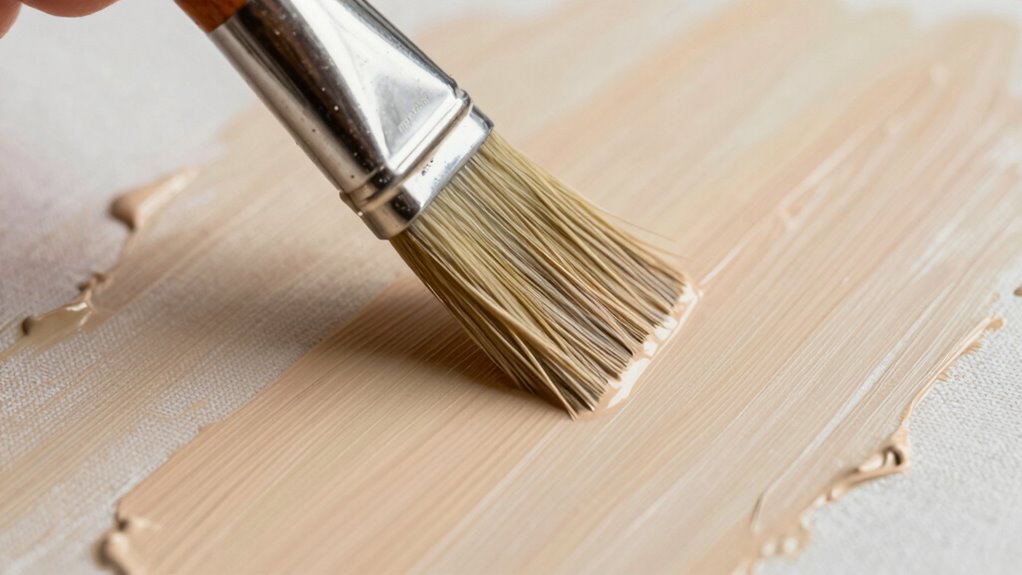

To minimize brush strokes without fancy tools, focus on your technique. Keep your brush loaded with the right amount of paint and maintain a steady hand with smooth, even strokes. Use softer brushes or broad movements for large areas, and switch to smaller, precise strokes for details. Practice controlling your pressure and rhythm to create fluid, cohesive results. If you keep refining these skills, you’ll develop a professional, polished look that hides brush marks effectively.
Key Takeaways
- Use a steady hand and maintain a consistent speed to achieve smooth, uniform strokes.
- Keep your brush loaded with the right amount of paint; avoid overloading or underloading.
- Employ broad, sweeping strokes for large areas and switch to smaller, controlled strokes for details.
- Maintain proper brush maintenance and cleanliness to ensure smooth paint flow and soft edges.
- Practice regularly to develop a steady rhythm that enhances control and minimizes visible brush marks.
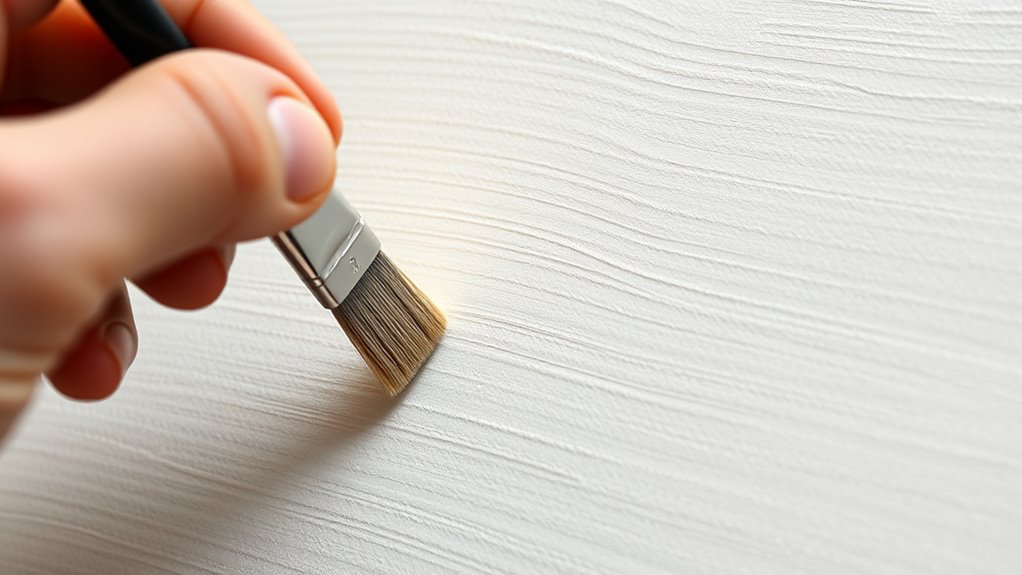
Have you ever wondered how artists create dynamic textures and expressive lines in their paintings? The secret often lies in their brush technique and how they manage stroke consistency. When you’re aiming to minimize visible brush strokes, mastering these elements becomes essential. Your brush technique involves more than just choosing the right brush; it’s about how you apply paint with control and purpose. You want each stroke to flow smoothly, avoiding abrupt or uneven marks that can make your work look rough or overly textured. To achieve this, keep your brush loaded with the right amount of paint—neither too much nor too little—so your strokes are fluid and controlled. Practice applying gentle pressure to keep your strokes consistent, which helps prevent jagged or inconsistent lines that draw attention to brushwork instead of the overall composition. Additionally, understanding stroke consistency can significantly improve the uniformity of your work. Stroke consistency plays a critical role in creating a polished appearance. When your strokes are uniform, the painting appears more deliberate and cohesive. To develop this consistency, focus on maintaining a steady hand and a uniform speed as you move your brush across the canvas. Rushing can lead to uneven strokes and visible brush marks, so take your time to build confidence in your movements. Additionally, adjusting your grip and stance can help you gain better control over your brush. Keep in mind that varying your pressure slightly can add subtle interest, but avoid drastic changes that make your strokes look inconsistent. The key is to develop a rhythm that allows your hand to glide smoothly, producing strokes that are similar in width, texture, and opacity. You don’t need fancy tools or expensive brushes to minimize brush strokes effectively. Instead, focus on your technique and how you handle your tools. Using softer brushes can help you create more seamless transitions and softer edges, but even with basic brushes, careful control can produce the desired effect. When working on larger areas, use broad, sweeping strokes to maintain stroke consistency, and switch to smaller, more precise strokes for detail work. Remember to keep your brush clean and well-maintained to prevent uneven paint flow, which can cause irregular strokes. With consistent practice, you’ll develop a more refined control over your brushwork, leading to smoother, more unified paintings that showcase your skill without the distraction of visible brush strokes.
Amazon Product B0F25T39CL
As an affiliate, we earn on qualifying purchases.
Frequently Asked Questions
Can Mixing Different Paint Types Reduce Brush Strokes?
Mixing different paint types can help reduce brush strokes if you achieve a consistent paint consistency. When the paint blends well, it flows smoothly, making brush pressure easier to control. Use light, even pressure and avoid overloading your brush, which can cause streaks. Experiment with small batches to find the right mix. This approach helps you create a more uniform finish and minimizes visible brush strokes without needing fancy tools.
How Does Drying Time Affect Brush Stroke Visibility?
Like a bygone era’s delicate lace, drying time influences brush stroke visibility. When paint dries too quickly, the paint film integrity suffers, making strokes more noticeable. Longer drying allows solvent evaporation rates to stabilize, smoothing out strokes. Patience ensures an even finish, giving your work a sleek look. Rushing this step can leave your masterpiece with unwanted texture, so let it dry fully before adding layers or finishing touches.
Are There Specific Brush Shapes That Minimize Strokes?
Yes, using a flat or angular brush shape helps minimize stroke visibility. These shapes allow you to cover larger areas smoothly, reducing the appearance of brush marks. Opt for brushes with soft, flexible bristles that glide evenly across the surface. By choosing the right brush shape, you can achieve a more even, professional finish and markedly decrease the visibility of strokes in your painting.
Does Painting in Layers Help Hide Brush Marks?
Yes, painting in layers helps hide brush marks by building up a smooth texture. Before you start, focus on proper surface preparation to guarantee an even base, which reduces the chances of visible strokes. Use texture techniques like feathering and glazing between layers to create a seamless finish. Applying thin, even coats and allowing each layer to dry thoroughly will also minimize brush marks and enhance the overall smoothness of your painted surface.
Can Ambient Temperature Influence Brush Stroke Formation?
The ball’s in your court—ambient temperature does influence brush stroke formation. Temperature effects can alter paint viscosity, making it either too thick or too runny, which impacts application. To control brush strokes, keep your workspace at a consistent, moderate temperature, and adjust paint viscosity if needed. Proper temperature management guarantees smoother application, reducing visible brush marks and giving your artwork a polished finish without fancy tools.
Amazon Product B009YNG21U
As an affiliate, we earn on qualifying purchases.
Conclusion
Now that you know how to minimize brush strokes, your paintings will flow as smoothly as a gentle stream. Think of each stroke as a whisper rather than a shout, blending seamlessly into the canvas. With patience and practice, your brush will dance gracefully across the surface, leaving behind a masterpiece free of harsh ridges. Keep these tips close, and watch your art transform into a fluid, engaging story that invites viewers in like a warm summer breeze.
Amazon Product B0D9NJZHJS
As an affiliate, we earn on qualifying purchases.
Amazon Product B00EKT30JK
As an affiliate, we earn on qualifying purchases.