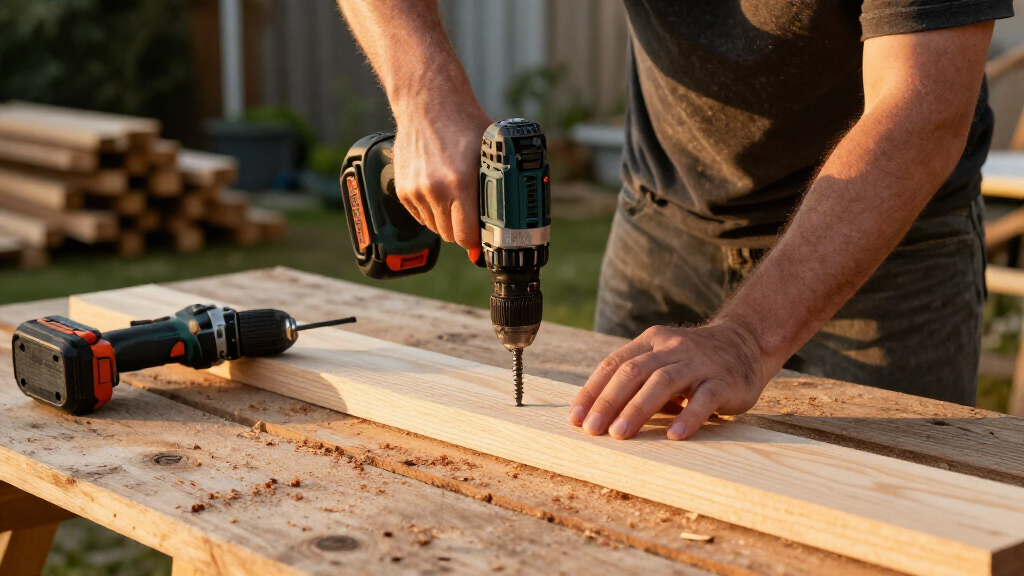

Choosing a cordless drill set is a choice between comfortable handling for everyday jobs and extra power for tougher, longer work. A 12V set is usually the easier tool to carry, control overhead and store in a small home kit. An 18V set can drive larger fasteners and drill wider holes with less strain on the tool, and often belongs to a broader range of compatible equipment.

Get business pricing on tools and workshop supplies
- Business-only prices and quantity discounts
- Tax-exempt purchasing
- Multiple users, one account, clear invoices

DEWALT 20V MAX Cordless Drill and Impact Driver (DCK240C2)
- ✔ Platform: 20V MAX lithium-ion
- ✔ Tools included: Drill/driver and impact driver
- ✔ Batteries: Two included; listed as 1.3Ah packs

BLACK+DECKER 20V MAX POWERCONNECT Cordless Drill Driver Kit with 100-Piece Tool Kit
- ✔ Platform: 20V MAX POWERCONNECT lithium-ion
- ✔ Tool included: Cordless drill/driver
- ✔ Battery: One 1.5Ah battery

COMOWARE 20V Cordless Drill and Bits Set
- ✔ Platform: 20V lithium-ion
- ✔ Tool included: Cordless drill/driver
- ✔ Maximum torque: 266 in-lb
That difference matters more than the voltage label alone: battery capacity, drill design, included bits and the maker’s tool lineup all affect what a particular set can do. Still, for comparable models, 12V suits occasional repairs, furniture assembly and lighter drilling; 18V suits renovation work, frequent use and users who want one battery platform for several tools. The comparisons below focus on the common tradeoffs, since exact performance and kit contents vary by brand and model.
At a Glance
| Criteria | 12V cordless drill sets | 18V cordless drill sets | Winner |
|---|---|---|---|
| Weight and handling | Usually smaller and lighter, with less fatigue during overhead or one-handed tasks. | Usually heavier and bulkier, which can make precision and overhead work more tiring. | A |
| Power for demanding jobs | Well suited to pilot holes, assembly and routine drilling; can struggle more with large bits or long screws. | More headroom for larger holes, longer fasteners and sustained work, though model and bit choice still matter. | B |
| Runtime and battery options | Often uses smaller batteries; suitable for intermittent household work, with runtime dependent on capacity and workload. | Often offers higher-capacity battery choices and suits longer or heavier sessions; actual runtime varies. | B |
| Included kit and versatility | Compact sets may prioritize drill, charger and batteries; contents vary widely. | May offer broader kits or bundles, but included accessories and batteries are model-specific. | Depends |
| Platform and tool selection | Can be a capable small-tool platform, though product range varies by manufacturer. | Often connects to a wider family of higher-demand tools, depending on the brand. | B |
| Price and value | Often costs less to enter; value is strongest when its power and tool range match your needs. | Usually costs more; worthwhile if the added power, runtime or platform tools will see regular use. | Depends |
DEWALT 20V MAX Cordless Drill and Impact Driver (DCK240C2)
This is the most capable all-around set in our comparison because it pairs a drill/driver with a separate impact driver. The drill handles holes and general fastening; the impact driver is better suited to repetitive screw driving where a basic drill can bog down. That division of labor gives us more flexibility than either BLACK+DECKER or COMOWARE, which each provide one drill. The compact designs and integrated LED lights also make the kit more practical for confined or poorly lit work areas.Its package is comparatively work-ready: two 20V batteries, a charger, and a contractor bag are included. One battery can be available while the other is in use, though the listing identifies the included packs as 1.3Ah, so we should not assume long runtime between charges. The impact driver accepts 1-inch hex bits with one-handed loading, a useful detail for quick bit changes. The provided material gives differing torque figures for the kit, so we would not use one number as a precise basis for comparing it with COMOWARE’s stated 266 in-lb.The tradeoff is that this set is less of a broad starter accessory bundle than BLACK+DECKER’s 100-piece kit, and it is more tool than a casual user may need. Buyers who mostly assemble furniture or hang occasional fixtures may find a single drill and clutch easier to justify. Still, for a buyer who expects both drilling and substantial fastening, the second tool changes what the set can do in a way extra loose bits cannot.
Pros:
- Includes both a drill/driver and an impact driver.
- Two batteries, charger, and contractor bag are included.
- Compact tools with integrated LED work lights.
- Impact driver has a one-handed 1/4-inch hex chuck.
Cons:
- The included 1.3Ah batteries may limit runtime on extended work.
- Provides fewer included bits and accessories than the BLACK+DECKER bundle.
- The supplied listing gives inconsistent torque figures, complicating direct spec comparison.
Best for: DIYers and homeowners who expect frequent drilling and screw driving and want separate tools for those tasks.
Not ideal for: Occasional users seeking one simple drill with a broad ready-to-use accessory assortment.
Bottom line: Choose the DEWALT when having a dedicated impact driver matters more than getting the largest accessory assortment.
“Choose the DEWALT when having a dedicated impact driver matters more than getting the largest accessory assortment.”
BLACK+DECKER 20V MAX POWERCONNECT Cordless Drill Driver Kit with 100-Piece Tool Kit
BLACK+DECKER makes the clearest case for a first household kit: it pairs one cordless drill with a 100-piece assortment of bits, sockets, and small accessories. That range can save us from buying a separate basic set when starting repairs or DIY projects. Its 24-position clutch is especially relevant for assembling furniture and driving screws into softer materials, where dialing back force helps reduce stripped heads and overdriven screws. The soft-grip handle and zippered storage case add to its home-project focus.Compared with DEWALT, this is the simpler and more accessory-forward purchase: one drill instead of two specialized tools. It also includes one 1.5Ah battery, charger, and access to the POWERCONNECT interchangeable battery system. That system may be useful if we already own compatible BLACK+DECKER tools, but the included single battery leaves no spare to swap in during a longer session. The supplied specifications list differing speed and torque values, so we would treat those figures cautiously rather than infer a consistent performance advantage over COMOWARE.This kit is not the right pick simply because its piece count is highest. Some accessories may see little use, and a large assortment does not provide the dedicated fastening behavior of DEWALT’s impact driver. Its listed drilling capacities are modest, which reinforces the intended role: light household work and controlled fastening, not demanding construction. Buyers who already own bits or need more sustained work may prefer a different balance.
Pros:
- 100-piece kit includes a wide range of drill and driving accessories.
- 24-position clutch supports controlled screw driving.
- Battery works within the BLACK+DECKER POWERCONNECT system.
- Zippered case keeps the drill and accessories together.
Cons:
- Includes one drill rather than a drill and impact driver.
- One 1.5Ah battery means there is no included spare.
- The product listing provides inconsistent speed and torque specifications.
Best for: New homeowners or DIY beginners who want one drill and a broad collection of basic bits and sockets in the same case.
Not ideal for: Buyers doing frequent heavy fastening, long sessions without charging breaks, or work that calls for a separate impact driver.
Bottom line: Pick BLACK+DECKER when a broad starter assortment and clutch control matter more than a second tool or spare battery.
“Pick BLACK+DECKER when a broad starter assortment and clutch control matter more than a second tool or spare battery.”
COMOWARE 20V Cordless Drill and Bits Set
COMOWARE keeps the package focused on one drill and the essentials for home projects. Its stated 266 in-lb maximum torque and 25+1-position clutch give us a clearer picture of its intended role than the conflicting performance figures in the other single-drill kit listing. The low speed range is designed for controlled screw driving, while the higher setting reaches up to 1,300 rpm for drilling. A 3/8-inch keyless metal chuck accepts common round and hex-shank bits without requiring a separate chuck key.As a single-tool set, it is more straightforward than DEWALT’s two-tool combo, but it cannot split drilling and repetitive driving between dedicated tools. The included 1.5Ah battery, charger, case, and accessory assortment make it self-contained for furniture assembly, curtains, and similar jobs. BLACK+DECKER supplies a much larger listed assortment, while COMOWARE’s product description specifies a set of drill and driver bits plus sleeves and extensions. We should compare the actual accessory types we expect to use, not assume that either kit’s count means every bit is equally useful.The limitation is explicit: this is a household and light DIY drill, not a masonry or industrial tool. Its single compact-capacity battery may also call for pauses during bigger projects. For buyers who want a defined clutch, two speeds, and a keyless chuck for occasional jobs, that may be a sensible tradeoff. Those who need more accessories out of the box can look to BLACK+DECKER; those who need more fastening capability should move up to DEWALT’s drill-and-impact pairing.
Pros:
- Clearly stated 266 in-lb torque and 25+1 clutch positions.
- Two speed ranges support controlled driving and faster drilling.
- Keyless 3/8-inch metal chuck accepts common bit shanks.
- Battery, charger, storage case, and accessories are included.
Cons:
- Product description excludes concrete, masonry, and heavy industrial jobs.
- One 1.5Ah battery may require charging breaks on larger projects.
- One drill cannot match the task separation of DEWALT’s two-tool kit.
Best for: DIY users handling furniture assembly, household repairs, and light drilling who value adjustable clutch control.
Not ideal for: Anyone who needs masonry drilling, industrial duty, long runtime, or a separate impact driver.
Bottom line: Choose COMOWARE for a self-contained light-duty drill set with explicit clutch and speed details, provided its workload limits fit.
“Choose COMOWARE for a self-contained light-duty drill set with explicit clutch and speed details, provided its workload limits fit.”
As an Amazon Associate we earn from qualifying purchases.
Key Differences
The clearest everyday difference is handling. A compact 12V drill is easier to use for cabinet hardware, furniture assembly, shelf brackets and jobs above shoulder height. It is also less cumbersome to keep in a kitchen drawer or small toolbox. For occasional home maintenance, those advantages can matter more than extra power that may rarely be used. An 18V drill asks for more space and can feel tiring during repetitive overhead work, but it provides more capacity when a project calls for large holes or longer fasteners.
The 18V advantage grows when the drill is part of a larger battery system. If you plan to buy a circular saw, impact driver or other demanding tools from the same brand, battery compatibility can make the initial premium worthwhile. If you only need a drill and a few household accessories, the 12V set may provide better value. Compare the specific kits: battery count and capacity, charger, case and included accessories can change the practical value substantially.
Neither voltage guarantees a better drill. Chuck quality, clutch settings, balance, battery availability and warranty all matter, and an 18V set with a small battery or awkward design may disappoint. Choose according to the hardest work you expect to do regularly, not the largest task you might attempt once. For very demanding or repeated fastening, a dedicated impact driver may also be a better companion than relying on a drill alone.
Detailed Comparison
Weight and handling (12V cordless drill sets wins — moderate)
12V sets typically win on compact size and lower weight, making them easier to control for small holes, furniture assembly and overhead work. This is a moderate advantage for anyone using a drill often in awkward positions, and a minor one for short jobs at a workbench. An 18V drill’s added bulk is the cost of greater capacity, though individual designs differ.
Power for demanding jobs (18V cordless drill sets wins — major)
18V sets generally have more headroom for larger drill bits, longer screws and sustained work. That is a major difference if you renovate, build or regularly work with dense materials; it means fewer situations where the tool feels underpowered. For pilot holes, flat-pack furniture and common household repairs, a good 12V drill may be entirely adequate, so the gap is minor in those tasks.
Runtime and battery options (18V cordless drill sets wins — moderate)
18V platforms often provide a broader choice of higher-capacity batteries, which helps during long sessions and can support other tools. That is a moderate advantage for frequent users. A 12V set’s smaller batteries can be sufficient for intermittent jobs and keep the drill light; users should compare amp-hour ratings and kit contents rather than assume voltage alone determines runtime.
Included kit and versatility (minor difference)
There is no reliable winner by voltage: some sets include two batteries, a case and a useful accessory selection, while others keep the package sparse. The difference is minor until a missing battery or charger forces an extra purchase. Check the exact model’s contents, battery capacity and whether its accessories suit your work; included drill bits may still need upgrading for frequent use.
Platform and tool selection (18V cordless drill sets wins — moderate)
18V systems often have more options for saws and other higher-demand equipment, making them a stronger base for a growing workshop. This is a major advantage if you expect to buy compatible tools and a moderate one if you may add just one. Some brands offer strong 12V ranges, so check the maker’s actual lineup and battery compatibility before paying for a platform.
Price and value (moderate difference)
12V sets commonly cost less and deliver better value for users who need a drill for light, occasional jobs. The price gap is minor if the 18V set includes batteries or tools you would otherwise buy. Paying more is worthwhile when you will use its extra power, longer-session battery options or broader platform; otherwise, it buys capacity that can sit unused.
12V cordless drill sets: Pros and Cons
Pros:
- Usually lighter and easier to control for small jobs and overhead use.
- Compact for storage and often less expensive to buy into.
- Plenty capable for assembly, pilot holes and routine household repairs.
Cons:
- Less headroom for large bits, long fasteners and sustained heavy work.
- Battery and compatible-tool choices may be narrower, depending on the brand.
- May need an upgrade if projects become more demanding.
18V cordless drill sets: Pros and Cons
Pros:
- More power headroom for tougher drilling and fastening tasks.
- Often offers higher-capacity batteries and a broad compatible tool range.
- A strong base for renovation work or a growing workshop.
Cons:
- Heavier and bulkier for delicate or overhead work.
- Often has a higher upfront cost and takes more storage space.
- Extra capacity may go unused in a light-duty household kit.
Who Should Choose What
Choose 12V cordless drill sets if:
- You mainly assemble furniture, hang fixtures, install hardware or handle small repairs.
- You value low weight and easy handling, especially overhead or in tight spaces.
- You want a lower-cost drill set and do not expect to build a large tool collection.
Choose 18V cordless drill sets if:
- You regularly drill larger holes, drive long screws or work on renovation projects.
- You use tools for longer sessions and want higher-capacity battery options.
- You plan to buy other tools on a compatible platform and will use the extra capability.
Skip both if: If your work involves frequent heavy fastening or driving large fasteners, consider a dedicated impact driver alongside a drill; if the project needs rotary-hammer action for masonry, a standard drill set may not be the right tool.
Value for Money
A 12V set is the better value for a light-duty household if it covers the jobs you actually do. A lower purchase price and easier handling matter more than theoretical capacity when the drill comes out a few times a year. Check that the set includes the batteries and charger you need, since a bargain kit with limited capacity can be less attractive than it first appears.
Pay more for 18V when the extra power, battery options or compatible tool family will earn their place through regular use. If you are starting a workshop, one battery platform can reduce the need for separate chargers and batteries as you add tools. If you will only use a drill for occasional small repairs, the premium is hard to justify. Compare complete kit prices and warranty terms, not voltage labels alone.
Final Verdict
For most occasional household users, choose a 12V cordless drill set: it is easier to handle, simpler to store and usually costs less while covering common repairs and assembly. Choose 18V if you expect demanding drilling, long work sessions or a growing collection of compatible tools. The deciding factor is how often you will need the extra capacity. If those tougher jobs are rare, keep the lighter, lower-cost option; if they are routine, the 18V premium is worthwhile.
Frequently Asked Questions
Is an 18V cordless drill always more powerful than a 12V drill?
Voltage is a useful category indicator, but it does not tell the whole story. Motor design, gearing, battery condition and the specific model affect performance. Compare the manufacturers’ specifications and the tasks the drill is rated to handle.
Can a 12V drill handle home repairs?
Yes. A capable 12V drill can handle many household jobs, including furniture assembly, pilot holes and installing hardware. Large bits, long screws and repeated work in hard materials are more likely to challenge it.
Is paying extra for an 18V set worth it?
It is worth paying more if you regularly tackle demanding projects, work for longer sessions or plan to add compatible tools. For a handful of light household jobs, the lower weight and price of a 12V set often make better sense.
What should I compare besides voltage?
Check weight, clutch and speed settings, chuck, battery capacity, number of batteries, charger, warranty and the tools available on the same platform. Also confirm which accessories are included and whether they suit your materials and fasteners.