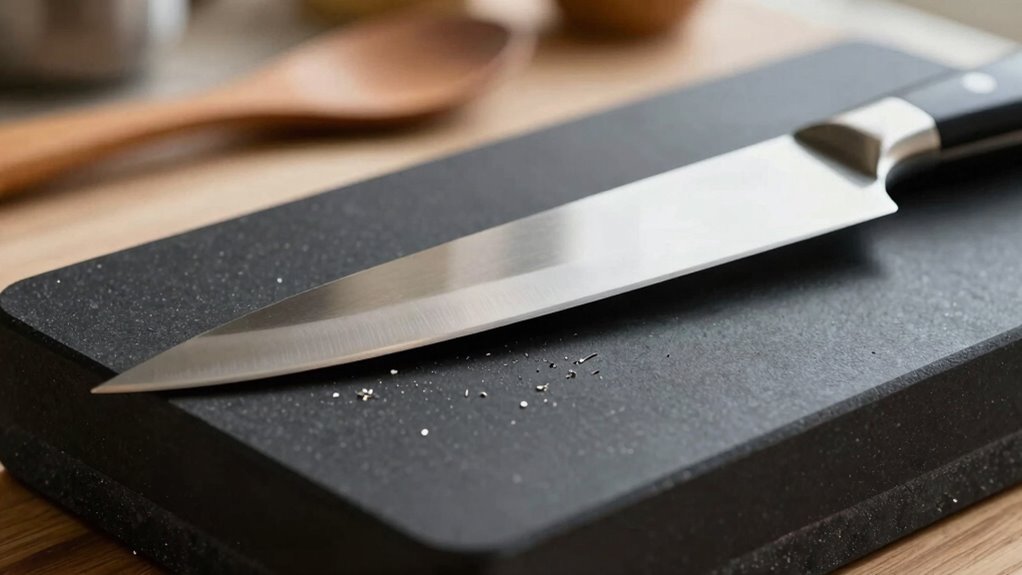

A sharp blade isn’t just about a fine edge — it’s about blade geometry, material properties, and proper technique working together. Sharpness means the ability to cut cleanly with minimal effort, which involves the right edge angle, steel hardness, and consistent maintenance. Over time, use causes tiny wear that dulls the edge. Knowing how to sharpen correctly and when to hone keeps your tools effective. If you keep exploring, you’ll discover how to achieve and maintain that perfect sharpness with confidence.
Key Takeaways
- Sharpness refers to the blade’s ability to cut cleanly with minimal force, influenced by edge angle and material microstructure.
- A truly sharp edge has a microscopic thinness and precise atomic arrangement that reduces friction and enhances cutting performance.
- Maintaining sharpness involves proper sharpening techniques, consistent angles, and avoiding over-sharpening that can weaken the blade.
- Material properties like grain size and microstructure determine how well a blade retains its sharpness over time.
- Regular honing, correct tool selection, and proper maintenance extend the effective sharpness of blades.
Japanese sharpening stone for knives
As an affiliate, we earn on qualifying purchases.
As an affiliate, we earn on qualifying purchases.
Understanding the Edge: What Does Sharp Really Mean?

Understanding the Edge: What Does Sharp Really Mean?
Have you ever wondered what truly makes a knife or tool sharp? It all comes down to blade geometry and edge angles. Blade geometry refers to the shape and thickness of the blade, which affects how the edge performs. A thinner blade with a precise edge angle can cut more easily and stay sharp longer. Edge angles are the angles formed at the very edge of the blade; smaller angles (around 15 degrees) create a sharper edge ideal for delicate cuts, while larger angles (around 20-25 degrees) offer more durability for tougher tasks. Understanding these aspects helps you grasp what “sharp” really means—an edge that’s finely honed, with the right geometry and angle for its intended use. Additionally, the material properties of the steel used in the blade influence how well it holds an edge over time. Recognizing the relationship between blade material and edge retention can help you select the best tools for your specific needs. Moreover, proper sharpening techniques are essential to maintaining that sharpness and ensuring the blade performs optimally. To achieve the best results, it’s important to understand how different sharpening stones and abrasives interact with various steel types. Understanding the role of steel composition can also guide you in choosing the right blade for durability and performance.
professional knife sharpening kit
As an affiliate, we earn on qualifying purchases.
As an affiliate, we earn on qualifying purchases.
The Science Behind a Sharp Edge
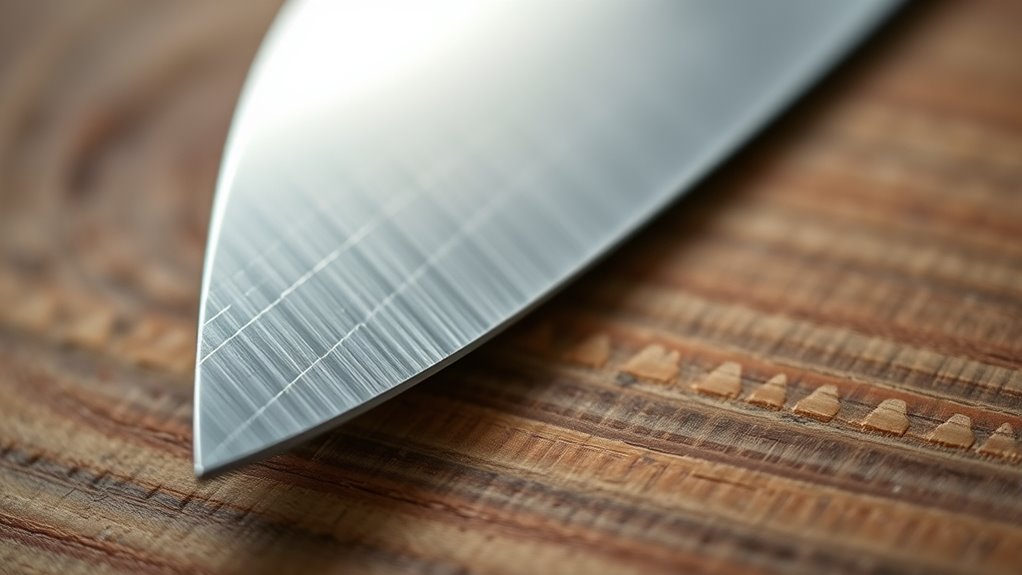
Your knife’s sharpness depends on the atomic structure of the steel, which determines how easily the edge can be refined. Friction during sharpening wears down the edge, affecting how long it stays sharp. Understanding these science basics helps you sharpen more effectively and maintain a lasting edge. Incorporating herbal remedies can also support hand health and reduce inflammation during frequent sharpening. Additionally, being aware of AI-powered virtual reality in learning can enhance your understanding of complex scientific concepts involved in sharpening techniques. Recognizing how material properties influence the steel’s durability can further improve your sharpening skills and extend the lifespan of your blades. Exploring soul sanctuaries can provide mental clarity and focus, enhancing your overall sharpening practice and patience. Studying cryptid mysteries can inspire curiosity about unseen forces and the importance of precision, which can translate into more mindful sharpening routines.
Atomic Structure of Steel
Ever wondered what makes steel capable of forming a razor-sharp edge? It all comes down to its atomic structure. Steel is an alloy primarily composed of iron atoms, with carbon and other elements added through steel alloying to enhance properties. The metal bonding within steel creates a crystalline lattice where atoms are tightly packed, giving it strength and hardness. When you sharpen steel, you’re actually influencing this atomic arrangement by removing material and exposing fresh surfaces. The arrangement of atoms determines how well the edge can hold a fine point without deforming. Understanding this atomic structure helps you appreciate why some steels sharpen more easily or hold an edge longer. It’s this complex atomic dance that ultimately defines what “sharp” really means at the microscopic level, much like the specialized magnification levels used by estheticians to achieve precision. Recognizing the atomic arrangement in different steel types can also guide you in selecting the best material for specific sharpening needs. Additionally, grain size plays a crucial role in how an edge forms and maintains its sharpness. In fact, microstructure influences how steel responds to sharpening and wear over time.
Friction and Edge Wear
Friction plays a crucial role in shaping how a knife’s edge wears over time, directly influencing its sharpness. As you use your knife, friction causes tiny bits of material to break away, gradually dulling the edge. The rate of wear depends on three factors:
- Material Hardness: Harder materials resist wear better, maintaining edge durability longer.
- Cutting Surface: Rough or abrasive surfaces increase friction, accelerating edge wear.
- Cutting Technique: Applying consistent, controlled pressure reduces unnecessary friction and preserves sharpness. Additionally, external conditions such as ambient temperature can influence how external conditions affect your blade’s wear over time. Understanding these elements helps you choose the right material and technique to optimize edge durability, which is also affected by frictional forces during use. Softer metals wear faster due to lower material hardness, while harder steels maintain their sharpness longer, balancing performance and longevity. Recognizing material properties can further help in selecting the best blade for specific tasks.
whetstone for kitchen knives
As an affiliate, we earn on qualifying purchases.
As an affiliate, we earn on qualifying purchases.
Common Myths About Sharpness
Many common beliefs about sharpening are actually myths that can lead beginners astray. Debunking myths helps you understand what truly matters when achieving a sharp edge. For example, some think that more sharpening always equals a better edge, but over-sharpening can damage your blade. Others believe that a very fine grit guarantees maximum sharpness, but the right angle and technique matter just as much. There’s also a misconception that sharpening is complicated or requires expensive tools—truth is, simple methods often work best for beginners. Recognizing sharpening misconceptions allows you to focus on proper technique and realistic expectations. By dispelling these myths, you set yourself up for consistent, safe, and effective sharpening progress.
electric knife sharpener for home use
As an affiliate, we earn on qualifying purchases.
As an affiliate, we earn on qualifying purchases.
Tools and Materials for Effective Sharpening
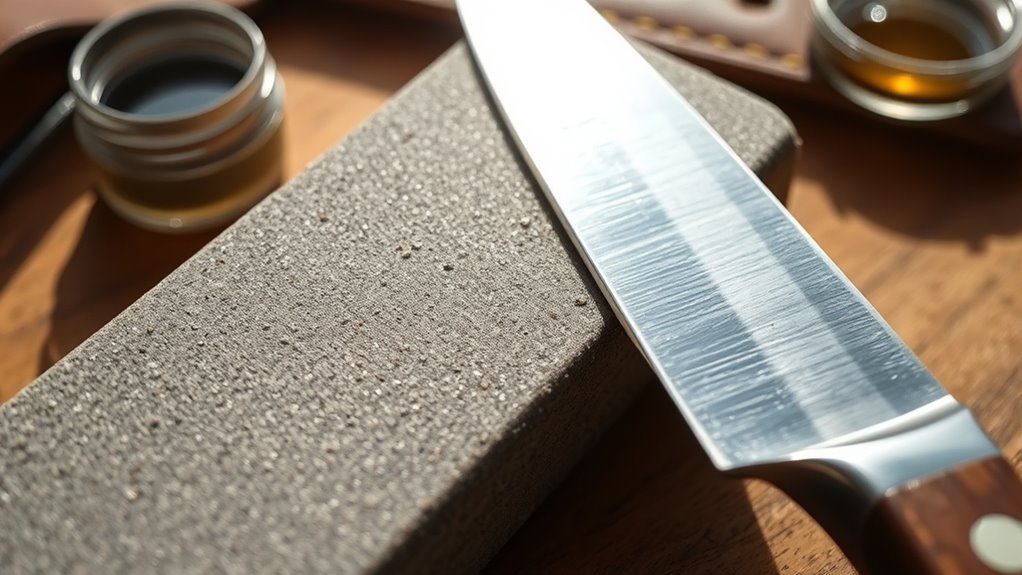
To sharpen effectively, you need the right tools and materials. Selecting essential sharpening tools and the appropriate grits will make the process smoother and more successful. Understanding which materials suit your needs helps you achieve a sharp edge efficiently. Incorporating proper tool comparisons can help you choose the most suitable equipment for your sharpening tasks.
Essential Sharpening Tools
Having the right tools is essential for achieving a sharp edge efficiently. Without proper tools, you risk falling for sharpening myths that lead to false expectations about edge durability. To get started, you’ll need:
- A sharpening stone or whetstone, which provides the precise abrasive surface for honing your blade.
- A honing guide or jig, ensuring consistent angles and preventing uneven edges.
- A leather strop or finishing stone, for polishing and refining the edge to maximize sharpness.
These tools help you sharpen confidently, avoiding common mistakes that diminish edge retention. Remember, proper tools don’t just sharpen; they maintain edge durability, so your blades stay sharp longer. Invest in quality, and you’ll see the difference in your results.
Suitable Materials and Grits
Choosing the right materials and grits is key to achieving a sharp, durable edge. The abrasive materials you select—such as sharpening stones, diamond plates, or honing steels—must suit your tool and skill level. Grit sizes vary from coarse to fine; coarse grits (around 200-400) remove material quickly for reshaping blades, while finer grits (800 and above) refine and polish the edge. Using the appropriate grit size guarantees efficient sharpening without damaging the blade. For dull or damaged edges, start with a coarser grit and progress to finer ones for a razor-sharp finish. Remember, the right combination of abrasive materials and grit sizes makes your sharpening more effective and results in longer-lasting, sharper tools. Incorporating proper setup and placement techniques can also enhance the sharpening process and protect your tools from unnecessary wear.
Step-by-Step Techniques to Achieve a Sharp Edge

Achieving a sharp edge involves a clear, step-by-step process that guarantees each stroke removes just enough material to refine the blade. First, position your blade at the correct angle—usually 15-20 degrees—ensuring consistent contact. Second, make controlled strokes across the sharpening stone, imagining you’re slicing through a thin layer of material. Third, check your progress frequently, testing the edge’s sharpness without over-sharpening, which can harm edge durability. Many sharpening myths suggest more passes mean a sharper edge, but in reality, proper technique and precision matter more. Focus on maintaining a steady angle and even pressure. This approach prevents unnecessary material removal, preserving the edge’s longevity and ensuring you don’t compromise its durability over time.
Maintaining and Honing Your Tools Over Time
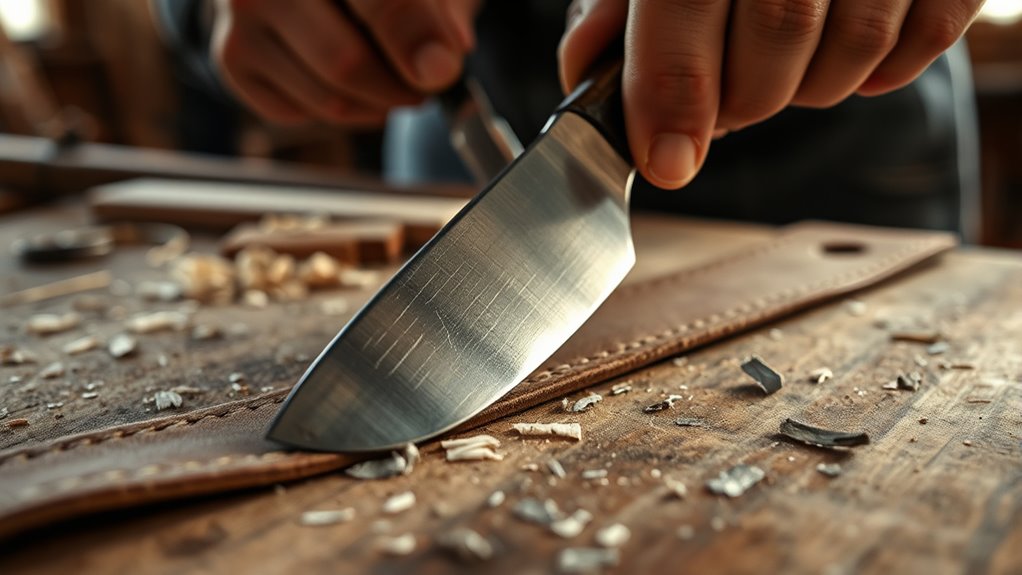
Once you’ve sharpened your tools to a fine edge, maintaining that sharpness over time becomes the next important step. Regular honing helps preserve blade ergonomics, ensuring your tools feel comfortable and controlled during use. To do this effectively, develop a routine that includes gentle touch-ups to realign the edge and remove minor dullness. Always prioritize sharpening safety—use stable surfaces, proper grips, and protective gear to avoid accidents. Keep your tools clean and dry to prevent rust and damage, which can compromise their performance. Remember, consistent maintenance not only extends the life of your tools but also keeps your work precise and safe. With proper care, your blades stay sharp, effective, and safe for all your projects.
Recognizing When It’s Time to Resharpen
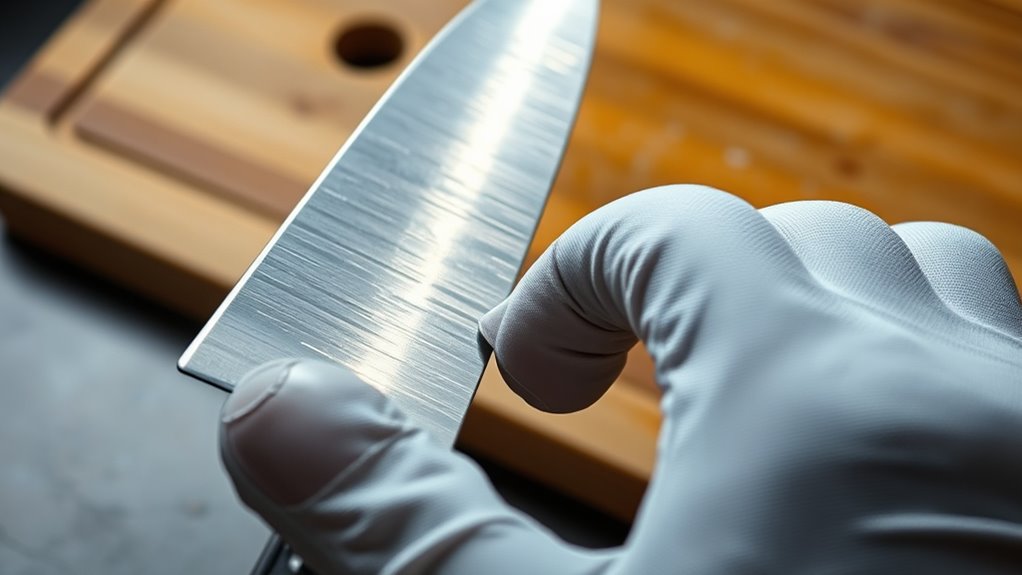
Knowing the signs that your tools need resharpening is essential to maintaining their effectiveness. As blades become dull, you might notice increased effort during use or uneven cuts. Blade corrosion can also cause dullness and weaken the edge, indicating it’s time to sharpen. Additionally, ergonomic handling may feel off—your tool might require more force or cause discomfort, signaling dullness. Look for these clues:
- You’re applying more pressure than usual.
- Cuts or slices are rough or uneven.
- The blade shows signs of rust or corrosion.
When these signs appear, it’s a clear reminder to resharpen. Regularly maintaining your tools ensures sharpness, prevents damage, and keeps your work safe and efficient.
Frequently Asked Questions
How Often Should I Sharpen My Tools for Optimal Performance?
You should sharpen your tools based on their usage and your maintenance schedule, typically every few uses or when you notice a decline in performance. For frequent use, a regular sharpening schedule—perhaps weekly—keeps them in top shape. Pay attention to the cutting edge, and don’t wait until they’re dull. Maintaining a consistent frequency enhances tool performance and prolongs their lifespan, ensuring you’re always ready for the task at hand.
Can Improper Sharpening Damage My Blades or Tools?
Improper sharpening can indeed damage your blades or tools, especially if you don’t focus on sharpening safety. You might cause blade corrosion or uneven edges, shortening their lifespan. To avoid this, use the correct technique, proper sharpening tools, and avoid excessive force. Always clean your blades after sharpening and store them safely. Being cautious guarantees you maintain a sharp edge without risking damage or corrosion.
What Are Signs That My Tool Needs Sharpening Beyond Dullness?
You’ll notice your tool needs sharpening if you see signs like edge degradation or uneven wear. Even if it’s not dull, a rough or chipped edge indicates it’s time for a touch-up. You might also feel increased resistance or hear a dull scraping sound when working. These signs mean your edge isn’t performing at its best, and sharpening will restore its precision and extend its lifespan.
Are There Different Sharpening Techniques for Various Blade Types?
Yes, different blade types require specific sharpening techniques. For example, precision knives often have a steeper blade angle and benefit from honing to maintain their edge, while broader blades like axes might need grinding. Understanding the blade’s material and purpose helps you choose between honing, which realigns the edge, and grinding, which reshapes it. Always match your technique to the blade’s design for ideal sharpness and longevity.
How Does Blade Material Affect Sharpening Methods and Results?
Your blade material substantially influences sharpening methods and results. For example, high-carbon steel blades are easier to sharpen and hold an edge longer, while stainless steel may require gentler techniques to prevent damage. Understanding blade composition helps you choose sharpening compatibility—like using diamond stones for harder materials or ceramic rods for delicate blades. Adapting your approach guarantees effective sharpening, prolongs blade life, and maintains ideal cutting performance.
Conclusion
Understanding what sharp really means helps you sharpen with purpose. Did you know that a properly sharpened tool can cut up to 80% more efficiently? Regular maintenance not only keeps your tools performing at their best but also extends their lifespan. By following these simple techniques, you’ll improve your skills and enjoy safer, cleaner cuts. Remember, a sharp edge isn’t just about precision — it’s about working smarter and more confidently every time.