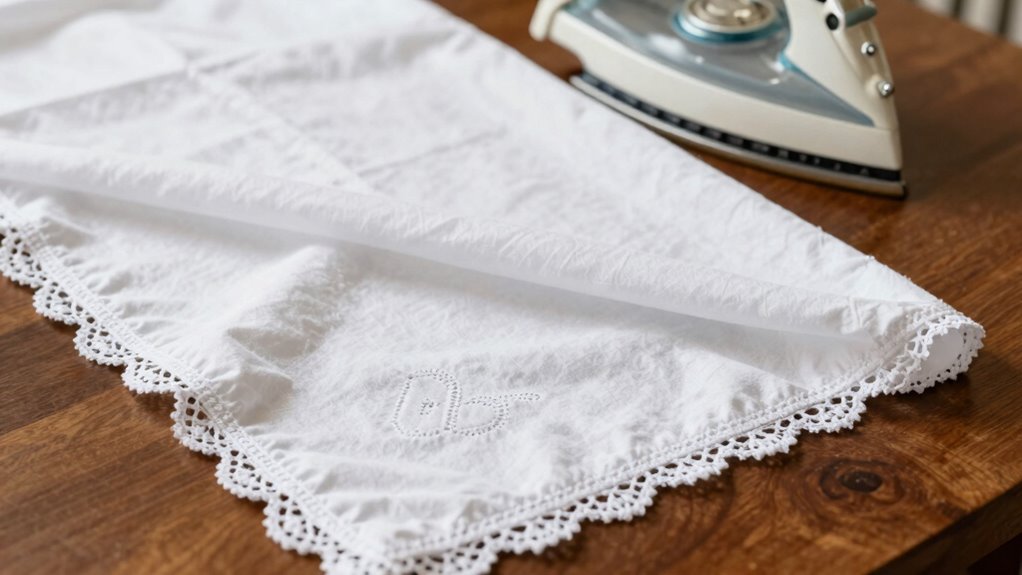

A pressing cloth is essential when you want to protect delicate fabrics, like silk or linen, from heat damage or shine. It helps distribute heat evenly, prevents sticking, and keeps your stitches and embroidery crisp. Use one anytime you’re ironing fragile or vintage textiles, layered projects, or garments prone to scorching. If you want to learn more about how a pressing cloth can keep your sewing projects looking professional, keep exploring these tips.

Get business pricing on tools and workshop supplies
- Business-only prices and quantity discounts
- Tax-exempt purchasing
- Multiple users, one account, clear invoices
Key Takeaways
- Pressing cloths protect delicate fabrics from direct heat, preventing damage like scorching or melting.
- They help maintain the appearance and shine of fabrics, ensuring a smooth, professional finish.
- Use a pressing cloth when pressing seams, embroidery, or layered projects to prevent puckering or distortion.
- They are essential for vintage, fragile, or heat-sensitive textiles to preserve fiber integrity.
- Pressing cloths distribute heat evenly, reducing the risk of unwanted shine or residue transfer.

A pressing cloth is a crucial tool that can make a significant difference when ironing delicate fabrics or intricate details. It acts as a barrier between the hot iron and your fabric, helping to prevent direct heat contact that can cause damage. When you’re working with fragile textiles like silk, linen, or synthetics, using a pressing cloth guarantees you avoid unwanted shine and scorching, preserving the fabric’s original look. This simple step can also protect the fabric’s fibers, maintaining their integrity and preventing breakage or thinning over time.
A pressing cloth protects delicate fabrics from heat damage, preserving their look and fiber integrity during ironing.
If you’re concerned about stitch preservation, a pressing cloth becomes even more necessary. When you press over seams, appliqués, or embroidery, direct heat can weaken stitches or cause them to flatten or distort. By placing a cloth between the iron and your work, you distribute heat more evenly, reducing the risk of damaging delicate stitches or causing puckering. This is especially important for heirloom sewing, quilting, or any project where stitch quality is critical. With a pressing cloth, you maintain the crispness of your seams and keep your embroidery looking fresh, ensuring your work remains professional and durable. Additionally, a pressing cloth helps prevent fabric sticking or melting, which can ruin your project.
In addition to protecting stitches, a pressing cloth helps boost fabric shine without risking damage. Many fabrics develop a beautiful sheen when pressed correctly, but applying heat directly can result in a dull, scorched appearance. Using a cloth ensures the heat is evenly distributed, enhancing the fabric’s natural luster without leaving shiny spots or marks. This is particularly beneficial for garments meant to look polished and well-maintained, where a glossy finish adds to the overall aesthetic. When you’re mindful about applying heat through a pressing cloth, you get a smooth, shiny surface that elevates the look of your finished piece.
You’ll find pressing cloths useful in a variety of sewing and ironing situations. For delicate silks, they prevent the fabric from sticking or melting. For layered projects, they keep the layers from shifting or sticking to the iron. When working on vintage or fragile textiles, a pressing cloth can be the difference between preservation and damage. It also helps in avoiding any transfer of dye or residue from the iron onto your fabric, keeping your project clean and vibrant. Proper fabric protection ensures your work stays looking professional and well-maintained over time. Additionally, using a pressing cloth can help prevent heat damage that occurs from direct contact with a hot iron, especially on delicate or heat-sensitive fabrics.
As an affiliate, we earn on qualifying purchases.
Frequently Asked Questions
Can Pressing Cloths Be Reused Multiple Times?
Yes, pressing cloths can be reused multiple times if you keep them clean and in good condition. They help prevent fabric dye transfer and protect delicate fabrics during ironing. After each use, inspect for stains or residue, and wash them gently if needed. Properly maintained pressing cloths guarantee effective delicate fabric care, reducing the risk of damage or color bleeding in your garments. Just make sure they stay free of dirt and oils.
What Materials Are Best for Pressing Cloths?
Think of pressing cloths as your secret weapon, much like a knight’s shield. The best materials for them are tightly woven natural fabrics like cotton or linen, which offer durability and heat resistance. These fabric types withstand repeated use and washing without losing their effectiveness. For long-lasting performance, choose high-quality, durable materials that can handle the heat and pressure, ensuring your delicate fabrics stay protected and pressed to perfection.
How Do I Clean My Pressing Cloths Properly?
To clean your pressing cloths properly, start by checking their fabric care labels. Most can be hand-washed with mild detergent and warm water, then air-dried. Avoid using harsh chemicals or bleach, as they can damage the material. Regular cleaning keeps your pressing cloths effective and prolongs their lifespan. Incorporate these fabric care tips into your ironing routine to guarantee smooth, professional results every time.
Are Pressing Cloths Necessary for All Fabrics?
Pressing cloths aren’t necessary for all fabrics, but they’re vital for delicate or easily scorched materials like silk, satin, or lace. Using a pressing cloth helps protect your fabric from direct heat and prevents shiny marks, improving your fabric care and ironing techniques. For sturdier fabrics like cotton or linen, you can often iron directly without a cloth. Always assess each fabric’s needs to avoid damage and guarantee a crisp, professional finish.
Can Pressing Cloths Prevent Fabric Shine or Scorch Marks?
Yes, pressing cloths can prevent fabric shine or scorch marks. They act as a barrier, offering fabric protection during ironing. By using proper ironing techniques with a pressing cloth, you distribute heat evenly and avoid direct contact, which helps maintain your fabric’s texture and color. This simple step is especially useful for delicate or shiny fabrics, ensuring they stay looking their best without damage.
As an affiliate, we earn on qualifying purchases.
Conclusion
So, next time you’re about to iron that delicate silk or precious heirloom, remember: a pressing cloth isn’t just a fancy accessory—it’s your secret weapon against disaster! Without it, you risk turning your pristine fabric into a scorched, unrecognizable mess faster than you can say “wrinkle-free.” Don’t leave your favorite garments to chance—grab that cloth and keep your clothes looking flawless, shiny, and perfectly pressed. Trust me, your wardrobe will thank you!
As an affiliate, we earn on qualifying purchases.
As an affiliate, we earn on qualifying purchases.
Fall yard work Picks
leaf blowers
As an affiliate, we earn on qualifying purchases.