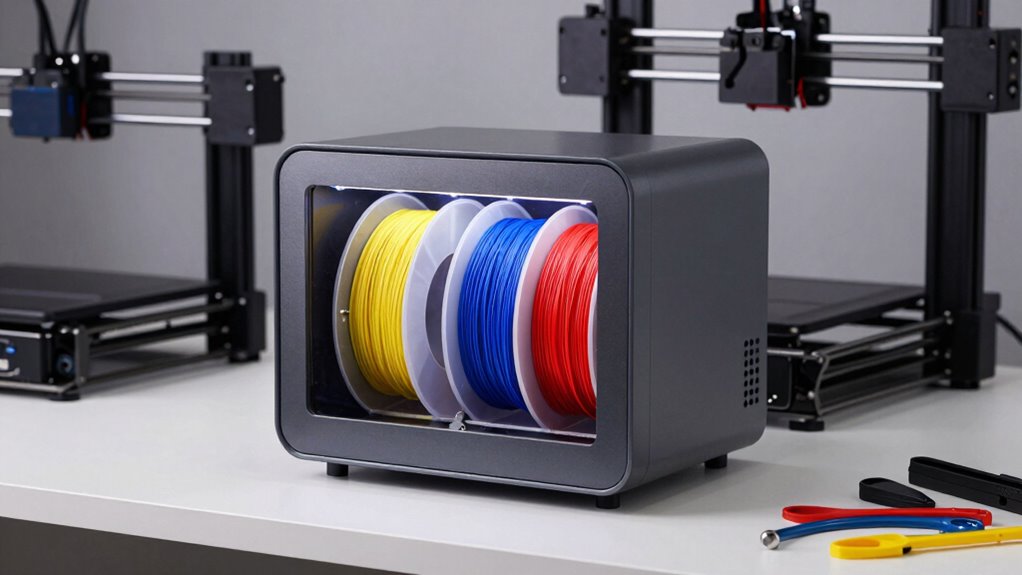

A filament dryer can matter more than a printer upgrade because it directly tackles a common cause of print failures: moisture. Moist filament leads to bubbling, stringing, weak layers, and surface issues, regardless of your printer’s capabilities. Removing excess moisture guarantees consistent extrusion and better surface finishes. By controlling humidity before printing, you reduce troubleshooting time and material waste. Keep going to discover how mastering moisture control can truly enhance your 3D prints.

Get business pricing on tools and workshop supplies
- Business-only prices and quantity discounts
- Tax-exempt purchasing
- Multiple users, one account, clear invoices
Key Takeaways
- Moisture causes filament defects that upgrades can’t directly fix, making drying more impactful.
- Proper filament drying enhances print quality more effectively than hardware modifications.
- Moisture control prevents common problems like bubbling, stringing, and poor layer adhesion.
- Using a filament dryer reduces failed prints and filament waste, improving overall efficiency.
- Long-term filament preservation and consistent results rely heavily on effective moisture management.

If you’ve ever experienced failed 3D prints or inconsistent results, you might not realize that moisture in your filament could be the culprit. Moisture control is often overlooked, but it plays a crucial role in achieving high-quality prints. When filament absorbs humidity from the air, it becomes brittle, causes extrusion issues, and leads to defects like bubbling, stringing, or poor layer adhesion. A simple filament dryer can significantly improve your printing outcomes by removing this excess moisture, ensuring your filament remains in optimal condition. Proper filament storage is essential to prevent moisture buildup, but even with good storage habits, a filament dryer offers an extra layer of protection. It keeps the filament dry during printing sessions, especially if you’re working in humid environments or on long projects.
Moisture in filament causes print defects; a dryer ensures optimal performance and flawless results.
Many users underestimate how much moisture impacts print quality. When filament is moist, it doesn’t melt uniformly, which results in inconsistent extrusion. You might notice your prints have rough surfaces, weak layers, or unexpected failures. Investing in a filament dryer isn’t just about fixing these issues; it’s about maintaining consistent quality over time. Even premium filaments can become compromised if stored improperly or left unprotected from humidity. A filament dryer ensures that moisture doesn’t sneak in during extended storage periods, and it provides a controlled environment for drying filament just before use. Recognizing the importance of moisture control can make a significant difference in your overall printing success. Incorporating proper drying techniques into your workflow can help prevent many common printing problems caused by moisture. Additionally, understanding the effects of humidity on filament performance can help you better troubleshoot printing issues.
While upgrading your 3D printer can seem tempting, a filament dryer offers a more immediate and tangible benefit: it directly improves the filament’s performance. You’ll see fewer failed prints, less wasted filament, and better surface finishes. It’s a smart upgrade that targets the root cause of many print problems—moisture. Plus, it complements good filament storage practices, making your entire 3D printing process more reliable. When you regularly dry your filament, you reduce the risk of clogs, inconsistent flow, and layer separation, which are common symptoms of moisture-related issues. Moreover, humidity fluctuations can further exacerbate moisture absorption, underscoring the importance of consistent filament drying routines. Recognizing how moisture absorption affects filament can help you develop more effective preventative measures.
In the end, a filament dryer isn’t just an accessory; it’s an essential tool for anyone serious about 3D printing. It enhances filament performance, preserves filament quality, and ultimately saves you time and material. Instead of pouring money into complex printer upgrades that may only marginally improve results, investing in moisture control through a filament dryer often yields more significant, immediate benefits. It guarantees your filament stays dry, and your prints come out flawless—making it a smarter, more effective upgrade for your 3D printing setup.
As an affiliate, we earn on qualifying purchases.
Frequently Asked Questions
How Does a Filament Dryer Affect Print Layer Adhesion?
A filament dryer improves print layer adhesion by ensuring your filament is thoroughly dried, preventing moisture-related issues. Proper filament storage and drying techniques eliminate humidity that causes bubbles and weak bonds between layers. When your filament is dry, it flows smoothly, sticking better during printing. This results in stronger, more precise layers, reducing warping and improving overall print quality. Using a filament dryer is key to consistent, high-quality 3D prints.
Can a Filament Dryer Prevent Filament Moisture-Related Print Failures?
Think of a filament dryer as your secret weapon against moisture-related print failures—like a modern-day alchemist. By improving filament storage and moisture control, it prevents issues like bubbling, stringing, or weak layer adhesion. Yes, it can save your prints from disaster and guarantee consistent quality. With a dryer, you proactively combat moisture, making your prints more reliable and reducing time spent troubleshooting.
Is a Filament Dryer Necessary for All Filament Types?
A filament dryer isn’t necessary for all filament types, but it’s highly beneficial for materials sensitive to moisture, like nylon and PETG. Proper filament storage and moisture control help prevent print failures, warping, and stringing. If you work with hygroscopic filaments regularly, investing in a filament dryer can improve print quality and consistency. For less moisture-sensitive filaments like PLA, it’s less critical but still advantageous for ideal results.
How Much Does a Filament Dryer Improve Print Surface Quality?
A filament dryer considerably improves print surface quality by reducing moisture-related issues like bubbling, stringing, and poor adhesion. When you focus on filament storage and moisture control, you keep your filament dry, resulting in cleaner, smoother prints. Using a filament dryer enhances these benefits, ensuring your filament stays moisture-free, which directly translates to better surface finish and consistent print quality. It’s a worthwhile upgrade for achieving professional results.
What Are the Long-Term Cost Benefits of Using a Filament Dryer?
Using a filament dryer can save you a fortune over time. It drastically reduces material waste by preventing moisture-related print failures, extending your filament’s lifespan and minimizing replacements. Better material storage means fewer ruined spools and consistent print quality, which cuts costs and time. In the long run, investing in a filament dryer pays for itself by making your filament last longer and ensuring every print is perfect, saving you money and frustration.
As an affiliate, we earn on qualifying purchases.
Conclusion
Investing in a filament dryer can greatly enhance your 3D printing experience, often more than just upgrading your printer. Did you know that moisture in filament can cause up to 50% more print failures? By keeping your filament dry, you guarantee better layer adhesion, smoother finishes, and fewer print defects. So, before splurging on the latest printer model, consider how a simple filament dryer could make your prints more reliable and save you time and frustration in the long run.
3D printer filament storage container
As an affiliate, we earn on qualifying purchases.
As an affiliate, we earn on qualifying purchases.
As an affiliate, we earn on qualifying purchases.
Halloween Picks
halloween
As an affiliate, we earn on qualifying purchases.