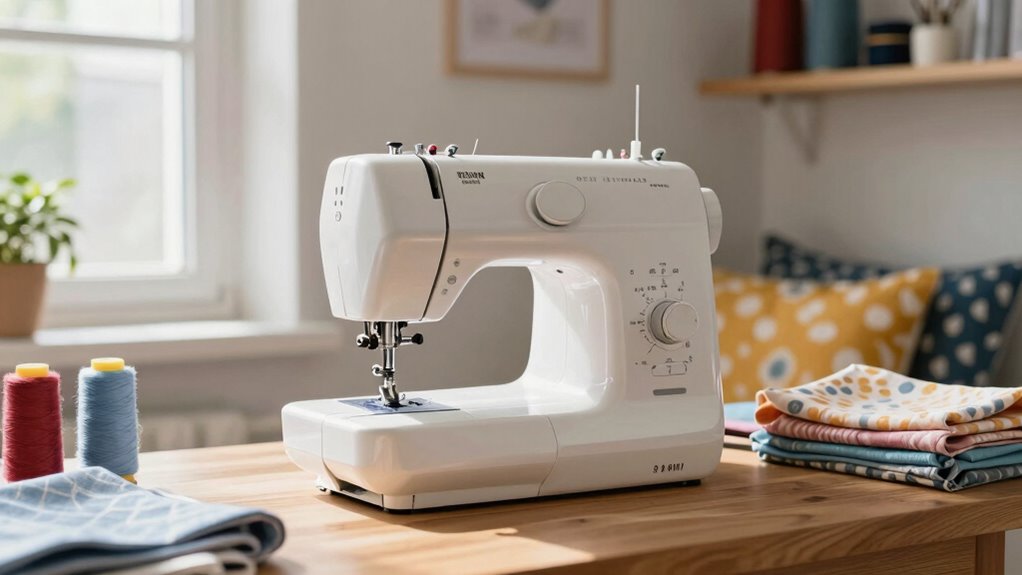
The size of sewing machine you need for your craft room depends on your projects and available space. If you mainly do small tasks like mending or crafts, a compact, lightweight machine will work well. But for quilting or upholstery, go for a larger, sturdier model that offers more power and stability. Consider your workspace size and future project plans, and you’ll find the perfect fit. Keep exploring to discover more tips for choosing the right machine.
Key Takeaways
- Choose a compact machine for small projects and portability, or a larger one for quilting and heavy-duty tasks.
- Consider available space and storage when selecting machine size to ensure comfortable operation.
- Match machine size to project scope: small for mending, large for quilting, and heavy-duty for thick fabrics.
- Prioritize features like adjustable tension and needle size based on your project types and skill level.
- Balance budget, eco-conscious practices, and workspace constraints to select the most suitable machine size.
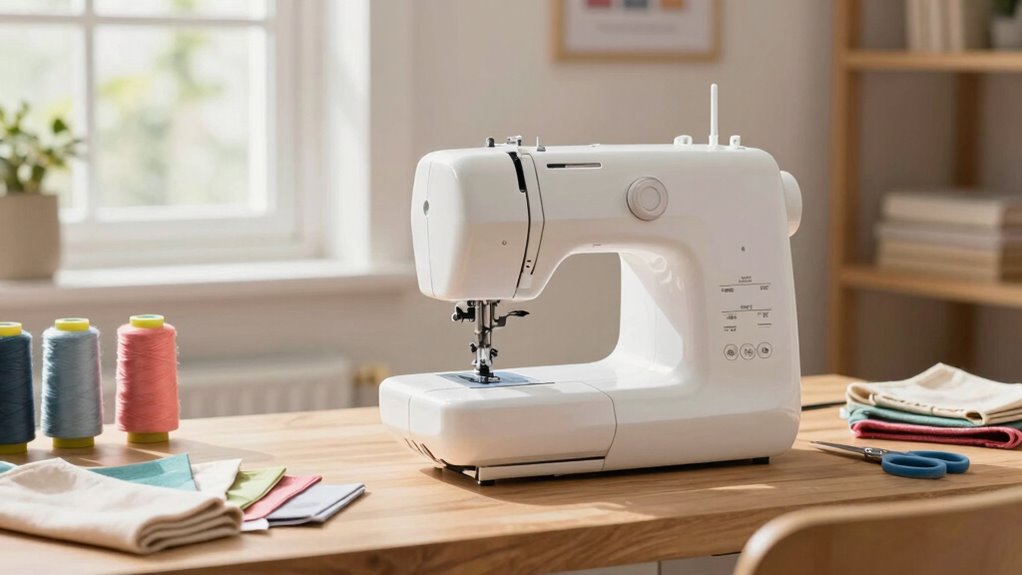
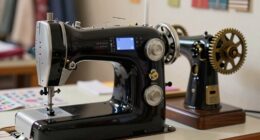
Choosing the right sewing machine size for your home craft room depends on your project needs and available space. If you’re just starting out or mainly working on small projects like mending or crafts, a compact, lightweight machine might be ideal. These machines are easy to store, transport, and typically offer enough features for basic sewing tasks. On the other hand, if you plan to tackle larger projects such as quilting or upholstery, a bigger, sturdier machine gives you the power and durability you need. It’s important to evaluate not just size but also how the machine will fit into your workspace, making sure you have enough room to operate comfortably.
Choose a sewing machine size based on your space and project needs for optimal comfort and performance.
When selecting a machine, pay attention to features related to thread tension and needle size. Thread tension is essential because it affects how your stitches look and how well your fabric is held together. A machine with adjustable thread tension allows you to fine-tune your stitches for different fabrics and thread types, which becomes especially important as you work on diverse projects. Proper tension prevents puckering and skipped stitches, guaranteeing your finished pieces look professional. Needle size is equally important because it influences the quality of your stitches and the range of projects you can undertake. Smaller needles are suitable for delicate fabrics, while larger needles provide strength for heavier materials. Some machines come with adjustable needle positions, giving you more control depending on your project.
Considering your project scope, a versatile machine with a range of needle sizes and tension settings can save you time and frustration. If you’re working on intricate projects, look for a machine that offers precise tension control and a variety of needle options. For beginner or hobbyist sewing, a machine with automatic tension adjustment can simplify your work and help you focus on the creative aspect rather than technical troubleshooting. Keep in mind that larger machines often have more advanced features, but they can also be bulkier and more expensive. Smaller machines tend to be more straightforward but may lack some of the bells and whistles that make complex projects easier. Additionally, understanding the importance of biodiversity in our environment can inspire you to create sustainable and eco-friendly sewing practices, such as repurposing fabrics to reduce waste. Incorporating eco-conscious practices into your sewing routine can further enhance the sustainability of your projects and contribute positively to the environment. Moreover, selecting a machine that aligns with your space constraints will help you maintain an organized and efficient craft room.
compact sewing machine for small projects
As an affiliate, we earn on qualifying purchases.
As an affiliate, we earn on qualifying purchases.
Frequently Asked Questions
Can I Use a Sewing Machine for Quilting Projects?
Like a painter with a broad brush, you can definitely use a sewing machine for quilting projects. Just choose one with a sturdy build, a good presser foot, and sufficient throat space. It’ll handle quilt batting and intricate quilting patterns with ease. Keep in mind, a machine with quilting-specific features will make your work smoother and more enjoyable, turning your quilting dreams into beautiful reality.
How Loud Is a Typical Home Sewing Machine?
A typical home sewing machine produces moderate noise, usually around 70-80 decibels, comparable to a vacuum cleaner. Machine noise levels vary, but you can minimize sound with sewing machine soundproofing techniques like adding mats or enclosures. If noise is a concern, consider quieter models designed for peaceful operation. This way, you can enjoy your projects without disturbing others and keep your craft space comfortable.
Do Sewing Machines Require Regular Maintenance?
You might find it surprising, but sewing machines do require regular maintenance to keep running smoothly. Follow a maintenance schedule recommended by sewing machine brands, including cleaning and oiling parts. Neglecting routine care can lead to issues down the line. By staying proactive, you guarantee your machine operates efficiently, and your projects stay on track. Consistent maintenance becomes a quiet, essential part of your crafting journey, almost like a hidden partner.
Are Portable Sewing Machines Suitable for Heavy Fabrics?
Portable sewing machines aren’t ideal for heavy fabrics because they usually lack the heavy duty performance needed. They’re great for lightweight fabrics and quick projects, but when you tackle thick or dense materials, you might find them struggling or even jamming. If you frequently work with portable fabrics or heavy-duty projects, consider investing in a more robust, full-sized machine designed specifically for durability and power.
What Safety Features Should I Look for in a Sewing Machine?
You should look for safety features like safety switches that automatically turn off the machine if it jams or overheats, preventing accidents. Also, guarantee the sewing machine has adjustable thread tension to avoid snapping or uneven stitches, which can cause frustration or injury. These features help you work safely and efficiently, giving you peace of mind while creating your projects. Always prioritize safety to enjoy sewing without worries.
heavy-duty sewing machine for quilting
As an affiliate, we earn on qualifying purchases.
As an affiliate, we earn on qualifying purchases.
Conclusion
Ultimately, choosing the right sewing machine depends on your crafting needs and space. For example, Sarah, a hobbyist, started with a compact machine for small projects but upgraded to a larger model as her skills grew. If you plan to tackle big quilts or heavy fabrics, a mid-sized or heavy-duty machine is your best bet. Remember, selecting the right size guarantees your craft room stays functional and enjoyable, making every project a pleasure.
adjustable tension sewing machine
As an affiliate, we earn on qualifying purchases.
As an affiliate, we earn on qualifying purchases.
sewing machine for delicate fabrics
As an affiliate, we earn on qualifying purchases.
As an affiliate, we earn on qualifying purchases.