Your thread keeps breaking mainly because of tension issues, incorrect settings, or using poor-quality thread. When tension is too tight or too loose, it strains the thread and weakens stitches, causing breakage. Using the wrong thread or incompatible needle can also lead to problems. Regular machine maintenance and choosing the right supplies are essential. Keep these tips in mind, and you’ll discover how to fix this annoying problem for good.
Key Takeaways
- Incorrect tension settings cause uneven stitches and weaken thread fibers, leading to frequent breakage.
- Using poor-quality thread or mismatched thread and fabric increases stress and increases the risk of snapping.
- Improper needle size or type can cause skipped stitches, fraying, and tension issues that break thread.
- Lack of regular machine maintenance results in tension imbalance and operational problems that damage thread.
- Sewing at excessive speeds or with improper tension stresses the thread, causing it to weaken and break easily.
Common Causes of Thread Breakage

One of the most common reasons your thread keeps breaking is due to improper tension settings. When your tension is too tight or too loose, the thread experiences unnecessary stress, leading to breakage. Additionally, choosing the right thread color can affect your sewing experience; mismatched or low-quality threads tend to snap more easily. Sewing speed also plays a role—sewing too fast can cause tension issues or fraying, especially if your machine isn’t adjusted properly. Always match your thread type and color to your fabric, and test your tension before starting your project. Maintaining a steady sewing speed helps prevent sudden tension fluctuations that can weaken the thread. Proper machine maintenance also plays a crucial role in preventing thread breakage and ensuring smooth sewing performance. Regularly checking your sewing machine’s tension settings ensures consistent stitch quality and minimizes thread breakage. Ensuring proper ventilation of your workspace helps maintain optimal machine performance and prevents overheating that could contribute to tension problems. Incorporating quality thread options can further reduce the likelihood of breakage by providing greater durability and resistance to fraying. Proper machine adjustment is essential for maintaining consistent tension and preventing thread issues, especially when using different fabric types.
The Impact of Incorrect Tension Settings

When your tension isn’t set correctly, it can cause your thread to break frequently. You’ll notice signs like uneven stitches or skipped areas, which indicate tension issues. Proper tension calibration is essential because it directly affects thread quality and the overall durability of your sewing. Additionally, maintaining the right tension settings can help prevent damage to your sewing machine and extend its lifespan. Regularly checking and adjusting the machine’s tension can ensure consistent stitching and reduce unnecessary wear. Understanding the different types of tension adjustments can further help troubleshoot specific sewing problems. Utilizing Suprem fabric for your projects can also provide more consistent results due to its durability and quality, reducing the likelihood of tension-related issues. Proper maintenance of your machine, including understanding air purifier maintenance dos and don’ts, can also contribute to smoother operation and fewer sewing disruptions.
Proper Tension Calibration
Proper tension calibration is crucial because incorrect tension settings can cause your sewing thread to break frequently. When your thread tension is off, it puts unnecessary stress on the thread, leading to breakage and uneven stitches. To avoid this, you need to regularly check and adjust your machine’s tension settings. Use calibration techniques like testing on scrap fabric to find the right balance where the thread interlocks smoothly without puckering or looseness. Start by tightening or loosening the upper thread tension dial gradually. Keep in mind that tension adjustments might vary depending on the fabric and thread type. Additionally, paying attention to thread quality can significantly impact the frequency of breakage and the overall sewing experience. Regularly inspecting and maintaining your sewing machine components ensures consistent tension and reduces thread issues. Understanding paint sprayer zone concepts can help you better maintain your equipment for optimal sewing results. Consistently calibrating your tension ensures smoother sewing, reduces thread breakage, and results in cleaner, professional-looking stitches. Incorporating essential oils for maintenance into your routine can also promote the longevity of your machine by preventing rust and buildup.
Signs of Tension Issues
Incorrect tension settings often produce obvious signs that your machine needs attention. If your thread tension is too tight, you may notice puckering or gathering, especially on fabrics with high elasticity. Conversely, loose tension can cause uneven stitches, loops on the underside, or skipped stitches. Fabric elasticity plays a key role here; stretchy fabrics are more sensitive to tension issues, revealing problems more quickly. When tension is off, the stitches won’t sit properly, and your seams may look uneven or distorted. You might also see thread breakage or excessive thread buildup on the bobbin area. These signs indicate that your tension needs adjustment to match your fabric’s elasticity, ensuring smooth, even stitches and preventing breakage. Proper tension adjustment is essential for achieving professional-looking results and preventing damage to your fabric or machine.
Effects on Thread Quality
Poor tension settings can directly damage your thread quality, leading to weaker stitches and increased breakage. When tension is too tight, it can cause thread color to fade or look uneven, making your project less professional. Conversely, loose tension results in loose stitches that can unravel easily. Different sewing machine brands may respond differently to tension adjustments, so it’s essential to calibrate properly for each machine. Incorrect tension also causes unnecessary stress on your thread, weakening its fibers over time. This deterioration makes the thread more prone to snapping during sewing, especially if you’re using delicate or specialty threads. Maintaining the correct tension ensures your thread remains strong, vibrant, and durable, giving you consistent, high-quality results with every project. Additionally, understanding how thread tension affects overall sewing quality can help prevent frequent breakage and improve your craftsmanship. Being aware of the effects of tension on thread integrity emphasizes the importance of proper machine setup, especially considering the different precious metals used in various investment options. Proper tension calibration can also help prevent issues caused by cryptid sightings, which can sometimes lead to distractions or misinterpretations of sewing results in a busy workspace.
Choosing the Right Thread for Your Fabric
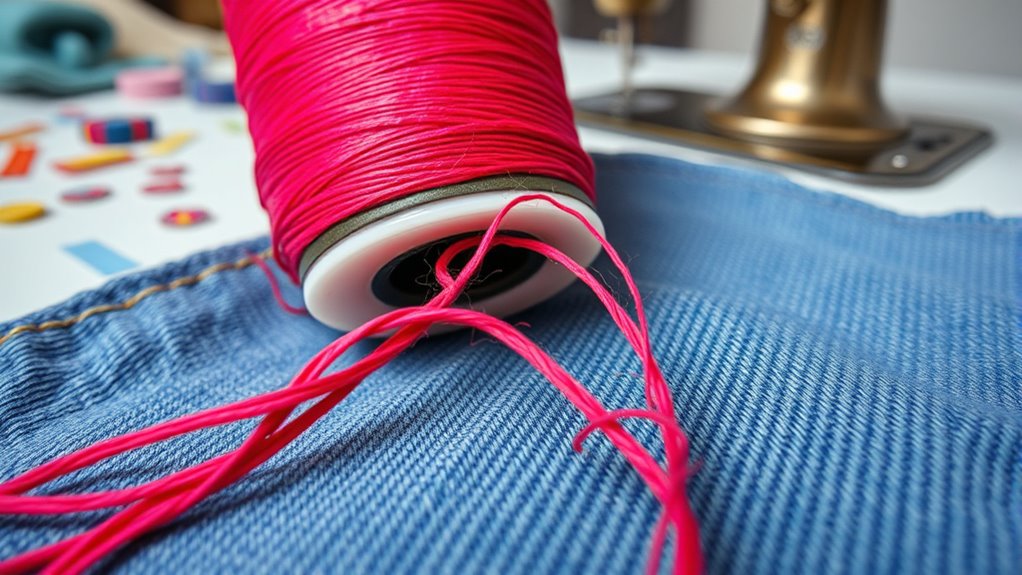
Choosing the right thread starts with matching it to your fabric’s type to prevent breakage and uneven seams. You also want a thread with enough strength and durability for your project’s needs, especially for heavy or stress-prone fabrics. Additionally, employing color matching techniques guarantees your stitches blend seamlessly, giving your finished piece a professional look. Moreover, understanding the importance of fiber composition can help select a thread that complements your fabric’s material for longer-lasting results. Recognizing the influence of thread tension ensures smooth stitching and reduces the risk of breakage during sewing. Being aware of the Sun’s temperature and its energy output can also inspire the choice of high-quality, heat-resistant threads for specific applications. Incorporating holistic health practices into your sewing routine, such as mindful stitching and regular breaks, can enhance your focus and craftmanship.
Fabric Compatibility Matters
Since different fabrics respond best to specific types of thread, selecting the right one is vital for a durable and professional-looking seam. For stretchy fabrics, choose threads with high elasticity to accommodate fabric stretch without breaking. For delicate or lightweight fabrics, use fine, smooth threads to prevent puckering. Heavy fabrics require strong, thick threads to withstand stress. Here’s a quick comparison:
| Fabric Type | Recommended Thread Characteristics | Examples |
|---|---|---|
| Stretch | High thread elasticity, flexible | Lycra, spandex |
| Delicate | Fine, smooth, low bulk | Chiffon, silk |
| Heavy | Strong, thick, durable | Denim, canvas |
Matching fabric stretch with thread elasticity ensures seamless sewing and prevents thread breakage.
Thread Strength and Durability
Selecting the right thread strength is essential to guarantee your sewing holds up under stress and wear. You want a thread that matches your fabric’s weight and anticipated use, ensuring durability without unnecessary bulk. When choosing thread color, pick a shade that blends seamlessly or contrasts intentionally, depending on your design. This not only enhances aesthetics but also helps hide weak spots or breaks. Trust reputable thread branding, as quality brands often produce stronger, more consistent threads that resist breaking and fraying. Avoid cheap or generic options that may lack durability. Strong, durable thread will keep your stitches secure through washing and daily use, preventing breakage and ensuring your project lasts. Always select a thread suited to your fabric’s demands for the best results.
Color Matching Techniques
Matching your thread color to your fabric is key to achieving a polished, professional look. When selecting thread, consider color harmony to blend seamlessly or create deliberate visual contrast for emphasis. To do this effectively, match your thread with the fabric’s dominant hue or choose a shade slightly darker or lighter for subtlety. For bold contrast, pick a color that stands out against your fabric. Use this table to guide your choice:
| Fabric Color | Thread Match | Visual Effect |
|---|---|---|
| Light Blue | Same or slightly darker | Soft, blended look |
| Dark Red | Same or contrasting | Bold, statement |
| Neutral Beige | Same or slightly lighter | Subtle, seamless |
| Bright Yellow | Contrasting for pop | Eye-catching, vibrant |
Balancing color harmony and contrast enhances your project’s overall appearance.
The Importance of Proper Needle Selection

Choosing the right needle is essential because it directly affects your sewing machine’s performance and the quality of your stitches. Selecting the correct needle size ensures smooth fabric penetration and prevents thread breakage. For example, using a too-small needle with thick thread can cause skipped stitches or breakage, while a large needle with delicate thread might damage the fabric. Also, consider the thread color; a needle that matches your thread enhances tension and reduces stress on the thread. Proper needle selection allows your machine to sew evenly without pulling or fraying your thread. Always match your needle size to both your fabric type and thread weight. Doing so helps prevent common issues like thread breakage, skipped stitches, and uneven seams, ensuring a professional finish.
How Thread Quality Affects Durability
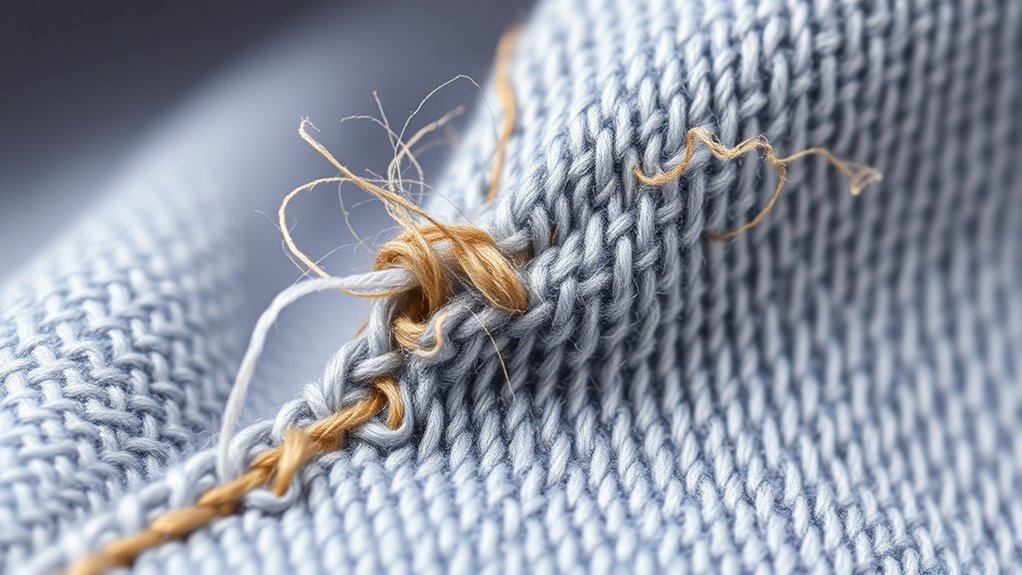
The quality of your thread directly impacts how durable your finished project will be. High-quality thread resists breaking, fraying, and fading, ensuring longevity. Poor-quality thread can lead to weak seams and frequent breaks. Keep in mind that:
Using high-quality thread ensures your project’s durability and long-lasting seams.
- Thread color matters; matching it properly prevents weakening over time.
- Using thread with consistent thickness avoids tension issues.
- High-quality thread withstands faster sewing speeds without snapping.
- Better thread resists abrasion, reducing wear on the stitches.
Choosing good thread helps you maintain even tension and prevents breakage during sewing. It also ensures your project stays intact longer, even with frequent washing or use. Remember, investing in quality thread saves you time and effort in the long run by providing stronger, more durable stitches.
The Role of Machine Maintenance and Cleaning
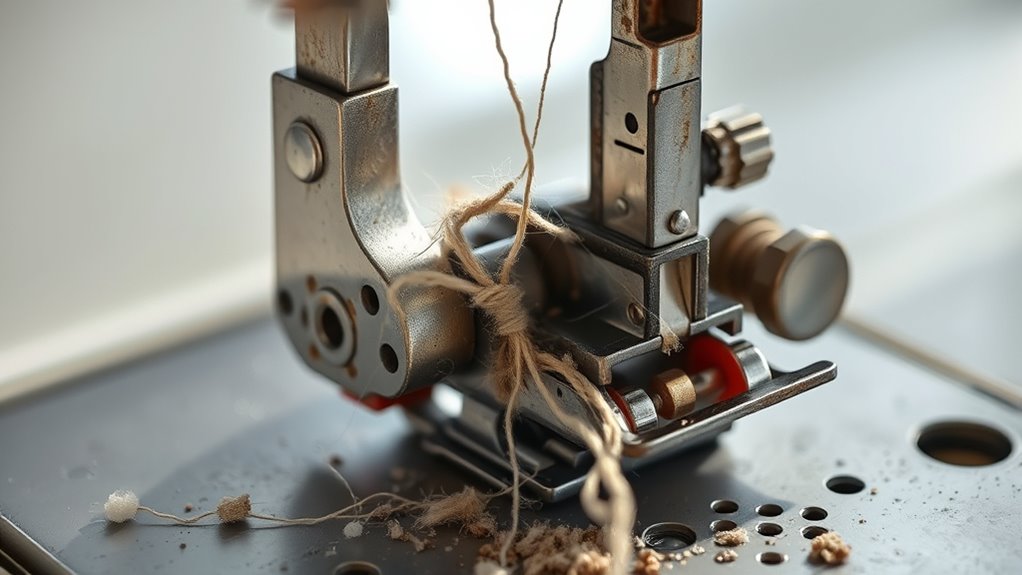
Regularly maintaining and cleaning your sewing machine is essential for preventing thread breakage. Proper machine lubrication keeps moving parts functioning smoothly, reducing friction that can cause tension issues and breakage. Make sure to follow your machine’s manual for lubrication intervals and use the correct oil. Additionally, keeping your tools sharp, like scissors and needles, ensures clean cuts and smooth fabric handling, minimizing stress on your thread. Regular cleaning removes lint, dust, and fabric fibers that can clog mechanisms and interfere with thread tension. Check and replace worn parts promptly to avoid unnecessary strain on the machine. Consistent maintenance, including lubrication and tool sharpening, keeps your machine running efficiently, preventing the tension problems that often lead to broken threads.
Tips for Preventing Future Thread Breaks

To prevent future thread breaks, it’s important to pay close attention to your sewing technique and machine setup. Proper thread storage helps keep your thread in good condition, preventing weakening or tangling. Be mindful of environmental factors like humidity and temperature, which can affect thread strength and tension. To minimize breaks, consider these tips:
- Store thread in a cool, dry place away from sunlight
- Use high-quality thread suited for your fabric and machine
- Avoid pulling or stretching thread during threading or sewing
- Regularly check and adjust your machine’s tension settings
Frequently Asked Questions
Can Environmental Factors Influence Thread Strength and Breakage?
Yes, environmental factors can influence thread strength and breakage. Moisture impact is significant; high humidity weakens thread quality by causing swelling or mold, while dry conditions can make threads brittle. Temperature fluctuations also stress threads, making them more prone to breaking. To prevent issues, store your threads in a cool, dry place and choose high-quality threads suited for your environment. Proper storage and selecting good thread quality help maintain strength.
How Does Machine Speed Affect Thread Durability?
Oh, because faster machines magically make threads immortal, right? In reality, cranking up your speed skyrockets thread tension, risking breakage. You need precise machine calibration to keep tension consistent; otherwise, your thread’s dignity suffers. Push too hard, and your thread rebels—snaps mid-suture. So, slow down a bit, fine-tune your equipment, and let the thread do its job without turning it into a breakage drama queen.
Are There Specific Storage Tips to Prolong Thread Lifespan?
To prolong your thread lifespan, focus on proper thread storage and organization. Store threads in a cool, dry place away from sunlight to prevent weakening. Use airtight containers or sealed bags to keep moisture out and avoid tangling. Organize your thread spools by color and size to make it easier to find and manage. Proper thread storage and organization guarantee your threads stay strong and ready for your next project.
What Are Signs of a Worn-Out or Damaged Needle?
You’ll notice signs of a worn-out or damaged needle when the thread tension becomes inconsistent, causing skipped stitches or bunching. Look for a bent or dull needle, which can snag fabric or leave visible holes. Using the wrong needle size can also cause issues; a too-small needle may damage fabric, while a too-large one can break thread. Regularly check and replace your needle to guarantee smooth sewing.
Can Using Multiple Thread Types Cause Compatibility Issues?
Using multiple thread types can cause compatibility issues, especially if their thread tension and quality don’t match. When thread tension isn’t properly adjusted for each type, stitches may break or bunch up. Poor quality threads are more prone to breaking, and mixing them with high-quality ones can lead to uneven tension. Always choose compatible threads and adjust tension settings accordingly to prevent threading problems and *guarantee* smooth sewing.
Conclusion
So, after all that, it turns out the real culprit isn’t your fabric or even your machine—it’s you. You’ve been ignoring simple steps, like checking tension or using quality thread, thinking it’s all too complicated. Ironically, fixing these tiny details could save you hours of frustration. So next time your thread snaps, remember: sometimes the biggest mistake is just not paying attention to the little things. Happy sewing—better luck (and threads) ahead!