
To stop crochet edges from waving, you should focus on proper blocking techniques, gently dampening your project and pinning edges to a flat surface until dry. Maintain consistent tension throughout your work, adjusting slightly if edges curl or become floppy. Choose stitch patterns like single crochet that are less prone to waves and select yarns suited for your project. Practice these methods, and you’ll see smoother, more professional-looking borders. Keep exploring these tips for even better results.
Key Takeaways
- Use proper blocking techniques to relax fibers and set edges flat after crocheting.
- Maintain consistent tension throughout your work to prevent uneven edges.
- Choose stitch patterns less prone to curling, like single crochet borders.
- Select yarns with appropriate weight and elasticity for the project to minimize waving.
- Practice and develop your technique for better tension control and edge management.
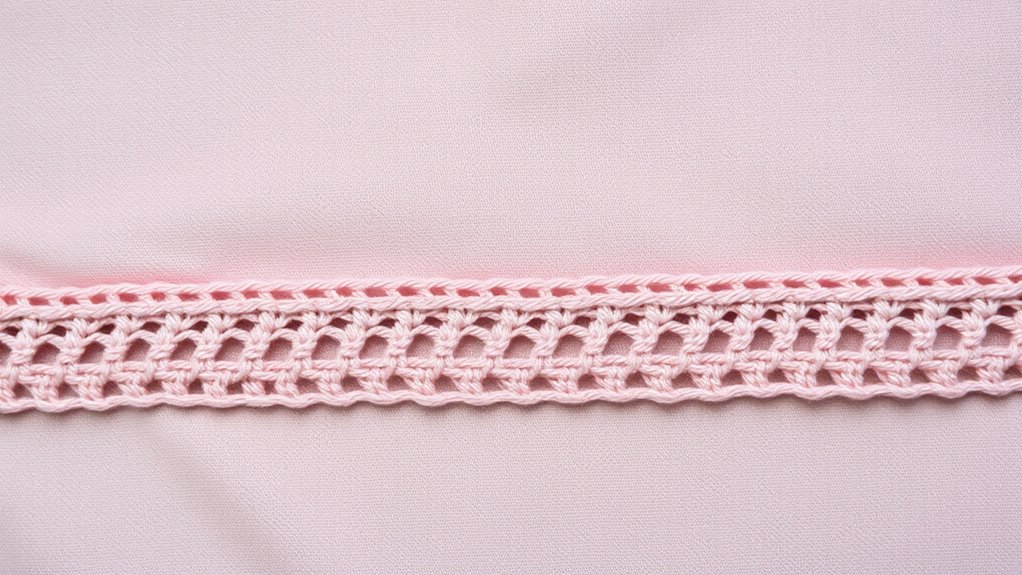
Crochet edges that wave or curl can be frustrating, but with the right techniques, you can achieve smooth, even borders. One of the most effective ways to control this issue is through proper blocking techniques. Blocking helps set your crochet piece into its final shape, relaxing the fibers and evening out tension. When you’ve finished your project, dampen it lightly—either by spraying it with water or soaking it in a gentle bath—and then pin it carefully onto a blocking board or foam mat. Stretch and shape the edges to smooth out any waves or curls, pinning them in place until they dry completely. This process encourages the fibers to relax and settle into a flat, even border, making your edges look much neater. Detecting passive voice in your writing can help you create clearer and more direct instructions for blocking and tension adjustments.
In addition to blocking, tension adjustment plays a crucial role in preventing wavy edges. If your tension is uneven or too tight, your edges are more likely to curl or wave. Pay close attention to your stitch tension from the start, maintaining a consistent grip on your yarn and hook. When you notice your edges starting to curl, try loosening your tension slightly, especially during border stitches. Conversely, if your edges are floppy or uneven, tightening your tension a bit can help create a more structured border. Practice makes perfect—by developing a steady tension, you’ll have better control over the shape and appearance of your edges.
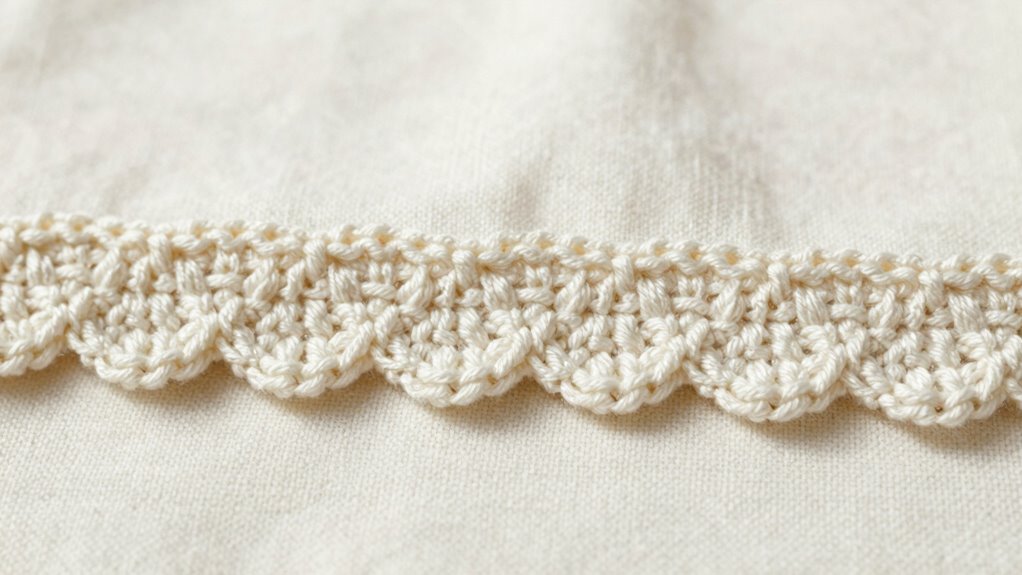
Another tip is to choose the right stitch pattern for borders. Some stitches naturally curl or wave, especially if they’re tighter or looser than your main fabric. For example, single crochet borders tend to be more stable, whereas certain shell or ripple stitches can accentuate curling. Experiment with different stitch combinations and tension settings to find what works best for your project. When working your border, ensure you’re evenly spacing your stitches and not pulling too tightly or leaving them too loose. This consistency helps keep the edge flat and reduces the risk of curling as the project relaxes over time.
Finally, always consider the type of yarn you’re using. Thicker or more elastic yarns tend to curl more easily, especially if they’re not blocked properly. Using a yarn that suits your project and following proper blocking techniques will make a significant difference. With patience, attention to tension, and a good blocking routine, you’ll be able to stop your crochet edges from waving and get a polished, professional-looking finish every time.
Frequently Asked Questions
Can Tension Adjustments Prevent Crochet Edge Waving?
Yes, tension adjustments can prevent crochet edge waving. By maintaining tension consistency throughout your work, you guarantee the fabric stays even and flat. Additionally, incorporating edge reinforcement techniques, like working a few extra stitches along the edge, helps stabilize the border. Practice controlling your tension and reinforcing edges regularly; this combination reduces waviness and results in a cleaner, more professional-looking finish.
Are Specific Yarn Types Better for Stable Edges?
Choosing yarn with strong fiber strength helps stabilize your crochet edges, reducing waving. Opt for solid or uniform-colored yarns, as color variation can cause inconsistencies that lead to waviness. You should also consider smoother yarns, which glide easily and maintain tension better. By selecting yarns with these qualities, you’ll achieve more stable, even edges, making your crochet projects look neat and professional.
How Does Hook Size Influence Edge Waviness?
Using different hook size variations impacts your crochet edges by affecting fabric density. A larger hook creates looser stitches, making edges more prone to waviness, while a smaller hook produces tighter stitches, resulting in a more stable edge. To prevent waviness, choose a hook size that matches your yarn’s recommended gauge, ensuring consistent tension and fabric density. This balance helps keep your edges smooth and less likely to wave.
Can Blocking Eliminate Existing Wave Patterns?
Yes, blocking techniques can eliminate existing wave patterns. By carefully pinning your crochet piece to a blocking board and applying steam or water, you can reshape and smooth out the edges. Use finishing methods like pinning the edges straight and allowing the piece to dry completely. This process helps relax the fibers, reducing waviness and giving your project a more polished, professional look.
Does Stitch Count Affect Edge Stability?
Your crochet project’s edge stability depends heavily on stitch count, and yes, it can be a game-changer! When your stitch count is consistent, it creates a strong foundation that prevents edges from waving or curling. Proper stitch consistency ensures even edge reinforcement, making your work look neat and professional. So, pay close attention to your stitch count, and you’ll notice your edges stay flat, smooth, and beautifully finished—like a masterpiece!
Conclusion
Now that you know how to prevent your crochet edges from waving, you’re well on your way to a polished finish. Just remember, patience is a virtue, and sometimes it takes a bit of trial and error to get it just right. Don’t be afraid to tweak your tension or add a bit of blocking to keep everything looking sharp. With these tips, you’ll have your projects looking neat as a pin in no time!