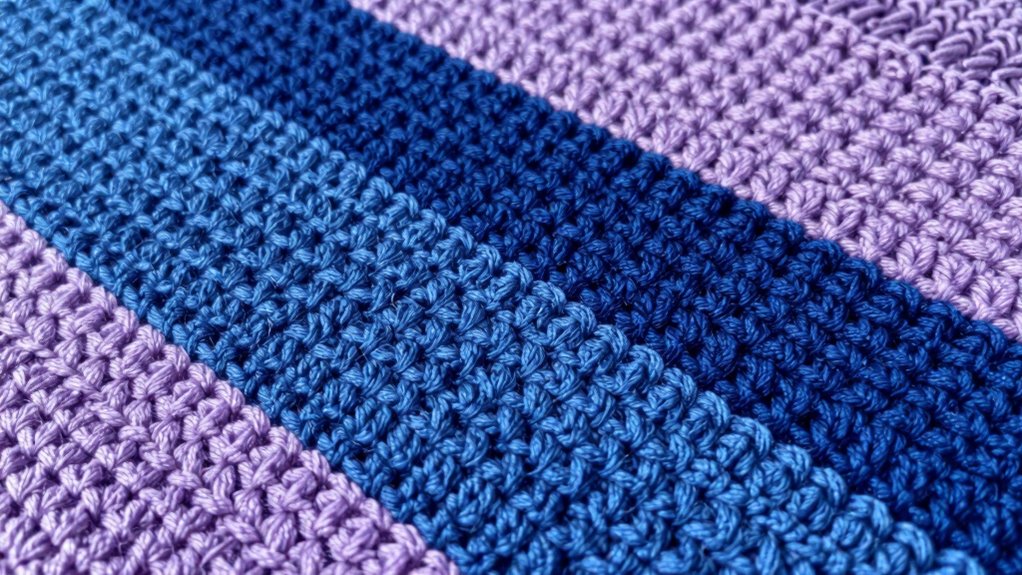

To avoid ugly ‘step’ lines when changing colors in crochet, use techniques like carrying the yarn over the stitch or working a few stitches with both colors before switching fully. Keep your tension consistent and choose yarns with similar fiber content and dye lots for smoother progressions. Incorporate slip stitches or bridge stitches to blend colors seamlessly. With careful planning and these tips, you’ll achieve a polished, professional look—if you want to master these skills, keep exploring further.
Key Takeaways
- Carry the yarn over the stitch instead of cutting to create a seamless color transition.
- Use yarns with similar fiber, weight, and dye lots for consistent blending.
- Work a few stitches in the new color before completing the color change to soften the line.
- Maintain steady tension throughout the project to prevent gaps or puckers at color shifts.
- Incorporate techniques like slip stitches or blending yarns to create gradual, smooth color transitions.
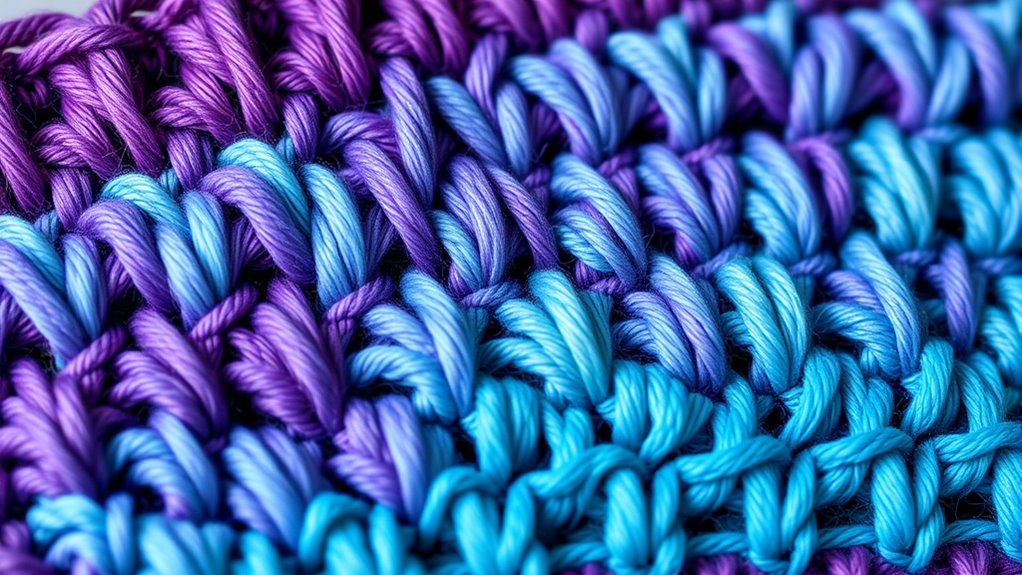
Have you ever wondered how to seamlessly switch colors in your crochet projects? Achieving smooth color changes without that unsightly ‘step’ can elevate your work from amateurish to professional-looking. The key lies in understanding color blending and making smart yarn selections. When you plan your color changes properly, you avoid abrupt transitions that create bulky, obvious lines. Instead, your projects will have a polished, cohesive appearance that highlights your craftsmanship.
Master seamless color transitions to elevate your crochet projects with polished, professional results.
One of the most important aspects of a clean color change is selecting the right yarn. Not all yarns are created equal when it comes to color blending. For smooth transitions, opt for yarns with similar fiber content, weight, and texture. This consistency helps the colors meld more naturally, preventing noticeable jumps or ridges. When you choose yarns with similar dye lots, you reduce the risk of color discrepancies, which can make your changeovers look uneven. If you’re working with variegated or multicolored yarns, be especially mindful of how the colors will shift and blend as you switch to a new hue. Sometimes, choosing a yarn with a subtle color gradient can help mask any abrupt changes.
Color blending techniques are equally essential. One effective method involves carrying the yarn over the stitch, rather than cutting and rejoining, which can create thick, visible lines. When you reach the point where you want to change colors, leave a bit of the old color on the back side, then introduce the new color by working it into the last stitch of the previous section. This creates a seamless transition, especially if you work a few stitches in the new color before fully switching over. Another tip is to incorporate a ‘slip stitch’ or ‘bridge stitch’ technique, which helps blend the colors gradually, avoiding harsh lines. Additionally, blending the old and new yarns for a stitch or two helps create a gradual color transition, making the change less noticeable.
Tension is another essential factor. Keep your tension consistent throughout the project. Looser tension can cause gaps and unevenness around the color change, while tighter tension might pull the yarns tight and create puckers. Practice maintaining even tension, especially when working with different yarn weights or textures. This consistency ensures that your color changes sit flush with the surrounding stitches, reducing the appearance of any ‘step’ effect.
crochet color change yarns
As an affiliate, we earn on qualifying purchases.
As an affiliate, we earn on qualifying purchases.
Frequently Asked Questions
Can I Change Yarn Colors Without Cutting the Thread?
Yes, you can change yarn colors without cutting the thread by using color blending techniques. When you approach the color change, leave a tail and crochet a few stitches with the new yarn, then drop the old yarn and continue with the new one. This method allows smooth yarn dyeing *gradations* and creates seamless color blending, avoiding ugly color steps. Just remember to secure your ends properly for a clean finish.
How Do I Hide Color Change Knots Effectively?
Did you know that smooth color transitions can elevate your crochet projects considerably? To hide color change knots effectively, use blending techniques like weaving tails into the stitches or employing knot alternatives such as magic knots. These methods create seamless transitions, making knots less noticeable. When switching colors, guarantee your knots are secure but not bulky, and always hide the ends within the stitches for a polished look.
What’s the Best Method for Maintaining Tension During Color Changes?
To maintain smooth tension during color changes, you should keep your yarn snug but not tight, ensuring even tension across your stitches. Use your fingers to gently hold the new color’s yarn closer to the hook, preventing slack or pulling. This approach helps you achieve consistent tension and color, avoiding gaps or unevenness. Practice controlling your tension as you switch colors, and you’ll see improved color consistency and a professional-looking finish.
Are There Specific Crochet Stitches That Suit Color Changes Better?
Did you know that single crochet stitches are ideal for smooth color shifts? You should try using simple stitches like single or half-double crochet, as they work well with color blending strategies. These stitches allow for cleaner, less noticeable color change steps. For seamless color transition techniques, stick to these basic stitches, which help you avoid harsh lines and create a more professional, polished look in your crochet projects.
Can Color Changes Be Incorporated Seamlessly Into Complex Patterns?
Yes, you can incorporate color changes seamlessly into complex patterns. Use advanced color blending techniques like gradual color shiftings and subtle variegated yarns to create smooth shifts. Employ color transition methods such as double-ended color changes or overlay techniques to hide abrupt color jumps. These approaches help maintain the intricate design while ensuring your color changes look intentional and polished, resulting in a professional, cohesive finished piece.
seamless crochet color transition tools
As an affiliate, we earn on qualifying purchases.
As an affiliate, we earn on qualifying purchases.
Conclusion
As you weave your colors seamlessly, imagine the gentle flow of a river blending into new currents. With each stitch, you’re guiding your yarns smoothly, avoiding that harsh step. Feel the rhythm of your hands, steady and confident, as your project transforms into a vibrant tapestry of hue. When finished, you’ll hold a masterpiece where colors dance seamlessly, a proof of your skill. Keep practicing, and watch those shifts become your signature style.
crochet slip stitch techniques
As an affiliate, we earn on qualifying purchases.
As an affiliate, we earn on qualifying purchases.
crochet yarn blending tools
As an affiliate, we earn on qualifying purchases.
As an affiliate, we earn on qualifying purchases.