If you’re trying to finish seams quickly on stretchy or layered fabrics, a serger is your best choice because it trims edges and encloses raw edges in one step. If your focus is on neat, professional hems or decorative topstitching on stretch fabrics, a coverstitch machine is ideal for precise, stretchable stitches. To discover which tool suits your specific sewing needs, all the details you need are just ahead.
Key Takeaways
- Determine if you need durable, professional seams on various fabric types; a serger is ideal for this.
- For finishing hems and decorative topstitching on stretch fabrics, a coverstitch machine is more suitable.
- If speed and efficiency for large projects are priorities, choose a serger.
- For detailed, stretchable decorative stitches, opt for a coverstitch.
- Assess whether your focus is on seam construction or finishing details to select the appropriate machine.
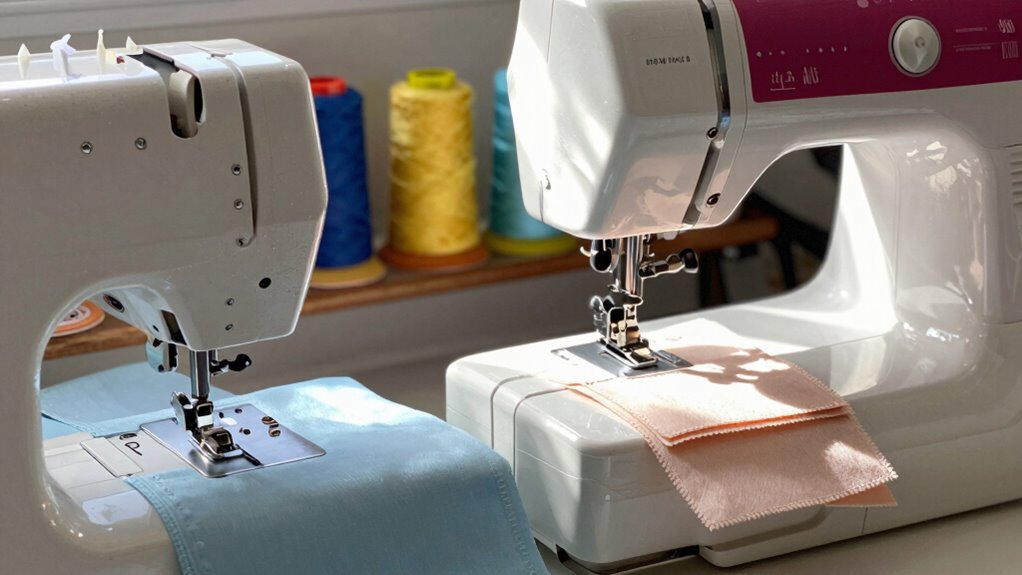
Are you unsure whether a serger or a coverstitch machine is better suited for your sewing projects? It’s a common dilemma for sewists trying to decide which machine will meet their needs best. The key to making the right choice lies in understanding the specific problems you want to solve. Both machines excel at finishing seams, but they do so in different ways, especially when it comes to fabric types and sewing speed.
Choosing between a serger and a coverstitch depends on your fabric types and finishing needs.
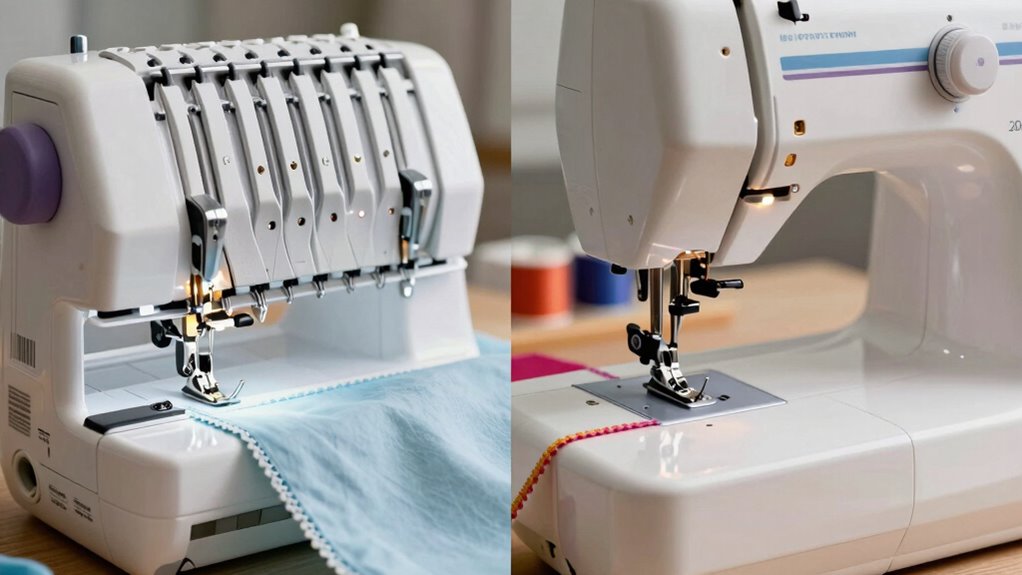
A serger, also known as an overlock machine, is your go-to for handling a wide variety of fabric types, from lightweight knits to heavy denim. It trims excess fabric and encloses raw edges simultaneously, making seams more durable and professional-looking. If you frequently work with stretchy or delicate fabrics, a serger offers the flexibility you need, thanks to its ability to handle multiple layers and different textures easily. When it comes to sewing speed, sergers are generally faster than other sewing machines. They can produce a finished seam in a matter of seconds, which is ideal if you’re aiming to increase productivity or work on large projects quickly. The quick turnaround helps you save time without sacrificing quality, especially when finishing numerous garments or home décor items. Additionally, many sergers now include automatic tension adjustments, which further streamline the sewing process and improve stitch consistency. Some models even feature color-coded threading guides to simplify setup and reduce errors. Moreover, newer models often incorporate advanced features that enhance versatility and ease of use for various sewing tasks.
On the other hand, a coverstitch machine is designed primarily for hemming and decorative topstitching. It’s perfect if your main goal is to achieve a professional-looking stretch stitch on knit fabrics, such as T-shirts, activewear, or swimwear. Unlike a serger, a coverstitch machine doesn’t cut fabric or finish raw edges; instead, it creates a clean, stretchable stitch that runs parallel to the edge of the fabric, giving your finished project a polished appearance. If you often work with jersey, spandex, or other stretchy materials, a coverstitch machine provides the stretchability and neatness you need. Additionally, a coverstitch machine often offers specialized stitch options that enhance decorative possibilities. For those seeking ease of use and precise control, a coverstitch machine is also designed to be user-friendly, making it accessible for sewers of all skill levels. The sewing speed on a coverstitch machine is generally slower than a serger, but it allows for precise control over the topstitching, which is essential for decorative details and professional finishes.
serger sewing machine for stretchy fabrics
As an affiliate, we earn on qualifying purchases.
As an affiliate, we earn on qualifying purchases.
Frequently Asked Questions
Can I Use a Serger for Decorative Stitching?
Yes, you can use a serger for decorative stitching, but it’s not ideal for all decorative techniques. Sergers excel at finishing seams quickly and adding texture, enhancing the aesthetic appeal of your projects. However, for intricate or colorful decorative stitches, a sewing machine with specialized embroidery features might give you more control. Use your serger creatively to add unique textures and borders, but consider other tools for detailed decorative work.
Is a Coverstitch Machine Suitable for Heavy Fabrics?
Is a coverstitch machine suitable for heavy fabrics? Think of it like trying to tame a wild beast—heavy fabrics demand a machine with the right strength. While coverstitches excel in creating stretchy, professional seams, they often lack the fabric durability and sewing speed needed for thick materials. For heavy fabrics, a serger might be better, providing the power and durability required to handle tougher projects efficiently.
Do Both Machines Require Special Needles?
Both machines require specific needles to guarantee ideal performance. Needle compatibility varies depending on the fabric and machine type, so using the recommended needles is necessary. Coverstitch machines typically use twin needles, while sergers need specialized serger needles. This requirement impacts machine versatility, as using the correct needles allows you to handle a broader range of fabrics and projects effectively. Always check your machine’s manual for the right needle type.
How Much Maintenance Do Each Machines Need?
Sergers generally require more frequent maintenance than coverstitches, especially due to their complex threading and multiple threads, which can impact machine durability. While sergers may cost more upfront and need regular cleaning and oiling, coverstitches are usually simpler and easier to care for, reducing long-term maintenance costs. If you want a machine with less upkeep, a coverstitch might be the better choice; if durability is key, a serger demands more attention.
Can I Upgrade My Sewing Machine to Include Both Functions?
You can’t typically upgrade a regular sewing machine to include both serging and coverstitch functions due to machine compatibility issues. Instead, consider investing in a combo machine designed for both, but keep in mind the higher cost comparison. These versatile machines offer convenience, but they often come with a bigger price tag and may require extra maintenance. Weigh the cost against your sewing needs before making a purchase.
coverstitch machine for hemming knitwear
As an affiliate, we earn on qualifying purchases.
As an affiliate, we earn on qualifying purchases.
Conclusion
So, next time you’re faced with that tangled mess of threads or a stubborn seam, picture yourself wielding the perfect tool—whether it’s the swift, all-in-one serger or the precise coverstitch. Imagine the fabric flowing smoothly under your hands, the stitches a seamless dance of efficiency. Choosing the right machine isn’t just about fixing a problem; it’s about crafting your vision with confidence. Your sewing journey awaits—pick the tool that turns your fabric dreams into reality.
professional overlock sewing machine
As an affiliate, we earn on qualifying purchases.
As an affiliate, we earn on qualifying purchases.
stretch stitch coverstitch machine
As an affiliate, we earn on qualifying purchases.
As an affiliate, we earn on qualifying purchases.