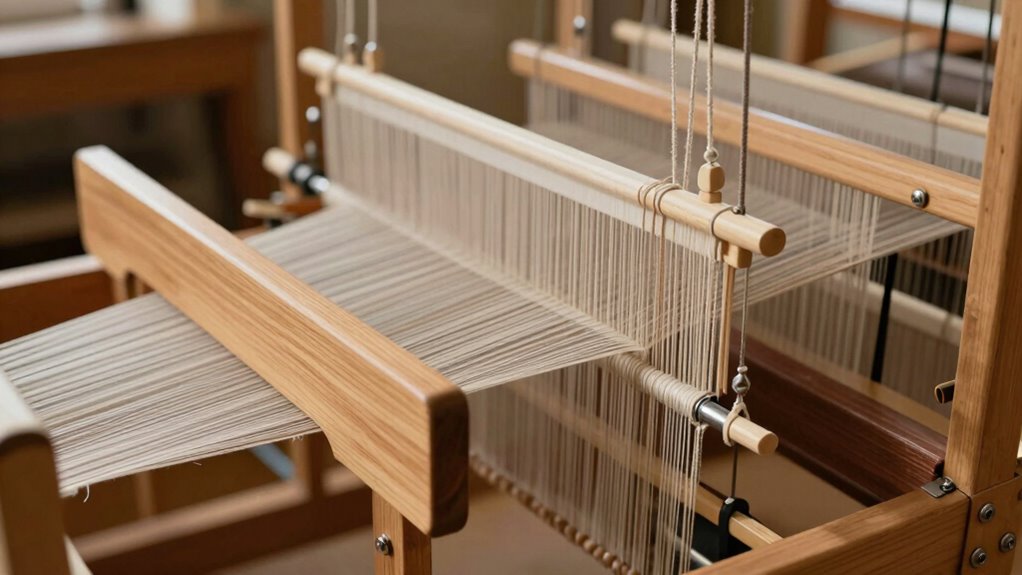

Starting with a rigid heddle loom is the smarter choice if you’re a beginner, as it’s simple, portable, and easy to use, making it perfect for quick setup and developing basic weaving skills. It’s less intimidating and requires less maintenance, allowing you to focus on learning techniques without feeling overwhelmed. As you gain confidence, you can explore more complex looms. Keep going to discover more helpful tips for your weaving journey.

Get business pricing on tools and workshop supplies
- Business-only prices and quantity discounts
- Tax-exempt purchasing
- Multiple users, one account, clear invoices
Key Takeaways
- Rigid heddle looms are more beginner-friendly due to their simplicity and easier setup process.
- They are highly portable, ideal for small spaces and learning in various locations.
- Starting with a rigid heddle develops foundational weaving skills before progressing to more complex looms.
- Maintenance is simpler, reducing initial frustrations and promoting consistent, safe weaving practices.
- For eco-conscious crafters, both loom types support sustainable practices, but rigid heddle looms facilitate quick, low-impact projects.

Choosing between these two types means considering how much time you want to dedicate to learning and maintenance. If you’re enthusiastic to start weaving quickly and keep things simple, a rigid heddle loom is a smarter choice. It’s less intimidating, easier to transport, and lets you focus on developing your weaving skills without the hassle of complex threading or frequent repairs. As you grow more confident, you can explore more advanced looms, but starting with a rigid heddle provides a solid foundation. Remember, whichever loom you choose, consistent loom maintenance and practicing proper threading techniques will ensure your weaving experience is enjoyable and successful. loom maintenance is a crucial aspect that helps prolong the life of your equipment and ensures smooth operation over time. Additionally, understanding the basic weaving techniques can greatly improve your skills and enjoyment from the start. Developing a good understanding of weaving safety can also help prevent common accidents and ensure a safe crafting environment. Furthermore, taking the time to learn about biodiversity can inspire you to create fibers and textiles that are environmentally responsible and sustainable. Incorporating knowledge about fiber sustainability can further enhance your appreciation for eco-friendly practices in weaving.
As an affiliate, we earn on qualifying purchases.
Frequently Asked Questions
Can I Upgrade a Rigid Heddle Loom to a Floor Loom Later?
Yes, you can upgrade a rigid heddle loom to a floor loom later. Many loom manufacturers offer loom upgrades, allowing you to expand your weaving options and increase future versatility. This way, you start with a simpler loom and, as your skills grow, you can shift to a more complex floor loom without losing your initial investment. It’s a smart choice for gradual skill development and long-term weaving enjoyment.
Which Loom Is Better for Intricate or Complex Weaving Patterns?
For intricate or complex weaving patterns, a floor loom usually holds the upper hand. It offers more versatility for tapestry techniques and detailed color blending, allowing you to easily manipulate multiple shafts and yarns. You’ll find it more suitable for complex designs that require precision and depth. While a rigid heddle loom is charming and simpler, a floor loom’s expanded capabilities better support your creative ambitions in sophisticated weaving projects.
How Much Space Does Each Loom Typically Require?
A rigid heddle loom usually needs less space, making it more portable and easier to set up in small areas, which can boost your weaving speed. Floor looms require a larger dedicated space, often around 5-6 feet wide and 8-10 feet long, which can limit portability. If space is tight, a rigid heddle loom is a smarter choice, allowing you to weave comfortably without sacrificing too much room.
Are There Specific Yarn Types Best Suited for Each Loom?
You might worry about yarn compatibility, but both looms handle a variety of yarn types. Rigid heddle looms are perfect for lightweight, fingering, or worsted weight yarns, often made from cotton or wool, which work well with their simple setup. Floor looms can handle bulkier, more complex fibers like bulky or roving yarns, giving you more flexibility for different projects. Choose based on your desired fiber and project needs.
What Is the Typical Learning Curve for Beginners With Each Loom?
You’ll find that the rigid heddle loom has a shorter learning curve, making it easier for beginners to pick up weaving speed quickly. Its straightforward design also means easier maintenance, so you spend more time weaving and less fixing. The floor loom might take longer to master, but it allows for more complex projects once you get comfortable. Overall, the rigid heddle offers a smoother, more beginner-friendly start.
As an affiliate, we earn on qualifying purchases.
Conclusion
So, which loom truly deserves your first weave? The rigid heddle offers simplicity and quick start-up, perfect for beginners enthusiastic to create. But the floor loom beckons with its expansive possibilities, promising more complex projects ahead. As you stand at this crossroads, remember—your choice sets the tone for your weaving journey. Will you embrace the straightforward ease or leap into the depths of intricate artistry? The decision awaits, and your future woven masterpiece hangs in the balance.
As an affiliate, we earn on qualifying purchases.
As an affiliate, we earn on qualifying purchases.
Fall Picks
fall essentials
As an affiliate, we earn on qualifying purchases.