The main difference between pressing and ironing is that pressing uses steam and a flat surface to shape fabric and set seams without creating shine or damage, while ironing involves direct heat with or without steam to smooth wrinkles quickly. Pressing maintains fabric structure, especially around seams, resulting in a crisp finish. If you want to know how each technique affects your garments and seams, keep exploring for detailed tips and tricks.
Key Takeaways
- Pressing uses steam and a flat surface to shape fabric, while ironing involves direct heat contact to smooth wrinkles.
- Pressing maintains fabric structure and sharp seams, crucial for professional finishes like tailoring and quilting.
- Steam penetrates deeper than dry heat, making pressing more effective for stubborn wrinkles and setting seams.
- Ironing is faster and more maneuverable for small, detailed areas, but pressing offers controlled, even pressure for larger surfaces.
- Proper technique and equipment choice protect delicate fabrics and ensure seams stay crisp and durable.
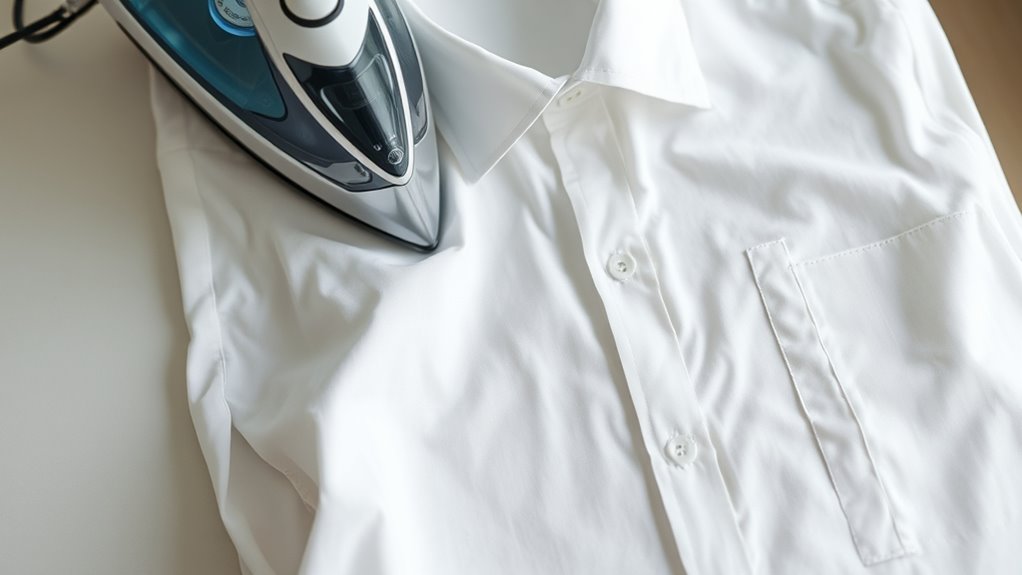
Have you ever wondered what sets pressing apart from ironing? While both methods aim to make your clothes look sharp and fresh, they’re actually quite different in technique and purpose. One key distinction lies in the type of heat and moisture used—steam versus dry heat. Ironing typically involves a dry or lightly dampened iron, which means you rely on direct contact and heat alone to smooth out wrinkles. Pressing, on the other hand, often employs steam, which relaxes fibers more effectively, making it ideal for crisp seams and structured garments. The steam penetrates fabric deeper than dry heat, reducing the risk of shiny spots and fabric damage. When you press, you usually use a steam iron or a dedicated pressing tool, both of which deliver continuous or burst steam to shape and set seams perfectly. Proper technique is essential to avoid fabric damage and achieve professional results.
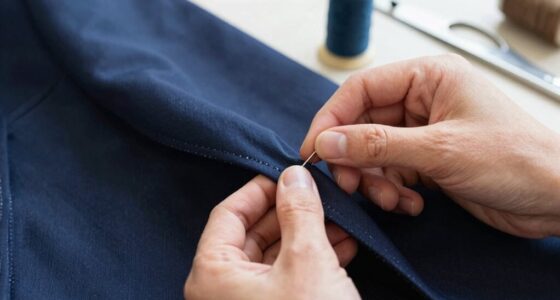
Another difference is the equipment you use. Ironing is generally done with handheld irons, which are portable and easy to maneuver over small areas. You glide the iron back and forth on your fabric, paying close attention to detail, especially around collars, cuffs, and seams. Pressing, however, often involves a flat, sturdy surface like a pressing board. This setup allows you to apply even pressure without constantly pushing and pulling, which is especially helpful for larger pieces like pants or jackets. Using a board helps maintain the fabric’s structure, ensuring that seams stay sharp and fabric doesn’t shift out of place. The handheld versus board approach is essential—pressing on a board lets you work more systematically, while ironing gives you quick control over smaller, more intricate sections.
Pressing uses a sturdy surface like a pressing board for even, controlled pressure.
Understanding when to steam versus dry is also important. Steam is excellent for removing stubborn wrinkles or setting seams, making fabrics like wool or linen look crisp. Dry heat might be better suited for delicate fabrics like silk or synthetic blends, where too much moisture could cause damage. When you’re pressing, you often combine steam with a pressing cloth to protect delicate fabrics. In contrast, ironing can be more versatile but requires careful temperature control to avoid scorch marks or shine. You’ll find that pressing on a board with steam is particularly effective for achieving sharp, professional-looking seams, especially in tailoring or quilting projects.
In essence, grasping the differences between pressing and ironing—and knowing when to use steam versus dry heat, handheld versus board—can greatly improve your garment finishing. It’s not just about smoothing out wrinkles; it’s about preserving fabric integrity, enhancing seams, and achieving a polished look that lasts longer. Whether you’re quick-pressing a shirt or meticulously pressing a jacket’s seams, understanding these techniques helps you work smarter, ensuring your clothes look their best every time.
Amazon Product B07GKHQYCM
As an affiliate, we earn on qualifying purchases.
Frequently Asked Questions
Can Pressing or Ironing Damage Delicate Fabrics?
Yes, pressing or ironing delicate fabrics can cause heat damage, especially if the iron’s too hot or you press too long. To protect your fabrics, use a low heat setting and consider placing a cloth between the iron and the fabric. This helps prevent heat damage, keeps the fabric soft, and maintains its quality. Proper pressing techniques also help avoid stretching or weakening delicate fibers.
What’s the Best Temperature Setting for Different Materials?
When it comes to temperature settings, you need to play it by ear to avoid damage. For delicate fabrics like silk or wool, use the lowest heat setting to prevent burning or fabric softening. For cotton or linen, crank it up a little. Always adjust the heat based on the fabric’s needs, and don’t forget to check the garment’s care label. Proper heat adjustment keeps your clothes looking crisp without a hitch.
How Do I Prevent Shiny Marks on My Clothes?
To prevent shiny marks and fabric residue, always use a clean, slightly damp cloth between your iron and the fabric. Make sure you’re not using excessive heat, as high temperatures cause heat marks. Move the iron gently and avoid staying in one spot for too long. Regularly clean your iron’s soleplate to prevent residue buildup that can transfer onto clothes, keeping your garments smooth and shiny-free.
Is It Better to Press or Iron When Sewing Seams?
It’s better to press your seams when sewing because pressing preserves fabric texture and guarantees seam precision. Pressing applies gentle, even pressure with a heated iron, preventing shiny marks and distortion. Ironing flat can stretch or flatten fabric unevenly, affecting your seams’ accuracy. By pressing, you maintain the fabric’s integrity, resulting in crisp, professional-looking seams, which is especially important for delicate or textured fabrics.
How Often Should I Clean My Pressing Tools?
You should clean your pressing tools regularly to maintain fabric preservation and guarantee proper tool maintenance. After each sewing project, wipe your pressing surface and iron with a damp cloth to remove residue and lint. Deep clean your iron’s soleplate monthly or as needed, especially if you notice sticking or build-up. Doing this keeps your tools in top shape, prevents fabric damage, and helps you achieve smooth, professional-looking seams every time.
Amazon Product B0FFT5NDG2
As an affiliate, we earn on qualifying purchases.
Conclusion
Think of pressing and ironing as dance partners—each has its own rhythm and purpose. When you press, you’re gently guiding your fabric, like a delicate waltz that preserves your seams. Ironing, on the other hand, is more like a lively salsa, smoothing out wrinkles with energy. Mastering both keeps your seams happy and your clothes looking sharp. So, choose your move wisely, and let your wardrobe shine like a perfectly choreographed performance.
Amazon Product B0CFY364MZ
As an affiliate, we earn on qualifying purchases.
Amazon Product B0D5YN9RB4
As an affiliate, we earn on qualifying purchases.