When choosing between a longarm and a domestic quilting setup, you weigh project size, workspace, and your comfort with maintenance. Longarms offer extended reach, faster stitching, and handle large projects without repositioning, but take up space and require more upkeep. Domestic machines are compact, versatile, and easier to maintain, ideal for small projects and hands-on quilting. Understanding these trade-offs helps you pick the best setup—continue exploring to make a confident choice.
Key Takeaways
- Longarms excel for large projects with extended reach and faster stitching, while domestic machines are ideal for smaller, versatile quilts.
- Space constraints and workspace setup influence the choice between a larger longarm and a compact domestic machine.
- Longarms require more maintenance and mechanical understanding due to their complexity, compared to easier-to-maintain domestic machines.
- Thread tension management is critical for both, but longarms handle thicker layers and complex patterns more effectively.
- Overall costs, including machine purchase, maintenance, and setup, vary significantly, impacting long-term investment decisions.
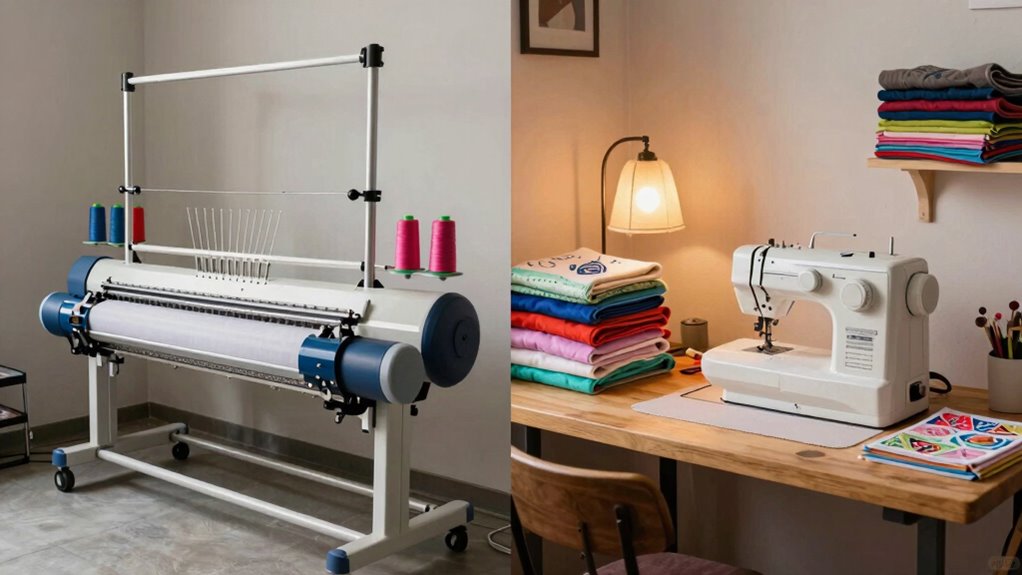
When choosing between a longarm and a domestic quilting setup, understanding how each machine operates can make a significant difference in your quilting experience. Longarms are designed for large projects, offering extended reach and faster stitching speeds. They allow you to quilt expansive quilts without repositioning your fabric as often, which can save you time. Domestic machines, on the other hand, are more compact and versatile, ideal for smaller projects or quilters who enjoy a more hands-on approach. Your decision should hinge on your specific needs, but also on how well you can manage aspects like thread tension and machine maintenance for each setup.
Choosing between longarm and domestic quilting depends on your project size, workspace, and maintenance comfort level.
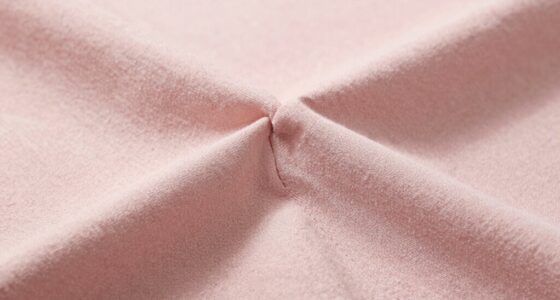
Thread tension is critical regardless of which machine you choose. With a longarm, you’ll find that maintaining proper tension is essential because the larger machine handles thicker layers and more complex quilting patterns. If your tension isn’t balanced, your stitches can become loose or puckered, ruining the quilt’s appearance. It’s important to regularly check and adjust thread tension, especially after changing thread types or colors. Domestic machines tend to be more straightforward in this regard, but they still require careful tuning. Keeping your machine properly maintained—cleaning lint from bobbin cases, oiling moving parts, and replacing worn needles—ensures consistent tension and stitch quality. Neglecting machine maintenance can lead to tension issues, skipped stitches, or even machine damage, which might slow down your quilting progress. Regular machine maintenance is essential to keep both types of machines functioning optimally.
When it comes to machine maintenance, longarms typically demand more attention because of their size and complexity. They often have more moving parts and require regular cleaning, lubrication, and calibration. This ongoing upkeep ensures the machine operates smoothly at high speeds and handles the thick layers of quilting fabric effectively. Domestic machines are generally easier to care for, but neglecting routine checks can still cause problems like thread breakage or uneven stitches. No matter which setup you prefer, sticking to a regular maintenance schedule will prolong your machine’s lifespan and keep your quilting projects on track. Additionally, understanding the complexity of machine mechanics can help you better anticipate maintenance needs and troubleshoot issues more effectively. Having a good grasp of these mechanics can also empower you to make informed decisions about repairs or upgrades as needed.
As an affiliate, we earn on qualifying purchases.
Frequently Asked Questions
How Much Does a Longarm Quilting Machine Typically Cost?
A longarm quilting machine typically costs between $10,000 and $30,000. You’ll find that machine portability varies, with some models easier to move than others. Fabric handling is also essential; higher-end machines often provide smoother, more precise control, making quilting easier. While the initial investment is significant, longarms can save time on large projects, but consider your space and comfort with handling larger machines before purchasing.
What Is the Learning Curve for Beginners With Longarm Quilting?
You might find the learning curve for longarm quilting steep at first, with about 20-30 hours needed to feel comfortable. As you develop your skills, you’ll master quilt design and thread selection, which are essential for professional results. Expect some trial and error early on, but with patience, you’ll enhance your precision and speed, making the investment worth it for intricate projects and detailed stitching.
Can Domestic Sewing Machines Handle Large Quilt Projects?
Yes, your domestic sewing machine can handle large quilt projects, but fabric handling might become challenging, especially with bigger pieces. You’ll need to carefully manage the fabric to prevent shifting or puckering. While domestic machines offer versatility for different sewing tasks, they may lack the extended arm and quilting features of longarms. Be patient, take breaks, and use proper techniques to guarantee a smooth quilting experience.
How Long Does It Take to Complete a Quilt With Each Setup?
You’ll find that a longarm quilt machine generally speeds up quilting, allowing you to complete a quilt faster—often in hours rather than days—thanks to its larger workspace and automated features. On the other hand, domestic machines take longer, requiring more time management and patience. Your quilting speed depends on your skill, project size, and setup, so plan accordingly to meet your desired timeline.
What Maintenance Is Required for Longarm Quilting Machines?
Keep your longarm humming smoothly by performing regular maintenance. You’ll need to check and adjust tension to guarantee even stitching, and keep the machine well-lubricated to prevent parts from wearing out. Cleaning the bobbin area and changing needles regularly are also essential. Following these steps is like oiling a well-oiled machine—your longarm will run efficiently, producing beautiful quilts without a hitch.
As an affiliate, we earn on qualifying purchases.
Conclusion
Ultimately, whether you choose a longarm or a domestic setup, it all comes down to what fits your quilting dreams and space. Sometimes, the right machine appears just when you least expect it—like that perfect fabric or a surprising burst of inspiration. Trust your instincts, stay open to new possibilities, and you’ll find the setup that makes your quilting journey both exciting and truly your own. After all, the best machine is the one that helps you create your masterpiece.
As an affiliate, we earn on qualifying purchases.
As an affiliate, we earn on qualifying purchases.