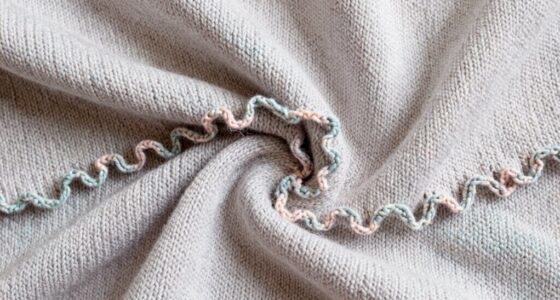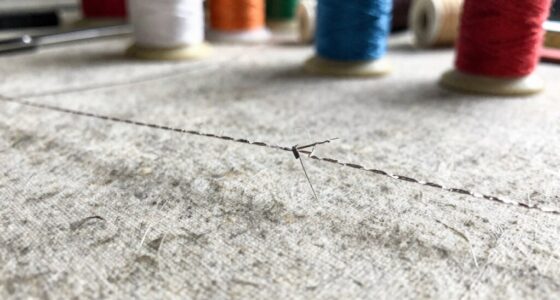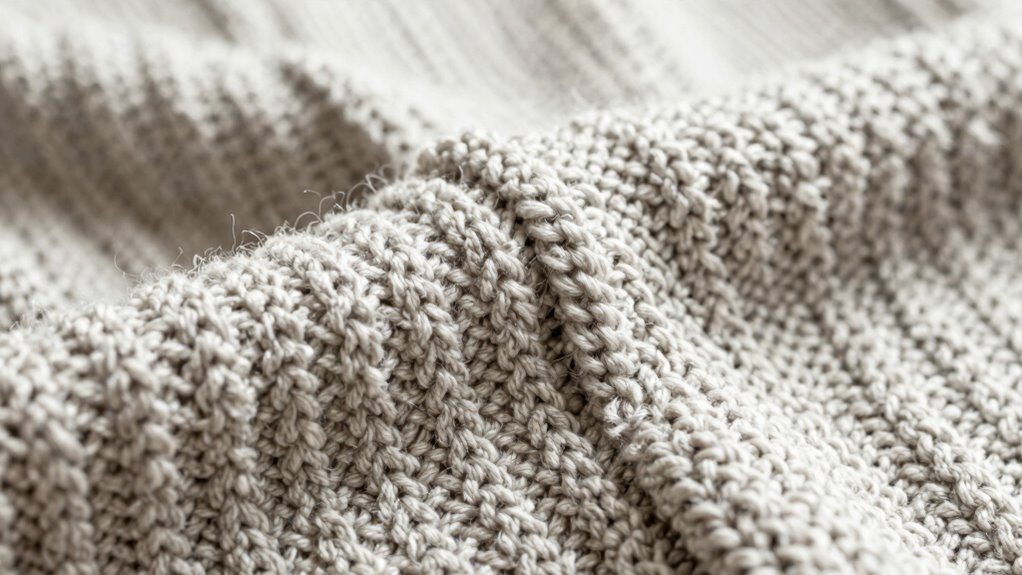

Knitted seams often look bulky because tight stitches, thick or fuzzy yarns, and traditional sewing methods trap excess fiber and create uneven joins. To flatten them, use seamless or nearly invisible techniques like slip or mattress stitches, maintain gentle tension, and avoid pulling seams too tight. Choosing finer, smoother yarns also helps reduce bulk. Proper finishing with blocking and pressing can make your seams lie flat. Keep exploring to discover effective tricks for a sleek, professional finish.
Key Takeaways
- Using traditional stitches like whip or overcast adds unnecessary bulk at seams.
- Tightly pulled seams and excess yarn trap create uneven, bulky joins.
- Thick, fuzzy, or textured yarns inherently increase seam volume.
- Proper blocking and pressing help flatten and smooth the seam area.
- Choosing fine, smooth yarns and seamless techniques reduces bulk for a neater finish.
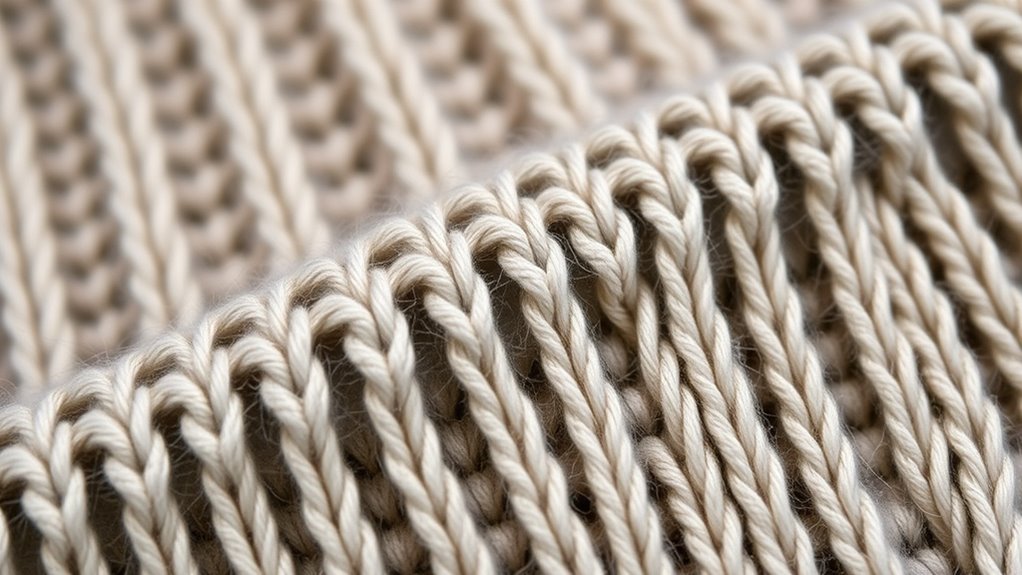
If you’ve ever noticed that your knitted garments look bulkier at the seams, you’re not alone. This common issue often leaves knitters frustrated, especially when trying to achieve a sleek, professional finish. The good news is that there are straightforward ways to tackle this problem, starting with understanding seam reduction techniques and making smart yarn choices. Seam reduction techniques involve adjusting how you join your pieces to minimize bulk, while yarn selection can influence how smooth or bulky your seams appear.
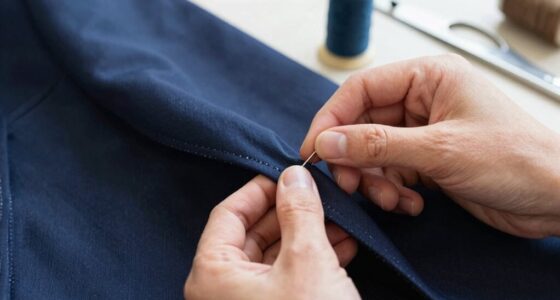
First, consider how you’re joining your seams. Traditional methods like sewing with a standard whip stitch or overcast stitch can sometimes add unnecessary thickness because they tend to trap more yarn at the edges. Instead, opt for seam reduction techniques such as a flat, slip stitch, or mattress stitch, which create nearly invisible joins. These methods work by sewing through the back loops or specific strands of yarn, reducing the amount of extra material that gets caught at the seam. Additionally, when you’re finishing seams, avoid pulling too tightly, as this can bunch up the yarn, adding to the bulk. Instead, aim for a snug but even tension, allowing the seam to lie flat without distorting the fabric.
Opt for slip or mattress stitch and maintain gentle tension for flat, nearly invisible seams.
Yarn selection also plays a notably significant role in seam appearance. Thicker or fuzzy yarns tend to make seams look bulkier because they add more volume at the join. For smoother, less bulky seams, choose a yarn with a finer weight or one with a smooth texture. If you prefer a softer, more textured look, consider blending yarns or using a slightly thinner yarn for seams than what you used for the main fabric. This can help the seam blend seamlessly into the garment. Moreover, choosing yarns that have good stitch definition will make your seams less conspicuous and easier to work with when implementing seam reduction techniques.
Another tip involves blocking your finished piece. Proper blocking can help relax the fibers and flatten out any bumps or bulges along the seams. Use steam or dampness to gently press the seams flat, which can considerably improve the overall appearance. Combining these methods—careful seam joining, thoughtful yarn selection, and proper finishing—ensures your knitted garments look polished and neat, without the unwanted bulkiness at the seams. With practice, you’ll find these adjustments make a noticeable difference, giving your knits a professional, refined look every time.
Frequently Asked Questions
Can Seam Type Affect Bulkiness in Knitted Garments?
Yes, seam type can affect bulkiness in knitted garments. For example, seam reinforcement often uses thicker or double stitches, which can add bulk. Decorative seams, on the other hand, are usually flatter and more streamlined. Choosing the right seam type helps you reduce bulkiness, making your knitted pieces look neater. Opt for flat seams when possible, and consider seam reinforcement only where extra strength is needed.
Do Different Yarn Weights Influence Seam Appearance?
You might think thicker yarns make seams bulky, but it’s actually finer yarn weights that can create a softer, less structured look. The key is yarn softness and seam tension; softer yarns bend and lay flatter, while tight tension can make seams pucker like a crumpled paper. So, choose lighter yarns and loosen your seam tension, and you’ll transform bulky seams into smooth, discreet lines, almost like magic.
Is Seam Flattening Necessary for All Knitted Fabrics?
Seam flattening isn’t always necessary for all knitted fabrics, but it can improve seam reinforcement and create a cleaner look, especially in garments with decorative seams. If your seam feels bulky or puckered, flattening helps achieve a smoother finish and enhances comfort. For delicate or lightweight fabrics, skipping flattening may be fine, but in most cases, taking a moment to press or flatten seams results in a more polished, professional appearance.
How Does Stitch Tension Impact Seam Bulking?
You’ll notice that stitch tension plays a subtle yet powerful role in seam bulking. When yarn tension is too loose, seams become puffier and less refined, creating that unwanted bulk. Conversely, maintaining proper stitch tension ensures seam fineness, making seams smoother and less bulky. By carefully controlling stitch tension, you evoke a polished look, reducing seam bulking and helping your knitted pieces look beautifully neat and professional.
Are Certain Knitting Techniques Better for Flat Seams?
Yes, some knitting techniques are better for flat seams. Using a method like the mattress stitch creates seamless, even seams with good seam elasticity, reducing bulk. It also provides strength and seam reinforcement, making your finished piece durable and smooth. Techniques that maintain consistent tension and avoid tight stitches help flatten seams and prevent bulking. Practice these methods to improve your seams’ appearance and longevity, ensuring a professional, polished result.
Conclusion
So, next time you notice your seams look bulky, remember it’s like finding a hidden pebble in your shoe—small but noticeable. By carefully blocking your project and adjusting your seam techniques, you’ll see those lumps flatten out just like a smooth river stone. It’s a little coincidence that a simple tweak can transform your work from bulky to beautifully flat, making your finished piece look polished and professional. Happy knitting!