Fabric grainline is an invisible but vital rule in sewing that guides how you align fabric threads during cutting. It affects the garment’s drape, stretch, and overall fit, ensuring your project stays true to shape and looks professional. Recognizing and following the grainline prevents distortion, skewing, and uneven seams. mastering this essential concept helps you create more durable, well-fitting clothes. Keep exploring, and you’ll discover how to handle different fabrics and avoid common mistakes in sewing.
Key Takeaways
- Fabric grainline guides proper alignment to ensure stability, drape, and accurate shape of garments.
- Identifying the grain involves understanding warp, weft, and bias directions in the fabric weave.
- Correct pattern placement along the grainline prevents distortion, skewing, and uneven seams.
- Ignoring grainline can cause garments to warp, stretch, or lose shape over time.
- Handling stretch and bias fabrics requires stabilization and gentle techniques to maintain grain integrity.
What Is Fabric Grainline and Why Is It Important?
Have you ever wondered why fabric grainlines matter when sewing? The fabric grainline guides you in aligning your fabric correctly, ensuring stability and proper drape. It’s especially important because fabric stretch varies depending on the grain, affecting how your garment will fit and move. When cutting, following the grainline helps prevent distortion and keeps your fabric from skewing. Additionally, pattern matching becomes easier when you cut along the grain, allowing seamless alignment of designs like stripes or plaids. Ignoring the grainline can lead to warped seams or uneven hems, ruining your finished piece. Paying attention to the fabric’s grain ensures your project stays true to the intended shape, looks professional, and feels comfortable to wear. Understanding the fabric’s behavior along different grainlines can also help you select the right fabric for your project, especially when considering fabric stability and stretch properties. Recognizing the grainline importance can ultimately improve both the durability and appearance of your sewing projects. Being aware of the fabric market can also help you find high-quality fabrics suited for your specific needs. Moreover, understanding the role of the grainline can assist in achieving the best possible fit and finish for your garments.
Understanding the Different Types of Fabric Grain
Understanding the different types of fabric grain is essential for achieving a well-constructed and professional-looking sewing project. The fabric weave determines how the threads are interlaced, affecting how the fabric drapes and behaves. Recognizing the grain directions—such as the lengthwise (warp), crosswise (weft), and bias—helps you cut pieces accurately and ensures proper fit. Fiber types also influence the grain’s characteristics, as natural fibers like cotton or silk tend to have different stretch and stability compared to synthetic fibers like polyester. By understanding how these fabric weave and fiber types interact with grain, you can make better choices when cutting and sewing, resulting in garments that hang correctly and maintain their shape over time. Additionally, at‑home beauty tech devices can be used to improve skin texture and elasticity, complementing your sewing projects with a focus on overall wellness. Knowing the influence of fabric stretch and stability can help you select the right fabric for your project’s intended fit and durability. For example, understanding the grain orientation can prevent fabric distortion during construction and ensure your finished piece looks professional. Recognizing the grain’s impact on fabric drape allows you to choose fabrics that will behave as intended when sewn. Being aware of fabric grain accuracy can also help you avoid common sewing mistakes and improve your overall craftsmanship.
How to Identify the Grainline on Your Fabric

Wondering how to find the grainline on your fabric? First, examine the fabric pattern; if the design runs consistently in one direction, that indicates the grainline. Next, look at the textile weave: the warp threads run parallel to the grainline, while the weft crosses it perpendicularly. To identify it physically, lay your fabric flat and gently pull along the edges. The grainline follows the lengthwise threads, which stay straight. Use this table to clarify:
| Method | What to Look For |
|---|---|
| Pattern Direction | Consistent lines or repeats along one edge |
| Textile Weave | Warp threads parallel to the grainline |
| Fabric Stretching | Slightly stretch, grainline resists distortion |
| Edge Inspection | Fold fabric; edge threads run straight |
| Grainline Tape | Use a straight line along the lengthwise edge |
Mastering this guarantees your fabric pieces will align perfectly.
Aligning Pattern Pieces Along the Grainline

To align your pattern pieces correctly, start by locating the grainline arrow on the pattern. Pin along this line to make sure your fabric stays straight and true. Proper pinning and matching the arrow help your finished garment hang smoothly and retain its shape.
Identifying the Grainline Arrow
Finding the grainline arrow on your pattern piece is essential for proper fabric alignment. This small arrow guides you to position your fabric pattern correctly on the fabric, guaranteeing a polished final look. When you locate the grainline arrow, you unlock the secret to sewing pieces that hang beautifully and hold their shape. Ensuring correct fabric orientation during cutting is crucial for achieving a professional finish. Here are four reasons why identifying the grainline arrow matters:
- It prevents fabric distortion, keeping your garment smooth.
- It ensures pattern pieces align perfectly, avoiding uneven seams.
- It maintains the fabric’s natural drape, enhancing the design.
- It guarantees your project looks professional and well-constructed.
Always match the grainline arrow to the fabric pattern’s grain for flawless sewing results.
Pinning Along the Grainline
Once you’ve identified the grainline arrow on your pattern piece, the next step is to pin it securely along the fabric’s grainline. Proper pinning helps prevent fabric distortion, which can skew your pattern and affect the final fit. Place pins perpendicular to the edge, ensuring the pattern remains aligned with the grainline. Check pattern alignment frequently as you pin, adjusting if needed to avoid shifting. Keep the fabric flat and smooth, avoiding tension that could distort the grain. Secure the pattern evenly, especially at corners and along long edges, to maintain accuracy. Correct pinning along the grainline ensures your fabric stays stable during sewing, leading to clean, professional-looking results. Proper pattern alignment is vital for the garment’s drape and fit. Additionally, understanding fabric grain can help you select the best fabric for your project and achieve a polished outcome.
Common Mistakes to Avoid When Cutting on the Grain
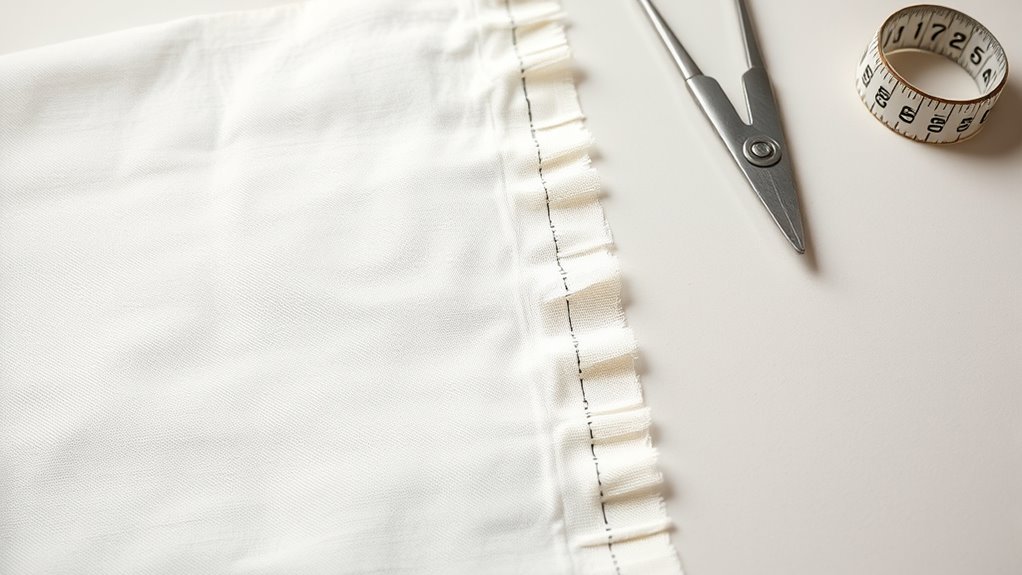
One common mistake is ignoring the grain direction, which can cause your finished piece to warp or twist. Using the wrong tools or rushing your cut can also lead to uneven edges and misaligned patterns. To get the best results, take your time and pay close attention to your fabric and cutting process. Being aware of the fabric’s grainline helps ensure your project maintains its shape and durability over time. Additionally, understanding the piercing care and hygiene guidelines can help prevent issues if you are working with layered or delicate fabrics that require special handling. Proper fabric handling techniques are essential for maintaining the integrity of your material and achieving professional-looking results. Recognizing the importance of material selection can further improve the overall quality of your sewing project. Understanding fabric properties can also assist in choosing the right materials for your specific project needs.
Ignoring Grain Direction
Ignoring the grain direction is a common mistake that can seriously affect the way your finished garment looks and fits. When you cut against the grain, you risk fabric stretch issues that cause shape distortion. Additionally, neglecting the pattern bias can lead to warped seams and uneven drape. Here’s what you might experience:
- Warp in your garment’s silhouette, making it look unprofessional.
- Reduced durability, as fabric may fray or stretch out of shape.
- Difficulty in sewing, with seams that don’t align properly.
- Frustration when your fabric refuses to behave as expected, wasting your effort and fabric.
Always pay attention to grainlines to guarantee your project turns out perfectly, avoiding these avoidable setbacks. Recognizing the importance of traditional practices can help you understand how fabric behaves naturally and how to work with its inherent qualities.
Not Using Proper Tools
Using the right tools when cutting on the grain is essential to guarantee accuracy and maintain the fabric’s integrity. Sharp fabric scissors are a must—they ensure clean cuts without distorting the fabric or causing fraying. Dull scissors can stretch or snag the material, affecting your pattern’s precision. Pattern weights are also invaluable, holding your fabric steady and flat, preventing shifting that could misalign the grainline. Avoid using pins or pulling the fabric taut, as this can distort the grain. Proper tools help you follow the grainline accurately, resulting in well-constructed garments and smooth seams. Investing in quality scissors and using pattern weights makes a noticeable difference in your sewing precision and the final look of your project. Additionally, understanding how to maintain your tools ensures they stay sharp and effective for longer periods. Regularly cleaning and sharpening your scissors prolongs their lifespan and preserves cutting quality. Good storage practices prevent tool damage and help maintain their performance over time. Using appropriate storage also keeps your tools in optimal condition, preventing damage and ensuring consistent performance.
Rushing the Cutting Process
Rushing through the cutting process can lead to mistakes that compromise your project’s accuracy. When you hurry, fabric tension often becomes uneven, causing pieces to shift and skew. This results in inaccurate seam allowances, which can ruin your fit and finish. To avoid these pitfalls:
- Skipping the proper layout increases the chance of cutting on the wrong grain.
- Rushing allows fabric to shift, creating uneven edges.
- Ignoring fabric tension leads to distorted pieces that won’t sew properly.
- Failing to double-check measurements risks cutting mismatched parts.
- Not practicing proper fabric grain alignment can lead to lasting distortions in your finished garment. Additionally, understanding the importance of grainline consistency helps ensure your project maintains its intended shape and drape over time.
Taking your time ensures your fabric stays aligned, tension remains even, and seam allowances are accurate. Precision during cutting sets the foundation for a well-fitting, professional-looking finished garment. Don’t let haste ruin your hard work.
The Impact of Grainline on Garment Fit and Drape

The grainline plays a critical role in how a garment fits and drapes on your body. When fabric is aligned properly, it enhances the natural fabric drape, creating a smooth, flattering silhouette. If the grainline is off, your garment may feel restrictive or saggy, and the drape can appear uneven or stiff. Proper alignment ensures the fabric falls correctly, allowing the garment to move comfortably with you. This alignment also impacts the garment fit, helping it maintain its shape and prevent distortion over time. By paying close attention to the grainline during cutting and sewing, you’ll achieve a more polished, professional look with better fit and elegant drape, making your finished piece both comfortable and visually appealing.
Tips for Working With Stretch and Bias Grain
Working with stretch and bias grain requires extra attention to detail because these grains behave differently from the straight grain. To succeed, follow these stretch fabric tips and bias cut techniques:
Working with stretch and bias grains demands careful handling for perfect results.
- Use sharp needles and fine pins to prevent snags and distortion, ensuring clean stitches.
- Stabilize fabric edges with stays or tissue paper to avoid stretching out during cutting and sewing.
- Handle fabric gently—avoid pulling or stretching as you sew; let the machine feed the fabric naturally.
- Test your fabric with scrap pieces to perfect your stitch length and tension, especially when working with stretch or bias cuts.
Mastering these tips helps maintain shape and fit, making your sewing projects more professional and confident.
Troubleshooting Grainline Issues in Your Sewing Projects
Grainline issues can cause your sewing projects to turn out less polished and may lead to fitting problems. If your fabric shifts or twists during cutting or sewing, it affects fabric stability and pattern alignment. To troubleshoot, always double-check that your fabric is properly aligned with the grainline markings before cutting. Use pattern weights or pins to secure fabric and keep it flat. When sewing, take care to maintain the grainline, especially on curved seams or tricky areas. If fabric warps or stretches, consider stabilizing it with interfacing or stabilizers. Regularly press seams and fabric to keep everything smooth and aligned. Addressing these issues ensures your project maintains the correct shape, fits well, and looks professional.
Frequently Asked Questions
Can Fabric Grainline Change After Washing or Cutting?
No, fabric grainline can change after washing or cutting due to fabric distortion caused by washing effects. When you wash fabric, it may shrink or stretch unevenly, shifting the grainline slightly. Cutting on grain ensures your garment drapes properly and maintains shape. To minimize these changes, always pre-wash fabric before cutting and handle it gently to avoid distortion, guaranteeing your finished piece stays aligned and looks professional.
How Does Grainline Affect Fabric Pattern Matching?
Your fabric’s grainline is the secret to perfect pattern matching—without it, you’ll be chasing chaos! When you align your fabric properly along the grainline, you ensure pattern continuity, making sure prints and seams match seamlessly. It’s like giving your project a solid roadmap, guiding fabric alignment for professional results. Ignoring grainline can cause mismatched patterns and wonky seams, turning what should be a masterpiece into a sewing nightmare.
Is It Necessary to Mark the Grainline on All Fabric Types?
You don’t always need to mark the grainline on all fabric types, but it’s highly recommended for best results. For woven fabrics, marking techniques like chalk or fabric markers help guarantee proper alignment and pattern matching. Stretch fabrics, however, may not require precise grainline marking since they’re more forgiving. In general, marking grainlines helps you cut and sew more accurately, especially with patterned or directional fabrics, so consider marking whenever precision matters.
What Tools Are Best for Marking Grainlines Accurately?
You should use a straight ruler or tailor’s chalk to mark grainlines accurately, helping you prevent fabric distortion and guarantee proper pattern alignment. A fabric marking pen, especially one that’s erasable, can also be effective for fine lines. These tools help you maintain true grainlines, which are essential for a polished finish. Always double-check your markings before cutting to avoid misalignment that could affect your sewing project.
How Do I Adjust Pattern Placement if My Fabric Is Off-Grain?
If your fabric is off-grain, you need to do a grainline correction before cutting. Lay your pattern on the fabric, then carefully realign the pattern pieces so the grainline matches the true selvage edges. Use a chalk or fabric marker to redraw the grainline if needed. For pattern alignment, make small adjustments to the pattern’s position, ensuring the grainline is parallel to the selvage, helping your finished project hang properly and maintain shape.
Conclusion
Mastering the fabric grainline is your secret weapon for flawless sewing. When you align your pattern perfectly, your garments will fit better, drape beautifully, and last way longer than you ever imagined. Don’t underestimate this invisible rule — it’s the backbone of professional-looking results. Pay close attention to grainline details, and you’ll turn simple fabric into stunning, runway-worthy pieces. Trust me, once you get it right, you’ll wonder how you ever sewed without it!