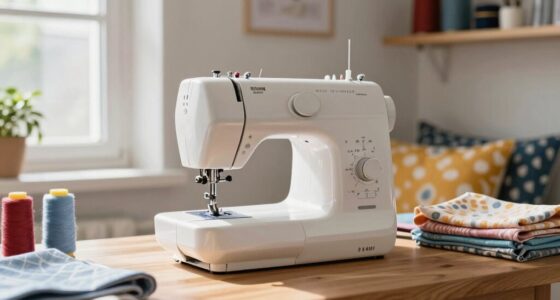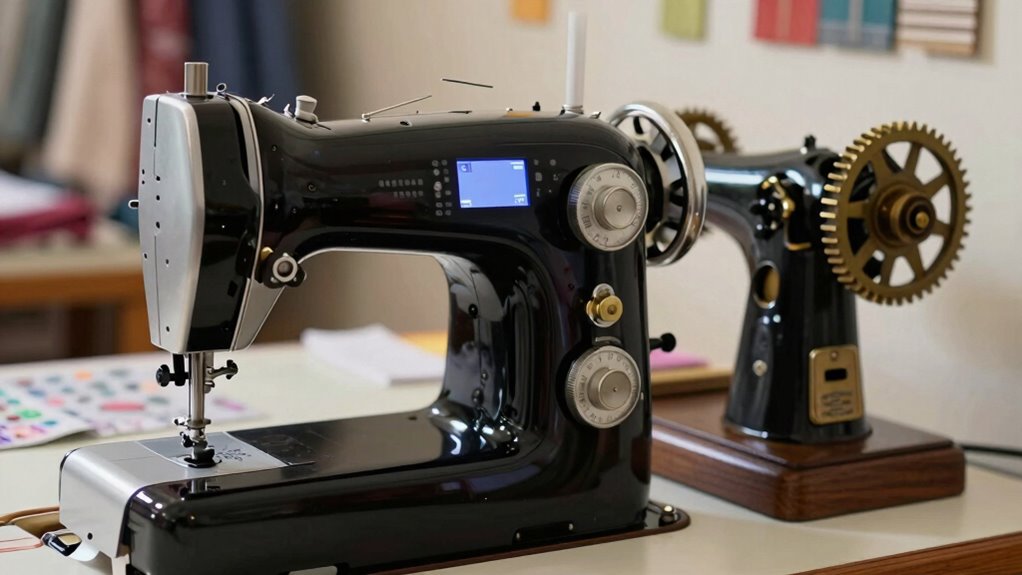
If you’re a serious beginner choosing between computerized and mechanical sewing machines, consider how each impacts fabric handling, ease of use, durability, stitch quality, and skill growth. Computerized models offer user-friendly features, quick results, and consistent stitches, making them great for fast learning. Mechanical machines require more control but help you grasp sewing fundamentals and maintenance skills. Your choice depends on your goals; exploring these differences further can help you find the best fit for your sewing journey.
Key Takeaways
- Ease of use and quick results make computerized machines ideal for beginners seeking simplicity.
- Mechanical machines offer hands-on control for learning sewing fundamentals and understanding machine mechanics.
- Computerized models ensure consistent stitch quality and handle complex patterns with minimal effort.
- Mechanical machines are generally more durable, easier to repair, and facilitate ongoing skill development.
- Choosing depends on whether automation and ease or manual control and foundational skills are more important.
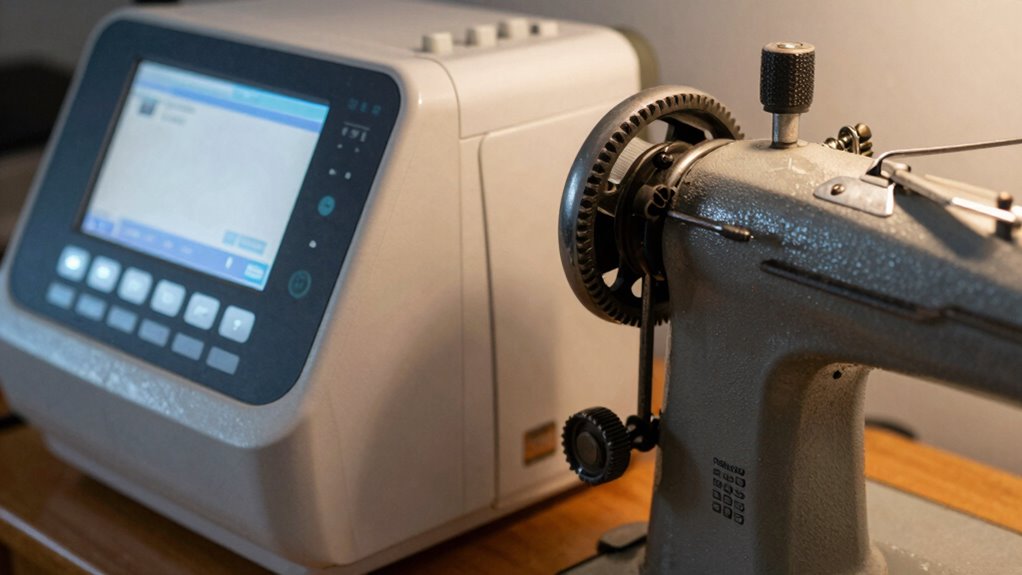
When choosing a sewing machine, understanding the differences between computerized and mechanical models can help you make an informed decision. As a serious beginner, you’ll want to consider how each type handles fabric selection and stitch quality, since these factors directly affect your sewing experience and the results you get. Computerized machines often come with a variety of built-in stitches and automatic settings, making fabric selection easier. You simply choose the fabric type or the project, and the machine adjusts the stitch length, width, and tension automatically. This can save you time and reduce frustration, especially when working with different fabrics like cotton, silk, or denim. Ease of use is a key advantage of computerized models for beginners who want quick results without needing to master every setting upfront. Mechanical machines, on the other hand, usually require you to manually set these parameters, giving you more control but also demanding a better understanding of your fabric and stitch settings. If you’re just starting out, this might feel overwhelming, but it can also help you learn the fundamentals of sewing more thoroughly. Additionally, the mechanical nature of these machines often makes them more durable and easier to repair, which can be advantageous for ongoing learning and maintenance. Understanding the internal mechanics of mechanical machines can deepen your appreciation for their design and function, especially when performing repairs or adjustments. Knowing how these components work can improve your ability to troubleshoot issues and extend the lifespan of your machine. Moreover, gaining knowledge about machine mechanics can empower you to customize or upgrade your machine as your skills develop. Developing this understanding can be crucial as you progress in your sewing skills.
When it comes to stitch quality, computerized models often produce more consistent stitches, thanks to their digital precision. They can handle complex stitch patterns with ease, and the automatic tension adjustment helps ensure the stitches look even across various fabrics. This consistency is especially noticeable when working with delicate or tricky fabrics, where uneven stitches can ruin the finished look. Mechanical machines, while potentially less precise, still offer good stitch quality—particularly if they’re well-made. They often have fewer stitch options and less automation, so you’ll need to make manual adjustments for different fabrics, but this can give you a better feel for how tension and stitch length influence the final product. Developing this understanding can be crucial as you progress in your sewing skills. Both types of machines can serve different learning styles, depending on whether you prefer automated convenience or manual control.
computerized sewing machine for beginners
As an affiliate, we earn on qualifying purchases.
As an affiliate, we earn on qualifying purchases.
Frequently Asked Questions
Which Type Is More Durable for Long-Term Use?
Mechanical sewing machines tend to be more durable for long-term use because they have simpler mechanics and fewer electronic parts that can fail. You’ll find they often handle thread tension adjustments and motor power better over time, making them reliable for heavy-duty projects. Computerized machines, while advanced, may require more maintenance and can be less durable in the long run if electronic components wear out.
Are Computerized Machines Easier for Complex Stitches?
Like having a Swiss Army knife in your sewing kit, computerized machines make complex stitches a breeze. They’re designed for digital convenience and user friendliness, so you can effortlessly select intricate patterns or adjust settings with just a tap. This means fewer frustrations and more creative freedom when working on detailed projects. If you’re after precision and ease, a computerized machine suits you perfectly, turning sewing into a smooth, modern experience.
How Much Maintenance Do Mechanical Machines Require?
Mechanical machines require regular maintenance, especially around thread tension adjustments and bobbin winding. You’ll need to clean lint from the bobbin case and check the tension settings to keep stitches even. Lubricate moving parts periodically to prevent wear. While not overly complicated, consistent upkeep guarantees smooth operation and prolongs your machine’s lifespan. Staying attentive to these small tasks makes sewing easier and more enjoyable over time.
Can I Upgrade a Mechanical Machine’s Features Later?
You can’t easily upgrade a mechanical machine’s features later, especially embroidery options or motor speed. If you’re serious about expanding your sewing skills, choosing a machine with built-in embroidery features or a powerful motor now saves frustration later. While mechanical machines are reliable, they lack the flexibility of computerized models, which can be upgraded or adjusted digitally. So, think ahead—your future projects depend on it.
Which Machine Is Better for Quilting Projects?
For quilting projects, a computerized sewing machine often works better because it offers precise stitch control, which helps with fabric selection and maintaining consistent thread tension. You’ll appreciate features like automatic tension adjustment and pre-programmed stitches, making quilting smoother and more consistent. Mechanical machines can still do the job, but a computerized option gives you more control, especially when working with different fabrics and complex patterns.
mechanical sewing machine durable
As an affiliate, we earn on qualifying purchases.
As an affiliate, we earn on qualifying purchases.
Conclusion
Whether you choose a computerized or mechanical sewing machine, what matters most is how it suits your needs and sparks your creativity. A mechanical machine offers simplicity and durability, perfect for those who love hands-on control. In contrast, a computerized machine provides advanced features and convenience, ideal for exploring modern techniques. Ultimately, your choice sets the tone for your sewing journey—so pick what inspires you and get stitching!
automatic stitch sewing machine
As an affiliate, we earn on qualifying purchases.
As an affiliate, we earn on qualifying purchases.
best sewing machine for learning fundamentals
As an affiliate, we earn on qualifying purchases.
As an affiliate, we earn on qualifying purchases.