To make your fabric appliqué look clean and intentional, choose fabrics with similar texture and weight, avoiding bulky or flimsy materials. Use sharp tools and small, even stitches to create precise edges. Secure your pieces well before sewing, and press gently to flatten puckers. Pay attention to tension and stitch consistency for a polished finish. Practicing these techniques will help you achieve a neat, professional appearance—if you keep exploring, you’ll master even the tiniest details.

Get business pricing on tools and workshop supplies
- Business-only prices and quantity discounts
- Tax-exempt purchasing
- Multiple users, one account, clear invoices
Key Takeaways
- Use tightly woven, thin fabrics and subtle patterns for a polished, deliberate appearance.
- Cut appliqué shapes precisely with sharp tools for clean edges.
- Sew with small, even stitches close to the edge to ensure neatness.
- Press appliqué gently with a pressing cloth to flatten puckers and secure placement.
- Maintain consistent tension and secure stitches for a tidy, professional finish.
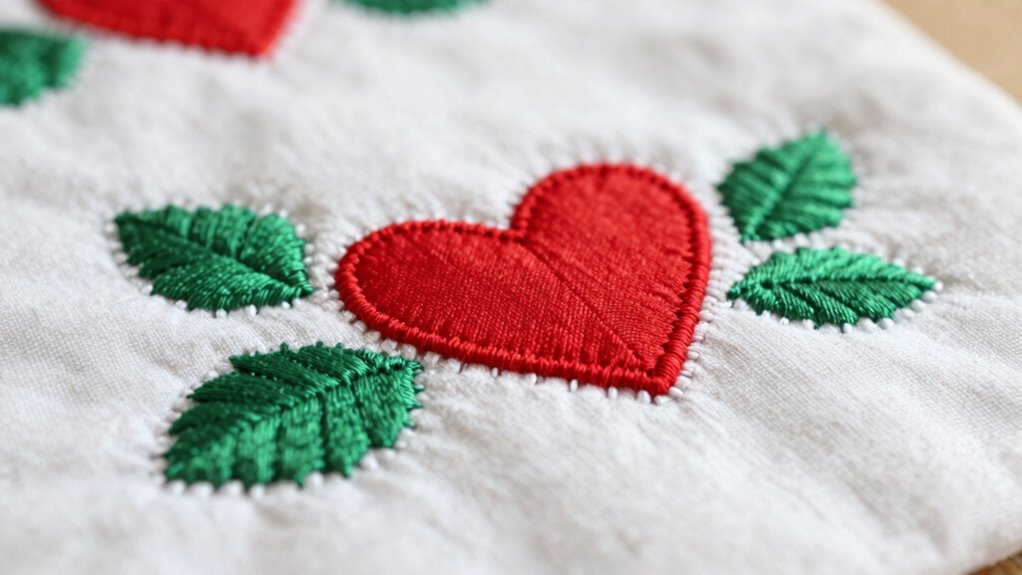
Fabric appliqué can add beautiful detail to your projects, but achieving a clean, intentional look requires careful technique. The first step is selecting the right fabric. You want fabrics that complement each other in texture and weight, avoiding anything too bulky or flimsy. Thin, tightly woven fabrics usually work best because they lie flat and are easier to manipulate. When choosing fabrics, consider their color and pattern — solid colors or subtle prints tend to give a more polished appearance, while busy patterns can distract from your design. Think about the overall aesthetic you’re after, and pick fabrics that enhance that vision.
Choose fabrics with complementary textures and weights for a polished appliqué finish.
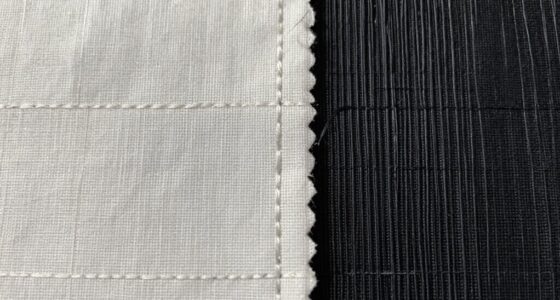
Once you’ve selected your materials, the next key is your stitching techniques. Precision is essential here. Use a sharp needle suited for your fabric type to prevent puckering and uneven stitches. Small, even stitches will help your appliqué look neat and professional. For the edges, you might opt for a close zigzag stitch or a satin stitch, both of which secure the appliqué and provide a clean finish. When stitching around curves or intricate details, sew slowly and follow your pattern carefully to maintain accuracy. If you’re concerned about fraying, consider using a stabilizer underneath your fabric or applying a light fusible interfacing before stitching. Additionally, choosing a stable, high-quality thread can make a noticeable difference in the overall appearance.
Another tip is to prep your appliqué pieces before attaching them. Cut your shapes with sharp scissors or a rotary cutter for crisp edges. Pin or baste them in place temporarily to check placement before stitching. This step prevents shifting during sewing, which can cause uneven lines or gaps. When you sew, keep your stitches close to the edge of the fabric, but not too tight—this helps your appliqué lay flat and look intentional. If you’re hand stitching, use tiny, even stitches like a blind hem stitch or whip stitch for a seamless finish. Practicing consistent stitch tension can greatly improve the neatness of your work and give it a more professional appearance. Incorporating stitching guides can also help maintain uniformity and accuracy throughout your project.
Pay attention to your fabric edges and stitching tension. Consistent tension results in smooth, even stitches that contribute to a tidy appearance. After sewing, press your appliqué gently with an iron, using a pressing cloth to avoid damaging your stitches. This step helps flatten any puckers and gives your finished piece a more refined look. Remember, practicing your stitching techniques can significantly improve the overall neatness of your appliqué work. Mastering the fabric selection process and maintaining careful tension during sewing are also crucial for achieving a polished, intentional look.
Popular right now

Roborock Robot Vacuum and Mop with LiDAR Navigation and 10,000 Pa Suction

Bose QuietComfort Wireless Noise-Cancelling Over-Ear Headphones, Black

Samsung 42-Inch S90H OLED 4K Smart TV Bundle
As an affiliate, we earn on qualifying purchases.
Frequently Asked Questions
What Types of Fabrics Work Best for Appliqué Projects?
For appliqué projects, you should choose fabrics with stable, tightly woven textures like cotton, linen, or felt. These fabrics are easy to cut and sew, helping you achieve clean, crisp edges. Avoid stretchy or overly delicate textiles, which can distort your design. Your fabric selection and texture considerations are key to making your appliqué look professional and intentional. Opt for fabrics that hold their shape well and complement your overall design.
How Do I Choose the Right Thread for Appliqué?
Imagine you’re in a vintage sewing shop, hunting for the perfect thread. To choose the right thread for appliqué, consider thread color coordination—match or contrast to your fabric for a clean look or creative flair. Decorative thread choices can add texture or shimmer, so select those that complement your design. Use a high-quality, all-purpose thread for durability, and always test on scrap fabric to guarantee your stitches stay neat and intentional.
Can I Use Machine or Hand Appliqué for Best Results?
You can use either machine stitching or hand embroidery for the best results, depending on your project and skill level. Machine stitching offers quick, precise edges and a clean finish, ideal for larger projects or a uniform look. Hand embroidery, on the other hand, provides a more textured, artistic touch, perfect for detailed or delicate appliqué. Both methods can be clean and intentional when you control stitches carefully.
What Tools Are Essential for a Professional Finish?
You need essential tools like sharp scissors, a hot iron, and a precision rotary cutter for a professional finish. Use fabric stabilization techniques to keep your appliqué layers smooth and secure, preventing puckering or fraying. Incorporate applique techniques such as raw edge or turned edge appliqué, and a good quality pressing cloth guarantees crisp, clean edges. These tools and techniques help you achieve a polished, intentional look every time.
How Do I Prevent Fraying Around Appliqué Edges?
Ever wonder how to keep your appliqué edges neat? To prevent fraying, focus on edge finishing techniques like zigzag stitching or pinking shears. Seam stabilization is also key; applying a fusible interfacing or stabilizer around the edges adds strength and reduces fraying over time. These methods guarantee your appliqué stays clean and crisp, giving your project a polished, professional look without unraveling.
Conclusion
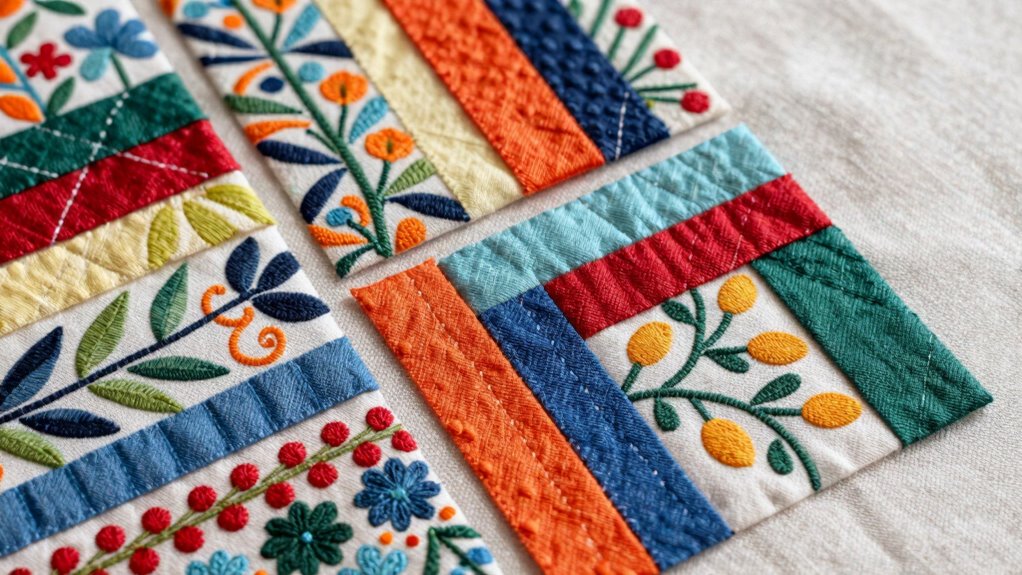
By paying attention to detail and practicing neat stitching, your fabric appliqué will look polished and intentional. Imagine attaching a delicate flower design to a tote bag—carefully trimming edges and choosing the right stitches makes all the difference. When you approach each project with patience and precision, your appliqué will elevate your sewing skills and produce professional-looking results. Keep experimenting and refining, and you’ll consistently create beautiful, clean appliqué work that truly stands out.