To keep your crafting space safe and comfortable, guarantee proper ventilation by using exhaust fans, localized hoods, or air purifiers equipped with HEPA filters and activated carbon. Position fans to draw fumes outside and promote consistent airflow throughout your workspace. Regularly maintain and clean your ventilation systems, and wear masks when needed. By taking these steps, you can minimize toxic fumes and odors. Keep exploring how to optimize your setup for a safer creative environment.
Key Takeaways
- Identify and target sources of fumes like resin, paint, and glue with localized exhaust hoods or venting systems.
- Ensure proper airflow by positioning exhaust fans near fumes sources and maintaining unobstructed ventilation paths.
- Use air purifiers with HEPA and activated carbon filters to trap particles and absorb odors effectively.
- Regularly clean and maintain ventilation equipment, checking filters and fans to sustain optimal performance.
- Combine good ventilation practices with protective gear like masks to ensure a safe and comfortable crafting environment.
resin fumes exhaust fan
As an affiliate, we earn on qualifying purchases.
As an affiliate, we earn on qualifying purchases.
Understanding Fume Sources in Crafting Spaces
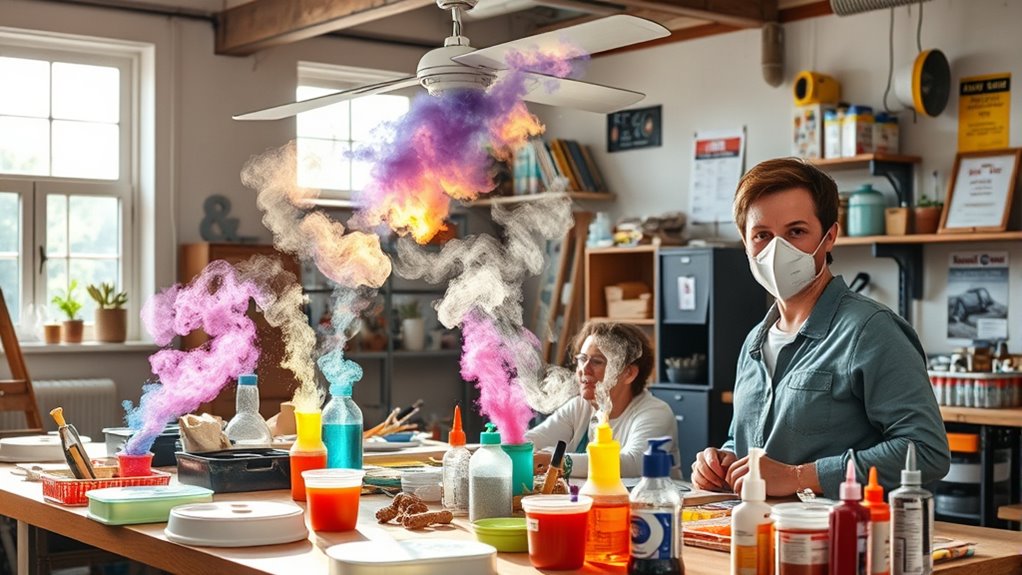
Have you ever wondered where the fumes in your crafting space come from? Many crafting activities release fumes that can affect your health and comfort. These fumes often originate from materials like resin, paint, glue, and solvents. Understanding their sources helps you manage odor control effectively. Proper ventilation placement is key to removing fumes at their source and preventing buildup. For instance, placing exhaust fans near workstations ensures fumes are drawn away quickly. Additionally, using localized exhaust hoods over specific tools or projects can improve air quality. Recognizing where fumes originate allows you to implement targeted solutions, reducing health risks and making your space safer. Incorporating ventilation systems designed for your specific needs can greatly enhance air circulation and overall safety. Proper airflow management is essential for maintaining a healthy crafting environment. By focusing on odor control through smart ventilation placement, you create a healthier environment for your crafting projects. Implementing effective air exchange strategies ensures that fumes are continually removed, promoting a safer workspace. Properly calibrated ventilation techniques can further optimize your space for safety and comfort. Additionally, understanding the sources of fumes in your environment helps you select the best equipment to keep your workspace safe and odor-free.
HEPA air purifier for craft room
As an affiliate, we earn on qualifying purchases.
As an affiliate, we earn on qualifying purchases.
The Importance of Proper Ventilation for Safety and Comfort
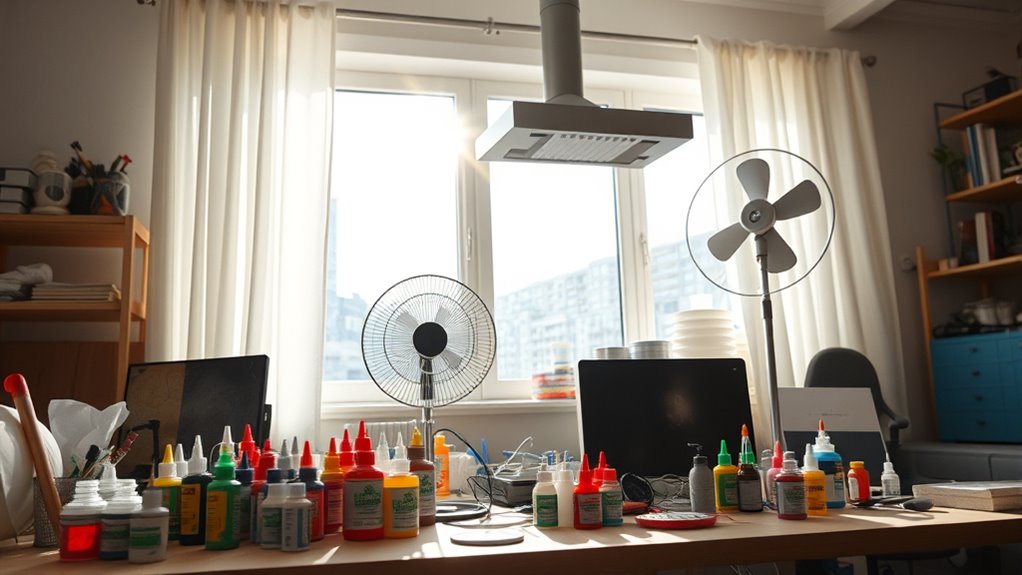
Proper ventilation keeps you safe by reducing toxic fumes and preventing health risks. It also makes your workspace more comfortable, so you can focus on your craft. Investing in good airflow is essential for both your safety and enjoyment. Additionally, using air purifiers can significantly improve air quality by filtering out airborne pollutants and allergens. Incorporating smart ventilation systems can optimize airflow based on real-time conditions, further enhancing safety and comfort. Understanding air exchange rates helps ensure your ventilation setup effectively removes hazardous fumes and maintains a healthy environment. Consulting reliable backup power options can also ensure your ventilation system remains operational during outages, preventing dangerous buildup of fumes. Knowing and maintaining proper ventilation standards ensures your workspace stays safe and well-ventilated at all times.
Reduces Toxic Fumes
When you work without adequate ventilation, toxic fumes from paints, adhesives, and other crafting supplies can quickly build up, posing serious health risks. Proper ventilation greatly improves air quality by dispersing harmful fumes and reducing their concentration. This is especially important when working with substances that emit chemical fumes, which can be dangerous if inhaled over time. Good airflow helps prevent headaches, dizziness, or long-term health issues caused by inhaling chemicals. Additionally, good airflow controls odors, making your workspace more pleasant and less overwhelming. Ventilation systems, like exhaust fans or open windows, ensure fumes don’t linger and become concentrated. Incorporating smart ventilation solutions can further optimize airflow and air quality management, enhancing safety. Utilizing home security system integrations can also allow for remote monitoring and control of your ventilation setup, adding an extra layer of safety and convenience. Proper air exchange is essential to maintain a safe and comfortable crafting environment.
Enhances Work Comfort
Good airflow not only keeps harmful fumes at bay but also markedly boosts your comfort while working. When your workspace has good air quality, you experience fewer headaches, dizziness, or irritation, making it easier to focus on your craft. Proper ventilation helps control scents, preventing them from becoming overwhelming or distracting. With fresh air circulating effectively, your workspace feels less stuffy and more inviting, which can improve your overall mood. By reducing lingering odors, ventilation also makes your environment more pleasant, especially during long sessions. Enhanced airflow ensures that your space remains comfortable, allowing you to work longer without fatigue or discomfort. Additionally, proper ventilation techniques can prevent the buildup of dangerous fumes, ensuring a safer environment. Implementing air exchange systems can further optimize airflow and safety in your workspace. Recognizing the importance of air quality management can help you establish a more effective and safe crafting environment. Ultimately, good ventilation creates a safer, more enjoyable crafting experience through better air quality and scent control. StrongMocha
Prevents Health Risks
Without adequate ventilation, harmful fumes and airborne particles can quickly build up in your workspace, posing serious health risks. Regular air quality monitoring helps you detect dangerous levels of fumes, ensuring you stay safe. Proper ventilation prevents these hazardous substances from accumulating, reducing the risk of respiratory issues, headaches, or long-term health problems. To maintain a safe environment, you need consistent ventilation maintenance, including cleaning filters and ensuring vents are unobstructed. When ventilation works effectively, it continuously clears out fumes and improves air quality, keeping you comfortable and protected. Additionally, understanding air quality standards helps you establish safe ventilation practices. Prioritizing these steps allows you to craft confidently, knowing your workspace supports your health and safety every step of the way.
localized exhaust hood for painting
As an affiliate, we earn on qualifying purchases.
As an affiliate, we earn on qualifying purchases.
Types of Ventilation Systems Suitable for Crafters

You can choose spot ventilation options like exhaust fans or range hoods to target specific work areas effectively. Portable air purifiers also help improve air quality without permanent installation. Both systems offer flexible solutions to keep your crafting space safe and comfortable. Incorporating cleaning & organization techniques can further reduce airborne contaminants in your workspace. Additionally, understanding proper ventilation principles can enhance the effectiveness of your chosen systems and ensure a healthier environment. To maximize safety, staying informed about holistic SEO strategies can help you adapt your ventilation setup as your workspace evolves. Familiarizing yourself with airflow dynamics can also optimize the placement and performance of your ventilation system.
Spot Ventilation Options
Are you looking for effective ways to manage localized fumes and dust from your crafting activities? Spot ventilation options are perfect for targeted air removal. These systems capture fumes directly at the source, reducing exposure. You can choose from DIY solutions like attaching a flexible duct to a fan or modify existing equipment for better airflow. For larger projects, consider installing wall-mounted or desk-mounted hoods that pull fumes away efficiently. Here’s a quick comparison:
| Solution | Pros |
|---|---|
| DIY exhaust fan | Cost-effective, customizable |
| Localized hoods | Efficient fume capture |
| DIY modifications | Easy to adapt to your workspace |
| Spot fans | Portable, simple to set up |
With these options, you can create a safer crafting environment tailored to your needs.
Portable Air Purifiers
Portable air purifiers are an excellent choice for crafters seeking convenient, effective ventilation. When selecting an air purifier, consider the size of your workspace and the types of fumes you generate, such as resin or paint vapors. Look for models with HEPA filters and activated carbon layers to trap particles and absorb odors. Portable ventilation options like these allow you to easily move the device where you need it most, providing targeted air cleaning. They’re ideal for small studios or areas without built-in ventilation systems. Proper air purifier selection ensures you maintain a safe breathing environment without the hassle of complex installations. By choosing the right unit, you keep fumes at bay and create a healthier, more comfortable crafting space.
carbon filter air purifier
As an affiliate, we earn on qualifying purchases.
As an affiliate, we earn on qualifying purchases.
Setting Up a Safe and Effective Ventilation Area
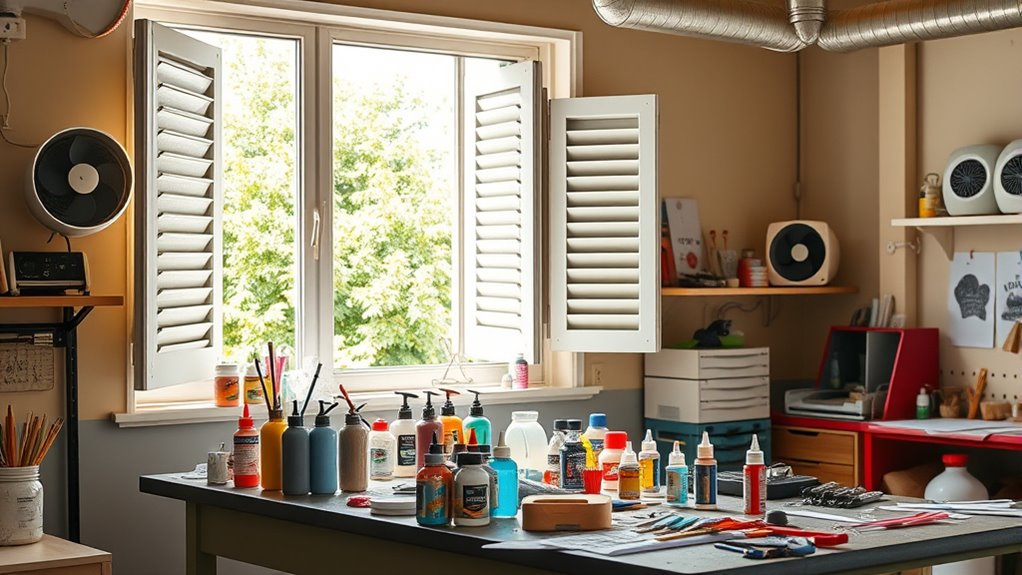
Creating a safe and effective ventilation area begins with choosing a well-ventilated space that minimizes exposure to fumes and dust. You need to take into account airflow patterns and ventilation placement to optimize safety. Proper setup involves positioning vents and fans to direct contaminated air away from your workspace and toward an exhaust point.
Consider these factors:
- Place exhaust fans near the source of fumes, not across the room
- Use multiple vents to promote consistent airflow
- Avoid stagnant zones where fumes can settle
- Ensure ventilation paths are unobstructed
- Position intake vents to draw fresh air from outside
Tips for Maintaining Good Airflow During Projects
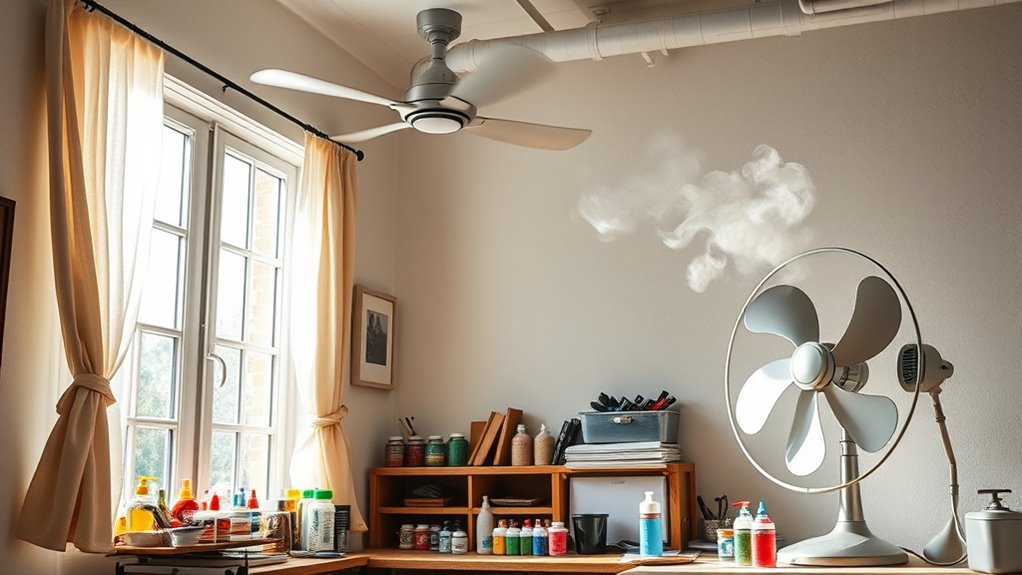
Maintaining good airflow during your projects is essential to guarantee fumes and dust are effectively carried away from your workspace. To do this, focus on establishing proper airflow patterns that direct contaminated air out and bring fresh air in. Position fans and vents to create a continuous flow, avoiding dead zones where fumes can linger. Regular ventilation maintenance is key; check that exhaust fans are functioning correctly, filters are clean, and air is moving smoothly. Adjust the placement of fans if you notice fumes settling in certain areas. Consistent airflow not only improves safety but also helps keep your workspace comfortable. By paying attention to airflow patterns and maintaining your ventilation system, you ensure a safer, healthier environment for all your crafting projects.
Additional Safety Precautions When Working With Fuming Materials
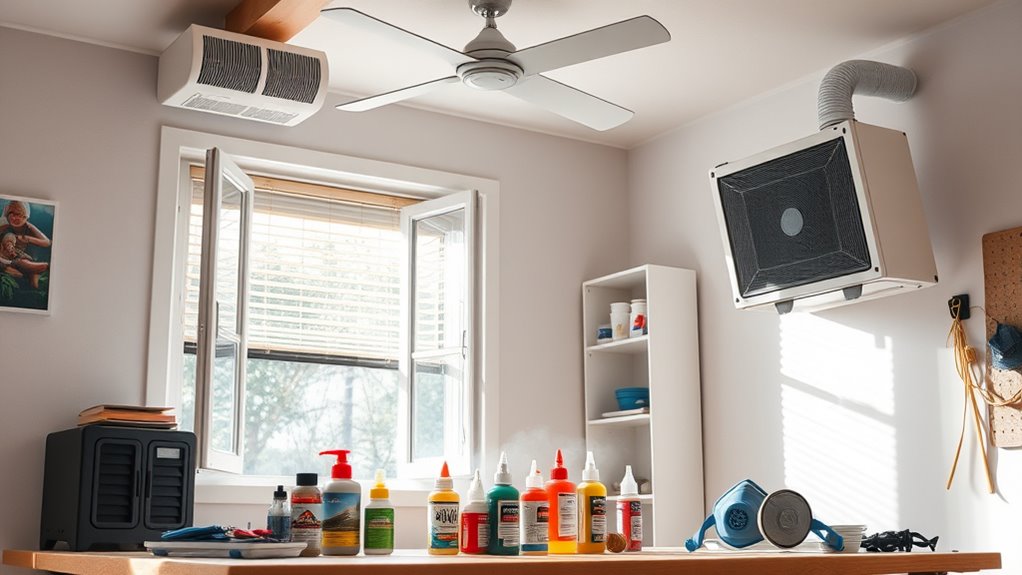
When working with fuming materials, it’s crucial to prioritize safety to prevent health risks. These fumes can contain harmful chemicals, so implementing extra precautions is essential. Focus on chemical odor elimination by using activated carbon filters and ensuring proper ventilation. Always wear respiratory protection strategies like masks with appropriate filters to avoid inhalation of toxic vapors. Keep your workspace well-ventilated and consider using local exhaust systems to capture fumes at the source. Additionally, store chemicals properly, away from heat and open flames, and avoid working alone in enclosed spaces. Regularly inspect your safety gear for integrity and replace filters as recommended. Taking these precautions helps protect your health and ensures a safer crafting environment when handling fuming materials.
Frequently Asked Questions
How Often Should I Replace or Clean My Ventilation Filters?
You should replace or clean your ventilation filters based on your filter type and usage, generally every 1 to 3 months. Follow your device’s cleaning schedules and monitor airflow; if it decreases or odors linger, it’s time for a change. Regular filter replacement guarantees ideal air quality and safety while crafting with resin, paint, or glue. Always check manufacturer recommendations for specific guidance.
Can I Use Natural Ventilation Instead of Mechanical Systems?
Yes, you can use natural airflow for DIY ventilation, but it may not be as effective as mechanical systems. Rely on open windows and doors to create a steady breeze, helping disperse fumes. However, for safer and more consistent air quality, consider supplementing natural ventilation with exhaust fans or air purifiers. Always guarantee good airflow during resin, paint, or glue work to protect your health.
Are There Specific Ventilation Requirements for Small Craft Spaces?
Think of your small craft space as a delicate greenhouse needing just the right breeze. Ventilation standards for small spaces focus on space-specific requirements, ensuring fumes don’t linger like a stubborn fog. You should prioritize proper airflow, using local exhausts or portable fans, to keep air fresh and safe. Remember, even tiny spaces need tailored solutions to meet safety, comfort, and health needs—like a well-tended garden thriving in the breeze.
How Do I Know if My Ventilation System Is Effective?
You can tell your ventilation system is effective if your air quality improves and you notice fewer fumes or odors lingering. Check for consistent airflow by feeling for steady air movement near vents or fans. Regularly clean your filters and ensure vents aren’t blocked. Optimizing airflow means maintaining proper fan operation and open pathways, so fresh air circulates well, keeping your craft space safe and comfortable.
What Are the Signs of Inadequate Ventilation During Crafting?
Imagine you’re in a sealed jar, feeling the air tighten—signs of inadequate ventilation show up as persistent odors, stuffy air, or lingering fumes. You might notice decreased air quality, headaches, or dizziness, indicating your craft space isn’t properly ventilated. If you smell fumes even after working or feel uncomfortable, it’s time to boost airflow. Trust your senses; they’re your first warning about insufficient ventilation.
Conclusion
Now that you know the essentials, imagine the perfect crafting space where fumes vanish and fresh air reigns. With proper ventilation, you’re not just protecting your health—you’re creating a safe haven for your creativity to flourish. But what if a simple change could transform your workspace into an even safer, more comfortable zone? Stay vigilant, keep those airflow tips in mind, and watch your craft area become a sanctuary where safety and inspiration collide.