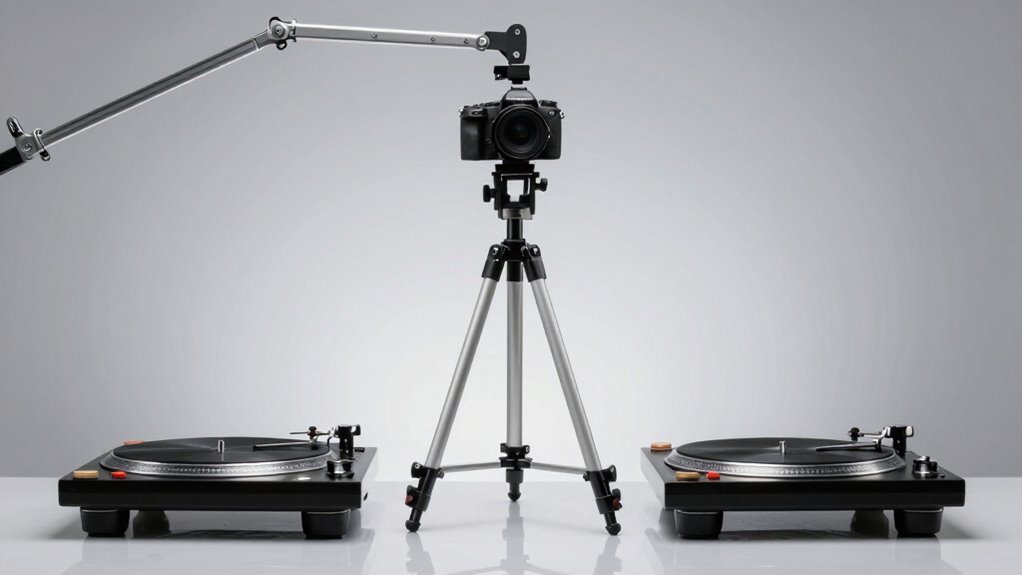
If you’re looking for stability, a tripod is your go-to for steady shots and smooth, sweeping videos. Overhead rigs are perfect for top-down angles, detail work, and consistent lighting, especially in product or craft shoots. Turntables help showcase objects from multiple angles, ideal for new product displays or artistic projects. Each tool solves specific filming needs—keep exploring to discover how to choose the best gear for your projects and master your filming setup.

Get business pricing on tools and workshop supplies
- Business-only prices and quantity discounts
- Tax-exempt purchasing
- Multiple users, one account, clear invoices
Key Takeaways
- Tripods are best for stable, static shots and smooth sweeping motions in photography and videography.
- Overhead rigs excel in capturing top-down views, overhead shots, and detailed craft or cooking scenes.
- Turntables are ideal for showcasing products with rotating views, enhancing 360-degree presentations.
- Overhead rigs improve stabilization and consistent positioning for overhead filming and lighting setups.
- Choosing the right tool depends on whether stability, overhead perspective, or product rotation is the main requirement.
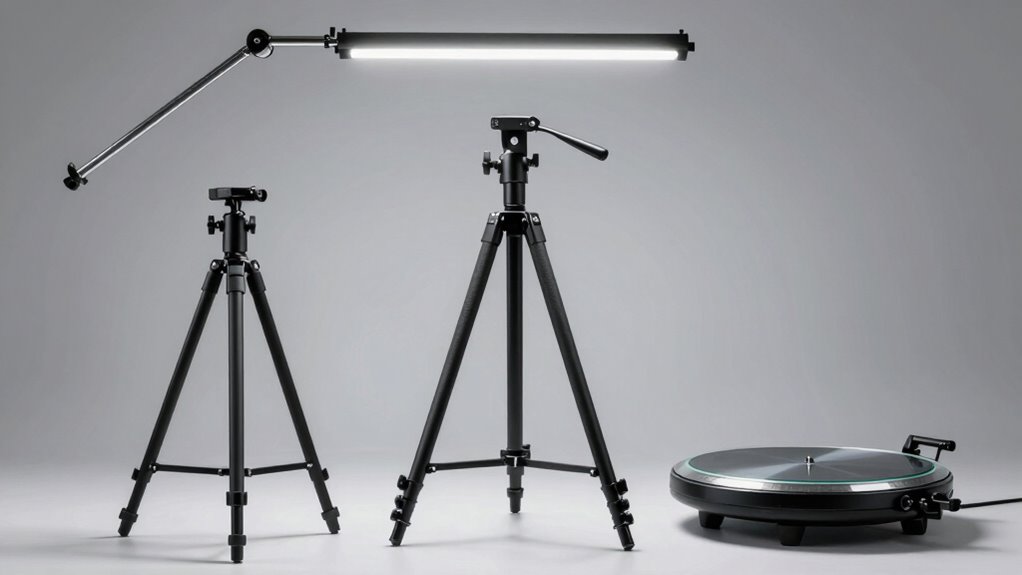
Tripods, on the other hand, excel in scenarios where you need to shoot from above or achieve smooth, sweeping motion shots. These rigs are perfect for product photography, stop-motion animation, or overhead video captures, providing a stable platform that minimizes unwanted movement. With an overhead rig, you can maintain consistent camera positioning, which is essential for lighting setups that demand even illumination across the subject. It also helps in maintaining camera stabilization during dynamic shots, allowing you to move the camera smoothly along a track or arm without jitters. If you’re filming a cooking tutorial or a detailed craft project, an overhead rig offers an unobstructed view, giving your audience a clear, engaging perspective. Understanding camera stabilization is key to producing professional-looking footage, and overhead rigs are instrumental in achieving this. Additionally, selecting the right support equipment can greatly enhance your filming efficiency and quality.
Popular right now

Vitamix Propel Series 750 Professional-Grade Blender, 4 Programs, Black

Breville Barista Pro Espresso Machine with Grinder, Brushed Stainless Steel

Breville Bambino Espresso Machine, Brushed Stainless Steel
As an affiliate, we earn on qualifying purchases.
Frequently Asked Questions
Which Tool Is Best for Outdoor Photography Stability?
For outdoor photography stability, a tripod is your best choice. It provides solid camera stability, ensuring sharp images even in low light or windy conditions. Plus, modern tripods are lightweight and portable, so you can carry them easily during hikes or outdoor shoots. They’re versatile and reliable, giving you the stability needed to capture detailed shots without camera shake, no matter where your outdoor adventures take you.
How Do I Choose Between an Overhead Rig and a Turntable?
Choosing between an overhead rig and a turntable depends on your desired camera angles and lighting adjustments. Imagine you’re painting a ceiling—an overhead rig helps you capture high, straight-down shots with precision, ideal for detailed product shots. A turntable, like a lazy Susan, allows smooth, continuous rotation for dynamic, multi-angle shots. Consider your subject’s movement and lighting needs to pick the tool that offers the flexibility you want.
Can These Tools Be Used for Video Recording?
Yes, these tools can be used for video recording. They enable smooth camera movement and help you achieve precise framing techniques, essential for professional-looking videos. Overhead rigs and turntables allow for dynamic shots and seamless shifts, while tripods provide stability and steady framing. By choosing the right tool for your shot, you can enhance your storytelling and create engaging visuals with controlled camera movement.
What Is the Cost Difference Among These Tools?
You’ll find that tripods are generally the most affordable, with prices ranging from budget options around $20 to high-end models near $200. Overhead rigs tend to cost more, often between $100 and $500, depending on size and complexity. Turntables vary widely, from about $50 for basic models to over $1,000 for professional-grade equipment. When considering your budget, weigh their cost comparison against your specific needs and how often you plan to use each tool.
Are There Size or Weight Restrictions for Each Tool?
You’ll find that each tool has its own size and weight restrictions, mainly due to weight limitations and portability concerns. Tripods tend to have weight limits to guarantee stability, overhead rigs are often bulky and heavy, making portability a concern, while turntables are usually lightweight but limited in size. Always check the specifications to ensure your equipment fits within these constraints for safe, effective use.
Conclusion
Understanding the strengths of tripods, overhead rigs, and turntables helps you choose the right tool for each shot. Did you know that overhead rigs can reduce setup time by up to 30%, making your workflow more efficient? By selecting the right device, you not only improve your photo quality but also streamline your process. So, next time you plan a shoot, remember which tool best fits your creative needs – you’ll be amazed at the results!