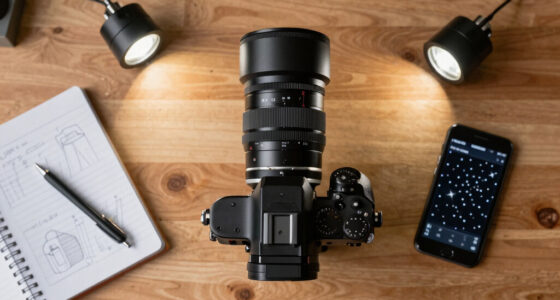
Your home studio’s environment plays a bigger role than a better camera. By adding soundproofing, like heavy curtains or foam panels, you improve audio clarity and reduce echoes. Proper ventilation keeps equipment in good shape, while effective lighting enhances your visuals. Using quality monitors or headphones ensures accurate editing. When you focus on these practical upgrades and create a well-controlled space, your content looks and sounds professional—more than just camera quality, your environment makes the difference. Keep exploring to learn more.

Get tools and workshop supplies delivered free — and shop member deals
- Fast, free delivery on millions of items
- Access to Prime Big Deal Days deals on October 6–7
- Prime Video, Amazon Music and more included
Key Takeaways
- Soundproofing materials like foam panels and heavy curtains improve audio clarity more than high-end camera upgrades.
- Quality monitor speakers and headphones enhance editing accuracy, often more impactful than camera enhancements.
- Proper lighting setups and natural light make visuals more appealing than investing in expensive camera gear.
- Effective ventilation and air quality control preserve equipment and maintain consistent sound and visual conditions.
- Acoustic treatments like bass traps and diffusers ensure professional sound quality, outperforming camera improvements.
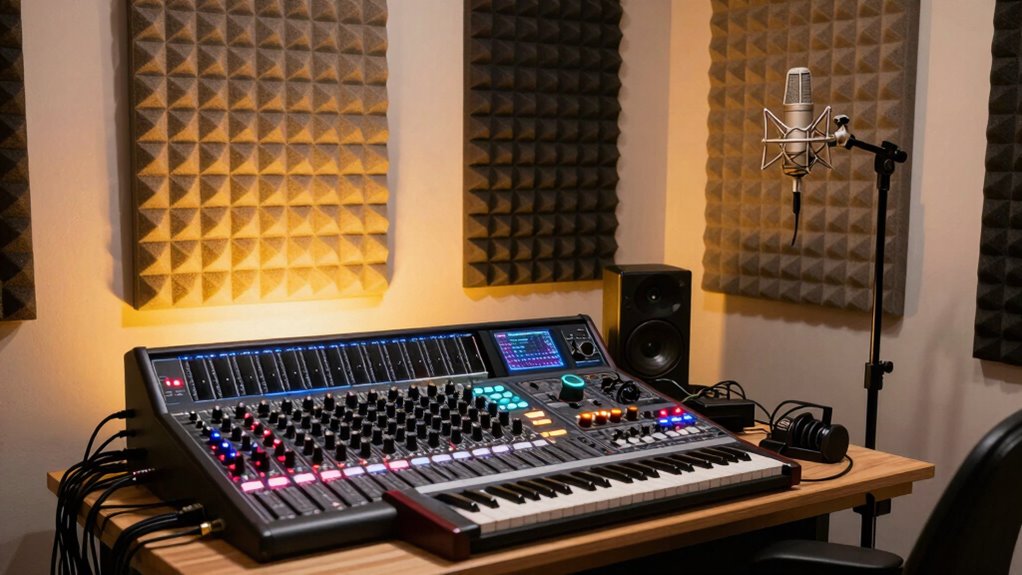
Setting up a home studio can seem overwhelming, but with the right gear, you can create a professional-sounding space without breaking the bank. One of the most essential aspects of a good studio isn’t just high-end cameras or microphones; it’s the environment you build around your equipment. Soundproofing techniques play a critical role in ensuring your recordings are clean and free from unwanted noise. You don’t need costly professional soundproofing; simple solutions like heavy curtains, foam panels, or even bookshelves filled with books can absorb echoes and reduce noise transmission. Seal gaps around doors and windows with weatherstripping to prevent outside sounds from sneaking in. These small adjustments considerably improve your audio quality, making your recordings clearer and more professional. Additionally, biodiversity-friendly materials such as natural fibers or eco-conscious insulation can enhance your soundproofing while supporting sustainable living practices. Incorporating eco-friendly soundproofing options can also help reduce your studio’s environmental footprint. Using sustainable materials not only benefits the environment but can also improve the overall acoustic performance of your space. Considering air quality and ventilation is also important, as a well-ventilated space prevents humidity buildup that can affect equipment and sound quality. Proper ventilation and humidity control are crucial for maintaining the longevity of your gear. Lighting setups are equally important, especially if you’re creating video content or streaming. Proper lighting helps you look your best on camera and enhances the overall production quality. You don’t need expensive professional lighting rigs—start with a basic ring light or softbox. Position your lights to minimize shadows and avoid harsh glare; natural light can work well if you have a good window. Experiment with different angles and intensities until your face is evenly lit. Good lighting can make a more noticeable difference than a high-end camera because it affects how viewers perceive your video. When combined with effective soundproofing, your visuals will look polished, and your audio will be crisp. Beyond soundproofing techniques and lighting setups, the right monitor speakers or headphones matter just as much. Clear audio playback lets you catch every detail, so you can mix and edit with confidence. Acoustic treatment, like bass traps or diffusers, can further improve sound quality within your space, giving you a true sense of how your recordings will sound in the real world. Don’t overlook the importance of proper cabling and organization either; a clutter-free environment helps you focus on your work without distractions. Ultimately, it’s the thoughtful integration of these elements—soundproofing, lighting, and quality monitoring—that transforms your space into a professional-grade studio. You don’t have to invest in the most expensive gear to get great results. Instead, focus on making smart, practical upgrades that improve your environment and workflow. When your space is well-treated acoustically and visually, your recordings will sound clearer, look more appealing, and elevate your overall content. These foundational elements are what truly help you produce more polished, engaging work, proving that better gear isn’t just about the camera—it’s about creating the right environment for success. Proper Acoustic treatment can also significantly impact how well your recordings translate to different listening environments.
soundproof foam panels for home studio
As an affiliate, we earn on qualifying purchases.
As an affiliate, we earn on qualifying purchases.
Frequently Asked Questions
How Do I Choose the Right Microphone for My Home Studio?
To choose the right microphone, focus on your recording needs and environment. Consider microphone placement to avoid unwanted noise and achieve ideal sound. Select a polar pattern suited for your setup: cardioid for vocals, omnidirectional for ambient sounds, or figure-eight for interviews. Test different mics if possible, and prioritize one that complements your space and style, ensuring clear, professional-quality recordings.
What Are the Best Soundproofing Tips for Small Spaces?
Want to cut down noise in your small space? Start with soundproof curtains—they’re an easy, effective solution. Combine them with DIY insulation, like foam panels or acoustic blankets, to absorb sound waves. Seal gaps around doors and windows with weatherstripping or draft stoppers. These simple tweaks can dramatically improve your soundproofing, turning your space into a quiet sanctuary and making your recordings or work sessions much more professional.
How Does Acoustic Treatment Improve Recording Quality?
Acoustic treatment improves recording quality by managing sound absorption and reflection control in your space. When you add sound-absorbing materials, you reduce echo and unwanted reverberations, making your recordings clearer. Reflection control minimizes sound bouncing off surfaces, preventing muddiness and ensuring your voice or instrument sounds true to life. With proper acoustic treatment, your home studio produces professional-sounding recordings, even without high-end equipment.
What Software Is Best for Beginner Home Studio Setup?
For beginners, software like Ableton Live Intro, FL Studio, or GarageBand offers user-friendly interfaces perfect for music production. They help you focus on creativity while mastering studio ergonomics, ensuring your workspace stays comfortable and efficient. These programs are affordable and versatile, making them ideal for learning the basics of recording, editing, and mixing. As you progress, you can upgrade to more advanced versions to expand your home studio capabilities.
How Do I Prevent Background Noise During Recordings?
Imagine recording vocals at home, only to be interrupted by street noise. To prevent background noise, you should focus on diy soundproofing your space and optimize microphone placement. Use blankets or foam panels to absorb sound, and position your microphone close to you, slightly off-axis, to minimize capturing unwanted ambient sounds. These simple steps drastically improve your audio quality, making your recordings cleaner and more professional.
As an affiliate, we earn on qualifying purchases.
Conclusion
Remember, your home studio gear is the foundation of your creative sanctuary, more essential than a shiny camera. Think of it as the roots of a tree—strong and steady, supporting every branch of your craft. When you invest in the right tools, you’re planting seeds for growth and innovation. So, nurture your setup, and watch your skills blossom like a vibrant garden, turning your space into a powerhouse of inspiration.
As an affiliate, we earn on qualifying purchases.
As an affiliate, we earn on qualifying purchases.
Halloween Picks
halloween
As an affiliate, we earn on qualifying purchases.