Smudges happen when ink hasn’t fully dried before you touch or handle your print. Factors like paper quality, ink type, and environmental conditions play key roles in drying time. Using glossy or coated paper slows absorption, increasing smudge risk, while matte, uncoated paper helps ink sink in faster. Warm, dry environments also speed up drying. To avoid smudges, choose the right paper and wait patiently for the ink to dry completely; more tips are just ahead.
Key Takeaways
- Smudges occur when ink hasn’t fully dried, often due to paper type, ink formulation, or environmental conditions.
- Using absorbent, matte, or uncoated paper speeds up ink absorption and reduces drying time.
- Faster-drying inks and controlling humidity and temperature help prevent smudging during handling.
- Allow sufficient drying time before stacking or touching printed materials to avoid smudges.
- Proper paper selection and environmental management are essential for achieving optimal dry time and print quality.
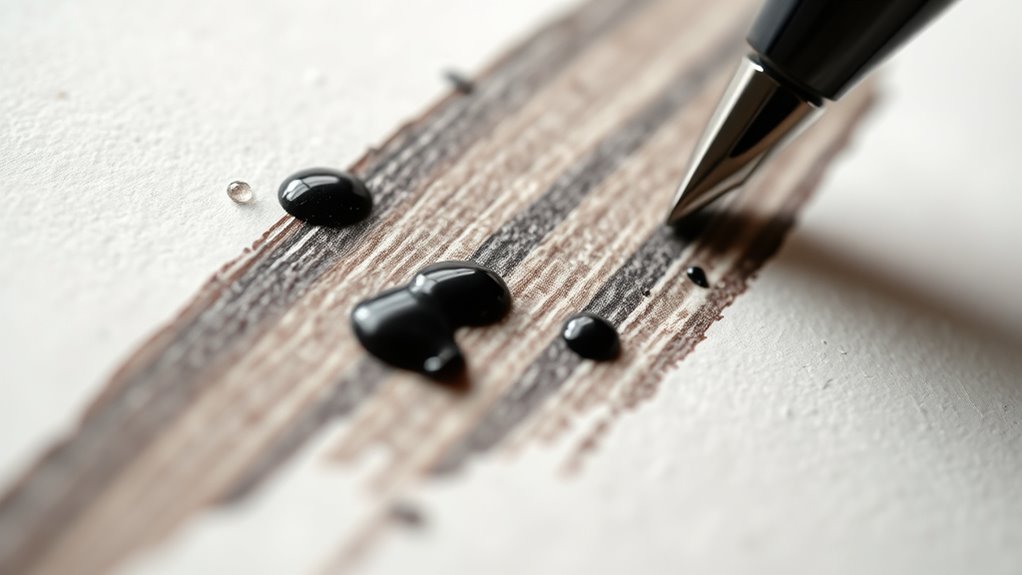
Ever wondered how long it takes for ink to dry completely? The answer depends on several factors, but two of the most important are ink absorption and paper quality. When you write or print, ink doesn’t stay on the surface forever; it soaks into the paper fibers. This process, known as ink absorption, varies greatly based on the type of paper you’re using. High-quality paper is designed with a specific texture and composition that influences how quickly ink can sink in, while lower-quality paper might have a smoother or more coated surface that slows down ink absorption. If the paper is too glossy or coated, the ink tends to sit on the surface longer, increasing the chance of smudges. Conversely, rougher, more absorbent paper allows the ink to penetrate faster, reducing dry time and the likelihood of smudging.
Understanding the relationship between ink absorption and paper quality is key to controlling smudges. When you use thick or glossy paper, you might notice that ink remains wet for longer, making smudges more common if you handle the paper too soon. In these cases, waiting a bit longer before stacking or touching the printed material can save you from messy mistakes. On the other hand, when you choose high-quality, matte paper with good ink absorption properties, the ink sinks in quickly, so you can handle your documents sooner. It’s worth noting that the type of ink also plays a role; some inks dry faster because they contain faster-evaporating solvents, while others might require more time to set fully. Additionally, proper filtration and pump protection can help ensure consistent ink flow, contributing to a more uniform drying process and fewer smudges.
To improve your drying process, consider the paper’s quality before printing or writing. If you need quick dry times, opt for paper with a matte or uncoated surface that promotes better ink absorption. Using the right paper can make a significant difference, especially for busy environments where smudges could slow down your workflow. Additionally, controlling environmental factors like humidity and temperature can influence ink drying; dry, warm conditions facilitate faster evaporation of solvents in the ink, speeding up the process. Remember, patience is sometimes necessary—rushing to handle freshly printed documents can undo all your effort by smudging the ink. So, selecting the appropriate paper and understanding its absorption qualities isn’t just about aesthetics; it’s a practical step toward cleaner, sharper results and avoiding those frustrating smudges that ruin your work.
Frequently Asked Questions
How Does Humidity Affect Ink Drying Times?
Humidity effects can considerably impact your ink drying times. When humidity is high, the moisture in the air slows down drying efficiency, causing ink to stay wet longer and increasing smudge risk. Conversely, low humidity speeds up drying, reducing smudges. To control this, you can adjust indoor humidity levels with dehumidifiers or fans, ensuring ideal drying conditions and minimizing smudges during your printing or writing tasks.
Can Different Paper Types Change Ink Dry Times?
Yes, different paper types can alter ink dry times. You notice that paper textures, like rough or smooth surfaces, influence how quickly ink dries because they affect ink absorption. Coarser papers tend to absorb ink faster, reducing smudges, while smoother papers may take longer. So, when choosing paper, consider its texture to guarantee your ink dries properly and doesn’t smudge easily.
What Are the Best Drying Methods for Quick Results?
To get quick results, use quick-drying inks and apply gentle heat. You can speed up drying by using a heat gun, a hairdryer on low, or placing your paper in a warm, dry spot. Think of heat as a gentle breeze that whispers, “Dry faster.” Always keep the heat moving to avoid burns or smudges, and guarantee your paper is well-ventilated for the best, smudge-free finish.
Do Digital Inks Have Drying Issues Like Traditional Inks?
Digital inks generally don’t have drying issues like traditional inks because of advanced digital ink technology. Thanks to recent ink formulation advancements, digital inks dry instantly on most surfaces, reducing smudging and messes. You’ll find that digital printing offers quick results without needing extra drying time. This makes digital inks ideal for fast-paced environments where speed and clean results matter most.
How Can I Prevent Smudging During Multi-Color Printing?
Think of multi-color printing like layering a delicate cake—you need the right ingredients and timing. To prevent smudging, guarantee the ink layer thickness is balanced and the ink formulation is optimized for quick drying. Use quick-dry inks designed for multi-pass printing, and consider drying between layers. This way, each color sets properly, preventing smudges and ensuring vibrant, sharp results.
Conclusion
Understanding ink dry time is like tending a delicate garden—you need patience for everything to settle and flourish. Rushing your hands or smudging your work only hampers the process, much like pulling weeds too soon. By giving your ink the proper time to dry, you’ll ensure your masterpiece stays pristine, free of smudges and smears. Remember, patience is the gardener’s best tool—allow your ink to fully dry, and your work will bloom beautifully.