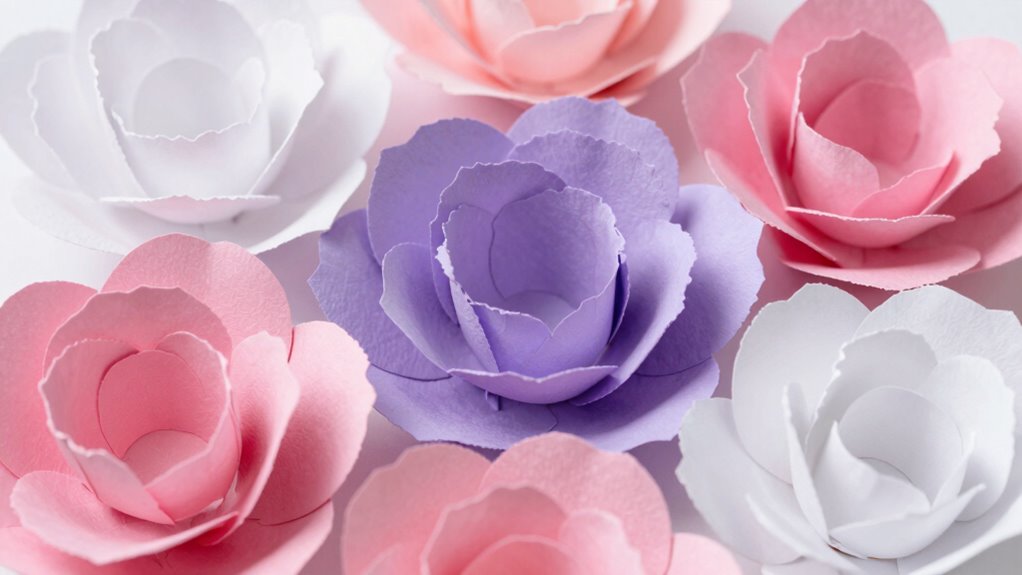

To make paper flowers look truly real, focus on shaping the edges of your petals. Gently curling, tearing, or fraying edges adds natural texture and dimension, mimicking real blooms. Using the right materials and technique, like curling with a pencil or scissors, helps create lifelike curves and irregularities. Small details make a big difference in realism. Keep experimenting with edge shaping—continue exploring to discover even more tips for stunning, realistic paper flowers.
Key Takeaways
- Use gentle curling and scalloping techniques to create natural-looking petal edges that mimic real flowers.
- Fray or tear paper edges unevenly for a more organic, lifelike appearance.
- Select flexible materials like tissue or crepe paper to easily shape realistic petal edges.
- Observe real flowers to replicate specific edge irregularities and textures for authenticity.
- Combine various edge shaping methods to add depth, dimension, and realism to paper flowers.
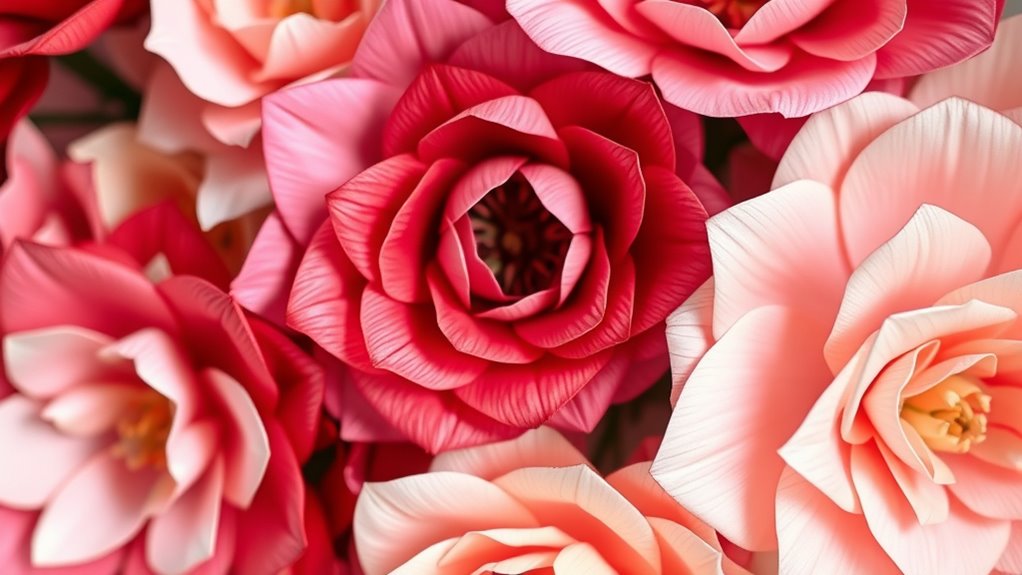
Have you ever wished for flowers that stay perfect year-round without watering or wilting? If so, paper flowers are the perfect solution. They bring vibrant beauty to any space and can be customized to match any color scheme or style. Whether you’re creating a stunning flower arrangement or diving into diy crafts, mastering the art of edge shaping is key to making your paper blooms look incredibly real. The secret lies in the details—specifically, how you shape the edges of each petal to mimic the natural curves and textures found in real flowers.
When you start making paper flowers, you’ll notice that the edges of your petals are essential. Straight, flat edges tend to look artificial, so instead, you want to gently curve, fray, or ruffle the edges to add depth and dimension. Using scissors, you can create tiny zigzags or scallops along the edges, which helps simulate the subtle undulations of real petals. For a softer look, gently curling the edges with a pencil or a bone folder can add a natural curve. This technique makes your flower look more lifelike by adding a sense of movement and delicacy that flat, stiff edges just can’t provide.
Gently curl, fray, or scallop petal edges to create lifelike, delicate paper flowers that mimic real blooms.
In diy crafts, the ability to shape edges creatively allows you to experiment with different flower types. For example, roses benefit from tightly curled edges, while daisies look more natural with slightly frayed, uneven edges. The key is to observe real flowers closely—notice how their edges aren’t uniform but have little variations that give each bloom character. You can replicate this by lightly tearing or ruffling paper edges or by using tools like embossing styluses for gentle shaping. This attention to detail elevates your craft from simple paper flowers to stunning, realistic floral arrangements. Additionally, understanding the edge shaping techniques used in professional flower making can greatly enhance the overall realism of your creations.
Furthermore, the materials you choose can influence how easily you shape edges. Thinner paper, like tissue or crepe, tends to be more pliable, allowing you to manipulate edges effortlessly. Thicker cardstock offers more durability but requires a bit more effort to achieve soft curves. Whichever material you pick, the goal remains the same: to create edges that imitate the natural irregularities of real petals. When you combine careful edge shaping with thoughtful assembly, your paper flowers will fool the eye and last forever, making them a fantastic centerpiece or gift.
Frequently Asked Questions
Can Paper Flowers Be Used Outdoors Without Weather Damage?
Yes, you can use paper flowers outdoors without weather damage if you apply weatherproof coatings. These coatings protect your flowers from rain, humidity, and sunlight, enhancing their outdoor durability. Make sure to choose a water-resistant sealer and seal all edges thoroughly. This way, your paper flowers stay beautiful and intact, even in varying weather conditions. Regular touch-ups with weatherproofing will keep them looking fresh longer.
What Types of Paper Work Best for Realistic Flowers?
You want realistic paper flowers? Choose lightweight yet sturdy papers like crepe or tissue, which mimic real flower petals beautifully. Use flower petal techniques like gentle shaping and curling to add dimension. For best results, consider paper selection tips—opt for textured or matte finishes that resemble natural petals. These choices make your flowers look authentic, ensuring your creations stand out with lifelike charm and delicate detail.
How Long Do Paper Flowers Typically Last?
Paper flowers typically last several months to years, depending on how you care for them. To extend their lifespan, focus on flower preservation techniques and choose durable paper, like high-quality cardstock or crepe paper. Keep them away from direct sunlight, humidity, and dust. Proper handling also helps maintain their appearance. With good paper durability and careful maintenance, your realistic-looking paper flowers can stay beautiful much longer.
Are There Eco-Friendly Options for Making Paper Flowers?
Yes, you can choose eco-friendly options for making paper flowers by opting for biodegradable materials and recycled paper options. These choices decrease waste, minimize environmental impact, and promote sustainability. By selecting biodegradable materials, you guarantee that your flowers break down naturally over time, while recycled papers give new life to old resources. You create beautiful, eco-conscious decorations, and contribute to a greener future, all while making stunning paper flowers.
Can Paper Flowers Be Customized for Specific Colors or Sizes?
Yes, you can totally customize paper flowers for specific colors or sizes. Using color matching techniques, you can blend inks or paints to match exact shades. For size customization options, you simply cut your paper to your desired dimensions and shape the petals accordingly. This way, you get personalized flowers that fit your project perfectly, whether you’re aiming for a particular hue or a unique size.
Conclusion
Now you see, mastering the art of edge shaping is the secret to making paper flowers look incredibly real. With a little practice, you’ll turn a simple craft into a stunning, lifelike bloom that’s sure to impress. Remember, you’re only as good as your details, so don’t overlook the small touches. When it all comes together, you’ll have created a masterpiece that looks as fresh as if it just bloomed yesterday—proof that good things come to those who craft.