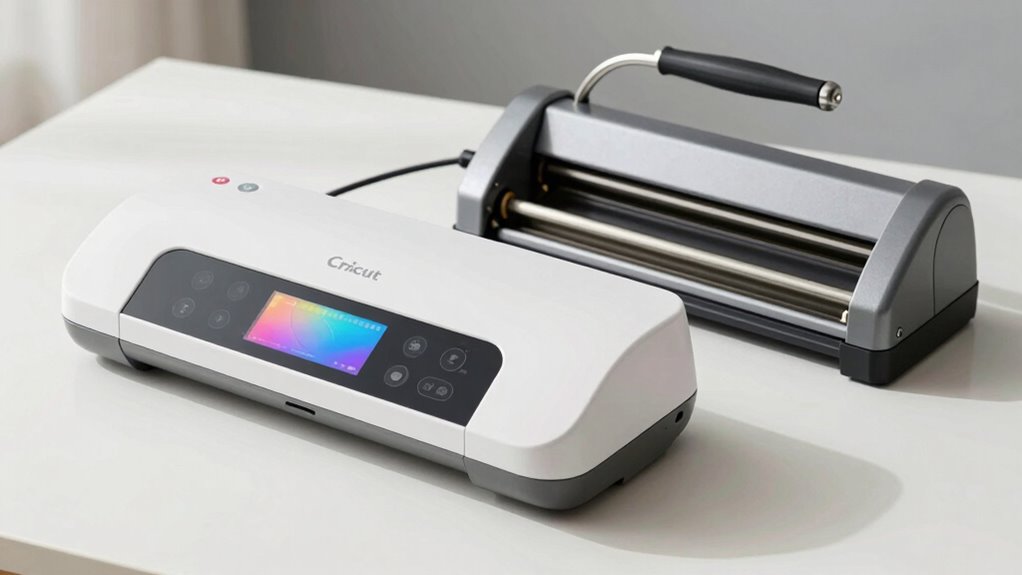
If you enjoy customizing designs digitally and want quick adjustments, a Cricut-style machine is your best choice. It offers versatility, creating intricate shapes with ease and supporting design software. However, if you prefer manual craftsmanship, durability, and traditional processes, a die-cutting machine with physical dies might suit you better. Considering your crafting style and needs can help you pick the right tool. Keep exploring to find out which machine matches your creative journey perfectly.
Key Takeaways
- Cricut-style machines offer digital design flexibility, enabling quick customization and complex cuts, ideal for modern, tech-savvy crafters.
- Traditional die-cut machines excel in tactile craftsmanship, durability, and detailed cuts without electronic components.
- Digital machines are better for experimentation and quick adjustments, while manual die-cutters suit those who prefer hands-on processes.
- Consider space, budget, and desired complexity: digital machines tend to be more expensive but versatile; manual ones are typically more affordable.
- Your choice depends on preference for digital convenience versus manual craftsmanship, skill level, and crafting style.
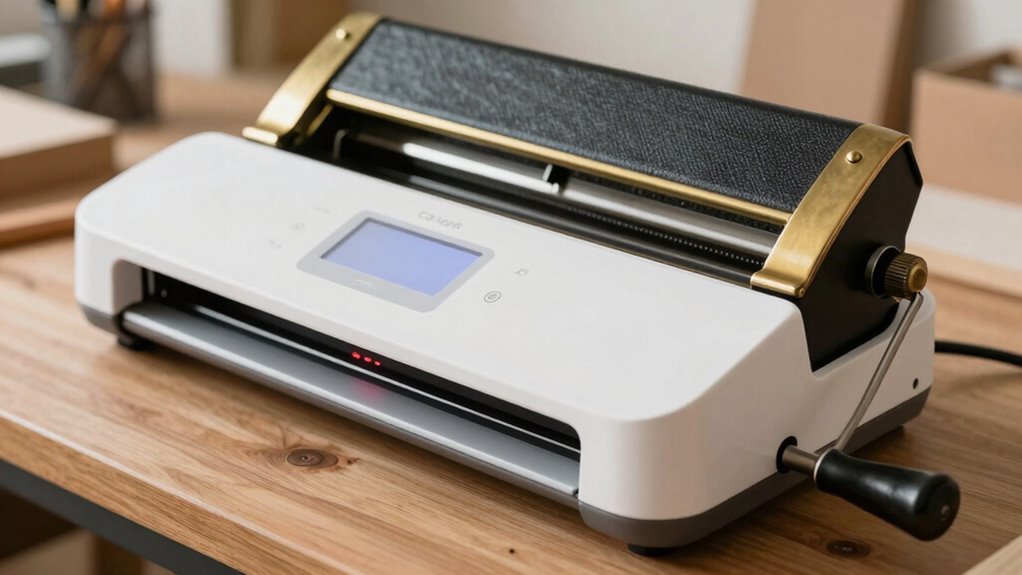
Cricut-style machines shine with their digital interfaces and compatibility with design software, allowing you to create or upload intricate designs directly from a computer or mobile device. This digital approach makes it easier to experiment with different designs and easily resize or modify them. They also support a broad ecosystem of accessories and tools, such as scoring styluses and fine-point blades, expanding your creative options. The digital design capabilities offer greater flexibility for modern crafters, making Cricut-style machines a popular choice among those seeking convenience and innovation. Traditional die-cutters, meanwhile, rely on physical dies, which can be less flexible but often produce very detailed cuts, especially for complex designs. If you’re someone who values digital customization and quick adjustments, a Cricut is likely the better fit.
However, if you prefer working with physical dies and enjoy a more tactile, manual process, traditional die-cutting machines may suit your style better. They often have fewer electronic components, making them more durable and sometimes more affordable long-term. But keep in mind, they may require more space and additional tools for embossing techniques or specialty cuts. Additionally, manual craftsmanship can be a rewarding aspect for many crafters, giving a different tactile experience. Moreover, understanding the different cutting techniques used by both types can help you make a more informed decision based on your specific needs and skill level.
Cricut cutting machine
As an affiliate, we earn on qualifying purchases.
As an affiliate, we earn on qualifying purchases.
Frequently Asked Questions
Can Both Machines Cut Fabric Effectively?
Yes, both machines can cut fabric effectively, but their fabric versatility and precision cutting abilities vary. Cricut-style machines generally handle lightweight fabrics well and offer precise cuts for detailed designs. Die cutting machines excel with thicker or more textured fabrics, providing strong, accurate cuts. Your choice depends on the types of fabric you work with most and the level of detail you need, ensuring your project turns out just right.
Which Machine Is More Beginner-Friendly?
You’ll find a Cricut-style machine more beginner-friendly because of its intuitive interface and advanced features that make learning easy. Its design versatility allows you to create a wide range of projects without extensive experience. The machine’s user-friendly controls help you navigate complex designs effortlessly, making it ideal if you’re just starting out. Overall, it offers a smooth learning curve while still providing the advanced features to expand your creativity.
Are Replacement Blades Expensive for These Machines?
Replacement blades for these machines are generally affordable, especially compared to the cost of the machine itself. You’ll find blades with good durability, slicing through paper and vinyl like a hot knife through butter. The cost comparison shows they’re a smart investment, as you won’t need to replace them often. When you do, swapping out blades is quick and easy, keeping your creative flow smooth without breaking the bank.
How Does Cutting Speed Compare Between the Two?
You’ll find that Cricut-style machines typically cut faster than traditional die cutting machines, making them ideal for quick projects. This speed enhances material versatility, allowing you to work on diverse materials efficiently. Plus, Cricut machines often provide higher cutting accuracy, ensuring intricate designs come out clean and precise. If speed and versatility matter most, a Cricut-style machine might be the better fit for your crafting needs.
Do They Support Third-Party Accessories and Materials?
Think of your machine as a key to a treasure chest—supporting third-party accessories and materials unlocks endless creative possibilities. Both Cricut-style and die-cutting machines generally support third-party materials, but material and accessory compatibility can vary. You’ll find some machines open to a wide range, while others are more restrictive. Check each machine’s specifications to guarantee it supports your preferred materials and compatible accessories, making your crafting adventures truly limitless.
manual die cutting machine
As an affiliate, we earn on qualifying purchases.
As an affiliate, we earn on qualifying purchases.
Conclusion
Choosing between a Cricut-style machine and a die cutting machine depends on your crafting needs. If you want versatility and easy digital design, a Cricut is a great choice. For more precise, large-scale projects, a die cutter might suit you better. Remarkably, over 60% of hobby crafters report increased project efficiency with digital machines like Cricut. Whichever you pick, you’ll be making beautiful creations—so go ahead, get cutting!
digital craft cutting tools
As an affiliate, we earn on qualifying purchases.
As an affiliate, we earn on qualifying purchases.
fabric die cutter
As an affiliate, we earn on qualifying purchases.
As an affiliate, we earn on qualifying purchases.