
“Acid-free” means a material has a neutral or slightly alkaline pH, typically above 7, which helps prevent deterioration over time. You need acid-free products when storing delicate items like photos, documents, or artwork to avoid acid migration that causes yellowing, brittleness, or fading. Not all products labeled acid-free are equal—some may lack proper testing or certification. Keep exploring how to identify genuine options and when acid-free materials are truly essential for long-term preservation.
Key Takeaways
- “Acid-free” means the material has a pH close to 7, preventing acid-induced deterioration over time.
- Truly needed for storing valuable documents, photographs, textiles, or artwork prone to acid damage.
- Acid-free products are usually buffered or lignin-free to ensure long-term chemical stability.
- Verify genuine acid-free status through pH testing or certification; labels alone are insufficient.
- Use acid-free materials in preservation to extend the lifespan and maintain the integrity of sensitive items.
Understanding the Chemistry Behind Acid-Free Materials

Understanding the chemistry behind acid-free materials is essential because it explains why they help preserve items over time. At the core, pH levels indicate how acidic or alkaline a material is, with a neutral pH of around 7 being ideal for preservation. Acid-free products typically have a pH above 7, ensuring they’re less likely to cause deterioration. This high pH contributes to chemical stability, meaning the material resists changes that could lead to degradation. When you use acid-free storage or framing, you’re choosing materials that maintain their chemical integrity over years, preventing acids from breaking down paper, photographs, or artwork. chemical stability helps ensure that these materials remain unaffected by environmental factors, further prolonging their lifespan. Understanding the pH level of your materials can help you make informed decisions about protecting your valuable items, ensuring they stay in excellent condition for the long term. Additionally, awareness of acidic degradation processes can guide you in selecting the most suitable preservation methods.
How Acid Content Affects Paper and Artifacts

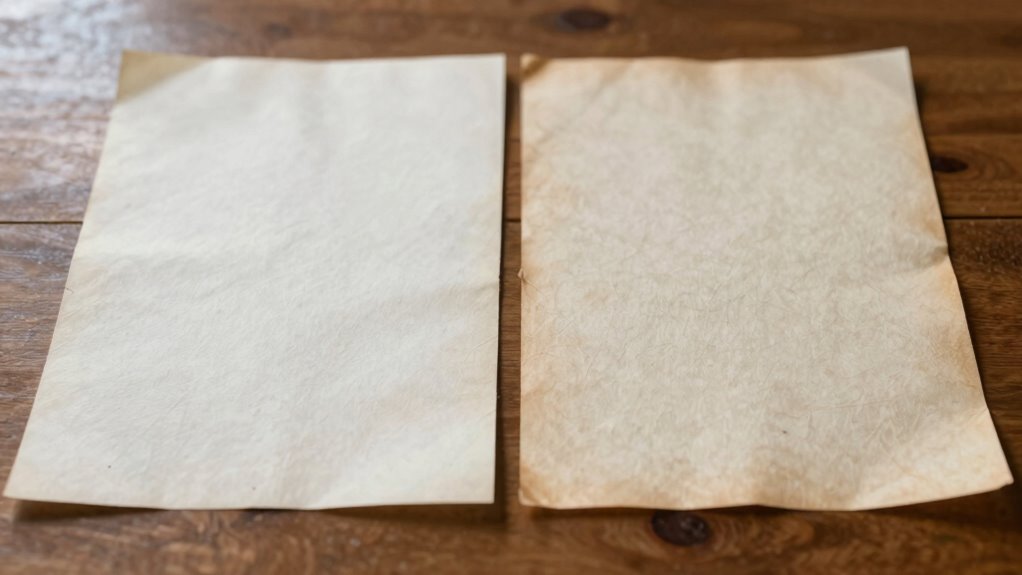
High acid content in paper accelerates deterioration, causing it to become brittle and discolored over time. This increases the risk of damage to your artifacts and reduces their longevity. Ensuring archival quality helps protect your items from these harmful effects. Understanding acid-free materials and their significance can help you better interpret historical documents and informal writings preserved on paper.
Paper Deterioration Risks
Have you ever wondered how paper and artifacts deteriorate over time? It all comes down to chemical stability and pH levels. Acidic paper has a low pH, which accelerates deterioration by breaking down cellulose fibers. Over time, this weakens the paper’s structure, making it brittle and prone to tearing. Acid content can also cause discoloration, turning pages yellow or brown. When pH levels drop below neutral, acids react with environmental pollutants, speeding up degradation. Without proper buffering, the acids continue to eat away at your artifacts, compromising their integrity. Understanding these risks helps you recognize why maintaining neutral or alkaline pH levels is vital for preserving paper and delicate items long-term. Avoiding acidic materials and using pH-balanced storage can greatly slow deterioration.
Archival Quality Assurance
Ensuring archival quality means paying close attention to how acid content influences the longevity of paper and artifacts. Acidic paper accelerates deterioration, compromising vintage preservation and reducing chemical stability over time. To maintain archival standards, you need materials with neutral or alkaline pH levels, which resist acid degradation. This approach is especially important for preserving documents and art that may be stored for decades or centuries. Proper archival quality assurance involves selecting acid-free or acid-neutral products that prevent acid migration and deterioration. By understanding how acid content affects your items, you can make informed choices that protect their integrity. Material stability considerations in backyard design can also influence the longevity and stability of outdoor materials, emphasizing the importance of choosing sustainable and durable options. Selecting acid-neutral papers and storage environments that control humidity and light exposure further enhances long-term preservation. Implementing proper acid control techniques is vital for maintaining the integrity of sensitive artifacts over extended periods. Additionally, understanding the role of pH levels in preservation helps in selecting appropriate storage materials and conditions, which is crucial for long-term conservation efforts. This careful approach is essential for long-term preservation, especially when safeguarding valuable or historical artifacts for future generations.
Common Products Labeled as “Acid-Free” and What They Actually Offer

Many everyday products like paper, stationery, and art supplies are labeled as “acid-free,” but their actual benefits can vary. You might find scrapbooking materials or frames marketed this way, yet not all truly provide long-term preservation. Understanding what these labels mean helps you choose the right items for your projects and collections. Additionally, knowing about acid-free materials can ensure your items are protected over time. It’s important to recognize that vetted products have undergone quality checks to truly meet these standards, especially for items like dog beds that support comfort and durability. Recognizing the acid-neutralizing properties of certain products can further help in selecting items that safeguard your belongings from deterioration, especially when considering vacuum cleaners that maintain a clean and preserved environment.
Paper and Stationery
When you see the label “acid-free” on paper or stationery, it often suggests durability and archival quality. While many products claim this, their benefits vary. For textile preservation or digital archiving, truly acid-free paper matters because it prevents deterioration over time. Standard stationery labeled “acid-free” may resist yellowing, but it doesn’t necessarily guarantee long-term preservation. If your goal is to archive important documents or delicate textiles, look for papers with neutral pH levels and stable, inert materials. These products reduce acid migration that can damage items over decades. Keep in mind that “acid-free” on everyday stationery helps prevent quick yellowing, but if you need genuine archival quality, verify the specifications to ensure it offers the level of preservation your project demands.
Art Supplies and Frames
Art supplies and frames labeled as “acid-free” often attract buyers seeking long-lasting preservation, but the label doesn’t always guarantee what you might expect. Many products claim to be “acid-free,” yet their true benefit depends on factors like ink absorption and maintaining color vibrancy over time. For example, acid-free papers and mats help prevent deterioration, but some frames may still contain materials that can impact your artwork.
| Product Type | Acid-Free Claim | Key Benefit |
|---|---|---|
| Art papers | Yes | Prevents yellowing, preserves ink absorption |
| Frames | Usually, but check labels | Protects against acid migration |
| Canvas and boards | Often, but varies | Maintains color vibrancy |
Scrapbooking Materials
Scrapbooking materials labeled as “acid-free” are popular choices for preserving memories, but their actual benefits can vary. While these products are often promoted as archival, they may not fully align with traditional conservation methods used in historical techniques. Acid-free paper and adhesives help prevent deterioration caused by acidity, offering a buffer against environmental damage. However, not all “acid-free” products are equally pH-balanced or long-lasting. For true preservation, look for materials that meet strict conservation standards, such as buffered papers for acidic environments or lignin-free options. Understanding these distinctions helps you choose the right scrapbooking supplies to ensure your memories stay intact over time, without accelerating deterioration or compromising the integrity of your treasured items.
The Difference Between Acid-Free and Archival Quality

While both acid-free and archival quality materials are designed to preserve your items, they serve different purposes. Acid-free materials have a low acid content, which prevents deterioration caused by acid migration, making them suitable for everyday preservation. Archival quality materials go a step further; they are tested to meet strict preservation methods that ensure long-term stability and minimal aging. These items often have buffered or pH-neutral properties, providing superior protection against environmental damage. Understanding the fundamentals of preservation principles can help you make smarter decisions about storage and conservation. Recognizing the importance of material stability ensures your collections are protected over extended periods, especially when dealing with irreplaceable items.
Situations When Using Acid-Free Materials Is Essential

Choosing the right storage materials depends on how long you need to preserve your items and their sensitivity to environmental factors. When engaging in historical preservation or following archival standards, using acid-free materials becomes essential. These items prevent deterioration caused by acids that can weaken paper, photographs, or textiles over time. If you’re storing documents or artifacts meant for long-term display or research, acid-free options help ensure their longevity. Museums, libraries, and archivists rely on acid-free storage to meet archival standards and protect valuable items from acid migration, yellowing, or brittleness. In such cases, acid-free materials aren’t just recommended—they’re necessary to maintain the integrity and historical accuracy of your collection for future generations. Additionally, choosing acid-free storage supplies can help prevent chemical degradation and preserve the original quality of your items over decades.
How to Identify Genuine Acid-Free Products

How can you tell if a product is genuinely acid-free? The key is to check its pH level through testing. Genuine acid-free materials typically have a pH close to 7, indicating chemical stability and neutrality. Look for products that provide certification or detailed specifications, as these often include pH values or test results. Avoid items with vague labels like “archival quality” without supporting data. When performing pH testing, use a reliable pH meter or test strips designed for paper or materials similar to what you’re evaluating. Keep in mind that true acid-free products maintain their chemical stability over time, so reputable brands usually perform regular testing to ensure quality. This approach helps you confidently identify authentic acid-free products for your preservation needs. Additionally, understanding chemical stability can help you make better choices for long-term preservation. Regular testing and certification ensure that the acid-free status remains reliable over the lifespan of the product. It’s also helpful to consider manufacturing standards when selecting products to ensure they meet industry best practices for neutrality and stability.
Tips for Preserving Items Without Relying Solely on Acid-Free Labels

Even if a product isn’t labeled as acid-free, you can still take steps to preserve your items effectively. Start with pH testing to determine the acidity level of materials; aim for a neutral or slightly alkaline pH for long-term preservation. Use proper storage techniques, such as acid-free folders, boxes, or sleeves, to protect items from environmental damage. Keep items away from direct sunlight, moisture, and fluctuating temperatures, which can accelerate deterioration. Store fragile objects flat or upright, depending on their nature, to prevent warping or bending. Regularly check the condition of your items and adjust your storage methods as needed. Understanding the importance of support breakfast options can help you make better choices when planning meals to maintain your health and energy, which is especially beneficial when caring for delicate or valuable collections. These practices help preserve your collection beyond relying solely on labels, ensuring longevity and stability.
Frequently Asked Questions
Can Acid-Free Materials Prevent All Types of Paper Deterioration?
Acid-free materials help prevent many types of paper deterioration by maintaining a neutral or alkaline pH level, but they can’t stop all damage. You’ll want to use proper conservation techniques, like storing papers in stable environments and avoiding exposure to light or moisture. While acid-free items slow decay, they’re not foolproof. Regular care and appropriate storage are essential for long-term preservation of your documents.
Are All “Acid-Free” Labels Regulated or Verified by Authorities?
No, not all “acid-free” labels are regulated or verified by authorities. Industry standards and certification processes vary, so it’s essential to verify if a product has recognized certifications like the Forest Stewardship Council (FSC) or other trusted seals. These standards ensure the label’s accuracy, giving you confidence that the material truly meets the “acid-free” criteria, especially for preservation or archival purposes.
How Long Do Acid-Free Products Typically Last Before Degrading?
Acid-free products generally last for decades, maintaining their archival longevity if stored properly. You can expect good material stability over 50 to 100 years, but this varies depending on storage conditions, material quality, and handling. To maximize lifespan, keep items in a cool, dry environment, away from light and pollutants. Proper storage guarantees your acid-free materials retain their integrity and remain archival for generations.
Is There a Cost Difference Between Acid-Free and Regular Materials?
You’ll find that acid-free materials usually cost more upfront, but it’s a case of getting what you pay for. The cost comparison shows they tend to be pricier than regular options, yet their enhanced durability means they last longer and won’t degrade over time. Investing in acid-free materials is like buying peace of mind—saving you money and effort in the long run, especially if preservation matters most.
Do I Need Acid-Free Supplies for Digital Art Preservation?
If you’re preserving digital art, you probably don’t need acid-free supplies, as they’re more relevant for physical materials. However, if you’re archiving physical copies or prints, using archival quality, acid-free materials helps prevent deterioration over time. Incorporate conservation techniques like proper storage and handling, ensuring your physical assets stay intact. Acid-free supplies aren’t essential for digital files but are vital for maintaining physical artifacts in the long term.
Conclusion
Think of acid-free materials as your items’ personal armor, shielding them from the corrosive villain of acidity. While labels help, don’t rely solely on them—learn to spot genuine products and understand their purpose. By choosing the right protection, you’re not just safeguarding your treasures; you’re planting seeds for their longevity. With the right knowledge, you’ll keep your cherished items thriving like a well-tended garden, blooming beautifully for generations to come.