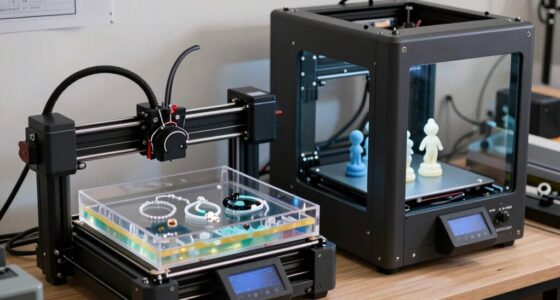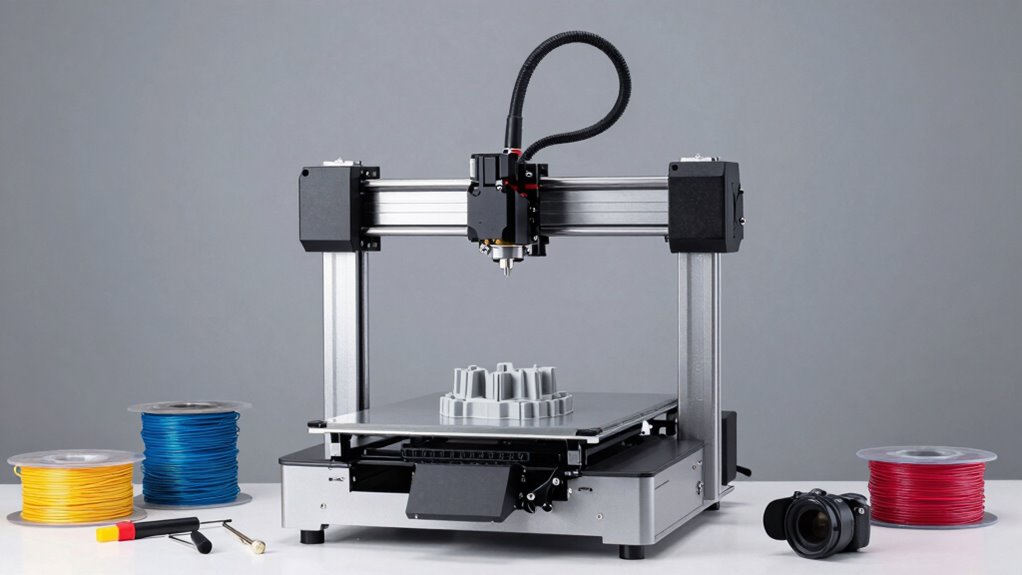

To determine if a large-format 3D printer is worth your space, consider your project needs, material compatibility, and workspace availability. If you regularly print bigger or complex parts, the enhanced build volume could be essential. Be aware of maintenance, costs, and environmental factors like ventilation. If your workflow requires it and you have the room, a large printer may be a smart investment. Keep exploring to uncover all crucial points before making your decision.

Get business pricing on tools and workshop supplies
- Business-only prices and quantity discounts
- Tax-exempt purchasing
- Multiple users, one account, clear invoices
Key Takeaways
- Assess if your project demands larger or more complex parts that justify increased space and investment.
- Evaluate the available workspace for size, ventilation, and environmental needs of the large-format printer.
- Consider the ongoing maintenance and operational costs associated with a larger machine.
- Determine if the extended print times align with your workflow and productivity goals.
- Ensure your material and performance requirements are compatible with the printer’s capabilities.
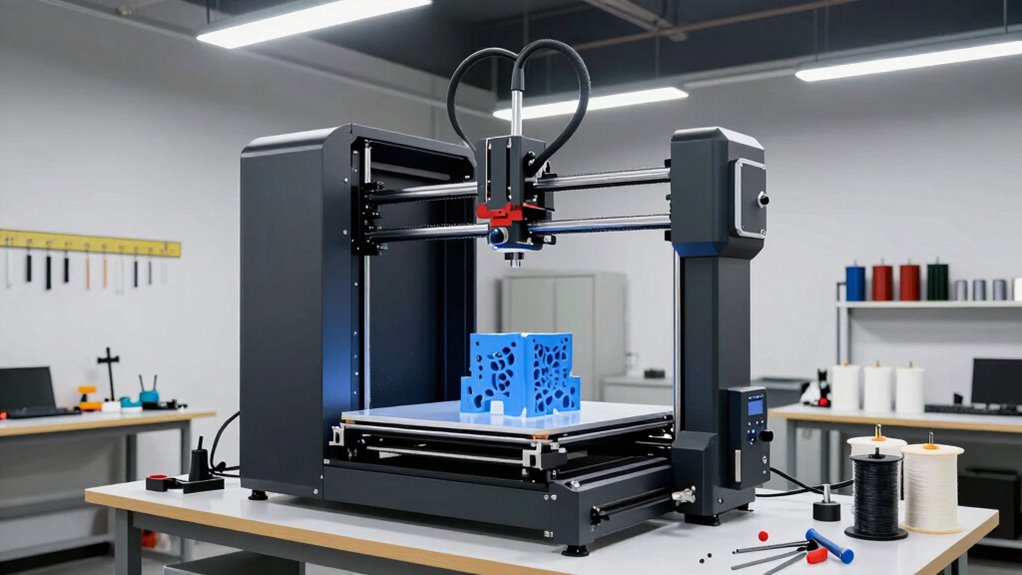
Deciding whether a large-format 3D printer is worth the space requires careful consideration of your specific needs and available resources. One of the first factors to evaluate is material compatibility. Larger printers typically support a broader range of materials, such as ABS, PETG, TPU, and even composite filaments, which can be essential for producing more complex or durable parts. If your projects demand diverse materials or larger prints that current smaller printers can’t handle, investing in a large-format model might be justified. However, it’s vital to confirm that the printer you’re considering is compatible with the materials you plan to use, as some machines have limitations on filament diameter, temperature ranges, or filament type. If your material needs are straightforward, a smaller or mid-sized printer might suffice, saving you space and cost.
Large-format 3D printers support diverse materials, ideal for complex or durable parts, but confirm compatibility with your specific needs.
Next, think about the maintenance requirements that come with larger machines. Large-format 3D printers generally require more upkeep due to their size and complexity. You’ll need to allocate time and resources for regular calibration, cleaning, and occasional part replacements. The larger build volume means more extensive bed leveling and more potential points of failure, which can increase downtime if maintenance isn’t kept up. Additionally, some models have more sophisticated cooling systems or moving parts, adding to their maintenance needs. If you’re prepared to dedicate the effort and possibly invest in spare parts or upgrades, then the maintenance demands might be manageable. Otherwise, the ongoing upkeep could become a distraction or expense that outweighs the benefits of the larger build volume. It’s also important to consider the overall cost of ownership, including parts, upgrades, and potential repairs. Moreover, understanding the print speed capabilities of a large-format printer can influence your decision, as larger builds often take significantly longer to complete, which might impact your workflow. Furthermore, assessing the learning curve associated with operating larger machines can help determine if it aligns with your skill level and project timeline. Being aware of space requirements and how it fits into your workspace is also crucial before making your decision.
As an affiliate, we earn on qualifying purchases.
Frequently Asked Questions
How Much Does a Large-Format 3D Printer Typically Cost?
A large-format 3D printer typically costs between $3,000 and $20,000, depending on features like material compatibility and print resolution. Higher-end models offer better material options and finer resolutions, making them ideal for professional use. Cheaper models may have limited material compatibility and lower resolution, suitable for hobbyists. Consider your project needs and budget to determine if the investment aligns with your goals.
What Safety Precautions Are Necessary for Large 3D Printers?
You need to follow safety protocols like wearing gloves, goggles, and a mask to protect yourself from fumes and hot surfaces. Make certain proper ventilation and keep a fire extinguisher nearby for hazard mitigation. Regularly check for leaks or malfunctions, and keep the workspace clean to prevent accidents. Training on the printer’s operation also helps you understand potential risks, making your environment safer and more efficient.
Can a Large-Format 3D Printer Operate Continuously?
Your large-format 3D printer can operate continuously if it’s properly maintained. Just like a well-oiled machine, guarantee the print bed stays level, and the filament feed remains steady to prevent jams. Regularly check for overheating and guarantee cooling fans work efficiently. With diligent upkeep, you can run nonstop, creating large projects without stopping—making your printer a tireless workhorse in your workshop.
What Are the Maintenance Requirements for These Printers?
You need to regularly check and clean the nozzle and print bed to keep your large-format 3D printer running smoothly. Proper filament storage, like sealed containers with desiccants, prevents moisture buildup, which can cause print issues. Verify good ventilation, especially when printing with fumes or ABS filament, to maintain a safe environment. Routine maintenance also includes inspecting belts, wires, and cooling fans for wear and proper operation.
How Energy-Efficient Are Large-Format 3D Printers?
Large-format 3D printers are like energy hogs, with energy consumption varying based on size and usage. While they generally use more power than smaller models, advances in technology have improved their efficiency, reducing environmental impact. You can lower energy use by optimizing print settings and choosing energy-efficient components. Overall, their environmental footprint depends on how you operate them, making mindful usage essential for sustainability.
3D printer filament compatibility
As an affiliate, we earn on qualifying purchases.
As an affiliate, we earn on qualifying purchases.
Conclusion
Ultimately, deciding if a large-format 3D printer is worth your space is like planting a mighty oak—you need to nurture it, understand its roots, and watch how it grows with your projects. If it fuels your creativity and expands your possibilities, then it’s worth the room to flourish. Remember, a well-placed giant isn’t just taking up space—it’s becoming the cornerstone of your innovative forest, standing tall and inspiring every step forward.
As an affiliate, we earn on qualifying purchases.
As an affiliate, we earn on qualifying purchases.
Halloween Picks
halloween
As an affiliate, we earn on qualifying purchases.