Your pliers leave marks when you apply too much grip pressure, use the wrong tools, or rely on improper technique. Over-tightening or holding too tightly can leave surface impressions or damage delicate surfaces. To prevent marring, choose pliers with softer, coated jaws, and use protective barriers like pads or tape. Developing a lighter, controlled grip and selecting the right tools for your work can save your surfaces from lasting marks—keep going to discover more helpful tips.
Key Takeaways
- Excessive grip pressure and over-tightening cause surface marring when using pliers.
- Using pliers with coated or padded jaws helps prevent surface damage.
- Applying surface protection methods like gloves or tape minimizes marring risks.
- Proper technique involves gentle, controlled grip pressure suited to the material.
- Choosing the right tool design and practicing improves control and reduces marks.

Have you ever noticed marks left on metal or wires after using pliers? These unsightly impressions can be frustrating, especially when you’re aiming for a clean, professional finish. The root cause often comes down to how you’re using your tools, specifically your grip pressure, and whether you’re paying attention to surface protection. When you squeeze too tightly, you increase the risk of marring the material you’re working on. Pliers are designed to grip firmly, but applying excessive force isn’t necessary and can lead to permanent damage. Instead, you should aim for just enough pressure to hold the object securely without crushing or deforming it. Think of grip pressure as a delicate balance—you want enough to keep control, but not so much that it damages the surface.
Use just enough grip pressure to hold objects securely without causing surface damage.
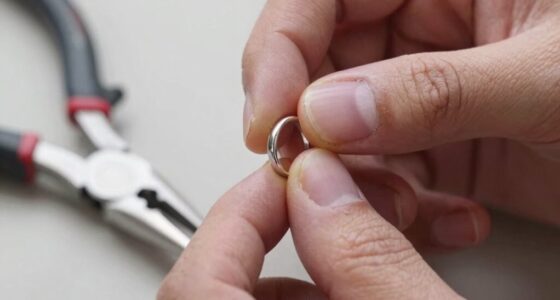
In addition to grip pressure, surface protection plays a vital role in preventing marks. Many people overlook this aspect, but adding a barrier between the pliers and the workpiece can greatly reduce marring. Using gloves with soft palms, rubber or silicone pads, or even wrapping the jaws with electrical tape can create a protective cushion. This acts as a buffer, absorbing some of the pressure and preventing direct contact that might leave a mark. When you’re working with delicate wires or polished metals, these small modifications can make a big difference. Remember, the goal is to hold the object firmly enough to manipulate it, but not so tightly that the surface suffers.
Another helpful tip is to choose the right type of pliers for the job. For instance, if you’re working with delicate or finished surfaces, consider using pliers with nylon or rubber-coated jaws. These materials provide a softer grip and are less likely to leave impressions. Also, be mindful of the pliers’ jaw design—angled or rounded jaws often distribute pressure more evenly, reducing the chance of surface marring. When you’re handling sensitive materials, it’s worth investing in specialized tools that prioritize surface protection. Additionally, understanding the material properties of the workpiece can guide you in selecting the most suitable tools and techniques to minimize damage.
Lastly, practicing proper technique can make a big difference. Instead of relying on brute force, focus on adjusting your grip gradually until you find the ideal spot where the pliers hold securely without leaving marks. Take your time to get familiar with the feel of the tool and the material you’re working with. Over time, you’ll develop a sense of how much pressure is enough, which will help you prevent marring in future projects. By paying attention to grip pressure, choosing the right tools, and protecting surfaces, you can keep your work clean and professional-looking—free of those unwanted marks that can ruin an otherwise great job.
Frequently Asked Questions
Can Using Lighter Grip Reduce Plier Marks?
Using a lighter grip can definitely reduce plier marks. When you apply less grip pressure, you minimize the pressure on the material, which helps prevent marring. Your hand strength plays a role here—if you can control your grip better, you’ll avoid squeezing too tight. Practice using just enough force, and your pliers will leave fewer marks, protecting your workpiece and ensuring a smoother finish.
Do Different Plier Materials Affect Mark Severity?
Yes, different plier materials can affect mark severity. For instance, pliers with softer, coated, or rubberized jaws tend to leave less noticeable marks, protecting delicate surfaces. Harder materials like steel may leave more prominent impressions. You should choose plier material based on your task, especially if you work with sensitive or finished surfaces. Using pliers with appropriate jaw material helps minimize mark severity and prevents damage during your projects.
Are There Specific Techniques to Prevent Marring?
You can prevent marring by using coating options like rubber or plastic covers on your pliers, which cushion the grip and minimize damage. Additionally, consider employing alternative tools such as cushioned or textured-jaw pliers designed specifically for delicate work. Always apply gentle pressure and position the jaws carefully to avoid excessive force. These techniques help protect surfaces and ensure your work stays clean and unmarred.
How Does Plier Jaw Design Influence Marks?
Your plier jaw design impacts marks through material selection and jaw ergonomics. Softer materials like aluminum or coated jaws reduce marring, while harder metals may leave marks on delicate surfaces. Proper jaw ergonomics ensure even pressure distribution, minimizing damage. When choosing pliers, consider those with well-designed, ergonomically shaped jaws and appropriate material coatings. This helps you grip securely without leaving unwanted marks, protecting your workpiece and ensuring cleaner, more professional results.
Can Regular Maintenance Minimize Damage?
Think of your pliers as a trusted partner; regular maintenance keeps them in top shape, reducing damage. By focusing on tool ergonomics and scheduling routine maintenance, you guarantee even pressure and prevent marring. Sharpening jaws and checking for wear allow your tools to perform smoothly. Consistent upkeep minimizes marks, protects delicate surfaces, and extends your tools’ lifespan. So, stay committed to maintenance scheduling, and your pliers will serve you better, always.
Conclusion
To keep your tools from leaving marks, choose the right type of pliers for the job and use them gently. For example, imagine you’re working on delicate jewelry—if you squeeze too hard, you risk marring the metal. Instead, apply steady, even pressure and consider using rubber or plastic-coated pliers. By being mindful and selecting the correct tools, you can prevent damage and finish your project with a smooth, professional look every time.