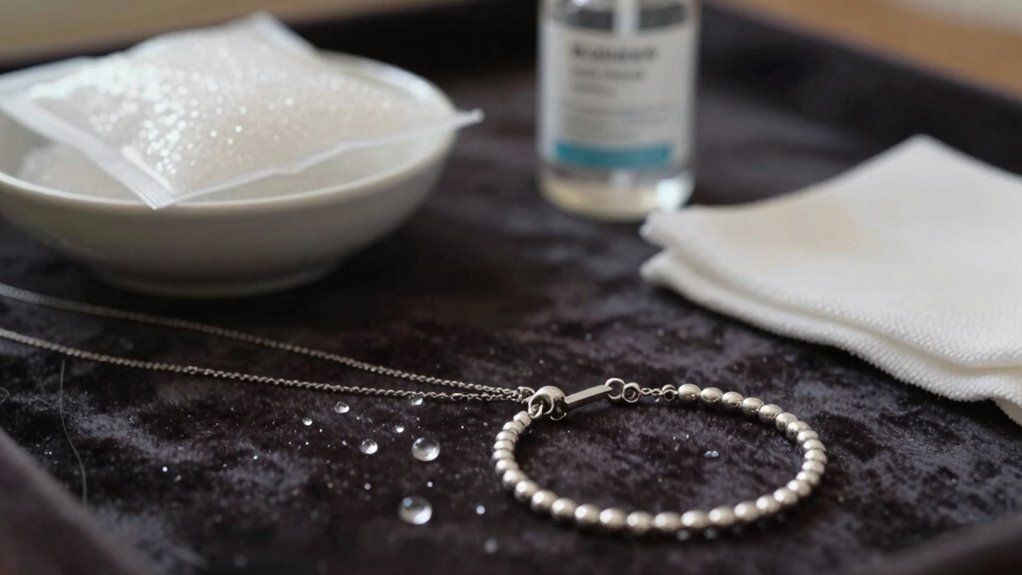

To prevent tarnish without ruining your jewelry’s finish, store pieces in a dry, cool place away from sunlight, ideally in airtight containers or anti-tarnish pouches. Use anti-tarnish strips and cloths to absorb humidity, and regularly clean your jewelry gently with soft cloths. Apply clear protective coatings or waxes for extra defense, avoid touching with skin oils, and keep items away from moisture and harsh chemicals. Keeping these tips in mind will help you maintain shine and beauty—learn more below.
Key Takeaways
- Store jewelry in dry, airtight containers away from sunlight and humidity to prevent tarnish without affecting the finish.
- Use gentle, non-abrasive polishing cloths to clean jewelry, avoiding harsh chemicals that could damage the surface.
- Apply clear protective coatings or waxes designed for jewelry to shield against tarnish without altering appearance.
- Keep jewelry separate from cosmetics, lotions, and chemicals to minimize surface exposure and maintain the finish.
- Regularly use anti-tarnish strips or pouches and replace them to absorb moisture and sulfur effectively.
Store Jewelry Properly to Minimize Exposure
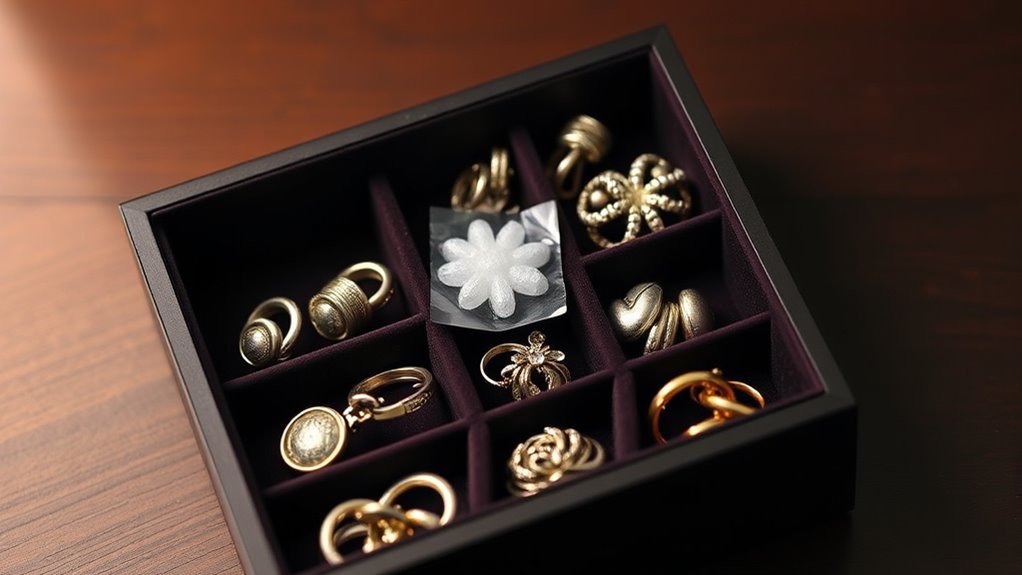
Properly storing your jewelry is essential to prevent tarnish. Proper storage involves keeping your pieces in a dry, cool environment, away from direct sunlight. Humidity control plays a vital role; high moisture levels accelerate tarnishing. Use airtight containers or jewelry boxes with individual compartments to prevent pieces from scratching or coming into contact with air and moisture. Consider storing delicate jewelry in anti-tarnish pouches or lined boxes that help absorb excess humidity. Avoid storing jewelry in bathrooms or other damp areas where humidity fluctuates. Keeping your jewelry in a controlled environment minimizes exposure to moisture and air, which are primary factors in tarnishing. Implementing proper storage techniques can significantly reduce the risk of tarnish forming on your jewelry. Using appropriate storage materials can further help maintain your jewelry’s shine and prolong its lifespan. Additionally, using moisture-absorbing packets inside storage containers can help regulate humidity levels and prevent tarnish. Incorporating desiccants and other humidity-regulating products can enhance your storage strategy. Effective storage habits will help maintain your jewelry’s shine and prolong its lifespan.
Use Anti-Tarnish Strips and Cloths Effectively
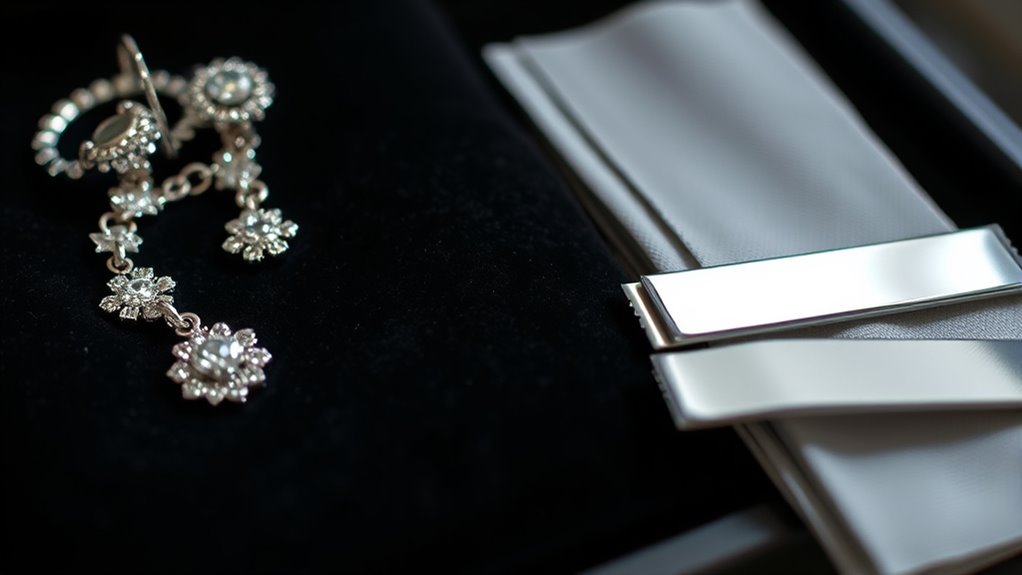
After guaranteeing your jewelry is stored in a dry, airtight environment, the next step is to actively protect its surface during wear and storage. Use anti-tarnish strips and cloths designed with advanced anti tarnish technology to absorb moisture and sulfur compounds that cause tarnish. These strips work especially well with metal alloys prone to tarnishing, creating a barrier that minimizes exposure to damaging elements. When wrapping jewelry in anti-tarnish cloths, make sure they are clean and free from lint to avoid scratching or residue buildup. Place strips and cloths near your jewelry or inside storage containers to maximize their effectiveness. Regularly replacing these materials ensures continuous protection, keeping your jewelry looking bright without compromising the finish. Proper storage techniques, including environmental control methods, can also help prevent tarnish by reducing environmental exposure. Additionally, storing jewelry in a controlled environment with stable temperature and humidity levels further enhances tarnish prevention. Incorporating oxidation prevention strategies can provide an additional layer of protection against tarnish formation over time. Using desiccants can further absorb excess moisture and improve overall tarnish resistance.
Clean Your Items Regularly With Gentle Methods
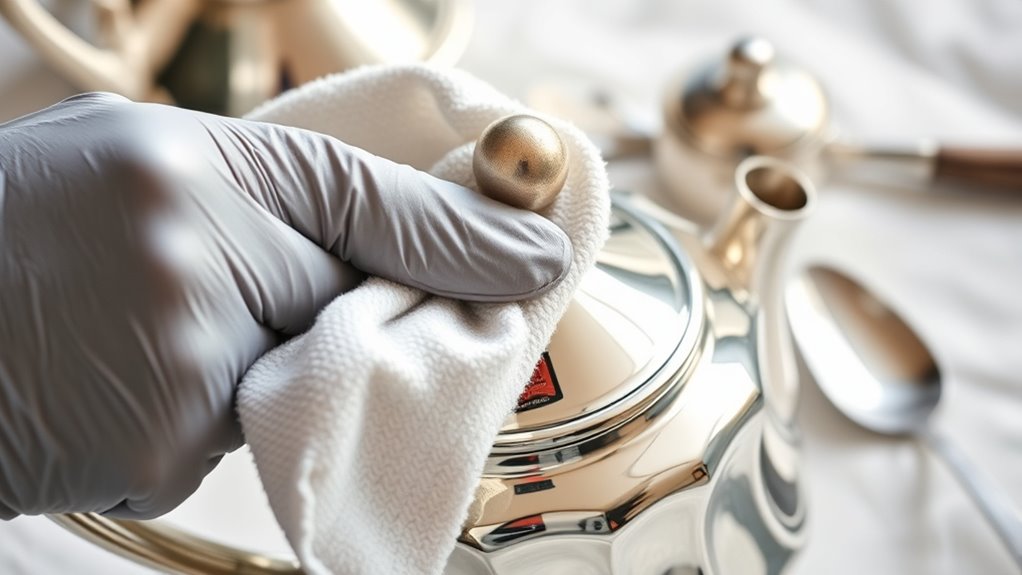
Regular cleaning is essential to prevent tarnish from building up on your jewelry. Using gentle methods helps maintain the finish without causing damage. When it comes to polishing techniques, opt for soft cloths or microfiber towels to buff your items gently. Avoid harsh abrasives that could scratch or dull the surface. Establish a consistent cleaning frequency based on how often you wear your jewelry—more frequent cleaning helps keep tarnish at bay. For routine upkeep, simply wipe your pieces after wearing, using mild soap and water if needed. This regular maintenance prevents dirt and oils from settling, reducing tarnish formation. Additionally, understanding air quality in your environment can help reduce exposure to pollutants that may accelerate tarnishing. Ensuring proper air purifier maintenance in your space can further minimize airborne pollutants that contribute to tarnish buildup. Incorporating anti-tarnish storage solutions can also help preserve your jewelry’s shine over time.
Apply Protective Coatings for Extra Defense
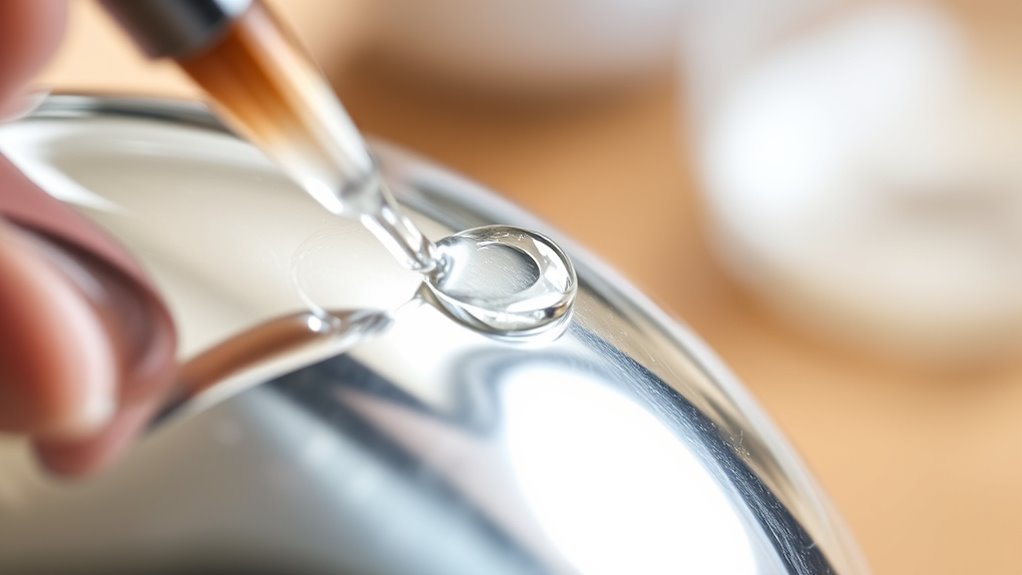
Protective coatings can give your items extra defense against tarnish, and choosing the right one is key. You might opt for clear sealants to maintain the look or apply protective waxes for added durability. Remember to regularly check and reapply these coatings to keep your items protected over time. Additionally, understanding safe installation practices can help ensure your protective measures don’t damage the underlying finish or material. Incorporating smart‑home integrations can also assist in monitoring the condition of your coated items remotely, ensuring ongoing protection.
Choosing Clear Sealants
Choosing a clear sealant is a simple yet effective way to shield your items from tarnish. It creates a barrier that minimizes direct contact with environmental factors like moisture and pollutants, which can trigger chemical reactions that cause tarnish. When selecting a sealant, look for products designed specifically for metals or jewelry, ensuring they won’t alter the finish. Clear sealants are transparent, so they won’t obscure your piece’s appearance. Applying a thin, even coat provides extra protection without changing the item’s look or texture. Keep in mind, though, that sealants may need reapplication over time, especially if exposed to harsh conditions. Using a high-quality, compatible sealant helps preserve your item’s beauty while preventing tarnish caused by environmental factors. Additionally, understanding how water interacts with metals can help you better protect your belongings from corrosion and tarnishing. Being aware of oxidation processes can also guide you in choosing the most effective protective measures. To enhance your protection strategy, consider the role of environmental humidity in accelerating tarnish and how sealants can help mitigate its effects. Proper application techniques can ensure the sealant performs optimally and extends the life of your protective coating.
Applying Protective Waxes
After applying clear sealants, adding a layer of protective wax can provide extra defense against tarnish. To maximize its benefits, use proper polish techniques to evenly distribute the wax, ensuring complete coverage. Avoid harsh cleaning agents before applying wax, as they can strip previous finishes or leave residues that impair adhesion. Instead, clean your item gently with a mild, non-abrasive cleaner, allowing the surface to dry thoroughly. Once clean, apply the wax with a soft cloth, buffing gently to create a smooth, even layer. This protective coating acts as a barrier, shielding your jewelry or metalwork from moisture and pollutants that cause tarnish. Regularly reapplying wax enhances the finish’s durability while maintaining its shine without damaging the underlying surface. Understanding corrosion prevention principles can help prolong the effectiveness of your protective measures, especially when combined with proper metal maintenance techniques. Implementing protective coatings correctly is essential for long-term tarnish resistance. Incorporating environmental controls, such as reducing humidity in storage areas, can further minimize tarnish formation and extend the life of your metal items. Additionally, utilizing AI-powered security methods can help monitor environmental factors and alert you to conditions that may accelerate tarnish.
Regular Coating Maintenance
To keep your jewelry and metal items protected over time, it’s vital to regularly inspect and reapply coatings as needed. Check for any signs of wear or dullness, and clean the surface with gentle polishing techniques to remove dirt and tarnish. Once cleaned, reapply a protective coating to maintain the barrier against moisture and air. Proper storage containers are essential; use airtight or anti-tarnish pouches to minimize exposure. Regular maintenance ensures your coatings remain effective, preventing tarnish from forming. By staying proactive, you extend the life of your jewelry and keep its finish looking fresh. Remember, consistent care is key to preserving shine and preventing damage over the long term.
Avoid Skin Oils and Chemicals That Accelerate Tarnish

Skin oils and chemicals can substantially speed up tarnishing, so it’s essential to minimize contact with them. When you handle jewelry, natural skin oils transfer onto the surface, creating a layer that encourages tarnish formation. Chemical exposure from lotions, perfumes, or cleaning products can also accelerate deterioration. To protect your jewelry, avoid touching it with bare skin when possible, or wash your hands beforehand. Store jewelry separately from cosmetics and harsh chemicals, and always remove it before applying lotions or sprays. Using gloves when handling jewelry can further reduce skin oil transfer and chemical contact. By limiting exposure to these elements, you help maintain the finish and reduce tarnish, keeping your jewelry looking bright and beautiful longer.
Keep Jewelry Away From Humid Environments
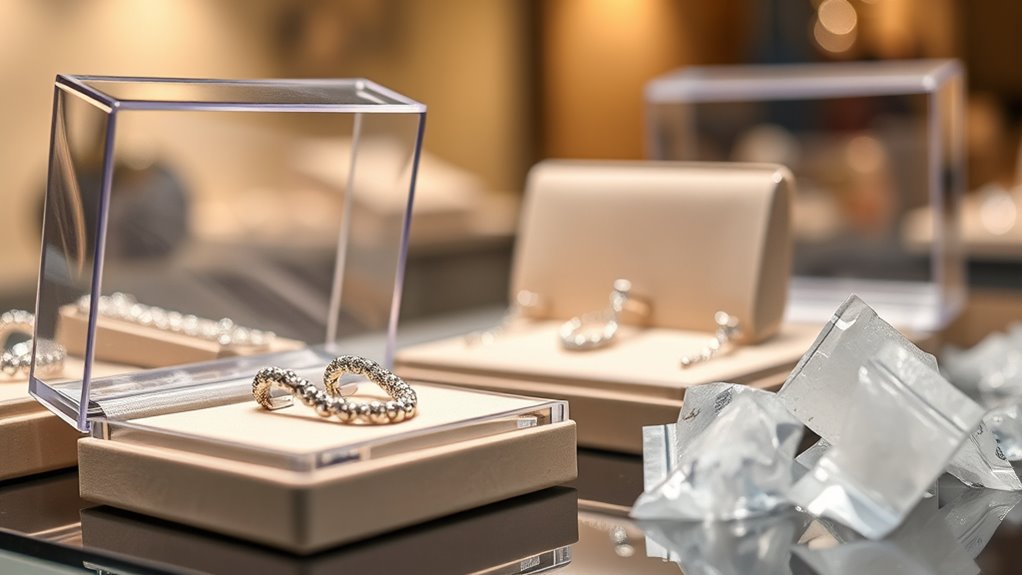
You should keep your jewelry in dry places to prevent tarnish. Avoid leaving it in humid areas like bathrooms, where moisture can speed up corrosion. Storing your pieces properly helps maintain their shine and extends their lifespan.
Avoid Bathroom Humidity
Bathrooms are one of the worst places for jewelry because the high humidity accelerates tarnishing. Bathroom humidity creates moisture that quickly reacts with jewelry metals, causing tarnish and deterioration. To protect your pieces, avoid leaving jewelry in the bathroom, especially near sinks or showers where moisture levels spike. If you must keep jewelry nearby, use moisture control strategies like airtight containers or silica gel packs to absorb excess moisture. Always remove jewelry before taking a hot shower or bath, and avoid hanging jewelry in steamy environments. By limiting exposure to bathroom humidity, you reduce the risk of tarnish and preserve your jewelry’s finish longer. Keeping jewelry in dry, well-ventilated areas is the best way to maintain its shine and quality.
Store in Dry Places
Storing jewelry in dry, well-ventilated places helps prevent tarnish caused by moisture exposure. Use appropriate storage containers that keep humidity out, such as airtight boxes or jewelry pouches. Avoid places with fluctuating temperatures or high humidity levels, like bathrooms or basements. Climate control is essential; consider using silica gel packs or dehumidifiers in your storage area to maintain a stable environment. Keep jewelry away from direct sunlight and sources of heat, which can accelerate tarnishing. When not in use, store your pieces separately to prevent scratches and chemical reactions. Proper storage in a dry environment minimizes moisture contact, helping your jewelry stay shiny and tarnish-free longer. Prioritize these steps for effective, long-lasting protection.
Handle Items With Care to Prevent Surface Damage
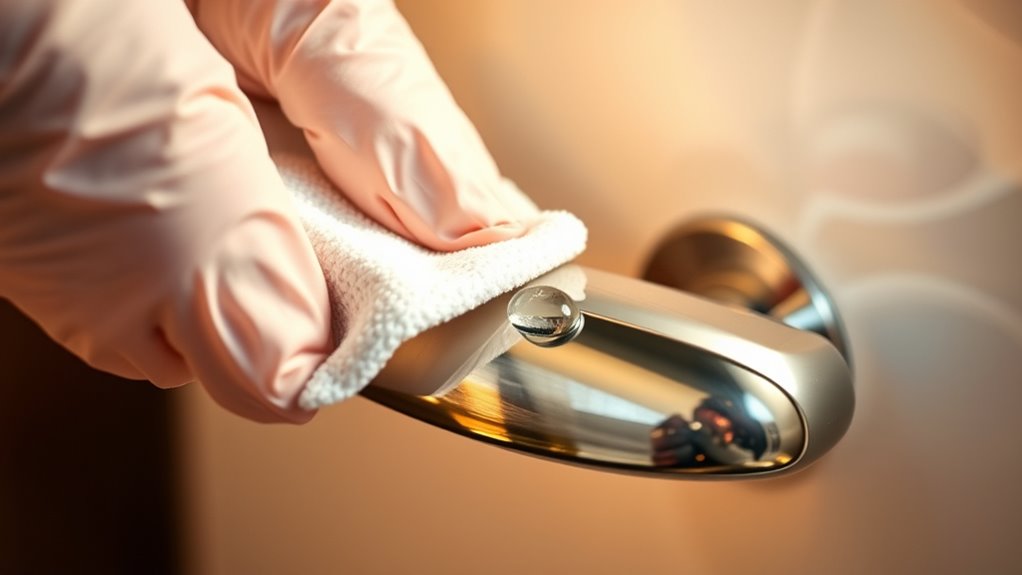
To prevent surface damage that can lead to tarnish, it’s essential to handle your items carefully. Proper handling techniques protect the finish and maintain their shine. Here are key tips:
- Always lift items with clean, dry hands to avoid transferring oils and dirt that can damage surfaces.
- Use soft cloths or gloves when cleaning or moving delicate pieces to provide surface protection.
- Avoid stacking or piling items, which can cause scratches or dents over time.
Choose Tarnish-Resistant Materials When Purchasing
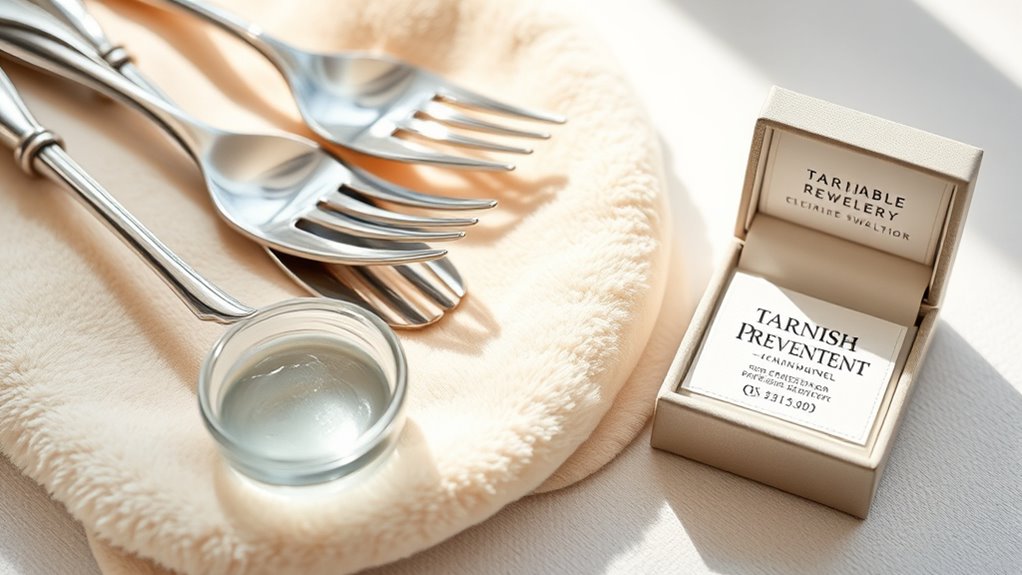
When selecting items to add to your collection, choosing materials that resist tarnishing can save you time and effort in maintenance. Look for jewelry made from tarnish-resistant precious metals like stainless steel, platinum, or titanium. These metals naturally resist oxidation, keeping your pieces shining longer. If you have sensitive skin, opt for hypoallergenic options such as niobium or surgical-grade stainless steel. These choices prevent allergic reactions and minimize tarnish. To help you compare, here’s a quick overview:
| Material | Benefits |
|---|---|
| Stainless Steel | Durable, tarnish-resistant, hypoallergenic |
| Platinum | Precious, resistant to tarnish |
| Titanium | Lightweight, hypoallergenic, tarnish-resistant |
| Niobium | Hypoallergenic, resists tarnish |
Choosing these materials ensures your jewelry stays beautiful without constant upkeep.
Maintain a Routine for Long-Term Shine Preservation
Establishing a consistent cleaning routine is essential for keeping your jewelry looking its best over time. Regular maintenance prevents tarnish buildup and preserves its shine. To do this effectively, focus on proper polishing techniques and cleaning frequency.
Here are three key steps to help you maintain long-term shine:
- Clean your jewelry at least once a month using gentle, non-abrasive methods.
- Use polishing cloths designed for jewelry to restore luster without damaging the finish.
- Schedule deeper cleanings periodically to remove stubborn tarnish and dirt buildup.
Frequently Asked Questions
Can I Use Everyday Cleaning Products on Tarnished Jewelry?
You shouldn’t use everyday cleaning products on tarnished jewelry, as they can cause unwanted chemical reactions that damage the finish. Instead, opt for gentle cleaning methods specifically designed for jewelry, like a soft cloth or mild soap. Regular household cleaners often contain harsh chemicals that can strip the protective coating or accelerate tarnishing, so it’s best to avoid them to keep your jewelry looking its best.
How Often Should I Replace Anti-Tarnish Strips for Best Results?
You should replace anti-tarnish strips every 30 to 90 days for the best results, depending on your jewelry’s exposure and the strip’s lifespan. Regular maintenance frequency ensures your jewelry stays tarnish-free and preserves its finish. Keep an eye on the strips—if they look saturated or discolored sooner, replace them sooner. This way, you maintain maximum protection without risking damage or deterioration to your jewelry.
Are There Specific Storage Containers That Better Prevent Tarnish?
Think of your jewelry as a delicate garden that needs the right shelter. You should store it in airtight containers or anti-tarnish bags, which act like a protective shield against air and humidity. These containers help prevent tarnish by limiting exposure to elements that cause it. Choose high-quality options with proper sealing to keep your pieces shining and beautiful for years to come.
What Are Natural Alternatives to Chemical Tarnish Preventatives?
You can try natural alternatives like homemade remedies and eco-friendly solutions to prevent tarnish. Use a mixture of baking soda and water to create a gentle paste, then apply it to your jewelry to remove tarnish or prevent it. You could also store items with silica gel packets or natural anti-tarnish cloths. These eco-friendly solutions help protect your pieces without harsh chemicals, keeping your jewelry beautiful and safe.
How Do Temperature Changes Impact Tarnish Formation on Jewelry?
Temperature changes can speed up tarnish formation on your jewelry by causing metal expansion and contraction, which creates microcracks that trap moisture and pollutants. To minimize this, you should focus on humidity control and maintain temperature stability in storage areas. Keep jewelry in a cool, consistent environment, avoiding sudden temperature fluctuations, and store it in airtight containers to prevent exposure to humidity, helping preserve your jewelry’s shine and finish.
Conclusion
By following these simple steps, you’ll safeguard your jewelry from tarnish and keep it shining brilliantly. Store, shield, and shine with care, avoiding oils and moisture that threaten your treasures. Regular cleaning and protective products provide powerful protection, preserving your pieces’ beauty for years to come. Remember, consistent care creates a clear, carefree, and mesmerizing collection. Take these tips to heart, and watch your jewelry stay pristine, polished, and perfect!