To make beadwork lay flat without twisting or gaps, choose uniform, round beads like seed beads and match your thread size to the bead hole for better tension control. Keep your tension consistent and avoid slack while adding each bead. Stay attentive to your work to prevent twists, and finish with secure knots and even tension across the entire piece. For extra stability, select proper backing and techniques—continue to explore for detailed tips to perfect your beadwork.
Key Takeaways
- Use uniform, round seed beads and match thread thickness to bead size for even tension and a smooth, flat surface.
- Maintain consistent tension during stitching, regularly checking to prevent slack or overly tight beads.
- Select reliable components and ensure proper threading to avoid gaps and twisting in the beadwork.
- Finish with secure, hidden knots and distribute tension evenly for a stable, flat design.
- Regularly inspect your work from multiple angles to correct twists, gaps, or unevenness early in the process.
Choosing the Right Bead and Thread for Flat Beadwork

Choosing the right bead and thread is vital for creating flat beadwork that lays smoothly. The bead shape plays a key role—preferably, select beads with uniform, round shapes like seed beads, which fit together tightly and create even surfaces. Avoid irregular or elongated beads that can cause gaps or unevenness. Thread thickness also matters; a thinner thread, such as size 10 or 12, allows the beads to sit closer together and helps maintain a flat, consistent surface. Thicker threads can cause the beadwork to puff up or warp. Match your thread to the bead size for best tension and flexibility. Additionally, understanding bead tension and how it affects the flatness of your work is essential. Proper thread choice can further enhance the durability and appearance of your beadwork. Ensuring you use the correct bead shape helps in achieving a seamless, flat finish. Using thread tension control techniques can also contribute to a more professional and polished look. A good understanding of bead quality will also ensure your flat beadwork remains durable and visually appealing. By carefully selecting beads with the right shape and matching thread thickness, you’ll set a solid foundation for flat, professional-looking beadwork.
Maintaining Consistent Tension Throughout Your Work

Maintaining consistent tension throughout your beadwork helps guarantee the surface stays flat and even. When you keep an even tension, beads maintain their proper bead shape, preventing gaps or puckering. Using the right needle size is essential; a needle that’s too thick can make it hard to control tension, while one that’s too thin might bend or break. Adjust your tension as you go, ensuring beads aren’t too tight or too loose. Consistent tension allows each bead to sit properly against its neighbors, promoting a smooth, flat surface. Regularly check your work to avoid slack or tight spots. It’s also helpful to develop a feel for tension over time, which improves with practice and experience. Developing a good beadwork technique involves understanding how tension affects the overall look and stability of your piece. Practicing consistent tension control is key to achieving professional-looking results. With practice, you’ll develop a sense of tension that helps you maintain even tension throughout your work, resulting in beadwork that lays flat without twisting or gaps. Additionally, paying attention to your thread tension ensures uniformity across your entire project.
Techniques for Preventing Twists and Gaps During Beading
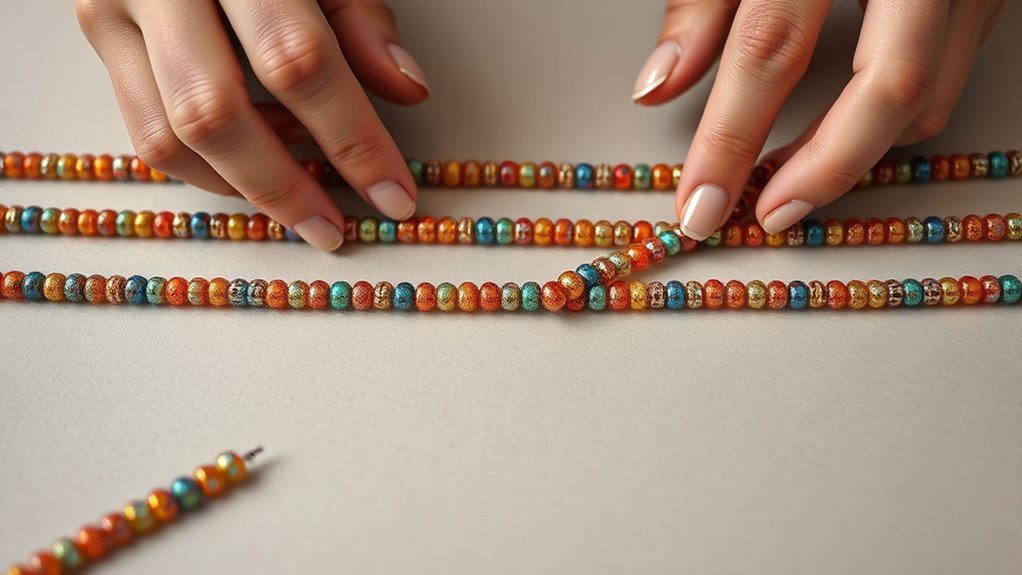
To prevent twists and gaps in your beadwork, maintaining proper alignment of your beads and consistent thread tension throughout the process is essential. Pay close attention to bead shape; uniform beads slide smoothly, reducing the risk of twisting. When selecting beads, consider color coordination, as complementary or contrasting colors can help you identify misalignments early. Keep your thread tight but not overstressed, ensuring beads stay in place without bunching or gaps. Regularly check your work from different angles to spot twists or uneven spacing. Using seed beads or uniform-shaped beads can help maintain a consistent flow. Additionally, choosing a reliable electric bike conversion kit can provide insights into the importance of quality components, which parallels ensuring high-quality beads for a smooth, flat design. Proper thread tension is crucial for achieving a flat, even surface, so take time to adjust your tension as you work. Maintaining consistent tension helps prevent bead twisting and keeps your work aligned. Paying attention to bead shape and color coordination can also aid in early detection of misalignments and maintaining a flat surface. Incorporating appropriate bead size adjustments can further enhance the uniformity of your design, ensuring a professional finish. By focusing on bead shape and color coordination, along with steady tension, you’ll create a flat, gap-free beadwork that lays perfectly.
Finishing Your Piece to Ensure Flatness and Durability
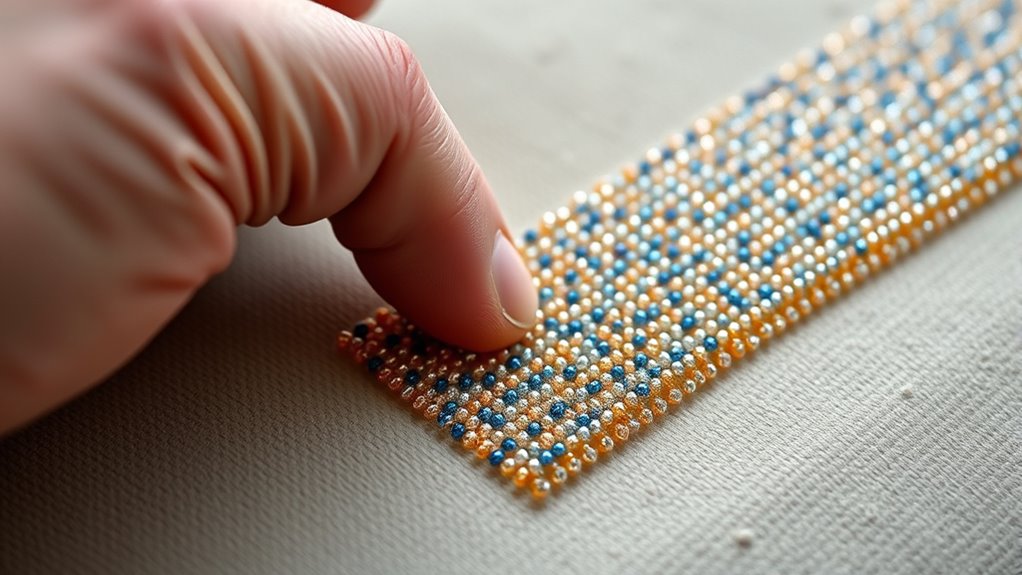
Finishing your beadwork properly is essential to keep it flat and durable over time. To achieve this, focus on bead color coordination, selecting colors that complement each other and enhance your beading pattern design. Consistent tension during finishing helps prevent puckering and maintains flatness. When securing your ends, use strong, flexible thread and ensure knots are tight and hidden. Be mindful of the beading pattern design, as symmetric or well-balanced patterns distribute tension evenly, reducing warping. Consider adding a clear protective finish or backing for extra durability. Proper finishing not only preserves the flatness but also enhances the overall aesthetic, making your beadwork more resilient and appealing for long-term wear or display. Additionally, understanding filtration and how it impacts the cleanliness of your workspace can help you maintain a tidy beading area, reducing debris that might cause uneven surfaces or damage over time. Maintaining a clean workspace can also minimize dust and fibers that might interfere with the finish or adhesion of protective coatings. Incorporating visual cues during the finishing process can assist in achieving consistent tension and alignment, ensuring a professional appearance. Moreover, paying attention to lighting conditions can help you better assess the flatness and quality of your work throughout the process. Implementing proper lighting can further help you spot imperfections and ensure an even finish throughout your piece.
Troubleshooting Common Flatness Issues in Beadwork
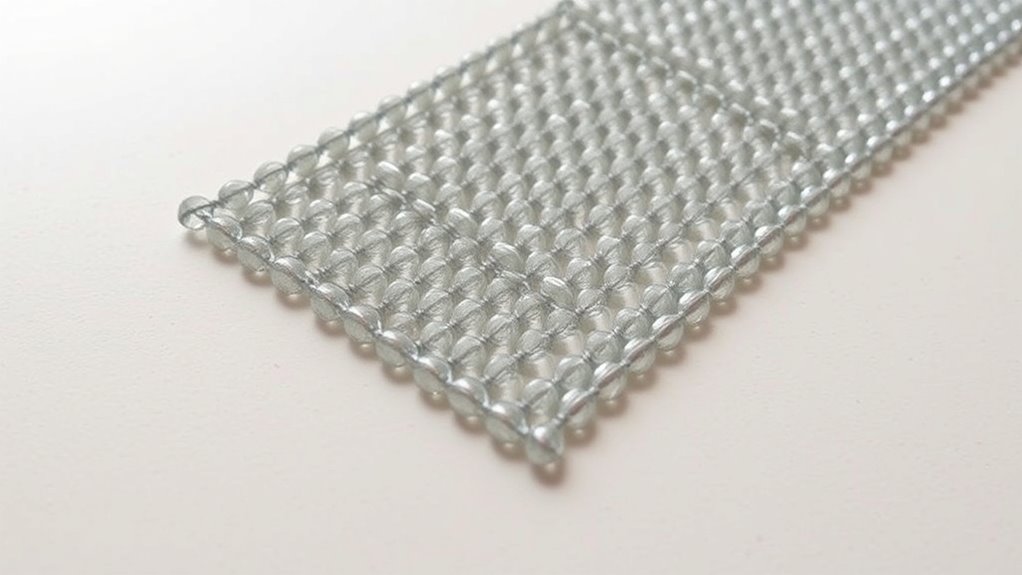
When your beadwork isn’t laying flat as desired, identifying the root cause is essential for effective troubleshooting. Often, uneven bead shape can cause puckering or curling, disrupting flatness. Check if beads are uniform in size and shape, as irregular beads create tension and gaps. Additionally, poor color coordination can influence the visual flatness, making areas look uneven or distorted. Use consistent bead sizes and shapes throughout your project to maintain a smooth, flat surface. Ensuring your beads are securely threaded without excess slack helps prevent twisting that causes unevenness. If necessary, adjust tension and replace irregular beads. Paying attention to bead shape consistency and thoughtful color coordination helps address common flatness issues and achieve a sleek, professional finish. Proper tension management and understanding bead material properties can also improve the overall flatness of your beadwork. Recognizing the influence of thread tension on bead alignment is crucial for maintaining a flat and polished appearance. Additionally, being aware of fabric tension or backing material can further influence how well your beadwork lays flat.
Frequently Asked Questions
Can Specific Bead Shapes Help Prevent Gaps or Twisting?
Yes, specific bead shapes can help prevent gaps and twisting in your beadwork. Using uniform, round beads ensures a consistent pattern design and a snug fit, reducing gaps and twisting. Additionally, choosing bead shapes like delica or bugle beads allows for a smoother, flatter surface. Incorporate these bead shapes thoughtfully into your pattern design, and you’ll achieve a more stable, flat beadwork piece with fewer gaps and less twisting.
What Are the Best Storage Methods to Maintain Flatness Long-Term?
Think of your beadwork as delicate origami, needing gentle handling to stay perfect. To maintain flatness long-term, store your beads in labeled, airtight containers or flat storage boxes, keeping them from dust and humidity. Avoid stacking heavy objects on top, which can cause warping. Proper bead storage guarantees your flat beadwork stays pristine, preserving its beauty and preventing twisting or gaps over time.
How Does Bead Size Variation Affect Flatness?
Bead size variation can considerably affect flatness, as inconsistent bead sizes cause uneven tension and gaps. Larger beads may create bulges, while smaller beads can lead to slack, disrupting the smooth, flat surface. To maintain flatness, control tension carefully and choose uniform bead sizes. Avoid mixing different sizes unless your design specifically requires it, and always test tension regularly during beadwork to ensure consistent flatness.
Are There Special Tools for Aligning Beads Evenly?
You don’t need special tools for aligning beads evenly, but tool recommendations like bead boards, tweezers, and needle threaders can make alignment techniques much easier. Use a bead board to keep beads straight and uniform, tweezers to handle tiny beads precisely, and a needle threader to keep your thread tight and consistent. Practicing gentle, even tension and working slowly helps make sure your beadwork stays flat and neat.
Can Certain Beading Patterns Inherently Reduce Twisting Issues?
Yes, certain beading patterns can inherently reduce twisting issues, though you’d think they’d be immune. By focusing on bead color consistency and choosing needle compatibility, you promote even tension and alignment. Intriguingly, complex patterns with uniform bead sizes often resist twisting better, making your work lay flat naturally. So, don’t overlook pattern choice; it’s a subtle yet powerful way to keep your beadwork smooth and gap-free.
Conclusion
By choosing the right beads and thread, keeping consistent tension, and applying proper techniques, you can make your beadwork lay flat and smooth. For example, Sarah’s first bracelet had gaps and twists, but after adjusting her tension and switching to a better thread, it lay perfectly flat. With patience and practice, you’ll master these tips too, creating beautiful, professional-looking beadwork that stays flat and durable every time.