
Jump rings are tiny metal loops that connect different parts of jewelry, but if they’re poorly made or improperly closed, they can cause your jewelry to break or come apart. Choosing the wrong size, material, or failing to close them securely creates weak points that can fail over time. To keep your jewelry safe and durable, you need to understand how these small components work—and there’s more to learn that can help you craft stronger pieces.
Key Takeaways
- Properly closed jump rings prevent gaps that can cause jewelry to fall apart or open unintentionally.
- Weak or improperly soldered jump rings are prone to cracking, deformation, or breaking under stress.
- Choosing the wrong size or material can compromise strength and increase failure risk.
- Poor craftsmanship, like incomplete closure or damage, reduces jewelry durability and safety.
- Regular inspection and replacement of damaged jump rings are essential to maintain jewelry security.
Amazon Product B0DBWKQ1Q8
As an affiliate, we earn on qualifying purchases.
What Are Jump Rings and How Are They Made?
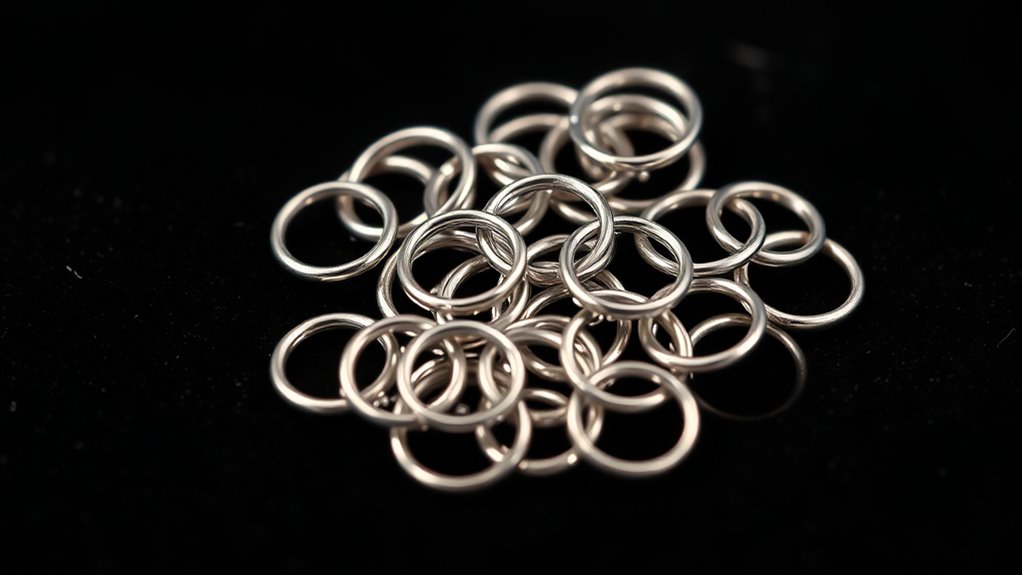
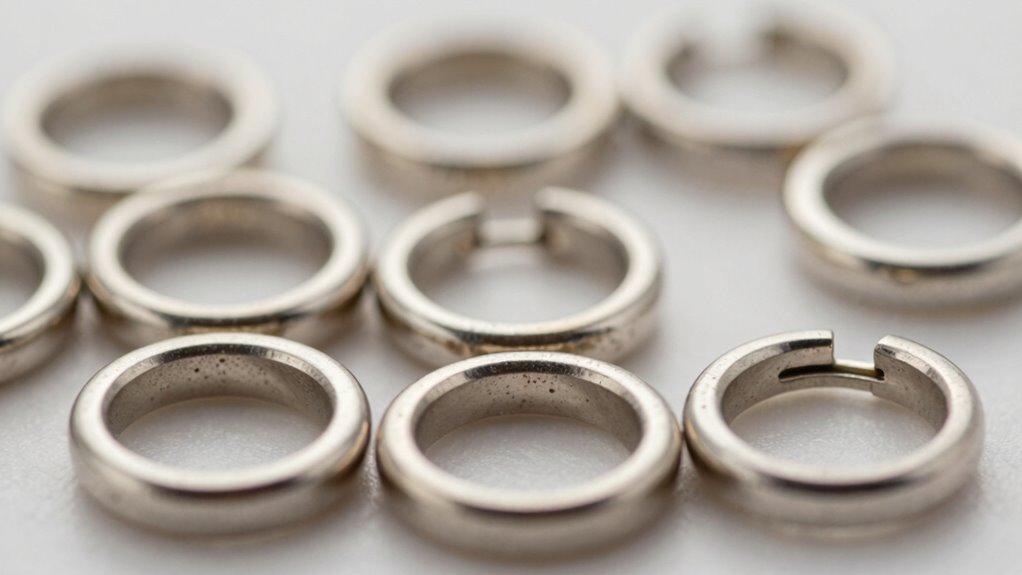
Have you ever wondered what jump rings are and how they’re made? These small, circular metal components are typically crafted from various metal alloys, chosen for their strength, flexibility, and corrosion resistance. The manufacturing process usually starts with melting down the metal alloy and casting it into rods or sheets. These are then cut into small pieces, which are shaped into rings through a series of precise processes like wire forming or stamping. The rings are then heated and soldered or welded to close the openings securely. Quality control guarantees uniformity in size and durability. Additionally, the choice of metal alloys directly impacts the jewelry’s overall strength and appearance. Proper manufacturing techniques ensure consistent quality and functionality in jewelry-making. Understanding the manufacturing processes behind jump rings helps you appreciate their strength and versatility in jewelry-making, making them essential building blocks for creating secure and reliable jewelry pieces. The precise shaping methods used in their production help maintain uniformity and high-quality standards across all jump rings.
Amazon Product B0CMHM6XQG
As an affiliate, we earn on qualifying purchases.
Different Types of Jump Rings and Their Uses
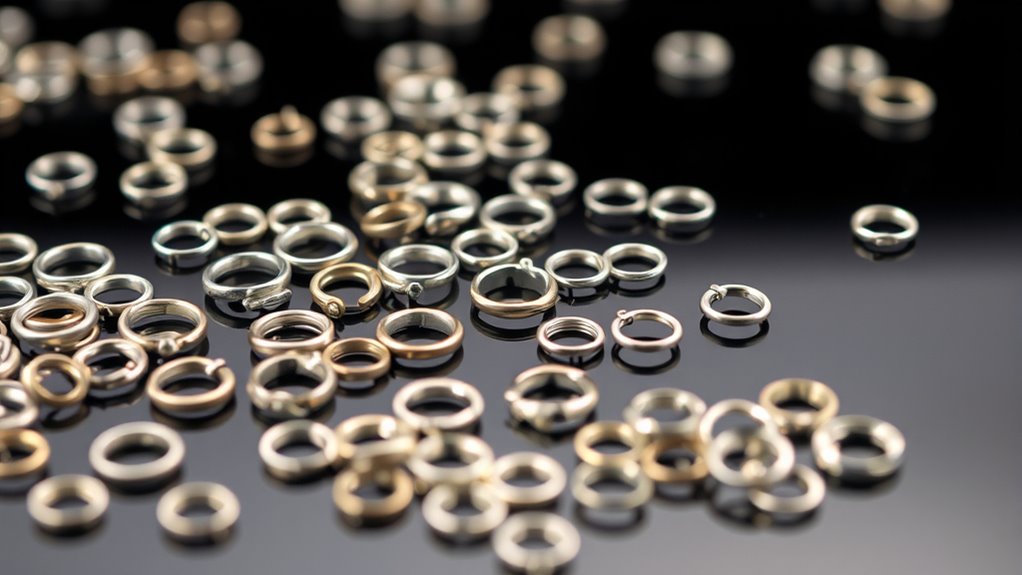
There are several types of jump rings, each designed for specific jewelry applications. You’ll find variations based on metal alloys like sterling silver, gold-filled, stainless steel, and niobium, chosen for their durability, color, and corrosion resistance. Manufacturing processes also influence their strength and flexibility; for example, wire-wound or cut-and-formed jump rings. Some are split open for easy attachment, while others are soldered closed for extra security. Different sizes and thicknesses suit delicate necklaces or sturdy charm bracelets. Knowing which type to use guarantees your jewelry holds together and functions properly. Whether you need lightweight rings for earrings or heavy-duty ones for clasps, selecting the right jump ring depends on its material, manufacturing process, and intended use. Additionally, understanding jump ring types can help you choose the most appropriate component for your jewelry projects. The choice of metal finishes can also impact the overall aesthetic and longevity of your jewelry. Proper selection of jump rings can also prevent breakage or failure, ensuring your jewelry remains durable over time. Considering compatibility with other findings is essential to ensure seamless integration with your jewelry components and avoid potential issues during assembly. Being aware of corrosion resistance can help in selecting rings suitable for jewelry that will be worn regularly or exposed to moisture.
Amazon Product B0FDQP54X8
As an affiliate, we earn on qualifying purchases.
The Importance of Proper Closure in Jump Rings

Proper closure of jump rings is vital to guarantee your jewelry stays secure and functions as intended. When you close a jump ring properly, you ensure maximum closure integrity, which prevents accidental openings that could lead to lost charms or broken pieces. A secure fastening depends on tight, seamless closure, avoiding gaps or misalignments that compromise strength. If the jump ring isn’t fully closed, it becomes a weak point where stress can cause it to open or break. Take your time to close the ring completely, pressing the ends firmly together. This simple step makes a significant difference in the durability and safety of your jewelry. Remember, a properly closed jump ring ensures your creation remains intact and ready to wear. Additionally, understanding the types of jump rings can help you choose the best closure method for your project, ensuring the closure method is appropriate for your design and strength requirements. To achieve the best results, consider closure techniques that match the material and intended use of your jewelry.
Amazon Product B0DPLV2LKC
As an affiliate, we earn on qualifying purchases.
Common Mistakes When Working With Jump Rings
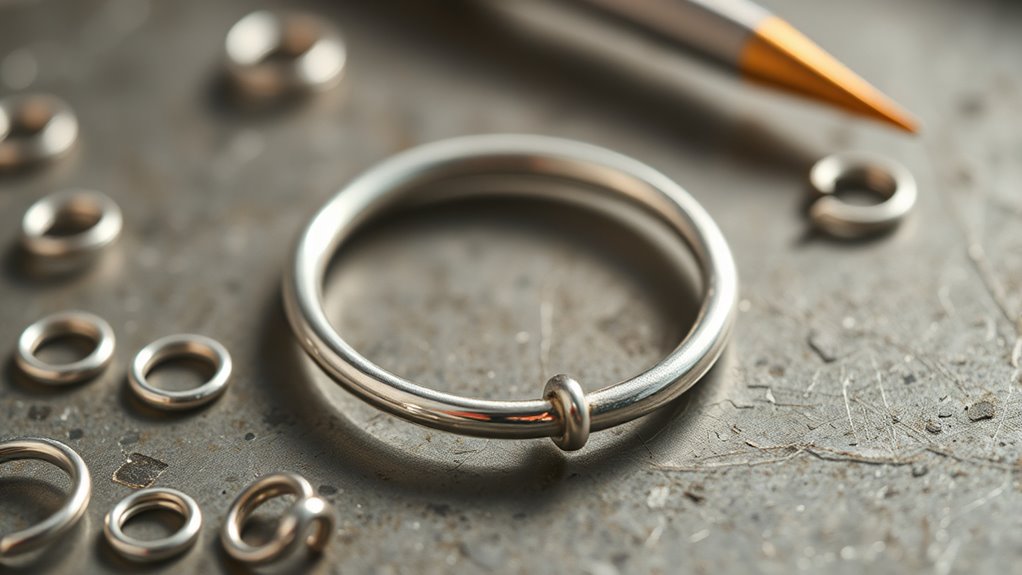
One common mistake when working with jump rings is not fully closing them before attaching components. This oversight can lead to jewelry coming apart and potential safety hazards. Always follow safety precautions by securely closing jump rings to prevent accidental openings. Many crafters overlook the importance of this step, risking damage to your piece. Additionally, understanding the historical uses of jump rings reveals their significance in ancient jewelry and security. Properly closing jump rings ensures the integrity of connections, which is essential for both functionality and aesthetic appeal. Failing to properly close them disregards their purpose, which is to create strong, reliable connections. Take time to inspect each jump ring after closing, ensuring there are no gaps. Proper closure not only enhances durability but also reflects traditional craftsmanship** that makes jewelry both beautiful and secure. Remember, craftsmanship** plays a vital role in ensuring the longevity and safety of your jewelry creations.
How to Choose the Right Jump Rings for Your Jewelry Projects

Choosing the right jump rings is essential for creating durable and aesthetically pleasing jewelry. First, consider material compatibility; match jump rings with your main materials—like sterling silver with silver-plated components or gold-filled rings with gold accents—to guarantee longevity and avoid corrosion. Aesthetic considerations also matter: select jump rings that complement your design’s style and color palette. Thin, delicate jewelry may require smaller, lightweight rings, while bold pieces benefit from thicker, sturdier options. Think about your clasp and chain types to choose rings that blend seamlessly or provide a contrasting accent. Additionally, understanding the horsepower of electric dirt bikes can inspire you to select more robust jump rings for high-stress areas to improve durability. When working with various jewelry components, it’s helpful to know about material strength to ensure your jump rings can withstand wear and tear. Using proper sizing techniques can further enhance the security of your jewelry pieces. Proper choices in piercing aftercare and material selection ensure your jewelry not only looks great but also holds up over time. Ultimately, selecting the appropriate material and size ensures your jewelry not only looks great but also holds up over time. Proper choices make your craftsmanship more reliable and visually appealing, especially when using vetted products designed for safety and effectiveness.
Signs That a Jump Ring Might Fail

You should keep an eye out for visible cracks or gaps in the jump ring, as these weaken its structure. If the ring is difficult to open or close, it might be overstressed or misshapen. Additionally, signs of wear or corrosion indicate the ring’s material has degraded and may fail unexpectedly. Monitoring material degradation is essential to prevent unexpected breakage. Ensuring proper material selection can help in choosing more durable jewelry components. Furthermore, understanding the security features of your jewelry can help identify early signs of potential failure. Using quality tools during assembly and repair can also improve the longevity of your jewelry pieces.
Visible Cracks or Gaps
Visible cracks or gaps in a jump ring are clear warning signs that it may fail during use. These cracks often result from manufacturing defects or stress over time, weakening the metal’s structure. If you notice any visible cracks, avoid using that jump ring, as it’s more likely to break unexpectedly. Gaps or uneven edges can also indicate poor craftsmanship or damage from previous wear. Inspect each jump ring carefully before adding it to your jewelry piece. Ignoring these signs increases the risk of the ring snapping open and causing your jewelry to fall apart. Always replace jump rings with visible cracks or gaps to guarantee safety and durability. Proper inspection helps prevent potential jewelry failure and keeps your designs secure.
Difficult to Open or Close
When a jump ring becomes difficult to open or close smoothly, it’s a warning sign that it may be prone to failure. This stiffness often indicates that the metal has become hardened or deformed, making it harder to manipulate without risking damage. To assess this, use proper techniques and tools, such as thin flat nose pliers designed for jewelry-making, to gently open and close the ring. If you find yourself struggling or needing excessive force, it’s a sign the ring’s integrity is compromised. Forcing a stubborn jump ring can cause it to weaken or break. Consistent use of the right techniques and tools helps prevent unnecessary stress, but persistent difficulty suggests it’s better to replace the jump ring altogether.
Signs of Wear or Corrosion
Over time, signs of wear or corrosion can weaken a jump ring’s structure, increasing the risk of failure. You might notice patina development, which is a discoloration caused by oxidation, signaling that the metal is breaking down. Surface pitting, tiny holes or indentations on the ring’s surface, also indicates corrosion and structural weakness. These signs can compromise the ring’s integrity, making it more prone to snapping or opening unexpectedly. Regularly inspecting your jewelry for these issues helps catch problems early. If you see significant patina buildup or pitting, it’s wise to replace the jump ring to prevent jewelry failure. Addressing corrosion early preserves your jewelry’s durability and guarantees it stays secure during wear.
Tips for Properly Opening and Closing Jump Rings
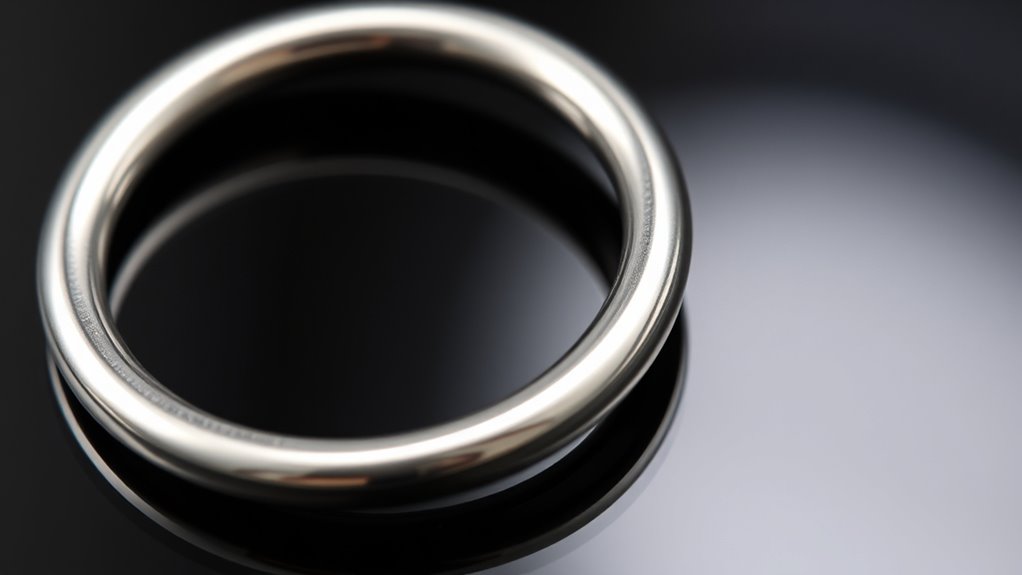
To make certain your jewelry stays secure and looks professional, it’s vital to open and close jump rings correctly. Start by gripping the ring with two pairs of flat-nose pliers, holding each side firmly. Avoid twisting the ring open; instead, slide one side sideways while keeping the other stationary, preserving the integrity of the ring’s shape. This technique maintains the ring’s roundness and strength, essential for a clean ring design. When closing, align the ends precisely and gently press them back together using the pliers. Proper closure techniques prevent gaps that weaken the ring and cause it to fail over time. Practicing these steps ensures your jewelry remains durable, with a seamless finish that enhances its overall appearance and longevity.
Troubleshooting Broken or Weak Jump Rings
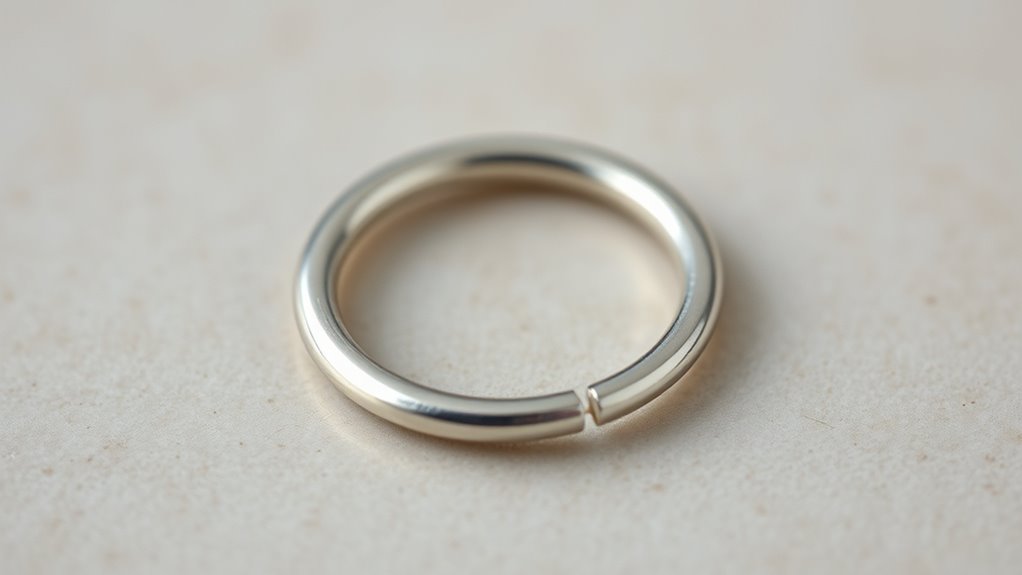
Broken or weak jump rings can compromise your jewelry’s durability and safety, but identifying and fixing these issues early can save your piece from further damage. Check the clasp attachment carefully—if it feels loose or looks damaged, replace or reinforce the jump ring connecting it. For chain extensions, weak or bent jump rings can cause the extension to detach unexpectedly. To troubleshoot, inspect each jump ring for signs of wear, cracks, or deformation. If you find a broken or compromised ring, remove it and substitute it with a new, sturdy one. Avoid forcing open or closed jump rings, as this weakens them. Regularly inspecting and replacing weak jump rings ensures your jewelry remains secure, especially at critical points like clasp attachments and chain extensions.
The Impact of Material and Size on Jump Ring Durability
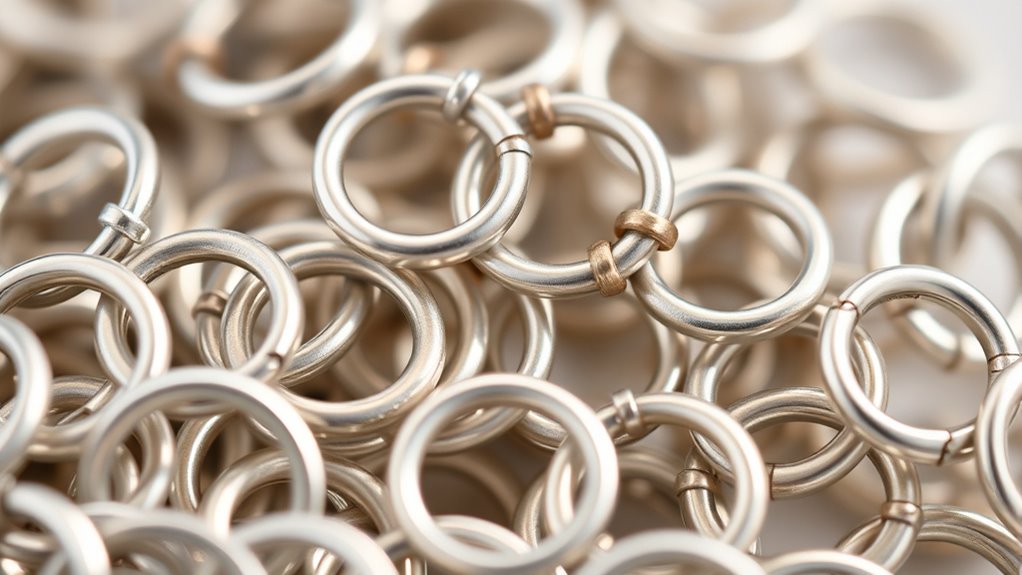
The material you choose greatly affects how durable your jump rings are, with stronger metals resisting breakage better. Size and thickness also play a role, as thicker rings tend to be more resilient but may be harder to work with. Additionally, consider corrosion resistance, since some materials withstand wear and environmental damage longer than others.
Material Strength Variations
Material choice plays an essential role in determining a jump ring’s durability, with different metals offering varying levels of strength and resilience. Alloy compositions greatly influence how well a jump ring holds up under stress. For example, sterling silver and gold-filled alloys tend to have lower tensile strength compared to stainless steel or niobium. Higher tensile strength means the metal can withstand more pulling force without deforming or breaking. When selecting jump rings, understanding the alloy composition helps you predict their performance and longevity. Thicker or stronger alloys are less likely to crack or bend under pressure, especially in jewelry subjected to daily wear. Choosing the right material based on strength variations ensures your jewelry stays secure and durable over time.
Size and Thickness Effects
Size and thickness considerably influence a jump ring’s durability, as larger or thinner rings tend to be more prone to deformation or breakage under stress. Ring thickness plays a vital role: thinner rings are more flexible but weaker, increasing the risk of bending or snapping. Conversely, thicker rings offer greater strength but can be heavier and less flexible. Size variations also matter; smaller rings are more delicate and susceptible to damage, especially in fine jewelry designs. Larger rings can handle more stress but may be more prone to accidental opening or distortion. When choosing jump rings, consider the balance between size and thickness to guarantee durability. Matching the ring’s dimensions to your project’s needs helps prevent failures and prolongs the lifespan of your jewelry.
Corrosion Resistance Factors
Ever wondered how your choice of material and size affects a jump ring’s resistance to corrosion? It all comes down to oxidation resistance and alloy composition. Materials like sterling silver, gold-filled, or stainless steel offer higher oxidation resistance, making them less likely to tarnish or rust over time. The alloy composition determines how well a jump ring withstands moisture and environmental exposure. For example, pure gold is highly resistant, while copper alloys may corrode faster. Size also plays a role; smaller jump rings have less surface area exposed, potentially reducing corrosion risk, but thicker rings with dense alloy content can offer better durability. Selecting the right material and size ensures your jewelry stays shiny and intact longer, avoiding premature failure caused by corrosion.
Frequently Asked Questions
Can Jump Rings Be Recycled or Repurposed?
Yes, you can recycle and repurpose jump rings. Recycling practices involve melting down old jewelry to create new pieces, but jump rings are often too small for this process. Instead, consider repurposing ideas like using them for DIY crafts, keychains, or reattaching charms. With a little creativity, you turn those tiny rings into functional or decorative items, giving them a second life instead of discarding them.
How Do Temperature and Environment Affect Jump Ring Strength?
You might not notice it, but temperature and environment act like a stealthy villain, weakening your jump rings over time. As temperatures rise, thermal expansion causes metal to stretch and become more fragile. In humid or salty environments, oxidation effects form a rusted armor, eroding their strength. Keep your jewelry in cool, dry places to protect these tiny links, ensuring they stay mighty and resilient for years to come.
Are There Hypoallergenic Jump Ring Options Available?
Yes, there are hypoallergenic jump ring options available. If you have nickel allergies, you should look for jump rings made from alternative metals like surgical stainless steel, titanium, niobium, or platinum. These materials are less likely to cause allergic reactions and are safe for sensitive skin. Always check product descriptions to verify they are labeled hypoallergenic, so you can enjoy jewelry without worry.
What Safety Precautions Should Be Taken When Working With Jump Rings?
Did you know that improper handling of jump rings causes over 30% of jewelry failures? To stay safe, always wear safety gloves to protect your skin from sharp edges, and use proper tools like pliers for opening and closing jump rings. Keep your workspace organized to avoid accidents, and double-check your work to make certain secure connections. These precautions help prevent injuries and ensure your jewelry stays durable.
How Long Do Jump Rings Typically Last in Jewelry?
Jump rings typically last several years in jewelry, depending on their material and how often you wear the piece. If you choose high-quality materials like sterling silver or gold, your jewelry’s ring durability improves, prolonging the material longevity. Regularly inspect your jump rings for signs of wear or damage, and avoid overstretching or pulling, which can weaken them. Proper care helps help make sure your jewelry stays secure and lasts longer.
Conclusion
Now that you know the secrets behind jump rings, imagine the perfect piece of jewelry you’ve been dreaming of—flawless, secure, and durable. But one tiny mistake could cause it to fail just when you’re about to wear it. Will you let a small, overlooked detail ruin your masterpiece? Stay vigilant, choose wisely, and handle your jump rings with care. The beauty of your creation depends on the tiny part that could make or break it.