Using a simple grid trick helps you create balanced handmade designs by guiding your placement, spacing, and alignment. Lightly sketching grid lines on your workspace allows you to measure and position elements consistently, resulting in a polished, professional look with minimal effort. This technique promotes better proportion and visual harmony while reducing guesswork. Keep exploring, and you’ll discover how this easy method can transform your projects into more refined and visually appealing works.
Key Takeaways
- Using a grid divides your workspace into equal sections, helping you align elements precisely for balanced designs.
- Lightly sketch grid lines to guide spacing and placement, ensuring consistency without complicating your process.
- A grid acts as a visual roadmap, making it easier to maintain proportion and harmony across all design components.
- It enables thoughtful color placement and contrast, preventing visual confusion and enhancing overall balance.
- Over time, employing a grid improves your craftsmanship skills, resulting in more polished and professional-looking handmade projects.

Have you ever struggled to keep your handmade designs symmetrical or evenly spaced? If so, you’re not alone. Achieving a balanced look can be tricky, especially when you’re working freehand or trying to create something that looks polished. That’s where the simple grid trick comes in—an easy method to help you maintain consistency and harmony in your designs. Using a grid as a guide, you can ensure that each element aligns perfectly and that your spacing remains uniform, giving your work a professional appearance without much extra effort.
Using a simple grid helps keep your handmade designs balanced, aligned, and polished with minimal effort.
When you start using a grid, the first thing to contemplate is how it helps with spacing consistency. By breaking your workspace into equal sections, you create a visual roadmap that guides you as you place each element. Instead of eyeballing distances or relying solely on intuition, you measure and mark out specific points that correspond to your grid lines. This way, you’re less likely to accidentally make one part larger or smaller than another. As your hand moves from one section to the next, the grid acts as a constant reference, making your spacing predictable and precise. Over time, this practice improves your eye for proportion, and your designs become more balanced naturally.
Another critical aspect is color contrast. When working with handmade designs, especially those involving multiple colors, the grid helps you plan how different hues will interact. For example, if you’re creating a pattern with contrasting colors, using the grid allows you to position these colors thoughtfully, ensuring that they don’t clash or create visual confusion. Proper color contrast is essential for making your design pop and for drawing attention to focal points. The grid ensures that the placement of contrasting colors is consistent across your entire piece, preventing one area from becoming overly busy or dull compared to others. It’s a simple way to maintain visual harmony, making sure each color complements the overall design rather than competing for attention. Additionally, incorporating visual balance into your layout ensures that your overall composition remains aesthetically pleasing and well-structured.
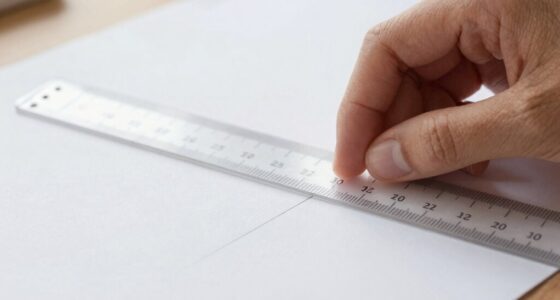
Applying this grid trick doesn’t require fancy tools—just a ruler, pencil, and some patience. You can lightly sketch the grid lines onto your workspace or material, then erase or hide them once your design is complete. The key is to be consistent with your measurements and to use the grid as a mental framework as you work. As a result, your handmade projects will look more balanced, with even spacing and well-thought-out color contrast. This approach not only enhances the aesthetic appeal but also helps you develop better craftsmanship skills. Over time, you’ll find it becomes second nature, making your designs look more professional and polished with minimal effort.
Frequently Asked Questions
Can the Grid Trick Be Used for Digital Designs?
Yes, you can definitely use the grid trick for digital designs. Digital tools like Adobe Photoshop, Illustrator, or Canva allow you to customize grids to suit your project. By adjusting grid spacing and guides, you can easily create balanced, harmonious layouts. This trick helps you maintain consistency and alignment, making your digital designs look professional and polished. It’s a versatile method that works seamlessly with various design software.
Is This Method Suitable for Complex or Detailed Artwork?
Yes, this method can work for complex artwork if you focus on proportional scaling and visual harmony. As you apply the grid, it guides your eye through intricate details, helping you maintain balance without overwhelming the viewer. But beware—overcomplicating your design might challenge the grid’s effectiveness. Use it subtly, and you’ll discover how it enhances even the most detailed pieces, creating a cohesive, harmonious artwork that captivates.
How Do I Choose the Right Grid Size?
You choose the right grid size by considering your artwork’s proportions and the level of detail you want to achieve. Opt for a grid with proportions that match your design’s dimensions, ensuring spacing consistency throughout. Smaller grids work for intricate details, while larger grids suit broader compositions. Always test different sizes to see which offers the best balance, helping your handmade design look harmonious and well-structured.
Can I Modify the Grid for Non-Rectangular Shapes?
Did you know 65% of designers customize grids for complex shapes? Yes, you can modify the grid for non-rectangular shapes through grid customization. Start by adjusting the grid lines to match your shape’s contours, then adapt the spacing and angles accordingly. This shape adaptation guarantees your handmade design remains balanced and visually appealing, allowing for more creative freedom while maintaining structure.
Does Using a Grid Affect the Creative Process?
Using a grid can influence your creative process by providing structure that guides your work. It helps you achieve visual harmony, making your design feel balanced and cohesive. However, it also offers room for creative freedom, allowing you to experiment within the framework. You’ll find that a grid can enhance your ideas without stifling your originality, giving you a reliable foundation while still encouraging innovation.
Conclusion
Now that you’ve mastered the simple grid trick, your handmade designs will look more balanced and beautiful than ever. Remember, consistency and clarity create compelling compositions. With this straightforward strategy, you’ll strengthen your skills and showcase your style with confidence. So, start sketching, stay strategic, and see your skills soar as your designs develop into dazzling displays of detail. Embrace the grid, and let your creativity confidently shine through every stroke!