
TL;DR
Interior designers interviewed by House Beautiful describe a soft return of honey oak, the orange-toned wood popular in homes from the late 1980s through the early 2000s. They say warmer interiors and nostalgia are contributing to renewed interest, but the wood is often used in limited doses and paired with cooler colors and modern materials.
Interior designers are reporting a soft return of honey oak, the golden, orange-toned wood widely used in homes from the late 1980s through the early 2000s. In a report by House Beautiful, designers describe renewed interest in warmer wood tones, but say current projects tend to use honey oak more selectively than the extensive cabinetry, trim and flooring common in its earlier heyday.

Get business pricing on tools and workshop supplies
- Business-only prices and quantity discounts
- Tax-exempt purchasing
- Multiple users, one account, clear invoices
Honey oak was once a familiar finish on kitchen cabinets, bathroom vanities, baseboards, stair railings and floors. Cathleen Gruver of Gruver Cooley told House Beautiful that it was a standard choice for builders and homeowners before cooler, more neutral interiors gained favor in the early 2000s. She said she has since noticed a limited return, particularly in cabinetry, millwork and furniture.
Elizabeth Bennett and Mallory Robins, co-founders of Kobel + Co, link the interest to the wider use of warm tones in interiors and nostalgia among homeowners who grew up in the 1980s and 1990s. Bennett said the renewed interest in styles from that period also appears in fashion. The article does not present sales figures, survey results or other market data to measure how widespread the shift is.
The designers’ examples emphasize balancing the wood rather than reproducing an all-over honey-oak look. Adina Hall described pairing existing honey oak with whitewashed French oak flooring, taupe cabinetry, white finishes and accents such as sage green and indigo. Nancy Dow of Sierra Living Concepts said she uses clean lines, matte black details, natural stone and modern lighting to give the wood a more current setting. Other examples include a honey-oak island against a bright white kitchen and a vanity paired with blue tile and gray paint.
A Warmer Alternative to Gray
The reported shift offers homeowners and designers another way to introduce warmth and visible wood grain into rooms that might otherwise rely on cool neutrals. It also suggests that some finishes associated with a particular past era can be reconsidered through changes in proportion, color and surrounding materials.
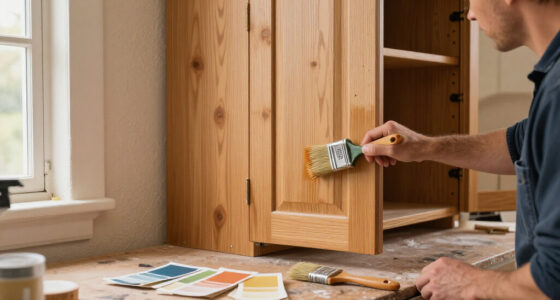
For homeowners with original cabinets or trim, the designers’ advice has a practical implication: replacing the wood is not the only option. The report describes projects that retain or incorporate honey oak while using restrained applications and contrasting finishes to prevent it from dominating a room. That is design guidance from the interviewed professionals, not evidence that every existing honey-oak interior will suit the same approach.
Popular right now

Ninja Foodi 10-Quart DualZone Smart XL Air Fryer, 6-in-1, Black, DZ550

Vitamix 5200 Professional-Grade Blender, 64 oz. Container, Black

Samsung 55-Inch S90H OLED 4K UHD Smart TV Bundle with Full-Motion Mount and Surge Protector
As an affiliate, we earn on qualifying purchases.
From Ubiquitous to Selective
House Beautiful places honey oak’s broad popularity between the late 1980s and early 2000s, when the finish appeared across many parts of a home. Gruver told the publication that it lost favor as homeowners moved toward cooler, more neutral interiors. The report frames the current interest within a wider preference for warmer, more lived-in spaces.
The examples in the article point to a change in how the finish is deployed. Instead of using it across floors, cabinetry and trim at once, Robins said homeowners may choose a single feature, such as a kitchen island or a piece of furniture. The report also recommends mixing wood tones and using muted greens, warm whites, greige, taupe or light blue to balance honey oak’s orange cast.
“It’s not necessarily a full-blown comeback, but I’ve definitely noticed a soft return—particularly in cabinetry, millwork details, and furniture.”
— Cathleen Gruver, Gruver Cooley, speaking to House Beautiful
How Broad Is the Return?
The report is based on comments from interior designers and project examples; it does not establish how many homeowners are choosing honey oak or whether demand is increasing across the wider housing and renovation market. No sales data, survey findings or comparison with previous periods are included.
It is also unclear whether the interest will persist or expand beyond selective details and individual pieces. Gruver explicitly described the change as a soft return, and the article does not claim that honey oak has regained its former status as a standard finish. The designers’ recommendations are opinions about styling, not a guarantee that a particular palette will work in every home.
Watch for Broader Adoption
The source identifies no upcoming industry report, product launch or other milestone that would confirm whether the trend is growing. The next useful evidence would be broader market data or further reporting that tracks the finish across renovation projects, cabinetry and home furnishings over time.
For now, the development described by House Beautiful is a change in designers’ observations and project choices, not a measured market-wide comeback. The practical approach presented in the article is to assess existing wood in its setting, then test whether selective use, mixed wood tones and cooler or neutral accents create the desired balance before making extensive changes.
Key Questions
Is honey oak fully back in style?
Designers interviewed by House Beautiful describe a soft or limited return, not a full revival. They report interest in selected cabinetry, millwork, furniture and features such as kitchen islands.
Why are designers reconsidering honey oak?
The designers cite renewed interest in warmer interiors and nostalgia for styles associated with the 1980s and 1990s. The report does not provide survey or sales data measuring the trend.
How do designers keep honey oak from overwhelming a room?
Examples in the report pair it with cooler colors, mixed wood tones and contrasting materials, including sage or indigo accents, white finishes, natural stone and matte black details. Some designers use it on just one feature rather than throughout a room.
Should homeowners replace original honey-oak cabinets?
The article suggests considering how the wood might work with updated colors and materials before replacing it. That is design advice, not a universal recommendation; the best choice depends on the condition of the cabinets and the homeowner’s plans.
Source: housebeautiful.com