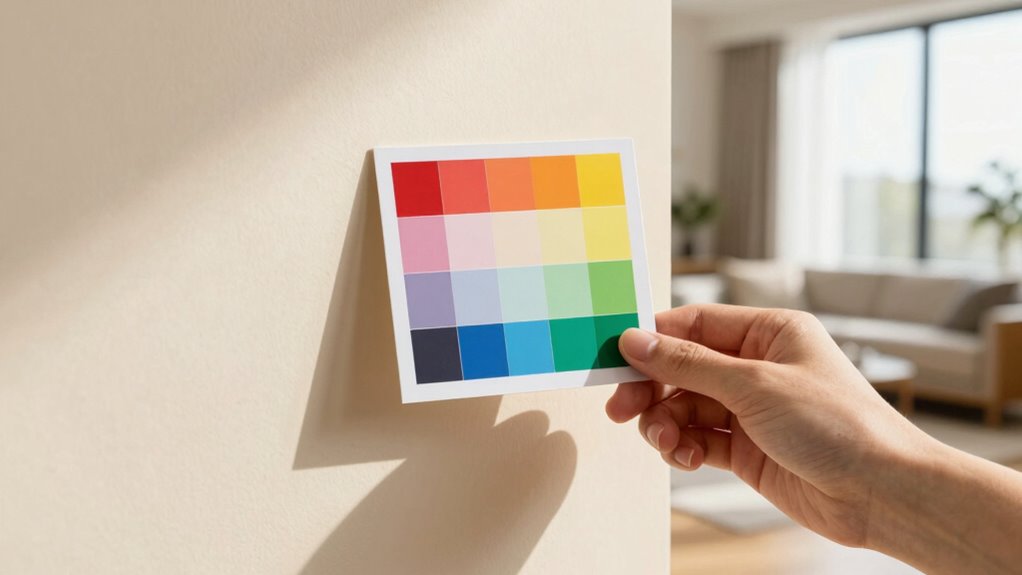

To test paint colors accurately, apply small samples directly on your walls in different spots and observe them at various times of day under natural and artificial lighting. Use high-quality paint with the finish you plan to use, and move furniture or hold fabric swatches against the wall to see how colors interact with your space. Pay attention to how lighting changes the hue, and if you want to guarantee a perfect match, keep exploring these helpful tips.
Key Takeaways
- Use small, 1-2 foot samples placed in multiple spots around the room.
- Observe colors at different times of day and under various lighting conditions.
- Test with the actual paint finish you plan to use for accurate results.
- Move furniture and hold fabric swatches against walls to see how color interacts with space.
- Check samples under both natural and artificial light to ensure consistent color perception.
Choosing the right color for your room can feel overwhelming, but testing samples makes the process much easier. When you’re considering different shades, it’s essential to see how they look in your actual space rather than relying solely on a swatch or a paint chip. The way colors appear on your walls can change dramatically depending on lighting conditions and furniture placement. Natural light, in particular, has a huge impact; a color that looks perfect in the morning may feel dull or too vibrant in the evening.
Start by testing small samples directly on your walls—preferably in patches about a square foot or two. Don’t just stick to a single spot; move the samples around the room, especially near windows and areas where you’ll spend most of your time. This allows you to observe how the color reacts to different lighting throughout the day. Keep in mind that the color’s appearance can shift based on the time of day, so check your samples during morning, afternoon, and evening. If your room has multiple light sources—like lamps, overhead lighting, or even skylights—consider how each affects the color’s look. Sometimes, a color that feels perfect in natural light can seem off under artificial lighting.
Test small wall samples in different spots and lighting conditions to see how colors truly look throughout the day.
Furniture placement also plays a *vital* role. If your room has large pieces of furniture or a specific layout, see how the color interacts with them. For example, a bold hue might look different when placed near dark-colored furniture versus light-colored pieces. It’s wise to move your furniture temporarily or hold up fabric swatches against the wall to get a sense of how the final look will come together. This step helps prevent surprises once the paint is on the walls and furniture is set in place.
Remember that the finish you choose—matte, eggshell, satin—also influences how the color appears. Some finishes can intensify or soften the hue, so if possible, test the actual paint finish you plan to use. When you’re testing, use a high-quality sample paint and apply it with a brush or roller for the most accurate representation. Avoid painting large sections; instead, do multiple small patches to compare different shades or shades at different times of the day. Additionally, understanding the environmental acoustics of your space can influence how you perceive colors, as sound reflections may impact your overall impression of the room’s ambiance.
Amazon Product B08GKMFWM7
As an affiliate, we earn on qualifying purchases.
Frequently Asked Questions
How Long Should I Wait Before Finalizing My Paint Color?
You should wait at least 48 hours, or even up to a week, before finalizing your paint color. This allows the paint sample duration to reveal how the color looks at different times of day and under various lighting conditions. Rushing color finalization timing can lead to surprises later. Give yourself enough time to see how the color truly feels in your space before making your final decision.
Can Lighting Affect How Paint Colors Appear in My Room?
Did you know that lighting effects can change how you perceive a paint color by up to 30%? Lighting plays an essential role in color accuracy, meaning your room’s light sources—natural sunlight, bulbs, or fixtures—can make colors look different throughout the day. To avoid surprises, test your paint color under various lighting conditions. This helps guarantee you choose a shade that looks great whenever and however you see it.
What Tools Are Best for Testing Paint Samples Accurately?
You should use high-quality paint sample pots for accurate color testing. Apply samples with consistent thickness using sample application techniques like a brush or roller, ensuring even coverage for true color comparison. Check for color consistency by viewing samples at different times of day and under various lighting conditions. This method helps you see how the paint truly looks in your space, reducing surprises and ensuring you’re happy with your final choice.
How Do Different Wall Finishes Impact Color Perception?
You’ll notice that wall finishes greatly influence color perception; matte finishes soften colors, while gloss reflects more light, making hues appear brighter. Texture effects also play a role, as rough surfaces can mute or distort colors, impacting your color psychology experience. To get accurate results, test paints on different wall textures and finishes, so you understand how each impacts the color’s true look in your space.
Should I Test Colors on All Walls or Just One?
Imagine your room as a canvas awaiting your touch—go ahead and test colors on all walls. Sampling multiple areas reveals how light, patches, or finishes influence perception. Use sample testing before painting, especially after wall patching, to see true color effects. This way, you avoid surprises and ensure the hues harmonize with your space, transforming your room into a masterpiece that feels just right from every angle.
Amazon Product B0DGL6N7QC
As an affiliate, we earn on qualifying purchases.
Conclusion
Testing your room’s color carefully can prevent surprises later, but sometimes, it feels like the perfect shade just appears when you least expect it. Maybe it’s the way the sunlight hits or a fleeting mood that influences your choice. Either way, trust your instincts and take your time. After all, the right color might just find you when you’re not looking for it, turning a simple test into an unexpected moment of discovery.
Amazon Product B07H2W5F2Y
As an affiliate, we earn on qualifying purchases.
Amazon Product B0FNBKTT97
As an affiliate, we earn on qualifying purchases.