Ukrainian Pysanka patterns are rich symbols rooted in ancient traditions that convey cultural values, spiritual beliefs, and protective meanings through intricate designs and colors. You’ll notice geometric shapes like triangles and diamonds, representing protection and eternity, while floral motifs symbolize fertility and life. Colors like red, black, and yellow each carry specific messages of love, protection, or abundance. Continue exploring to uncover the meaningful stories behind these beautiful, timeless symbols.
Key Takeaways
- Pysanka patterns incorporate ancient symbols like triangles and diamonds, representing protection, eternity, and spiritual protection.
- Colors such as red, black, and yellow convey love, protection, and abundance, respectively, reflecting cultural values.
- Floral motifs symbolize fertility, life, and natural harmony, rooted in Ukraine’s pagan traditions.
- Patterns serve as visual narratives, connecting modern Ukraine to its historical, spiritual, and cultural heritage.
- Each design embodies specific meanings and blessings, making Pysanka a respectful expression of Ukrainian identity.
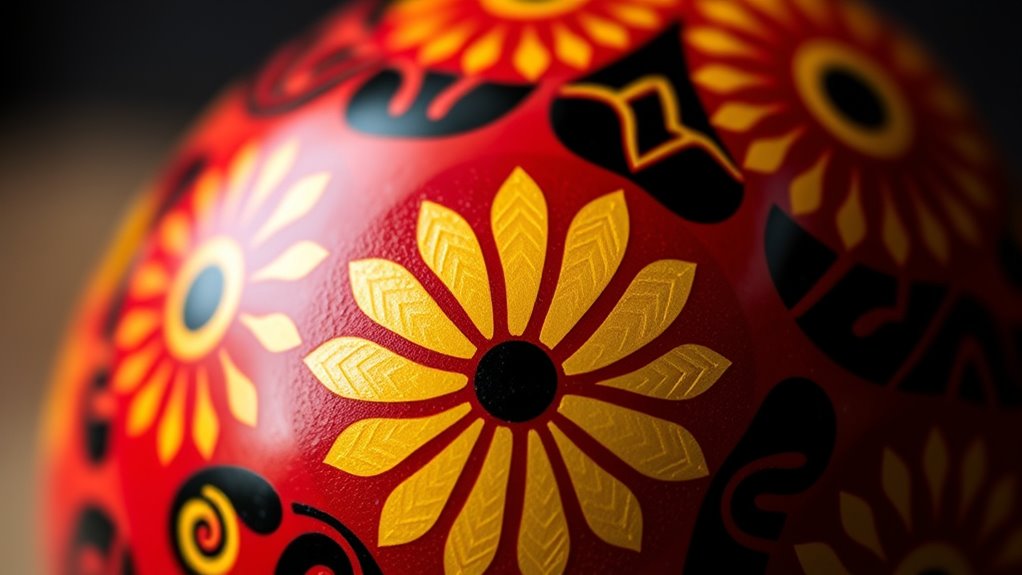
Have you ever wondered what makes Ukrainian Pysanka patterns so mesmerizing? It’s not just the vivid colors or intricate designs that catch your eye, but also the deep-rooted cultural significance behind each stroke and symbol. These decorated eggs, known as Pysanky, carry a rich history that dates back thousands of years, reflecting the beliefs, traditions, and hopes of the Ukrainian people. Understanding their origins helps you appreciate why these patterns are more than just beautiful artwork—they are a living expression of identity and history. The historical origins of Pysanka trace back to ancient times, long before Christianity influenced Ukraine. Archaeological findings suggest that decorating eggs was a ritual connected to fertility, rebirth, and protection. As early as the Neolithic period, people in the region used natural dyes and simple designs on eggs, believing they had sacred or protective powers. Over centuries, these practices evolved, blending pagan symbols with Christian motifs after Ukraine adopted Christianity in the 10th century. This fusion enriched the symbolism behind Pysanky, making each pattern a meaningful talisman. The traditional methods of creating Pysanky have been passed down through generations, preserving the cultural significance embedded in every design. The process involves drawing intricate patterns with wax, which resists dye and creates contrast on the eggshell. Each pattern is carefully chosen, often rooted in centuries-old symbolism, to convey specific messages. For example, geometric shapes like triangles and diamonds symbolize protection and eternity, while floral motifs represent fertility and life. The colors themselves carry meaning—red signifies love and passion, black symbolizes protection, and yellow stands for wealth and abundance. These symbols and colors are not random; they are a language that communicates hopes, blessings, and cultural values. When you observe a Pysanka, you’re looking at more than an art piece—you’re witnessing a visual narrative that connects the present to Ukraine’s ancient past. Every pattern tells a story that has been preserved through generations, revealing a collective memory that continues to thrive today. The cultural significance of Pysanky extends beyond individual designs, serving as a symbol of Ukrainian resilience, spirituality, and community identity. Whether used in religious ceremonies, festivals, or simply as decorative objects, these eggs embody a centuries-old tradition that continues to inspire admiration worldwide. Recognizing the cultural symbolism behind each pattern helps deepen your appreciation of the artistry and the history they represent. So, next time you see a beautifully decorated Pysanka, remember that behind its mesmerizing patterns lies a profound history and cultural legacy that has endured through centuries.
Ukrainian Pysanka egg decorating kit
As an affiliate, we earn on qualifying purchases.
As an affiliate, we earn on qualifying purchases.
Frequently Asked Questions
How Are Pysanka Patterns Traditionally Passed Down Through Generations?
You pass down pysanka patterns through oral tradition and apprenticeship programs. You learn from elders by listening closely to stories and instructions, maintaining the cultural meaning alive. You might also participate in hands-on workshops or family gatherings where traditions are taught directly. This active sharing ensures that the intricate symbols and techniques stay vibrant, connecting generations and preserving the rich heritage of Ukrainian egg art for years to come.
What Materials Are Used to Create Authentic Ukrainian Pysanky?
You use a hollowed eggshell, beeswax, and natural dye sources to create authentic Ukrainian pysanky. Wax resist techniques involve applying beeswax to design areas, then dyeing the egg in layers, building vibrant patterns. Natural dyes come from plants, fruits, and spices like onion skins, beets, and turmeric. These materials, combined with skillful wax application, produce the intricate, meaningful designs that honor tradition and preserve the art form.
Are There Regional Differences in Pysanka Designs Across Ukraine?
Yes, you’ll notice regional differences in pysanka designs across Ukraine. Different areas showcase unique motifs and patterns reflecting local traditions and cultural variations. For example, western regions often feature floral and geometric motifs, while eastern areas might emphasize symbols of fertility or protection. These regional motifs make each pysanka distinct, allowing you to appreciate the rich cultural diversity and history embedded in this beautiful Ukrainian folk art.
How Long Does It Typically Take to Complete a Pysanka?
You can expect to spend anywhere from a few hours to several days on a pysanka, depending on your skill level and the complexity of the design. It’s a labor of love that requires patience and attention to detail. If you’re just starting out, it may take longer, but with practice, you’ll get faster. Remember, every bead of sweat pays off when you hold a beautifully decorated egg in your hands.
Can Modern Artists Create New Symbolic Patterns in Pysanka Art?
Yes, you can definitely create new symbolic patterns in pysanka art through modern symbolism and artistic innovation. As a modern artist, you have the freedom to experiment with contemporary themes and incorporate innovative designs while respecting traditional techniques. This fusion allows you to express personal and cultural stories uniquely, enriching the art form. Your creativity helps keep pysanka alive, evolving with new meanings and interpretations.
wax resist Pysanka dyeing supplies
As an affiliate, we earn on qualifying purchases.
As an affiliate, we earn on qualifying purchases.
Conclusion
So, next time you admire a pysanka’s intricate design, remember it’s more than just pretty patterns—it’s centuries of symbolism and resilience. But don’t get too caught up trying to decode every symbol; sometimes, it’s okay to just enjoy the beauty without overthinking it. After all, in a world obsessed with meaning, a simple egg can remind us that sometimes, art’s true purpose is just to make us smile… or to hide a secret message from history.
traditional Ukrainian Pysanka patterns book
As an affiliate, we earn on qualifying purchases.
As an affiliate, we earn on qualifying purchases.
Pysanka egg art tools set
As an affiliate, we earn on qualifying purchases.
As an affiliate, we earn on qualifying purchases.