
Quilting bees in America were more than just crafting gatherings; they played a crucial role in empowering women, fostering social bonds, and supporting social movements like abolition and women’s rights. These events created safe spaces for sharing stories, passing down skills, and building community trust. Their influence extended beyond quilting, shaping collective identities and inspiring activism. By exploring their history, you’ll discover how these gatherings contributed markedly to American social and cultural progress.
Key Takeaways
- Quilting bees evolved from practical craft sessions into vital community events fostering social bonds and storytelling.
- They served as platforms for women to share experiences, voice opinions, and build mutual support networks.
- Quilting bees contributed to cultural heritage through artistic expression, blending community effort with storytelling.
- These gatherings played a role in organizing social movements related to abolition, women’s rights, and education.
- Their legacy highlights their importance in empowering women and strengthening community resilience in American history.
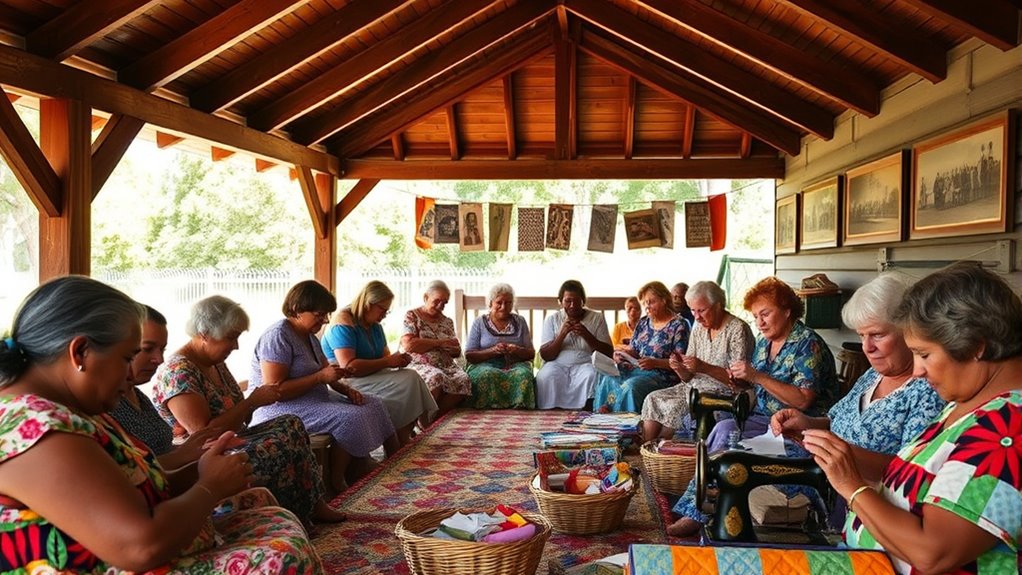
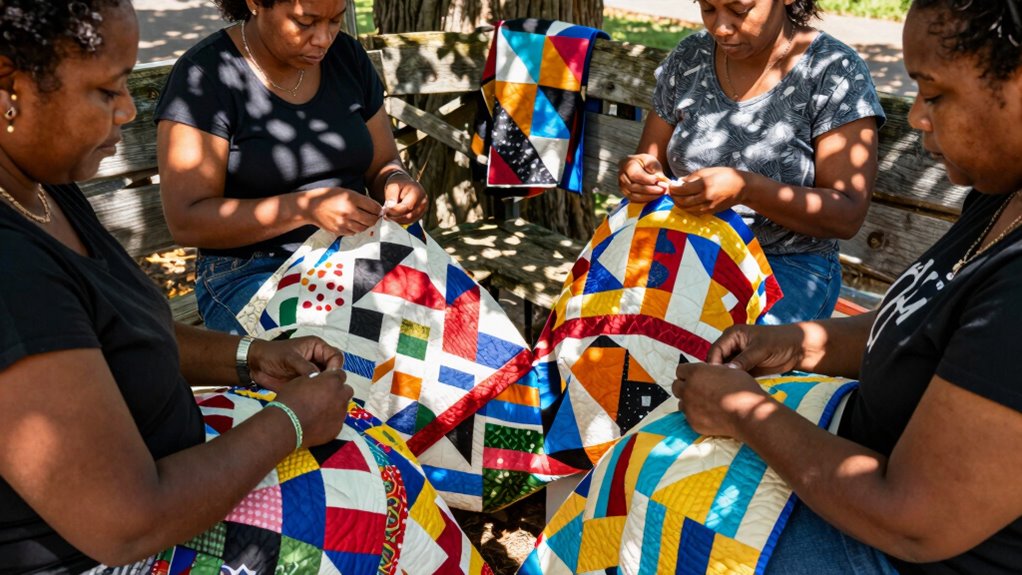
Have you ever wondered how quilting bees became a cherished tradition across America? These gatherings weren’t just about stitching fabric; they were essential events where women’s crafts transformed into powerful tools for community bonding. In a time when women’s roles often centered around domestic tasks, quilting bees offered a space where women could come together, share stories, and support each other. The act of quilting, which might seem like a simple craft, actually carried deeper social significance. It became a way for women to forge connections, pass down skills, and build a sense of solidarity that extended beyond individual homes. Moreover, quilting bees often incorporated elements of Free Floating landscapes, blending artistic expression with community effort. When you think about women’s crafts, quilting stands out as more than just a practical skill—it’s a form of expression and a communal activity. During these gatherings, women pooled their talents, often working on quilts that told stories of family history, community struggles, or shared hopes. The process fostered a sense of collective identity, as each stitch contributed to a larger narrative. These quilting bees weren’t just about making blankets; they were about weaving social fabric, creating bonds that could withstand the challenges of the outside world. They helped women feel less isolated, especially in rural or underserved areas, where opportunities for social interaction might have been limited. Community bonding at quilting bees also played a role in empowering women. In a society that often confined them to the private sphere, these gatherings offered a rare chance to voice opinions, exchange advice, and celebrate achievements. Women of all ages participated, from young girls learning the craft to older women passing down wisdom. The shared activity built trust and camaraderie, turning a simple craft into a form of mutual support and resilience. It was common for women to bring food, stories, and laughter, making the quilting bee a lively social event that strengthened neighborhood ties and reinforced social networks. Moreover, quilting bees contributed to broader societal movements. They provided a platform for women to organize around issues like education, abolition, and women’s rights. As they stitched, they also discussed ideas that could influence change, making these gatherings more than just social outings. In many ways, quilting bees laid the groundwork for collective activism, demonstrating how women’s crafts could serve as a foundation for community resilience and social progress. So, behind the stitches and fabric, these gatherings carried a powerful legacy of community bonding, empowerment, and shared purpose—an overlooked but essential chapter in American history.
Frequently Asked Questions
How Did Quilting Bees Influence African American Community Bonds?
You see, quilting bees strengthened social cohesion by bringing African American community members together to work and share stories. They also fostered cultural preservation, passing down traditions and skills through generations. During these gatherings, you’d bond over common experiences, support each other, and celebrate your heritage. This collective effort created a sense of unity and continuity, helping to sustain cultural identity amid difficult social circumstances.
What Role Did Quilting Bees Play in Women’s Empowerment?
You see, quilting bees played a essential role in women’s empowerment by fostering community building and skill development. As you participate in these gatherings, you gain confidence, learn new techniques, and share stories that strengthen bonds. This collective effort helps women assert their creativity and independence, turning quilting into a powerful act of self-expression and solidarity. Ultimately, quilting bees elevate women’s voices and promote their social and economic growth.
Were Quilting Bees Connected to Broader Social or Political Movements?
Yes, quilting bees often connected to broader social activism and political organizing. You might see women gathering to address community issues, support abolition, or fundraise for civil rights. These gatherings became spaces for collective action, blending craft with activism. By working together on quilts, women fostered social change, making quilting bees more than just sewing—they became essential hubs for political expression and social justice efforts in their communities.
How Did Quilting Techniques Evolve Through These Communal Gatherings?
They say practice makes perfect, and during quilting bees, you notice how embroidery techniques and fabric selection evolve. You experiment with new stitches, blending traditional patterns with innovative ideas, and choose fabrics that reflect cultural influences. These communal gatherings foster skill-sharing, leading to more intricate designs and stronger craftsmanship. As you work together, your techniques grow more sophisticated, transforming simple quilts into artistic expressions that tell powerful stories through every stitch.
Did Quilting Bees Contribute to Economic Opportunities for Women?
Yes, quilting bees offered women valuable economic opportunities. By participating, you could develop your skills and gain economic independence through selling quilts and related crafts. These communal gatherings allowed you to network, share techniques, and build confidence in your craft, which could lead to financial stability. Over time, quilting bees helped women transform their creative talents into income sources, empowering them both economically and socially.
Conclusion
As you reflect on quilting bees, remember they weren’t just about stitching fabric—they symbolized unity, resilience, and shared hope. Each thread woven together represents a community coming apart from isolation, creating something stronger and beautiful. Just like those quilts, your own connections can serve as a fabric that holds us through tough times. Embrace the symbolism of these gatherings, knowing that in unity, we find strength and a collective voice that endures beyond the stitches.