
To make your handmade work feel more collected, develop a deliberate design habit rooted in awareness and reflection. Focus on each step of your creative process, thoughtfully considering your aesthetic choices like color, texture, and proportions. Establish routines for reviewing and refining your work to guarantee coherence and authenticity. By intentionally slowing down and questioning your decisions, you’ll create pieces that look designed with purpose. Keep exploring how to cultivate this mindful approach to elevate your handmade projects even further.

Get business pricing on tools and workshop supplies
- Business-only prices and quantity discounts
- Tax-exempt purchasing
- Multiple users, one account, clear invoices
Key Takeaways
- Cultivate awareness and reflection throughout the creative process to ensure intentionality in design choices.
- Use deliberate aesthetic decisions, such as color and texture, to create cohesive visual language.
- Establish routines for reviewing and refining work to maintain consistency and authenticity.
- Slow down and assess each step to align decisions with your overall vision and goals.
- Develop second nature intentionality through regular feedback and mindful evaluation of your work.
Have you ever wondered how some designers consistently create innovative work while others struggle to keep up? The secret often lies in a simple yet powerful design habit that elevates handmade projects from casual to collected. It’s about cultivating a deliberate approach to your creative process and making thoughtful aesthetic choices. When you develop this habit, your work gains a sense of cohesion and intentionality that resonates deeply, whether you’re crafting a piece for yourself or for a client.
The core of this habit is awareness—being conscious of each step you take in your creative process. Instead of rushing through ideas or jumping into execution without a clear vision, you slow down and reflect on what you want your work to communicate. This mindfulness allows you to fine-tune your aesthetic choices, ensuring each detail aligns with your overall vision. Over time, this intentionality becomes second nature, making your handmade work feel more refined and “collected.”
Your aesthetic choices—color palettes, textures, proportions—are the visual language that ties your work together. When you approach these choices with purpose, you create a cohesive look that feels deliberate rather than accidental. This doesn’t mean every decision has to be perfect or overly curated; it simply means that each element serves a purpose and contributes to the overall story you want to tell. Developing a habit of consistently questioning and refining your aesthetic choices helps you build a visual identity that feels authentic and polished. Incorporating intentionality in design can further enhance this process by aligning your choices with your overall vision. Practicing mindful decision-making can deepen your understanding of how each element impacts your work’s cohesion. Additionally, understanding design principles provides a solid foundation for making informed aesthetic choices.
One way to reinforce this habit is by establishing routines that encourage reflection. For example, before starting a new project, spend a few moments reviewing your past work to identify what aspects feel most authentic to you. During the process, check in regularly to assess whether your choices are reinforcing your intended aesthetic. After completing each piece, evaluate what worked and what could be improved—this feedback loop sharpens your instincts and deepens your understanding of your style.
Ultimately, this design habit fosters a sense of control and coherence in your handmade work. It’s about making deliberate, thoughtful decisions at every stage, which results in pieces that look more collected and intentional. Over time, these habits become second nature, transforming your creative process into a mindful journey that consistently produces work with a stronger sense of identity and purpose. The more you practice this habit, the more your handmade pieces will exude a confident, collected aesthetic that truly stands out.
Popular right now

Breville Bambino Espresso Machine, Brushed Stainless Steel

KitchenAid Classic Series 4.5 Quart Tilt-Head Stand Mixer K45SS, Onyx Black

Roborock Robot Vacuum and Mop with LiDAR Navigation and 10,000 Pa Suction
As an affiliate, we earn on qualifying purchases.
Frequently Asked Questions
How Does Consistency Influence Handmade Work’s Perceived Value?
Consistency profoundly influences your handmade work’s perceived value by enhancing its craftsmanship perception and aesthetic consistency. When you maintain uniformity in style, materials, or techniques, viewers see your work as more intentional and professional. This reliability builds trust and admiration, making your creations appear more refined and collectible. By consistently applying your unique touches, you elevate your craftsmanship perception, encouraging others to value and cherish your handmade pieces more deeply.
Can Design Habits Be Developed Intentionally or Only Naturally?
Think of design habits as a garden—you can intentionally plant seeds or let nature take its course. You can consciously develop these habits through intentional growth, cultivating skills and routines deliberately. Or, they can emerge through natural development, blooming organically over time. Either way, with mindful effort, you shape your creative process, making it more refined and consistent, just like tending to a well-loved garden.
What Common Mistakes Undermine a Collected Handmade Aesthetic?
One common mistake that undermines a collected handmade aesthetic is inconsistent craftsmanship, which disrupts the overall aesthetic coherence. When your work varies too much in technique or finish, it feels less unified and intentional. To avoid this, focus on maintaining craftsmanship consistency across your pieces. This creates a cohesive look, reinforcing your aesthetic and making your handmade work appear more thoughtfully curated and collected.
How Long Does It Typically Take to Establish a Design Habit?
Building a new habit is like planting a seed; it takes time and consistent care. Usually, habit formation within daily routines takes about 21 to 66 days, but it varies depending on the complexity of the habit. The key is steady effort and repetition. If you stay committed to your design routine daily, you’ll notice the habit becoming second nature, making your handmade work feel more intentionally collected over time.
Does Digital Organization Impact the Feeling of a Handmade Collection?
Yes, digital organization impacts how you perceive your handmade collection. When you clear digital clutter, you create a sense of emotional attachment and pride in your work. Conversely, digital clutter can lead to emotional detachment, making your collection feel less special. By staying organized online, you reinforce the feeling that your handmade pieces are valuable and well-loved, enhancing their collected, intentional vibe.
Conclusion
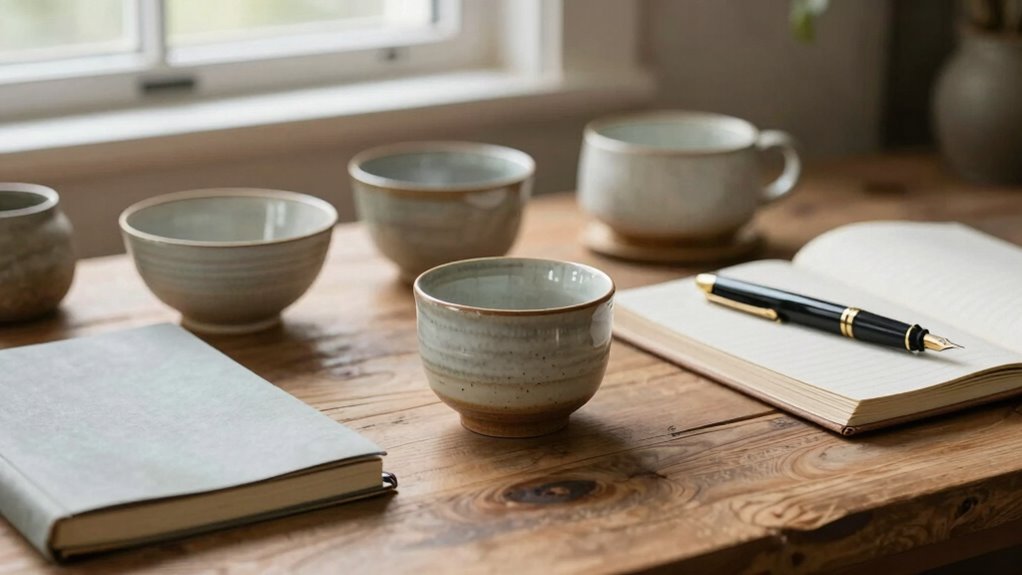
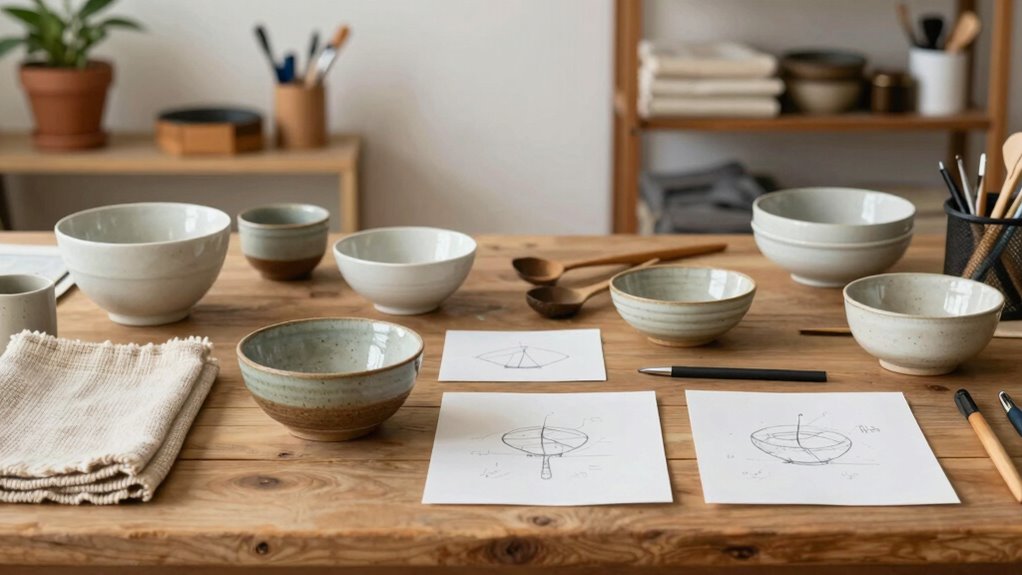
By cultivating the habit of intentional design, you create handmade work that feels genuinely collected and meaningful. For example, imagine a ceramic artist who carefully chooses each glaze and shape, resulting in pieces that resonate with personal stories and history. This deliberate approach not only enhances the aesthetic but also deepens the emotional connection for those who encounter your work. Embrace this habit, and your handmade creations will evoke a sense of authenticity and timelessness that truly stands out.