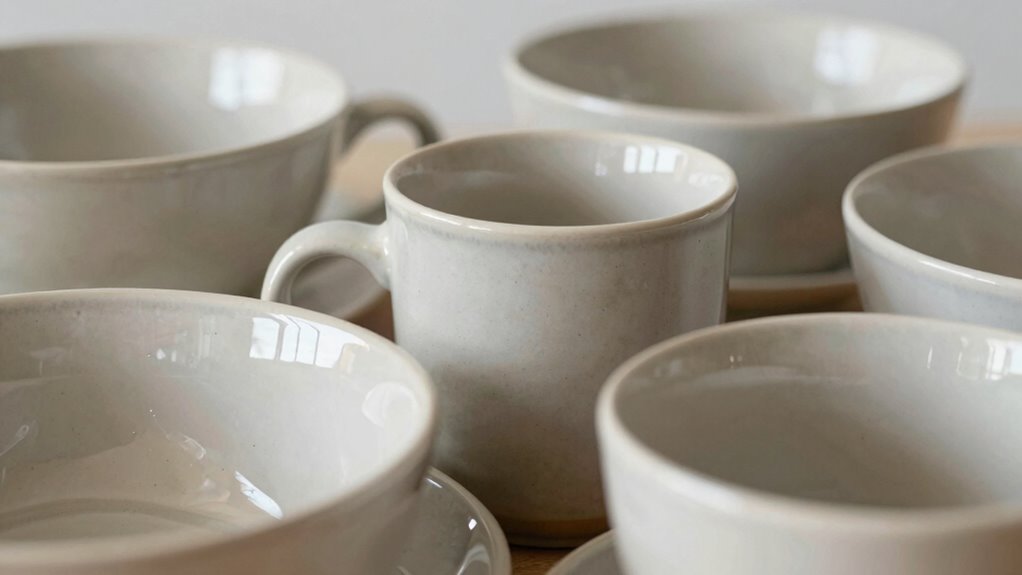

When a ceramic item is labeled “food-safe,” it means it’s made with glazes and materials that meet strict safety standards, preventing harmful substances like lead or cadmium from leaching into your food or drinks. These ceramics are tested and certified to guarantee they won’t pose health risks during normal use. To stay safe, look for verified labels and understand how standards and manufacturing methods impact safety—if you want to learn more, there’s plenty to discover below.
Key Takeaways
- “Food-safe” indicates the ceramic’s glaze and materials won’t leach harmful substances into food or drinks.
- Certification from agencies like FDA or NSF confirms compliance with safety standards.
- Proper manufacturing, firing, and testing ensure ceramics are vitrified and chemically stable for food contact.
- Non-certified ceramics may contain lead, cadmium, or other toxic metals that pose health risks.
- Always verify labels and certifications to ensure ceramics are genuinely food-safe.
food-safe ceramic dinnerware
As an affiliate, we earn on qualifying purchases.
As an affiliate, we earn on qualifying purchases.
Understanding What “Food-Safe” Signifies in Ceramics
Understanding what “food-safe” means in ceramics is essential if you want to use or purchase dishes that are safe for everyday use. In ceramic art, decorative techniques often add visual appeal, but they don’t necessarily guarantee safety for food contact. Food-safe ceramics are made using glazes and materials that won’t leach harmful substances into your food or beverages. When evaluating ceramic pieces, look for labels or certifications indicating they meet safety standards. It’s important to distinguish decorative techniques intended solely for aesthetic purposes from those that impact the safety of dishware. By understanding these distinctions, you can confidently select ceramics that are both beautiful and safe for your daily meals. Proper knowledge guarantees you enjoy your ceramic art without health concerns. Additionally, pay attention to glaze composition and the production process, as these factors directly influence whether the ceramics are truly food-safe. Recognizing safety standards in ceramics can help you make informed choices and ensure your dishes are suitable for regular use. Being aware of manufacturing practices can further ensure the ceramicware you choose adheres to safety protocols and quality controls. Knowing about testing procedures can also provide extra assurance of the safety of your ceramic ware, especially when the testing involves leaching tests that simulate real-world use.
lead free ceramic mugs
As an affiliate, we earn on qualifying purchases.
As an affiliate, we earn on qualifying purchases.
Common Materials and Glazes in Ceramic Dishware
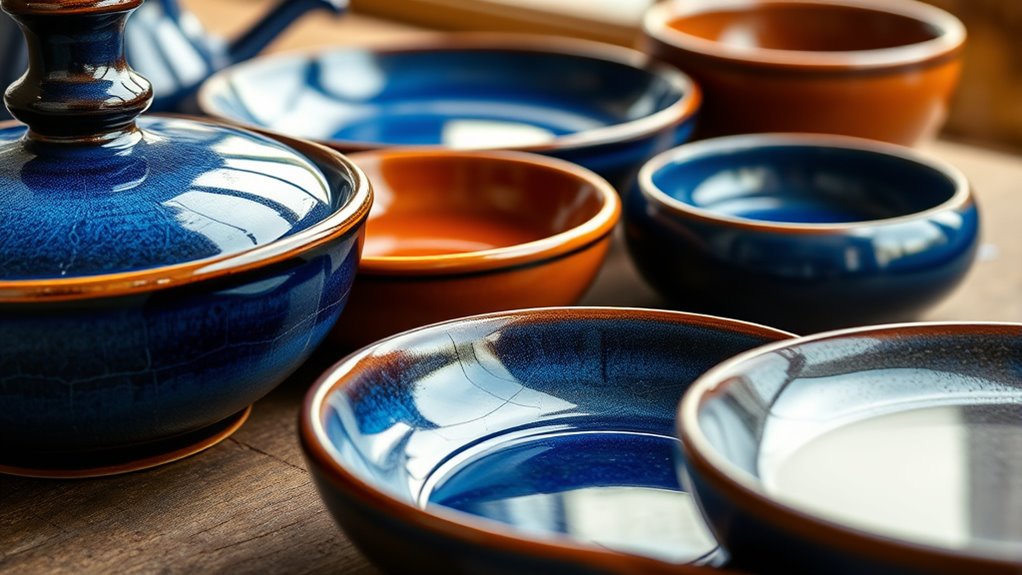
Ceramic dishware is crafted from a variety of materials and glazes that determine its durability, appearance, and safety. Common materials include clay, porcelain, and stoneware, each offering different strengths and firing temperatures. During ceramic firing, these materials are heated to create a strong, vitrified body that resists moisture and wear. Glazes are applied over the body, and their chemistry influences how they bond, melt, and form a smooth, glass-like surface. Understanding glaze chemistry is essential because some glazes may contain harmful substances if not formulated correctly, affecting food safety. The firing process ensures that glazes fully mature, sealing the surface and preventing leaching. Proper glaze formulation is crucial for ensuring the safety of ceramic dishware used with food. By selecting appropriate materials and mastering ceramic firing techniques, manufacturers produce dishware that’s both functional and safe for everyday use, especially when considering food-safe glazes and their chemical properties. Ensuring that glazes are properly tested and certified can help prevent leaching of harmful substances into food. Additionally, understanding the firing process helps in assessing the final safety and durability of ceramic products. For added assurance, many producers adhere to safety standards and conduct chemical testing to verify the absence of hazardous components.
NSF certified ceramic plates
As an affiliate, we earn on qualifying purchases.
As an affiliate, we earn on qualifying purchases.
Regulations and Standards Governing Food-Safe Ceramics
You need to understand how regulatory agencies oversee the safety of ceramic dishes you use daily. Certification processes make sure products meet strict standards, so you can trust their safety. Testing and compliance are key steps that guarantee ceramics are safe for food contact.
Regulatory Agencies Oversight
Regulatory agencies play a crucial role in guaranteeing that food-safe ceramics meet strict safety standards before they reach consumers. These oversight agencies enforce regulations that require manufacturers to comply with safety protocols, minimizing health risks. They conduct inspections, review testing results, and monitor manufacturing processes to ensure regulatory compliance. The following table highlights key oversight agencies and their roles: Vetted. Additionally, they establish testing standards to verify that ceramic products are safe for food contact, ensuring consumer protection.
Certification Processes Explained
Once regulatory agencies establish safety standards, manufacturers must navigate certification processes to prove their products meet these requirements. For ceramic art and decorative finishes, certification involves submitting product samples for testing and inspection. These processes verify that glazes and finishes are free from harmful substances like lead and cadmium, ensuring they’re food-safe. Certification bodies review manufacturing practices and material sources to confirm compliance with established standards such as FDA or EU regulations. This process helps you confidently produce ceramics suitable for food contact, whether for functional ware or decorative pieces. Additionally, proper ventilation considerations are essential during manufacturing to prevent contamination. Material safety standards are integral to maintaining product integrity and consumer trust. Understanding testing and inspection procedures can further clarify how products are evaluated for safety and compliance. It’s also important to stay informed about regulatory updates that may affect certification requirements and market access. Regular quality control checks during production can help ensure ongoing compliance and safety. Keep in mind, certification isn’t just a formality—it’s a vital step to demonstrate your commitment to safety and quality, making it easier to gain consumer trust and meet market regulations.
Testing and Compliance
How do standards and regulations guarantee that food-safe ceramics are truly safe for everyday use? They set strict testing protocols that ceramics must pass before reaching consumers. These tests assess leaching levels of harmful substances like lead and cadmium, ensuring they stay below safety limits. Regulations also specify materials and production processes that preserve ceramic artistry while maintaining aesthetic appeal. Certification bodies verify compliance through rigorous inspections and batch testing, giving you confidence in each piece’s safety. By enforcing these standards, manufacturers are compelled to produce ceramics that are both visually appealing and safe for food contact. Ultimately, these testing and compliance measures protect your health without compromising on the beauty or craftsmanship of your favorite ceramic pieces.
glazed ceramic food safe bowls
As an affiliate, we earn on qualifying purchases.
As an affiliate, we earn on qualifying purchases.
How Testing Is Conducted to Ensure Safety
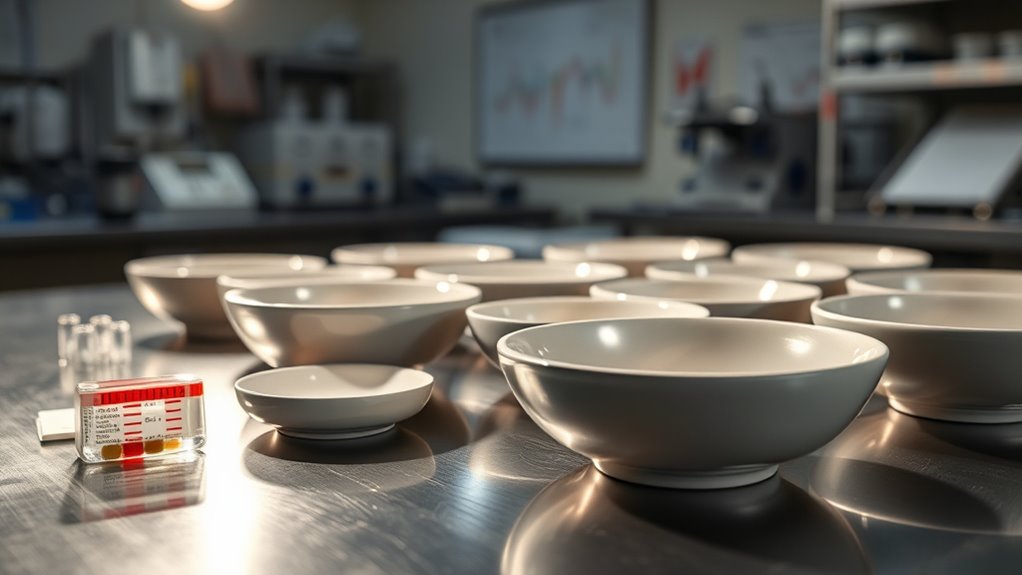
To guarantee food-safe ceramics meet health standards, manufacturers conduct rigorous testing to detect potential contaminants and ensure safety. They examine ceramic art pieces, especially those with decorative finishes, to verify that glazes and coatings don’t leach harmful substances. Testing involves chemical analysis, such as leachate tests, where ceramics are exposed to liquids that mimic food and drink contact. These tests measure whether any toxic elements migrate from the surface into consumables. Manufacturers also inspect the firing process, ensuring glazes are properly vitrified and stable. Proper firing techniques are essential to prevent the leaching of harmful chemicals and to maintain the integrity of the ceramic surface. Additionally, quality control protocols are implemented throughout manufacturing to consistently uphold safety standards. Consistent testing procedures help identify any issues early in production, ensuring each batch meets safety criteria. Regular monitoring of glaze composition and adherence to industry standards further contribute to safety assurance. Implementing standardized testing methods ensures that safety assessments are reliable and repeatable across different production batches. By combining chemical testing with visual inspections, they confirm that both functional and decorative aspects of ceramics are safe for food use. This extensive approach guarantees consumers receive products that are both beautiful and safe.
Potential Risks of Non-Food-Safe Ceramics
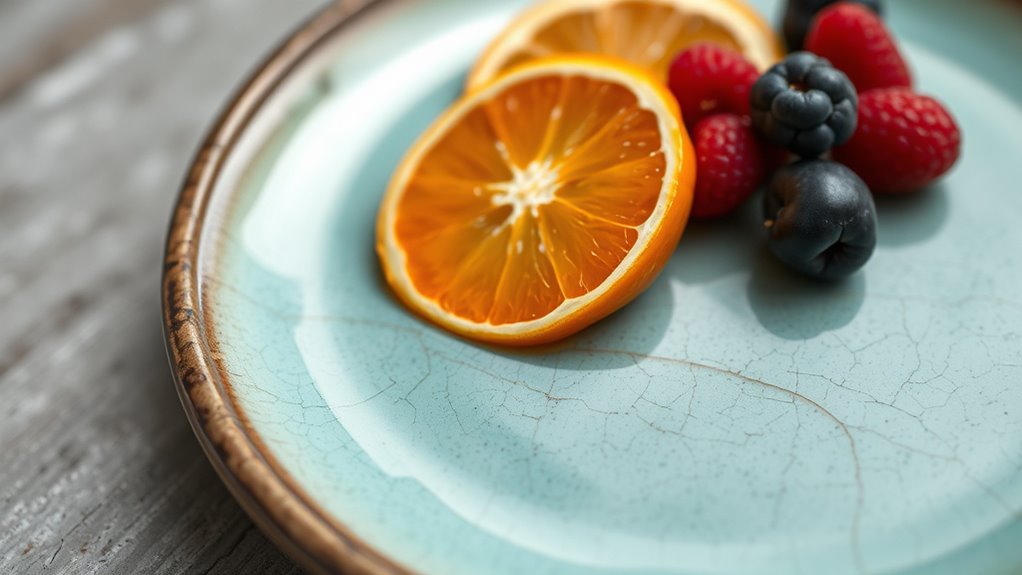
Using non-food-safe ceramics can expose you to toxic glaze components like lead and cadmium, which can leach into your food. These harmful substances pose serious health risks, especially with repeated use. It’s essential to understand these dangers to protect yourself and your loved ones. Additionally, choosing ceramics certified as food-safe can significantly reduce the risk of contamination and ensure safer usage.
Toxic Glaze Components
Non-food-safe ceramics often contain glazes with toxic components that can pose serious health risks. Glaze toxicity is a major concern because harmful chemicals can leach into food or liquids. One key factor influencing this is ceramic porosity; porous surfaces allow toxins to seep more easily from the glaze into your items. When the glaze isn’t properly formulated or fired at the right temperature, it may contain heavy metals or other hazardous substances. These toxic elements can migrate into your food, especially when the glaze is worn or chipped. Even small amounts of these chemicals can accumulate over time, increasing the risk of health issues. Ensuring your ceramics have a non-porous, food-safe glaze minimizes this danger and makes your tableware safer for everyday use. Additionally, understanding transfer-switch fundamentals can help prevent accidental exposure to hazardous substances during maintenance or repairs.
Lead and Cadmium Risks
Have you ever considered the risks posed by lead and cadmium in ceramic glazes? These substances are major contributors to lead hazards and cadmium risks, especially when ceramics aren’t food-safe. Lead can leach into food or drinks, causing health problems like neurological damage and developmental delays, particularly in children. Cadmium risks include kidney damage and bone fragility. Non-food-safe ceramics often contain these toxic metals, which can migrate into your food during use. If you use ceramics with untested or unsafe glazes, you expose yourself and others to these hazards. Ensuring your ceramics are lead- and cadmium-free is critical for your safety. Always check for proper certifications and avoid ceramics with unknown or suspicious glaze compositions to minimize these risks.
Recognizing Genuine Food-Safe Labels and Certifications
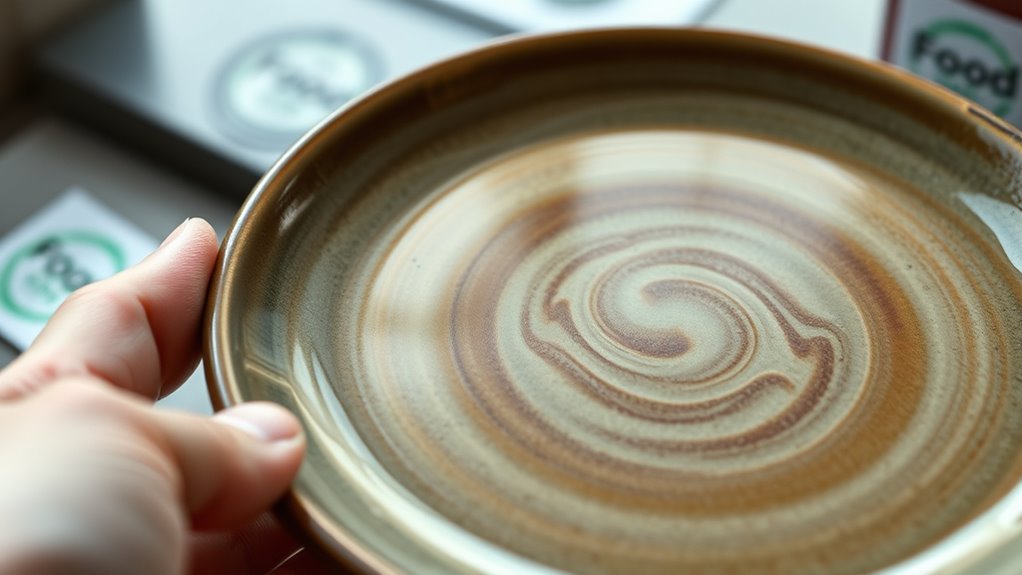
To guarantee your ceramics are truly food-safe, it’s essential to recognize genuine labels and certifications. These verify that the ceramic glazing has been properly tested and that the piece has undergone appropriate kiln firing. To spot authentic marks, look for:
- Official certification logos from recognized organizations like the FDA or NSF.
- Labels indicating the ceramic has been tested for food safety, not just decorative purposes.
- Certification seals on the bottom of the piece, confirming it met safety standards during kiln firing.
- Clear information about the ceramic’s glazing materials, confirming they’re free from harmful chemicals.
Always verify that the label is original and not a counterfeit. Genuine certifications ensure the ceramic has been produced with safe ceramic glazing and proper firing techniques, making it safe for your use.
Tips for Selecting Safe and Durable Ceramic Pieces
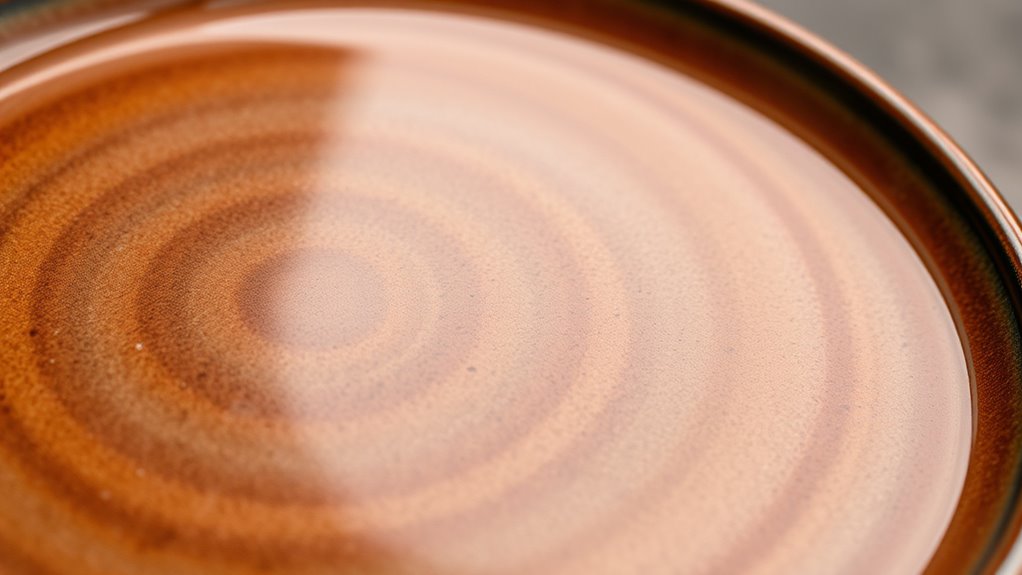
When selecting ceramic pieces for everyday use, prioritizing safety and durability is key to ensuring your items last and remain safe for food contact. Look for ceramics with smooth surfaces and minimal cracks, which can harbor bacteria or weaken the piece. Pay attention to ceramic decoration; avoid items with metallic or lead-based paints, as these can leach harmful substances. Artistic glazing adds beauty but can sometimes hide flaws or unsafe materials if not properly tested. Choose pieces with a reputable food-safe label or certification, and inspect for consistent glazing without chips or rough spots. Durable ceramics should feel sturdy and well-made, ensuring they withstand daily use without degradation. Combining safety with quality craftsmanship guarantees your ceramics are both beautiful and reliable for food contact.
Proper Care and Maintenance to Preserve Safety
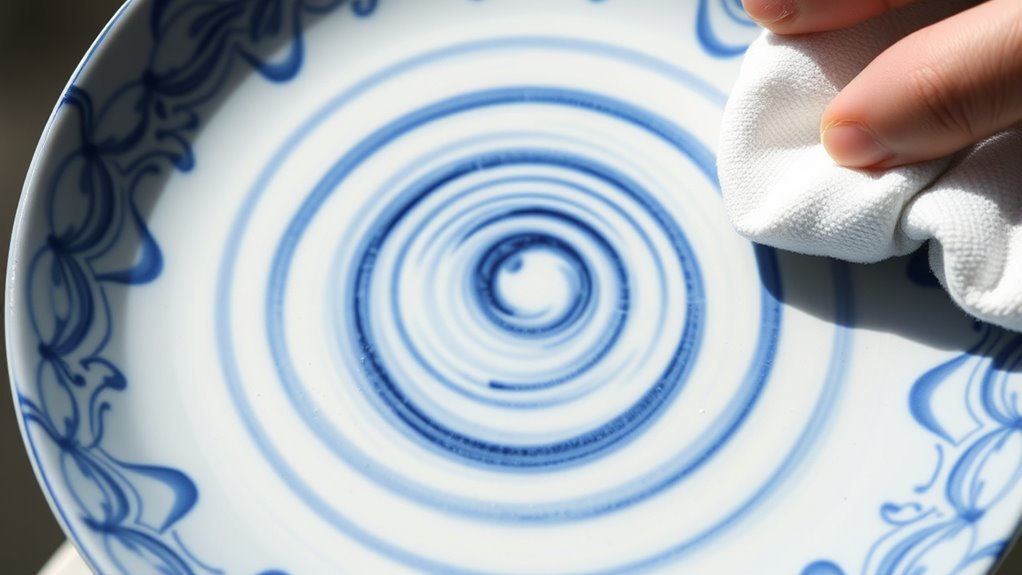
Proper care and maintenance are essential for keeping your ceramic art and decorative ceramics safe and in good condition over time. To guarantee safety and longevity, follow these steps:
- Hand wash with mild soap and warm water to prevent damage to glazes and surfaces.
- Avoid sudden temperature changes, like transferring from freezer to oven, which can cause cracks.
- Store ceramics carefully to prevent chipping or breakage, especially for decorative pieces.
- Regularly inspect for cracks or chips, and avoid using damaged items for food to prevent contamination.
Differences Between Handmade and Mass-Produced Ceramics
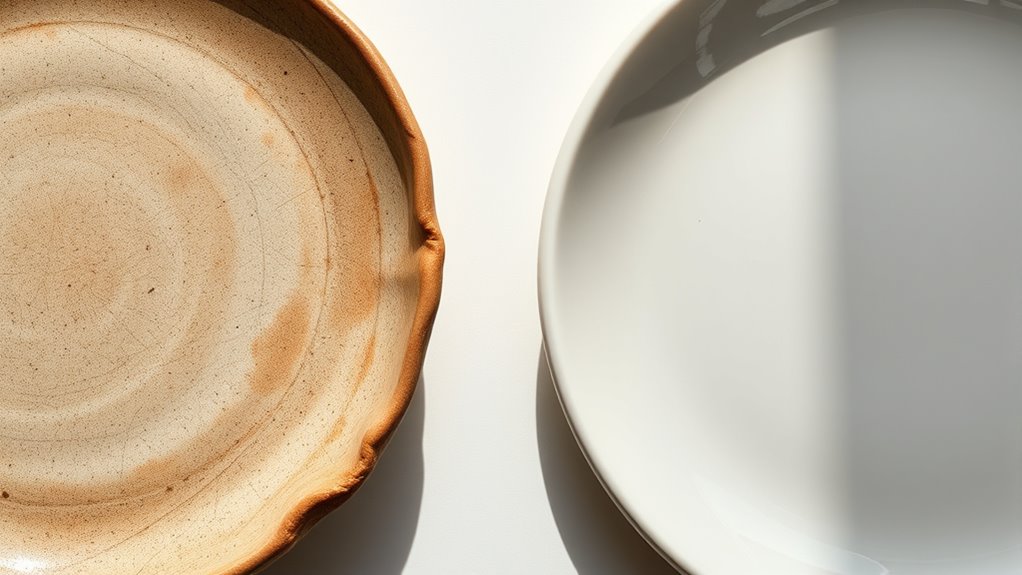
You’ll notice that handmade ceramics often have unique details and craftsmanship that set them apart from mass-produced pieces. Mass-produced ceramics are made at a larger scale, which can affect quality control and safety standards. Understanding these differences helps you choose items that are both beautiful and safe for food use.
Craftsmanship and Uniqueness
Handmade ceramics often showcase the artisan’s skill and personal touch, making each piece uniquely imperfect and full of character. You can see this in the subtle variations that reveal artistic expression and cultural significance. Unlike mass-produced items, these ceramics embody the craftsman’s vision and tradition. Consider these differences:
- Every piece reflects individual craftsmanship, highlighting creativity.
- Variations in shape and glaze add to each item’s charm and authenticity.
- The personal touch infuses cultural stories into the design.
- Each ceramic becomes a one-of-a-kind reflection of the artist’s skill, making it more meaningful.
This craftsmanship celebrates human artistry and cultural heritage, creating pieces that stand apart in character and significance, enriching your experience beyond mere functionality.
Production Scale Differences
While mass-produced ceramics are created using automated processes that guarantee uniformity and efficiency, handmade pieces reflect individual craftsmanship and variability. Artisanal craftsmanship influences every step, from shaping to finishing, resulting in unique characteristics in each piece. These ceramics often involve traditional kiln firing techniques, which can produce subtle differences in color, texture, and glaze application. Because of the scale, artisans pay close attention to detail, ensuring food safety standards are met during production. In contrast, mass production relies on standardized procedures, reducing variability but potentially overlooking nuanced safety considerations. The scale difference impacts not just aesthetics but also how the ceramics are tested and manufactured, shaping the level of quality control and safety assurances for food use.
Safety Standards Variations
Safety standards for ceramics vary markedly between handmade and mass-produced pieces, primarily due to differences in manufacturing processes and quality control. When evaluating safety, pay attention to:
- Glazing techniques: Mass-produced ceramics often use uniform, factory-applied glazes with strict safety testing, while handmade items may have varied or inconsistent glazing.
- Ceramic staining: Commercial pieces typically use tested ceramic stains, reducing toxicity risks, whereas handmade items might use untested or decorative stains that leach harmful substances.
- Firing consistency: Factory firing ensures complete vitrification, minimizing porosity and leaching, unlike some handmade ceramics that may not reach full vitrification.
- Quality control: Larger manufacturers follow stringent testing standards, while handmade ceramics depend on individual craftsmanship, which can lead to safety variations.
Trends and Innovations in Food-Safe Ceramic Production

Recent advancements in ceramic manufacturing are driving significant innovations in food-safe ceramics, making them more durable, environmentally friendly, and aesthetically versatile. New techniques now incorporate eco-friendly materials and sustainable firing processes, reducing environmental impact. In ceramic art, designers are experimenting with decorative finishes that add both visual appeal and functional safety, enhancing the aesthetic value of food-safe ceramics. These innovations allow you to create pieces that are not only safe for food contact but also visually striking. Additionally, improved glaze formulations help prevent leaching while maintaining vibrant colors and textures. The integration of digital printing and advanced glazing technologies opens up endless possibilities for customization. As a result, food-safe ceramics today combine safety, sustainability, and artistic expression more seamlessly than ever before.
Frequently Asked Questions
Can a Ceramic Piece Be Both Decorative and Food-Safe?
Yes, a ceramic piece can be both decorative and food-safe. You can enjoy its decorative functionality while knowing it’s safe for food contact. Look for ceramics with a glazed surface that’s free of harmful chemicals, ensuring aesthetic durability and safety. When purchasing, check labels or consult with the maker to confirm food safety, so your piece combines beauty with practicality for everyday use.
How Often Should Food-Safe Ceramics Be Tested for Safety?
Your food-safe ceramics are like a trusted ship, so regular inspections keep them seaworthy. You should test them at least once a year, especially if you notice cracks or crazing. This guarantees their ceramic durability and glaze stability remain intact, preventing harmful leaching. Remember, the longevity of your ceramics depends on consistent safety checks, so don’t wait for trouble—stay proactive to keep your dishes safe and beautiful.
Are There Specific Brands Known for Reliable Food-Safe Ceramics?
You should look for brands with a strong reputation for quality and safety. Reputable brands often meet strict certification standards, ensuring their ceramics are truly food-safe. Check for labels like FDA approval or other recognized safety certifications. Reliable brands prioritize non-toxic glazes and materials, giving you peace of mind. Research customer reviews and industry awards to confirm their commitment to safety and durability, making your choice easier and more confident.
Can Lead or Cadmium Be Present in Supposedly Food-Safe Ceramics?
In the days of the Titanic, lead contamination and cadmium presence in food-safe ceramics were less scrutinized. Today, you should be cautious, as some ceramics might still contain these harmful elements. Lead and cadmium can leach into your food, posing health risks. Always check for proper certifications and buy from reputable brands. If you’re uncertain, avoid using ceramics that haven’t been tested for safety to protect your health.
What Are Signs That a Ceramic Dish May No Longer Be Safe to Use?
You should stop using your ceramic dish if you notice crack detection or discoloration signs, as these may indicate damage or contamination. Cracks can harbor bacteria and compromise food safety, while discoloration might signal deterioration or leaching of harmful substances. Always inspect your ceramics regularly, and replace any piece showing these signs to guarantee safe food handling and prevent potential health risks.
Conclusion
Just like the alchemists turned clay into gold, today’s artisans and manufacturers transform raw materials into safe, beautiful ceramics. By understanding what “food-safe” truly means, you can confidently choose pieces that protect your health and elevate your table. Remember, it’s your responsibility to stay informed—much like Pandora opening her box, it’s better to know what’s inside before trusting any ceramic. With careful selection and care, your ceramics will serve you well, safely and beautifully.