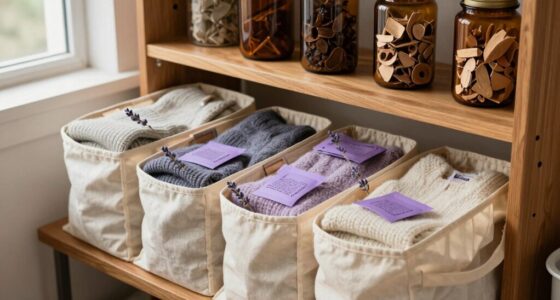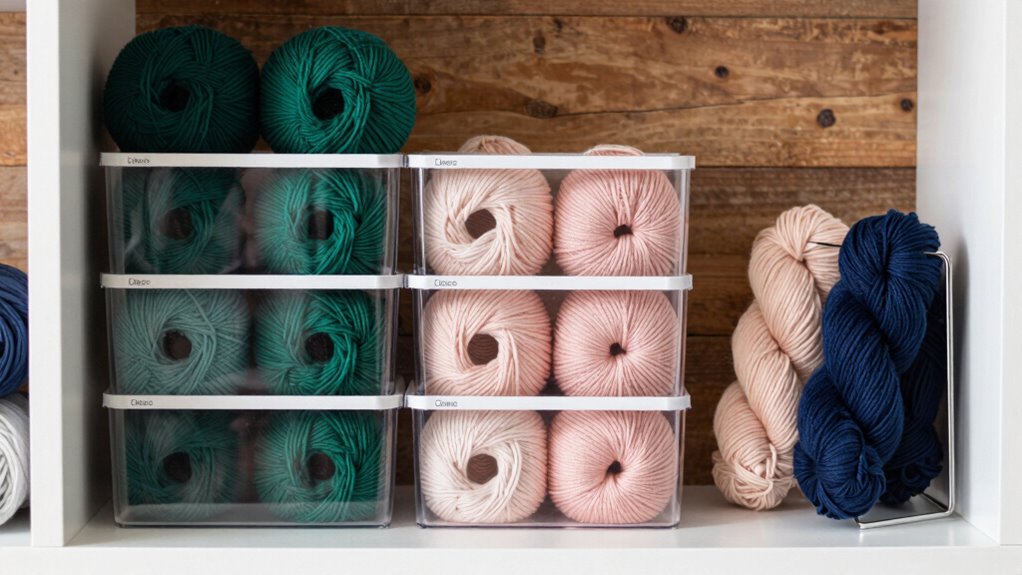

To store yarn so it doesn’t stretch or fade, keep it in a cool, dark place away from sunlight and fluorescent lighting. Use opaque containers or labeled boxes to protect it from light and dust. Store yarn loosely in coils or folds to prevent deformation, and avoid hanging skeins. Regularly check your stash for pests or damage, and handle the yarn gently, ensuring your collection stays vibrant and intact for years to come.
Key Takeaways
- Coil yarn loosely without tight loops to prevent stretching during storage.
- Store in a cool, dark place away from sunlight and fluorescent lighting to prevent fading.
- Use opaque containers with lids to shield yarn from light and environmental exposure.
- Keep yarn in a dry, temperature-controlled environment to avoid moisture damage and fiber degradation.
- Handle and organize yarn gently, avoiding hanging skeins or placing heavy objects on top to maintain shape.

Are you wondering how to keep your yarn organized and in good condition? Proper storage is essential for maintaining your yarn’s quality, preventing it from stretching out or fading over time. When you focus on organizing knitting supplies effectively, you not only save space but also protect your investment in beautiful, high-quality fibers. One of the most important aspects of yarn storage is preserving its color vibrancy. Exposure to sunlight and fluorescent lighting can cause yarn to fade, so it’s best to store your yarn in a cool, dark place. Keep your yarn away from windows and direct light, and consider using opaque containers that shield your yarn from ambient light. This helps maintain yarn color preservation, ensuring your projects look fresh and vibrant even after months of storage.
Next, consider the environment where you store your yarn. A dry, cool area is ideal because humidity and heat can damage fibers, encouraging mold growth or causing the yarn to become brittle. Avoid basements or attics that fluctuate in temperature and humidity. Instead, choose a closet or a dedicated storage bin in a climate-controlled room. When organizing knitting supplies, use containers that allow you to see the yarn’s color and weight easily. Clear plastic bins or labeled boxes are excellent options because they make it simple to find what you need without rummaging through piles. If you prefer, you can organize yarn by color, weight, or fiber type, which helps streamline your projects and prevents unnecessary handling that could stretch or deform delicate yarns. Additionally, understanding fiber types can help you tailor your storage methods to best suit each kind of yarn.
To prevent stretching, always store yarn loosely. Avoid hanging skeins or balls, as the weight can pull on the fibers and distort their shape. Instead, coil or fold yarn neatly, placing it in your containers without tightening the loops. Keep yarn away from sharp objects, which can snag and cause damage. If you’re storing multiple skeins of the same color, consider placing them in separate compartments or wrapping them with tissue paper to prevent tangling and color transfer. For long-term storage, adding silica gel packs can help control moisture levels and keep your yarn dry and safe from mold or mildew.
Finally, regular checks are vital. Every few months, take out your yarn to inspect for pests, mold, or fading. If you notice any issues, address them immediately to prevent further damage. By following these simple steps—focusing on protecting yarn color, organizing knitting supplies efficiently, and maintaining a suitable environment—you’ll keep your yarn in prime condition. This way, your future projects will turn out beautifully, and your yarn will stay vibrant and usable for years to come.
Amazon Product B01LBVYQ6U
As an affiliate, we earn on qualifying purchases.
Frequently Asked Questions
Can Sunlight Affect Yarn Color Over Time?
Yes, sunlight can affect yarn color over time. UV damage from exposure to direct sunlight causes color fading, making your yarn look dull and less vibrant. To prevent this, store your yarn in a cool, dark place away from sunlight. This simple step helps preserve the original color and quality of your yarn, ensuring your projects stay beautiful and vibrant for longer.
What Humidity Level Is Ideal for Storing Yarn?
You need to keep humidity levels around 50% when storing yarn—anything too high risks mold, while too low makes fibers brittle and fragile. Proper humidity control is essential for mold prevention and maintaining yarn’s softness and color. Think of it as the sweet spot where your yarn stays vibrant, flexible, and mold-free for years. Don’t let moisture or dryness ruin your precious stash—find that perfect balance!
Should I Store Yarn in Plastic or Breathable Containers?
You should store yarn in breathable storage rather than plastic containers, as breathability helps prevent moisture buildup and mold. Plastic containers can trap humidity, risking damage or fading over time. Opt for breathable options like fabric bins or storage bags with ventilation. This way, your yarn stays fresh, retains its color, and avoids stretching or fading, ensuring it’s ready for your next project whenever you need it.
How Often Should I Rotate Stored Yarn?
You should rotate your stored yarn every 6 to 12 months to prevent fading and maintain quality. Establish a storage schedule that includes checking for any signs of damage or pests, and gently reposition or shift your yarn bundles during each rotation. This routine helps keep your yarn fresh, prevents overstretching, and guarantees you’re always prepared to start your next project with pristine, well-maintained materials.
Is It Safe to Store Scented or Treated Yarn?
It’s generally not safe to store scented or treated yarn because the fragrance can cause interference with the yarn’s natural fibers, and chemicals might react unpredictably over time. These fragrance interference and chemical reactions could damage your yarn or alter its color and texture. To keep your yarn safe and pristine, avoid storing it with scented or chemical-treated products, and opt for plain, breathable containers instead.
Amazon Product B085JG9187
As an affiliate, we earn on qualifying purchases.
Conclusion
By storing your yarn wisely, you’re planting seeds for a vibrant, lasting garden of color and texture. Think of each skein as a precious gem, kept safe from fading sunlight and stretching storms. When you give your yarn a cozy, protected home, it stays true to its original brilliance, ready to blossom into beautiful creations whenever you choose. So, nurture your yarn with care, and watch your craft flourish like a well-tended forest in full bloom.
Amazon Product B0CW2J3D6V
As an affiliate, we earn on qualifying purchases.
Amazon Product B0CS4V7YPK
As an affiliate, we earn on qualifying purchases.