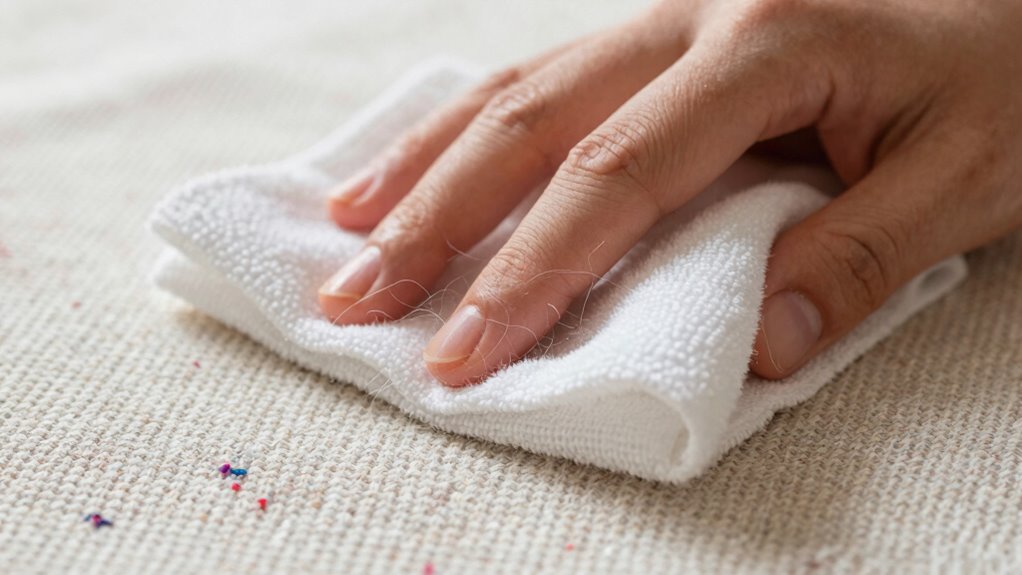

To remove pet hair from handmade textiles without pulling fibers, gently use a soft-bristled brush or microfiber cloth to lift the hair carefully across the fabric. Avoid pressing too hard or pulling on delicate fibers, instead using light, sweeping motions along the weave. Applying a fabric protector spray can also help repel hair in the future. For more effective tips on keeping your textiles pristine, there’s a lot more to explore.
Key Takeaways
- Use soft-bristled brushes or microfiber cloths to gently lift pet hair without pulling fibers.
- Employ light, sweeping motions that follow the fabric’s weave to prevent damage.
- Apply fabric protector sprays to reduce pet hair clinginess and facilitate easier removal.
- Regularly vacuum with a brush attachment to prevent pet hair buildup over time.
- Consider using slipcovers or washable covers to shield textiles and make pet hair removal easier.
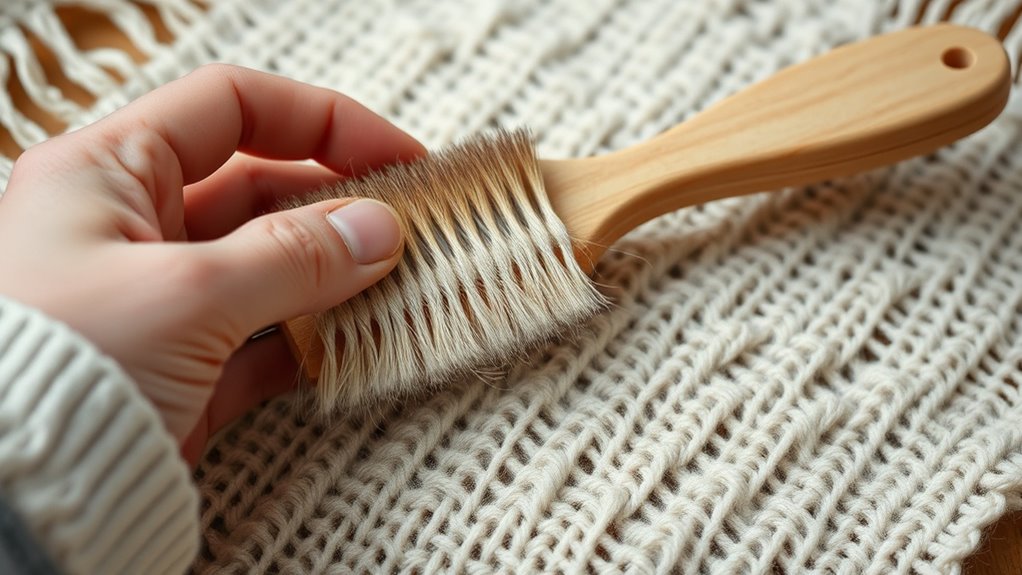
Pet hair can be a persistent challenge when caring for handmade textiles, especially if your pets love lounging on your creations. It seems to cling stubbornly, making your beautiful fabrics look dull and unkempt. The key to tackling this issue is to approach it gently, avoiding methods that might pull fibers or damage delicate weaves. Proper furniture cleaning techniques play an essential role here; you want to remove pet hair effectively without harming the fabric or compromising its integrity. Using a soft-bristled brush or a microfiber cloth can help lift pet hair without pulling on threads or loosening fibers. When you gently run these tools over your textiles, they attract pet hair and lift it away, preserving the handmade quality of your items. Incorporating gentle cleaning techniques ensures that your textiles stay intact and beautiful over time.
Gently lift pet hair with soft brushes or microfiber cloths to protect delicate handmade textiles.
In addition to furniture cleaning, fabric protection is vital for maintaining your textiles’ appearance over time. Applying a fabric protector spray creates a barrier that makes pet hair easier to remove and prevents dirt and oils from embedding into the fibers. This protective layer also helps reduce static, which often causes pet hair to cling to fabric surfaces. Regularly reapplying this spray can make cleaning sessions quicker and less frustrating. Remember, always test any fabric protector on a small, inconspicuous area first to ensure it won’t alter the appearance or texture of your handmade textiles. When combined with gentle cleaning methods, fabric protection can considerably extend the lifespan of your cherished pieces.
To prevent pet hair from becoming a permanent fixture on your textiles, consider placing slipcovers or washable covers over your furniture. These can be easily removed and cleaned, reducing the amount of pet hair that reaches your handmade textiles. Vacuuming with a brush attachment on a regular schedule also helps keep pet hair at bay, especially if you do it before it settles deep into the fabric. When you’re actively removing pet hair, avoid harsh scraping or aggressive pulling, which can distort or damage your textiles. Instead, opt for light, sweeping motions that follow the weave of the fabric, ensuring you lift pet hair without disturbing the delicate fibers. This gentle approach preserves the integrity of your handmade textiles and keeps them looking their best.
Ultimately, staying consistent with your cleaning routine and employing protective measures will help you maintain your textiles’ beauty. With patience and gentle techniques, you can remove pet hair effectively without pulling fibers, all while safeguarding your handmade treasures for years to come.
Frequently Asked Questions
Can I Use a Lint Roller on Delicate Handmade Textiles?
Yes, you can use a lint roller on delicate handmade textiles, but be gentle. If you’re worried about damaging fibers, consider lint roller alternatives like a soft brush or a piece of painter’s tape. For safe cleaning, stick to gentle methods that won’t pull or tear fibers. Always test a small area first, and avoid applying too much pressure to keep your textile’s integrity intact.
What Household Items Are Safe for Removing Pet Hair?
You can safely eliminate pet hair using household items like a damp microfiber cloth or rubber gloves, which are gentle on delicate textiles. Natural remedies, such as a mixture of water and a few drops of essential oil, can help repel pet hair. Pet hair repellents like a homemade vinegar solution also work well. Always test on a small area first to ensure your handmade textile stays undamaged.
How Often Should I Clean My Textile to Prevent Hair Buildup?
Did you know that pets shed up to 100 hairs daily? To prevent hair buildup, you should clean your textiles at least once a week. Regular cleaning helps manage pet shedding trends and keeps your handmade textiles looking fresh. Increasing cleaning frequency during heavy shedding seasons guarantees fewer pet hairs cling to fibers. Consistency is key, so make it a routine to maintain a hair-free, beautiful textile space.
Will Vacuuming Damage Fragile Handmade Fibers?
Vacuuming can cause vacuum damage if you’re not gentle, especially on fragile fibers. You should use a vacuum with a soft brush or upholstery attachment and set it to a low suction setting. Always test a small, hidden area first to avoid pulling or damaging delicate fibers. Regular, gentle vacuuming helps keep pet hair away without risking harm to your handmade textiles.
Are There Eco-Friendly Methods to Remove Pet Hair?
Yes, there are eco-friendly methods to remove pet hair. You can use biodegradable alternatives like a natural rubber glove or a damp cloth to lift hair without damaging delicate fibers. Natural cleaning solutions, such as a mix of vinegar and water, help loosen pet hair while being gentle on your textiles. These methods are effective, safe for the environment, and protect your handmade textiles from unnecessary wear and tear.
Conclusion
Think of your handmade textiles as delicate gardens, and pet hair as stubborn weeds. With gentle tools and patience, you can keep your creations pristine without damaging their beauty. By using the right techniques, you’re like a careful gardener tending to each plant, removing unwanted pests without pulling the flowers. Keep these methods in mind, and your textiles will stay as lovely and resilient as a well-tended garden—fresh, vibrant, and pet-hair free.