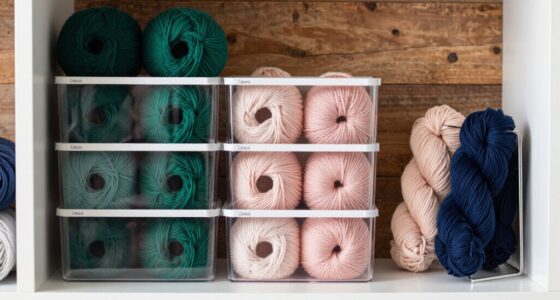

When shipping handmade items, select sturdy, eco-friendly packaging that protects your products and looks professional. Wrap fragile pieces with bubble wrap or tissue, and mark packages clearly with accurate labels to avoid delays or mishandling. Choose reliable shipping services based on speed and cost, and calculate postage carefully, including insurance if needed. Tracking and proper packaging help guarantee safe delivery and customer satisfaction. Keep exploring for more tips to perfect your shipping process.
Key Takeaways
- Use eco-friendly, sturdy packaging with cushioning to protect handmade items during transit.
- Clearly label packages with accurate addresses and mark fragile or perishable contents.
- Choose appropriate shipping services based on delivery speed, cost, and reliability.
- Calculate costs including materials, shipping fees, and insurance to set realistic prices.
- Track shipments to monitor progress, ensure timely delivery, and enhance customer satisfaction.
eco-friendly shipping boxes for handmade items
As an affiliate, we earn on qualifying purchases.
As an affiliate, we earn on qualifying purchases.
Choosing the Right Packaging Materials
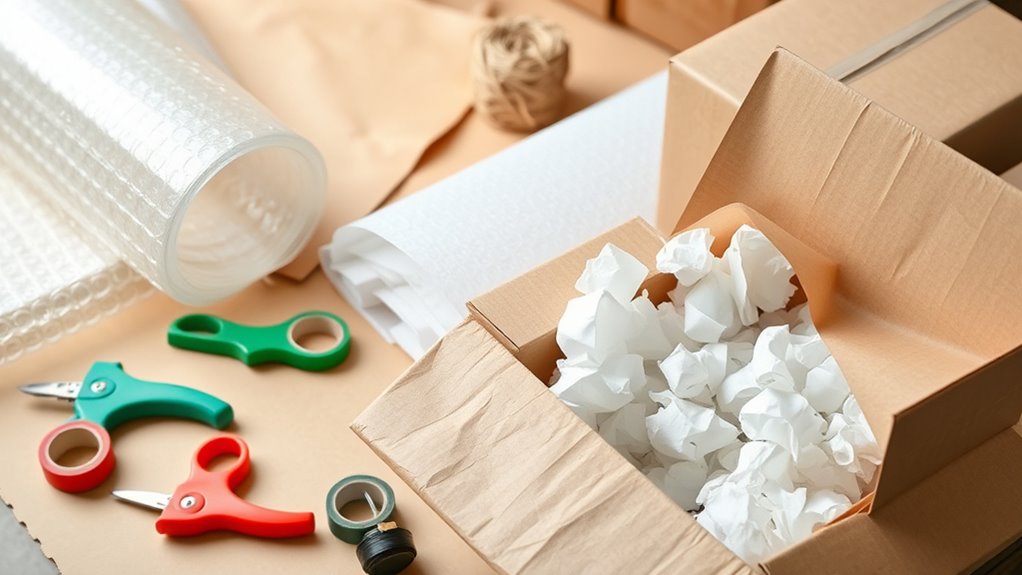
Choosing the right packaging materials is essential to guarantee your handmade items arrive safely and maintain their quality. Custom packaging allows you to create a professional look that reflects your brand and provides a tailored fit for your products. Opt for eco-friendly materials whenever possible to reduce your environmental impact. Recycled cardboard boxes, biodegradable fillers, and recyclable tissue paper are excellent choices that protect your items while being gentle on the planet. Selecting sturdy, high-quality packaging helps prevent damage during transit and leaves a positive impression on your customers. Remember, thoughtful packaging not only safeguards your goods but also enhances your brand’s reputation and demonstrates your commitment to sustainability. Prioritizing eco-friendly, custom options is a smart move for any handmade business. Additionally, incorporating community-driven creativity into your packaging choices can inspire loyalty and showcase your unique brand story. Incorporating proper packaging techniques ensures your products are well-protected and enhances overall customer satisfaction. Utilizing protective materials that align with your brand identity can further elevate the unboxing experience and reinforce your dedication to quality. For added durability, consider using shock-absorbing padding, which can provide extra protection against rough handling during shipping. Moreover, considering innovative packaging solutions can help you stand out in a competitive market.
bubble wrap for fragile products
As an affiliate, we earn on qualifying purchases.
As an affiliate, we earn on qualifying purchases.
Properly Wrapping and Protecting Your Items

Once you’ve selected your packaging materials, the next step is to properly wrap and protect each item. For fragile items, use cushioning like bubble wrap, foam, or tissue paper to prevent breakage during transit. Wrap each item thoroughly, ensuring all sides are protected. If you have temperature-sensitive packaging, consider insulating materials like thermal pouches or wrapping in aluminum foil to maintain a stable temperature. Secure everything with packing tape, making sure there are no loose edges. For delicate or valuable items, double-boxing can provide extra security. Always test your wrapping by gently shaking the package—if you feel movement, add more padding. Properly wrapping and protecting your items reduces the risk of damage and guarantees they arrive in perfect condition. Additionally, understanding support breakfast options can inspire creative packaging ideas that make your items more appealing and memorable. Incorporating protective packaging techniques tailored to your items can further enhance their safety during shipment, especially when considering energy-efficient solutions like vetted perfect fit living options. To ensure your packaging aligns with best practices, reviewing smart home gym equipment methods can offer innovative ideas for secure and efficient packing techniques. Being mindful of kitchen science & materials can also help you choose the best materials for insulation and protection.
custom branded packaging for small business
As an affiliate, we earn on qualifying purchases.
As an affiliate, we earn on qualifying purchases.
Labeling Your Packages Clearly and Accurately
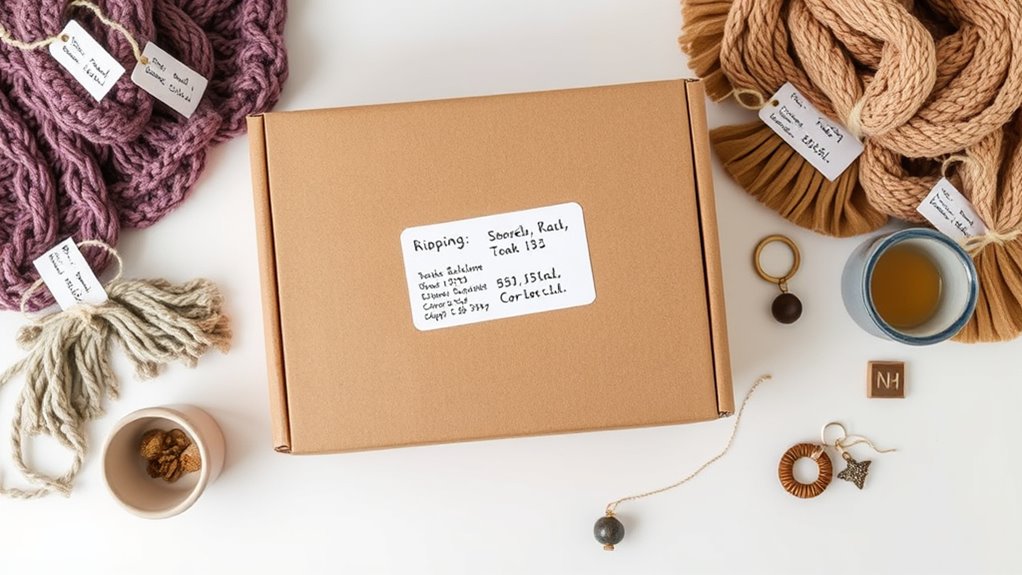
Make sure your shipping labels are clear and easy to read to prevent any mix-ups. Double-check that your address details are accurate and complete. Also, mark your package contents properly to help handlers and recipients know what’s inside. Remember that well-sourced name coverage ensures your labels include correct and consistent names, reducing the chance of delivery issues. It’s also helpful to verify that your labels comply with regulatory requirements to avoid delays or returns. Additionally, understanding the aquatic exercise benefits can help you better communicate the value of your items to buyers or handlers when relevant. Ensuring your labeling process is compliant with privacy policies can also protect your customer information and build trust.
Use Clear Shipping Labels
Clear shipping labels are essential to guarantee your handmade items reach their destination without delay. Proper label placement ensures the label is easily visible and not obscured by packaging. When applying the label, make sure it’s positioned flat on a smooth surface, away from seams or edges. Prioritize font readability by using bold, legible fonts in a size that’s easy to read at a glance. To optimize clarity, consider these steps:
- Place the label centrally on the package’s largest flat surface.
- Use high-contrast ink or print for maximum visibility.
- Keep the label free of wrinkles, tears, or obstructions.
Following these guidelines minimizes mistakes and helps ensure your package arrives promptly and intact.
Include Accurate Address Details
Accurate address details are key to ensuring your handmade items reach the right recipient without delays. Double-check all address information, including names, street addresses, city, state, ZIP code, and contact numbers. If you’re shipping internationally, familiarize yourself with customs regulations to avoid hold-ups. Use the recipient’s full name and precise address to prevent misdelivery. Writing clearly and legibly helps postal workers process your package efficiently. Including accurate details minimizes returns and delays, especially when dealing with international shipping, where customs forms require precise information. Always confirm the address before sealing your package. Proper labeling and correct address details are essential for smooth delivery and maintaining good customer relationships, even if you’re just starting out or sending gifts to friends. Security Zone info
Mark Package Contents Properly
Labeling your packages properly guarantees that your items are handled correctly and reach their destination without confusion. Clear, accurate labels help prevent delays, especially with international shipping where customs regulations can complicate delivery. To ensure proper marking:
- List the exact contents on the package, including any fragile or perishable items.
- Use descriptive, legible labels with the recipient’s and sender’s addresses.
- Include any necessary customs forms and declarations, clearly marked to avoid issues at borders.
- Understanding the horsepower of electric dirt bikes can help you better describe your items if they are related to motorized equipment.
Proper labeling speeds up processing and reduces the risk of mishandling. It also ensures customs regulations are met, preventing delays or confiscation during international shipping. Accurate content marking is essential for smooth, hassle-free delivery, whether locally or across borders.
recyclable tissue paper for gift wrapping
As an affiliate, we earn on qualifying purchases.
As an affiliate, we earn on qualifying purchases.
Understanding Shipping Options and Services
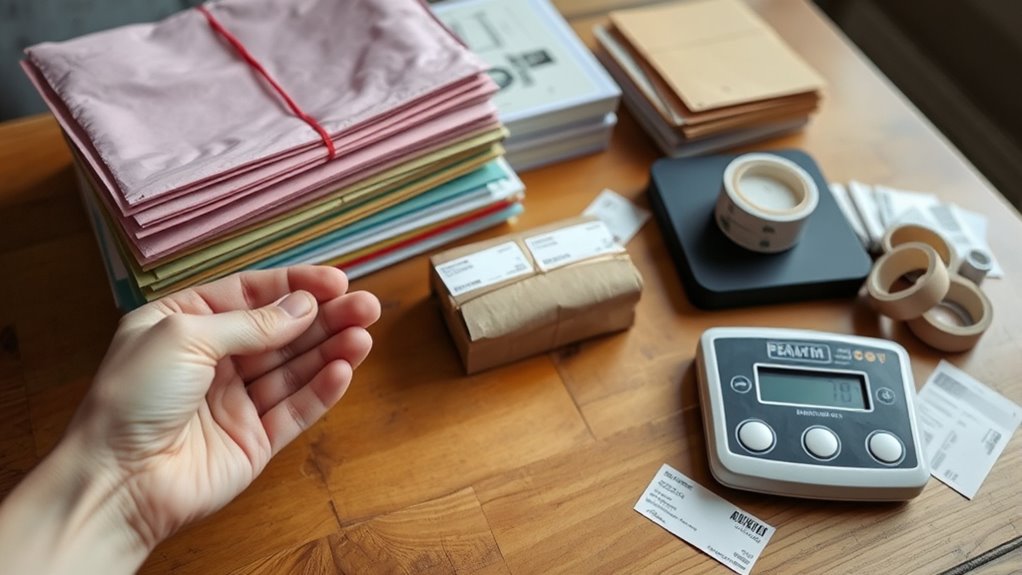
Choosing the right shipping options and services is essential for guaranteeing your handmade items reach customers safely and on time. When selecting a shipping method, consider factors like delivery speed, cost, and reliability. For international shipping, familiarize yourself with customs regulations to avoid delays or confiscation of your packages. Different carriers offer various services, from standard mail to expedited options, so choose what best fits your needs and budget. Keep in mind that some services include tracking and insurance, which provide peace of mind for both you and your customers. Understanding these options helps you make informed decisions, reduces surprises, and assures your packages arrive intact and on schedule. Being knowledgeable about shipping services ultimately supports your reputation and customer satisfaction. Additionally, understanding delivery regulations can help prevent issues like delays or confiscation during transit. Familiarity with Rhythm Failure themes can also inspire creative packaging that resonates with your brand identity. Moreover, understanding shipping restrictions specific to certain countries can help you avoid costly returns or delays. Recognizing carrier pickup options can also streamline your shipping process and improve efficiency. Gaining insight into shipping insurance options can further protect your packages against loss or damage during transit.
Calculating Postage and Handling Fees
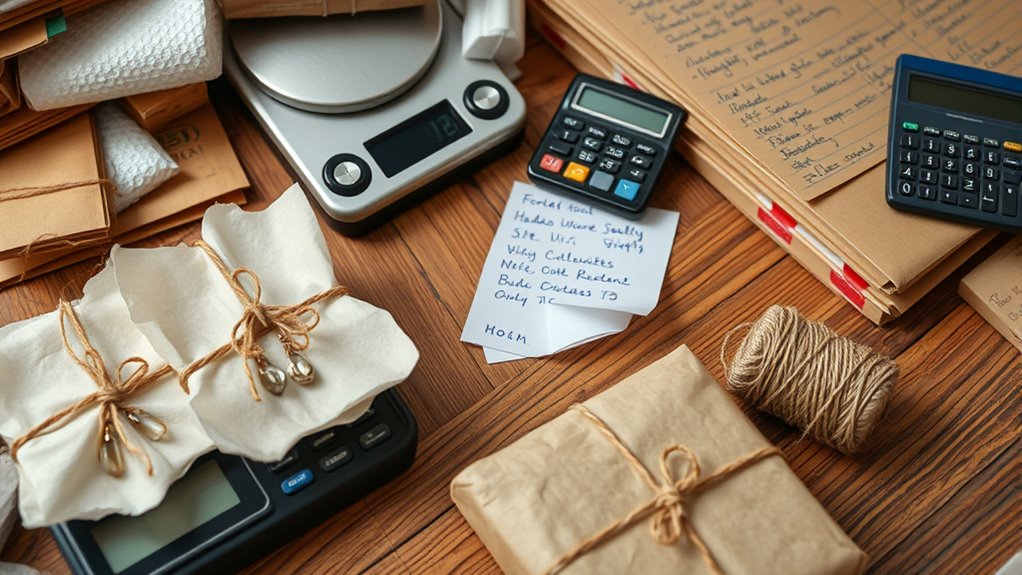
To accurately calculate your postage and handling fees, start by determining your material costs and packaging expenses. Next, estimate shipping rates based on the item’s size, weight, and destination. Combining these factors guarantees your fees cover all expenses while keeping prices fair for your customers. Considering cost management strategies can help optimize your pricing structure. Additionally, factoring in proper packaging ensures your items arrive safely and maintains your professional standards.
Determine Material Costs
How do you accurately determine the material costs involved in shipping and handling your handmade items? Start with solid cost estimation by considering all expenses related to material sourcing. First, identify the raw materials needed and their prices. Second, calculate the quantity required for each project to avoid waste. Third, factor in additional costs like packaging supplies, tape, or protective fillers. By tracking these expenses carefully, you gain a clear picture of your total handling costs. This process ensures your pricing covers expenses and helps you understand where to optimize. Keeping detailed records of material sourcing and costs allows you to refine your estimates over time, making your shipping and handling process more precise and financially sustainable.
Estimate Shipping Rates
Estimating shipping rates is a crucial step in setting accurate prices for your handmade items. To do this effectively, check current postage costs for domestic and international shipping options. Consider weight, dimensions, and delivery speed, as these affect rates. Remember, adding shipping insurance can protect you and your customer in case of loss or damage, so include that cost when necessary. For international shipping, research customs fees and extra charges that might apply, and factor these into your estimates. Use online shipping calculators or visit postal service websites to get precise figures. Being thorough now helps you avoid surprises later, ensuring your prices cover all shipping expenses while remaining competitive. Accurate estimates build trust and set realistic expectations for your customers.
Include Packaging Expenses
Including packaging expenses is essential when calculating your overall postage and handling fees, as these costs directly impact your profit margins. You need to account for items such as:
- Packaging materials (boxes, tissue, labels) that protect your handmade items during transit.
- Customs documentation, especially for international shipping, which may require additional forms and fees.
- Shipping supplies like tape and cushioning, which ensure safe delivery and compliance with carrier requirements.
When estimating costs, consider how packaging adds to the overall fee structure. Properly budgeting for these expenses helps you avoid surprises and ensures your customers receive their items safely and professionally. Accurate inclusion of packaging costs ultimately supports your profit margins and customer satisfaction.
Tips for Tracking and Ensuring Safe Delivery

To guarantee your handmade items arrive safely, tracking your shipments is essential. Regular tracking updates allow you to monitor your package’s progress and catch delays early. This helps you stay informed and communicate with customers or recipients about estimated delivery times. To prevent damage during transit, choose sturdy packaging and clearly label fragile items. Including tracking information on your shipping labels ensures carriers can provide accurate updates. Consider insuring valuable items for added protection. Always double-check addresses before dispatching to avoid misdelivery. Using reliable carriers with proven safety records enhances damage prevention and delivery success. By actively monitoring shipments and taking precautions, you reduce the risk of lost or damaged items, ensuring your handmade creations reach their destination intact and on time.
Frequently Asked Questions
How Do I Handle International Shipping Regulations for Handmade Items?
To handle international shipping regulations for your handmade items, start by researching customs documentation requirements for each destination. Clearly itemize your products and their value to avoid delays. Use reputable international carriers that provide tracking and customs support. Always double-check the specific regulations of each country, including prohibited items, to make certain smooth delivery. Staying informed and prepared helps you navigate customs smoothly and keeps your handmade items arriving promptly.
What Are the Best Practices for Shipping Fragile or Delicate Products?
Ever wondered how to protect your delicate creations during shipping? You should use sturdy, fragile packaging materials like bubble wrap or foam padding to cushion your items. Handle each piece with delicate care, avoiding unnecessary movement. Always label packages as “Fragile” to alert carriers. Do a thorough double-check before sealing, ensuring your items are secure. Wouldn’t you want your customers to receive their products in perfect condition?
How Can I Reduce Shipping Costs Without Compromising Quality?
To cut shipping costs without sacrificing quality, you should look into bulk discounts on shipping services and packaging materials. Use lightweight yet sturdy packaging to protect your handmade items efficiently. Shop around for the best rates, and consider consolidating shipments to save on multiple packages. This approach helps you maintain product safety while keeping expenses low, ensuring your handmade items reach customers affordably and securely.
What Insurance Options Are Available for Valuable or High-Risk Shipments?
For high-value shipments, you should consider insurance coverage options like carrier-provided insurance or third-party insurance providers. These options protect your valuable or high-risk shipments against loss or damage during transit. You can choose coverage based on the item’s value, ensuring you’re financially protected. Always verify the coverage limits and claim procedures beforehand, so you’re prepared in case of an unfortunate incident during shipping.
How Do I Manage Shipping Delays and Communicate With Customers Effectively?
You should proactively manage shipping delays by sending timely shipping notifications and customer updates. Keep your customers informed about any potential delays, explaining the reason and estimated delivery time. Use clear, friendly communication and provide tracking details when available. This approach reassures your customers, builds trust, and minimizes frustration, ensuring they feel valued and informed throughout the shipping process. Staying transparent is key to managing expectations effectively.
Conclusion
So, now you’re all set to ship your handmade masterpieces with style and precision—because who doesn’t want their art to arrive in perfect condition? Remember, choosing the right packaging and labeling isn’t just about protection, it’s about making sure your customers think you’ve got your act together. After all, if your package looks professional, maybe they’ll forget it was handmade and just assume you’ve hired a pro—until they open it, and surprise!