To fix color bleeding after washing without re-dyeing, promptly pre-treat affected areas with a mixture of equal parts water and white vinegar or gentle detergent. Wash the items separately in cold or warm water using a color-safe detergent and add a color-catcher sheet to trap loose dyes. Air dry the garments to prevent set-in stains. If the bleeding persists, repeat the process—more tips await if you keep exploring.
Key Takeaways
- Pre-treat stained areas with a vinegar-water or gentle detergent solution and let sit for 10-15 minutes.
- Wash affected items separately in cold or warm water with a color-safe detergent and add a color-catcher sheet.
- Avoid drying clothes until bleeding is fully removed; air dry instead to prevent setting stains.
- Repeat pre-treatment and washing steps if color bleeding persists to gradually reduce stains.
- Regularly use color-catcher sheets and follow care labels to prevent future bleeding.

Color bleeding after washing can be frustrating, but luckily, you can often fix the issue with some simple steps. One effective method involves fabric pre-treatment and paying attention to water temperature. If your clothes have bled colors onto other garments or the wash water turned unexpectedly vibrant, addressing the problem quickly can prevent further damage and restore your clothing’s look.
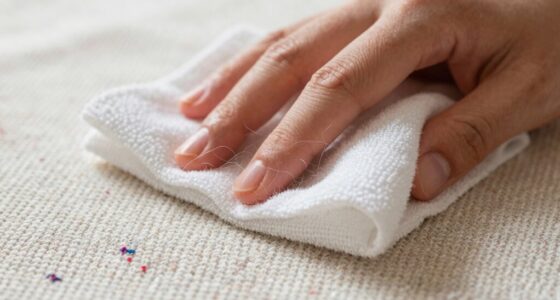
Start by identifying the affected items. If the color bleed is minor, you can try pre-treating the stained areas. Use a commercial stain remover designed for color bleeding or create a simple solution at home. A mixture of equal parts water and white vinegar or a gentle laundry detergent can help break down the color transfer. Apply this solution directly to the stained fabric and let it sit for about 10 to 15 minutes. This pre-treatment process helps loosen the dye particles from the fabric fibers, making subsequent washing more effective.
Pre-treat minor color bleed with vinegar solution for better stain removal.
Next, consider the water temperature used during your laundry cycles. Hot water tends to open up fabric fibers and cause dyes to bleed more easily, especially with delicate or loosely dyed fabrics. Always check the care labels on your garments for recommended water temperatures. When dealing with colored clothing, cold or warm water is generally safer to prevent further bleeding. If you suspect bleeding might occur, switch your washing machine to a cold water cycle. Cold water helps keep dyes locked in and reduces the risk of colors running onto other items. Additionally, using high-quality projectors with good color consistency can help in cases where visuals are affected, although this is more relevant to display technology than laundry.
After pre-treating the stained areas and adjusting your water temperature, wash the affected items separately or with similar colors for the next cycle. Use a gentle, color-safe detergent, and consider adding a color-catcher sheet to the wash. These sheets are designed to trap loose dyes during the wash cycle, preventing them from redepositing onto other clothes. Run the cycle and then check the results. If the bleeding persists, repeat the pre-treatment and washing process, as some dyes may require multiple attempts to fully lift.
Finally, avoid drying the clothes until you’re satisfied with the results. Heat from dryers can set remaining stains or bleed marks, making them much harder to remove later. Instead, air dry the clothing and evaluate whether the bleeding has been successfully mitigated. If necessary, repeat the pre-treatment and washing steps until the color bleeding diminishes or stops altogether. With patience and proper care—focusing on fabric pre-treatment and water temperature—you can often fix color bleeding without re-dyeing and preserve your clothes’ original appearance.
Amazon Product B0F25T39CL
As an affiliate, we earn on qualifying purchases.
Frequently Asked Questions
Can Fabric Softeners Cause Color Bleeding?
Fabric softeners can cause color transfer, especially with vibrant or dark fabrics. They contain chemicals that may weaken dyes or alter fabric fibers, making colors more prone to bleeding. If you notice color bleeding after using fabric softeners, it’s best to avoid them on delicate or brightly colored clothes. Instead, opt for gentle detergents and wash items separately to prevent unwanted color transfer and keep your clothes looking fresh.
How Long Should I Soak Clothes to Prevent Bleeding?
Did you know that soaking clothes for just 30 minutes can markedly reduce color bleeding? To prevent bleeding, soak your garments for about 15 to 30 minutes using cold water with a color-safe stain removal technique. Avoid over-soaking, which can cause dyes to loosen further. This simple step helps lock in the dye, keeping your clothes vibrant and preventing future bleeding during washes.
Does Vinegar Really Set Colors in Laundry?
Vinegar can help set colors in laundry by neutralizing excess dye and reducing bleeding, but its efficacy varies with fabric type and dye quality. Adding vinegar during the rinse cycle can improve color retention, but it’s not a substitute for proper washing techniques. Keep in mind, vinegar may diminish fabric softener effects if used excessively, so use it sparingly. Overall, it’s a helpful, natural option to preserve your clothes’ vibrant colors.
Are There Natural Remedies to Remove Bleeding Stains?
Yes, you can try natural stain removal methods for bleeding stains. Use herbal laundry remedies like soaking the fabric in cold water mixed with herbal extracts such as chamomile or lavender, which can help lift the dye. You might also apply a paste of baking soda and water directly to the stain, then rinse thoroughly. These natural remedies are gentle but effective at reducing or removing bleeding stains without harsh chemicals.
How Do I Prevent Color Bleeding in Future Washes?
Don’t let your laundry turn into a Jackson Pollock masterpiece—think of it as your personal Mona Lisa. To prevent future color bleeding, follow colorfastness tips like washing new clothes separately and using cold water. Always turn garments inside out and opt for gentle cycles. These laundry best practices help preserve vibrant hues and keep your wardrobe looking fresh. Remember, a little care goes a long way in avoiding unwanted dye messes!
Amazon Product B009YNG21U
As an affiliate, we earn on qualifying purchases.
Conclusion
Remember, prevention is always better than cure. By acting quickly and following these simple steps, you can minimize color bleeding and restore your clothes’ appearance. Treat stains as soon as possible, and always separate colors before washing. Keep in mind, a stitch in time saves nine—taking care of your clothes now will save you time and effort later. With patience and care, your garments can stay vibrant and beautiful for longer.
Amazon Product B0D9NJZHJS
As an affiliate, we earn on qualifying purchases.
Amazon Product B00EKT30JK
As an affiliate, we earn on qualifying purchases.