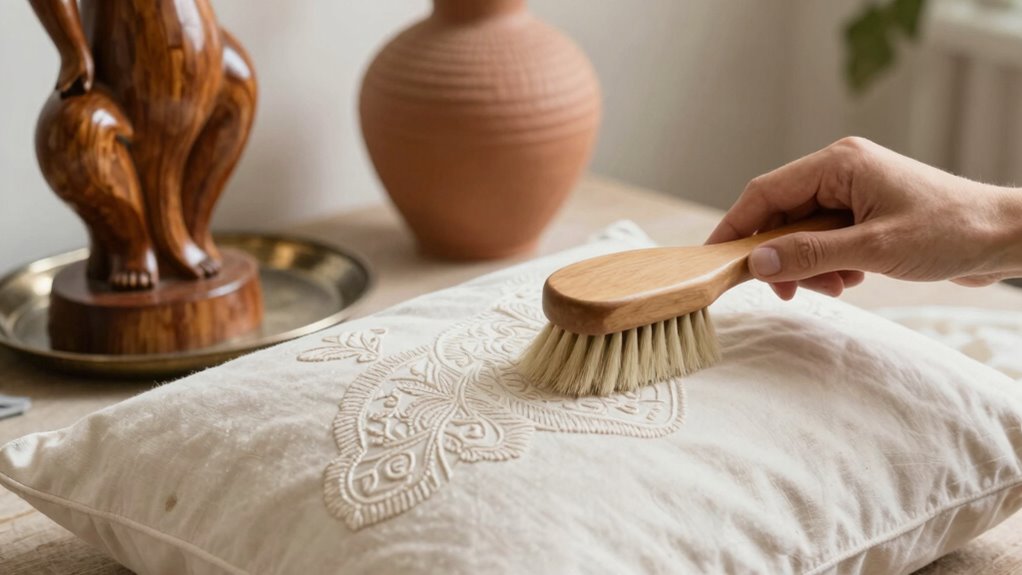

To clean handmade items without damaging them, identify the material first. Gently dust fabrics with a soft brush and spot clean using mild soap, avoiding soaking. For wood, use a soft cloth with gentle cleaner or oil, and avoid excess moisture. Handle clay and ceramics with care, using damp cloths and avoiding submersion. Metal pieces should be gently polished with soft cloths and stored in dry places. Keep these tips in mind to preserve your treasures and explore more expert advice.
Key Takeaways
- Test cleaning methods on small, hidden areas first to prevent damage or color changes.
- Use gentle, material-specific cleaning tools like soft brushes for delicate surfaces.
- Avoid excessive moisture; dampen cloths lightly and never soak fabrics, wood, or ceramics.
- For fabrics, lightly dust and spot clean with mild soap; for wood, use appropriate polish or oil.
- Handle items carefully, applying minimal pressure, and air dry thoroughly to preserve integrity.
Understanding the Material Composition of Your Handmade Items
To properly care for your handmade items, it’s essential to understand what materials they’re made of. Material identification helps you determine the best cleaning method selection, preventing damage. For example, fabric items may require gentle dusting or spot cleaning, while wood pieces often need specific polishing techniques. Clay creations might be delicate and susceptible to moisture, so avoiding water is key. Metal objects can tarnish or corrode if cleaned improperly. Carefully examine tags, labels, or the item’s construction to identify materials accurately. Knowing the composition guides you in choosing appropriate cleaning tools and solutions, ensuring your handmade treasures stay beautiful and intact. Material identification is a crucial aspect of essential cleaning practices for handmade items. Additionally, understanding whether an item is free floating can influence the cleaning approach, especially for delicate or lightweight pieces, and recognizing the material composition can help in selecting suitable cleaning agents that won’t cause deterioration. Knowing how to safely clean different craft materials helps preserve the integrity and appearance of your handmade creations for years to come.
Gentle Cleaning Techniques for Fabric Creations
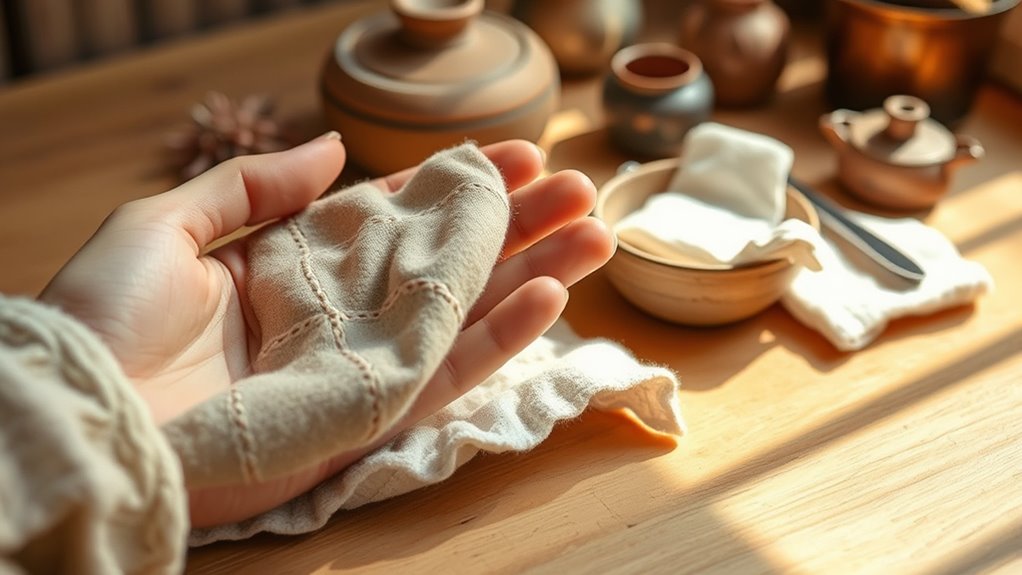
When caring for fabric creations, using gentle cleaning techniques is essential to preserve their softness, color, and overall integrity. Harsh scrubbing or strong chemicals can damage delicate textile textures and cause fabric dyes to fade. Instead, start by lightly brushing off surface dust or loose dirt. For stains, gently blot with a damp cloth using mild soap or specialized fabric cleaner. Avoid soaking the fabric completely, as this can distort its shape or affect the dyes. When rinsing, use cool water and ensure you don’t twist or wring the fabric, which can distort its texture. Air dry your fabric creations in a shaded area to prevent fading. Additionally, understanding vintage fabric care can help you implement the best preservation techniques. Incorporating proper storage methods can further protect textiles from environmental damage. Being aware of Glycolic Acid benefits can also help in choosing gentle cleaning products that won’t harm delicate fabrics. Maintaining proper cleaning frequency ensures your textiles stay vibrant and undamaged over time. These gentle methods help maintain the vibrancy of fabric dyes and keep the textile textures looking fresh and beautiful over time.
Proper Care and Maintenance for Wooden Handmade Pieces
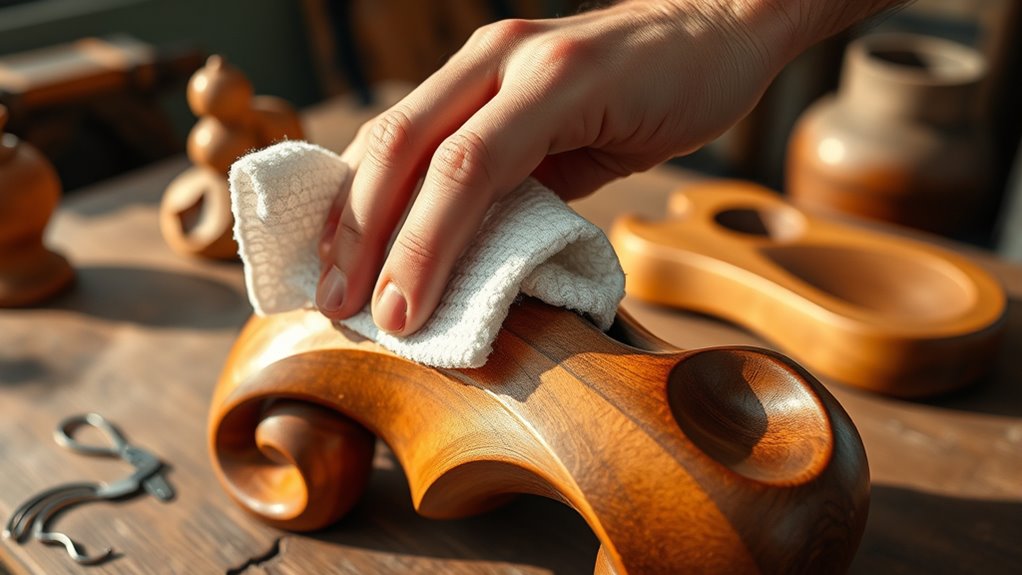
To maintain your wooden handmade pieces looking their best, you should dust them regularly with a soft cloth. Make sure to use gentle cleaning products designed for wood to prevent damage. Proper care now will help preserve their beauty and ensure they last for years to come. Considering proper maintenance, such as avoiding excess moisture, can also significantly extend the lifespan of your wooden items. Additionally, ensuring proper ventilation in storage or display areas can help prevent moisture buildup that may harm the wood over time. Using the right woods for farmhouse tables and following recommended cleaning practices will further protect your treasured wooden items. Incorporating appropriate cleaning techniques will also help maintain the integrity of the wood’s surface and finish. Being aware of wood types and their specific care needs can make a notable difference in preserving your pieces.
Dust Regularly and Gently
Regular dusting is essential for maintaining the beauty and longevity of wooden handmade pieces. You should perform detailed dusting at least once a week, using a soft, lint-free cloth or a gentle brush to reach into crevices. When dusting, avoid harsh materials that could scratch the surface. Use gentle wiping motions to remove dust without applying too much pressure. This careful approach prevents buildup and keeps the wood looking fresh. If there’s stubborn dust in intricate areas, a soft brush or a microfiber cloth dampened slightly can help. Incorporating proper care and maintenance into your routine not only preserves the appearance but also prevents damage caused by neglect. Regular maintenance prevents dust from settling deeply and preserves the piece’s natural luster. Additionally, understanding material-specific cleaning methods ensures that you use the safest techniques for your handmade wooden items. Remember, regular maintenance keeps your handmade wooden items looking their best and extends their lifespan. Incorporating energetic alignment into your care routine can also enhance the vibrational health of your pieces, ensuring they remain vibrant and energetically balanced over time.
Use Appropriate Cleaning Products
After dusting your handmade wooden items, it’s important to choose the right cleaning products to keep them looking their best. Use appropriate cleaning products that are gentle and suited for wood. Natural cleaning solutions, like a mixture of mild soap and water or vinegar diluted with water, work well without damaging the finish. Avoid harsh chemicals or abrasive cleaners that can strip the wood’s natural oils. Here’s a quick guide:
| Cleaning Product | Suitable For | Notes |
|---|---|---|
| Mild soap and water | General cleaning | Use a soft cloth to wipe |
| Vinegar diluted in water | Removing grime and disinfecting | Test on a small area first |
| Mineral oil or beeswax | Conditioning and polishing | Keep wood nourished |
Choose wisely to maintain your wooden pieces’ beauty and longevity. Additionally, understanding wood care techniques can help extend the lifespan of your handmade items. Regularly applying protective finishes can further safeguard your wood against damage and wear over time.
Safely Cleaning Clay and Ceramic Handcrafts
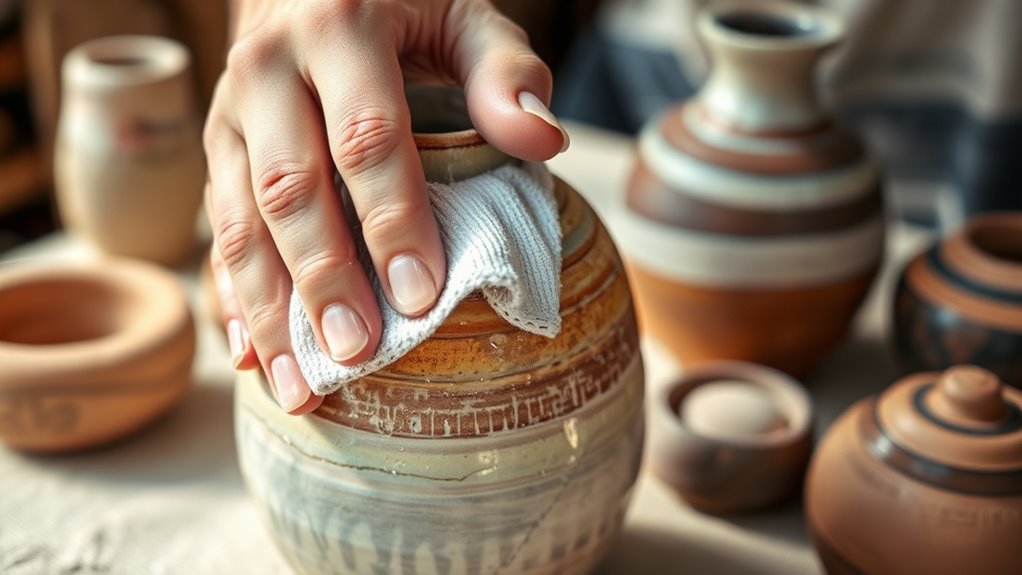
Ever wonder how to clean your clay and ceramic handcrafted items without damaging them? To guarantee painstaking preservation, you need to handle these pieces gently. Use a soft, damp cloth or a gentle brush to remove dust and loose dirt, avoiding abrasive materials that could scratch delicate detailing. For stubborn stains, mix a small amount of mild soap with water and carefully spot clean, avoiding soaking the item. Never submerge ceramics in water, as it can weaken the material or cause cracks. After cleaning, pat dry with a soft towel and let the piece air dry completely before display. Proper cleaning techniques are essential to maintaining their appearance and longevity. Incorporating proper handling practices helps prevent accidental damage during cleaning and supports material preservation over time. Additionally, understanding the types of ceramic finishes can guide you in choosing the safest cleaning methods to preserve their unique surface qualities. Being aware of the effects of moisture on ceramics can further aid in preventing common issues like cracking or glaze deterioration.
Caring for and Cleaning Metal Handmade Treasures
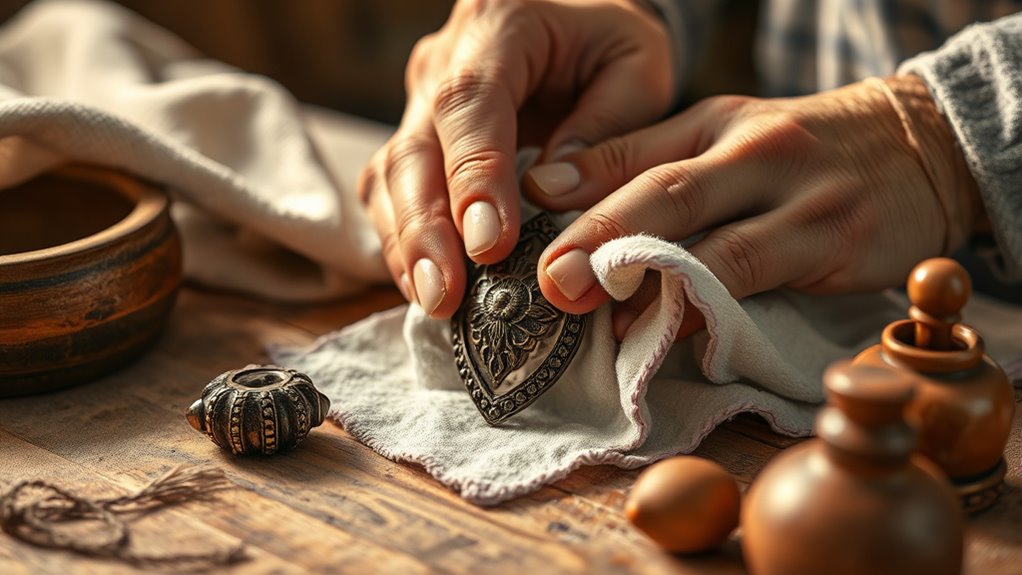
Cleaning metal handmade treasures requires a different approach to guarantee their beauty and longevity. To keep their shine, use gentle polishing techniques with soft cloths or microfiber cloths. Avoid abrasive materials that can scratch delicate surfaces. Regularly dust your treasures to prevent dirt buildup, which can lead to corrosion over time. For tarnished metals, a mild metal cleaner or a homemade mixture of baking soda and water works well—just apply sparingly and rinse thoroughly. To prevent corrosion, keep your treasures dry and store them in a cool, low-humidity environment. Applying a thin layer of protective wax or mineral oil can also help preserve their finish. Always test cleaning products on a small area first to avoid damaging the metal’s surface.
Tips for Preventing Damage During the Cleaning Process
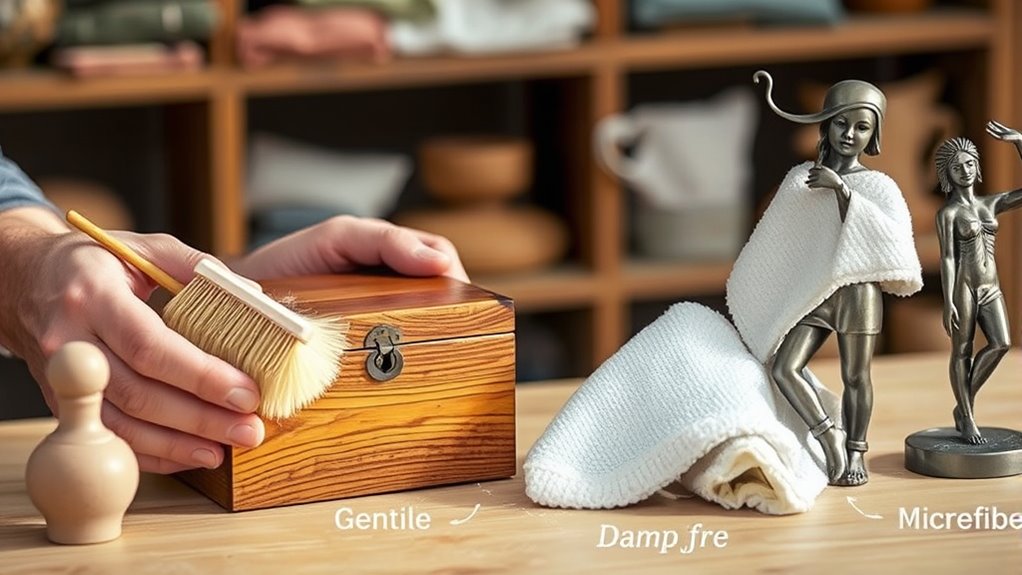
Before you start cleaning, always test your method on a small, hidden area to avoid surprises. Use gentle cleaning products to prevent damage and preserve the item’s integrity. Handle your handmade treasures carefully to keep them looking beautiful for years to come.
Test Cleaning Methods First
Since handmade items can be delicate, it’s vital to test cleaning methods on a small, inconspicuous area first. This step helps you perform material testing to guarantee the cleaner won’t cause damage. Use a gentle, compatible cleaning solution and apply it lightly. Observe how the item reacts—look for color changes, warping, or texture changes. If the material shows any adverse signs, avoid using that method on the entire piece. Testing is especially important for fragile fabrics, soft woods, or clay, where even minor mistakes can ruin the item. Taking these precautions helps prevent costly mistakes and preserves your handmade items’ beauty and integrity. Always remember, a little effort upfront saves you from potential damage later.
Use Gentle Products
Are you using the right products to clean your handmade items? Using gentle products is key to preventing damage. Avoid harsh chemical solutions and abrasive cleaners that can scratch or discolor delicate surfaces. Instead, opt for mild soaps, soft cloths, and natural cleaners suited to each material. Here’s a quick guide:
| Material | Recommended Cleaners | Avoid |
|---|---|---|
| Fabric | Mild soap, water | Bleach, harsh detergents |
| Wood | Gentle wood cleaner | Abrasive scrubbers |
| Clay | Damp cloth | Strong chemicals |
| Metal | Mild soap, water | Abrasive cleaners |
| Overall | Gentle, pH-neutral | Chemical solutions, abrasive cleaners |
Choosing gentle products helps maintain your handmade items’ beauty and integrity over time.
Handle With Care
Handling your handmade items carefully during cleaning is essential to prevent accidental damage. When dealing with handling delicacies and fragile surfaces, slow and gentle movements are key. Avoid applying excessive pressure or scrubbing vigorously, as this can cause cracks, chips, or other harm. Use soft cloths or brushes designed for delicate surfaces, and always test cleaning methods on a small, hidden area first. Be mindful of edges, corners, and intricate details that are more prone to damage. Keep cleaning tools clean and free of debris to prevent scratching. If unsure about a cleaning technique, consult specific care instructions or seek professional advice. Remember, patience and gentle handling protect your beautiful handmade pieces for years to come.
Storing Handmade Items to Maintain Their Quality Over Time
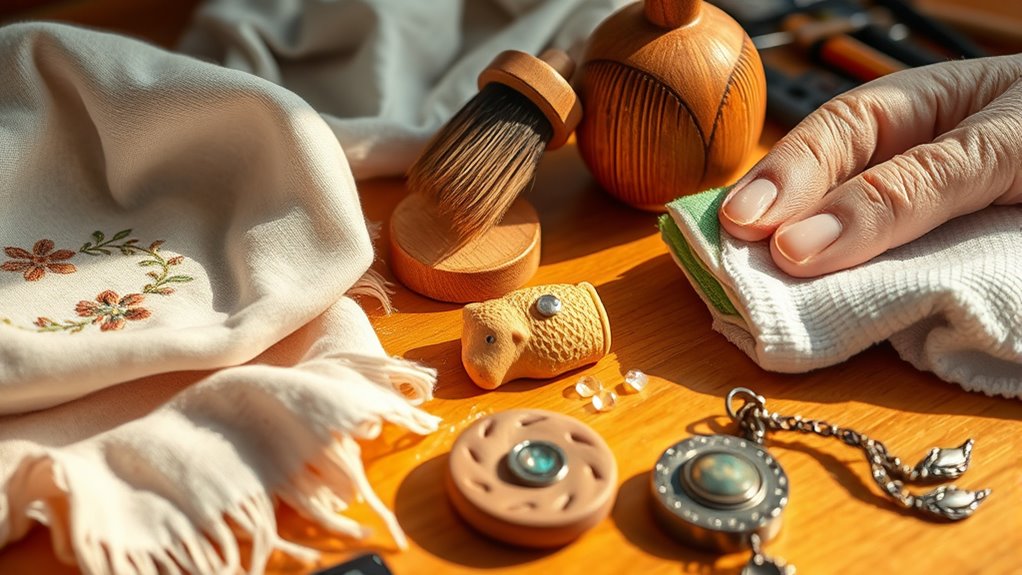
Proper storage is essential to keep your handmade items looking their best over time. To prevent damage, choose the right display or storage method based on the material. For fabric items, store in breathable bags; wood pieces should be kept in stable, climate-controlled environments; metal items benefit from anti-corrosion wraps. Use the following guide to help:
| Item Type | Display Tips | Storage Tips |
|---|---|---|
| Fabric | Use padded hangers or shelves | Store flat or rolled in breathable bags |
| Wood | Display in well-lit areas | Keep in climate-controlled boxes |
| Clay | Show in protected cases | Wrap gently in soft cloths |
| Metal | Use display stands with padding | Store in moisture-free containers |
This guarantees your items stay beautiful, preserving their value over time.
Frequently Asked Questions
How Often Should I Clean My Handmade Items to Prevent Damage?
You should clean your handmade items regularly, ideally with seasonal maintenance, to prevent damage. For delicate fabric or wood, wipe down surfaces every few months, and dust clay or metal pieces weekly. Store them properly with helpful storage tips to minimize dirt buildup and exposure to elements. This routine helps preserve their beauty and integrity over time, ensuring they stay in great condition without risking harm from over-cleaning or neglect.
Can I Use Commercial Cleaning Products on Delicate Handmade Pieces?
Don’t throw caution to the wind when it comes to commercial cleaning products on delicate handmade items. Chemical cleaners and abrasive solutions can do more harm than good, damaging the materials irreparably. Always test a small, hidden area first, and opt for gentle, non-abrasive cleaners designed for fragile surfaces. If in doubt, stick to natural or specialized cleaners to keep your cherished pieces safe and looking their best.
Are There Specific Tools Recommended for Cleaning Different Materials?
For cleaning different materials, you should use specific tools. Soft bristled brushes work best for delicate surfaces like wood and clay, gently removing dust without scratching. For fabrics and metals, opt for gentle cloths that won’t damage the finish or fibers. Always choose tools suited to each material and test in a small area first. This careful approach helps preserve your handmade items’ beauty and integrity.
How Do I Identify the Best Cleaning Method for Mixed-Material Handmade Items?
Think of your handmade item as a delicate puzzle, where each piece’s material compatibility guides your cleaning approach. To identify the best cleaning method, examine each material carefully—fabric, wood, clay, or metal—and research their specific cleaning requirements. Mix gentle cleaning techniques suited for each part, ensuring you don’t damage the whole piece. Always test in a small, hidden area first, so you can confidently choose the safest cleaning method.
What Are Signs That My Handmade Item Is Getting Damaged From Cleaning?
You’ll notice signs of deterioration if your handmade item shows visible discoloration, cracks, or peeling. Feel for changes in texture or softness, which can indicate damage. If colors fade or spots become dull, it’s a clear sign cleaning is harming your piece. Always stop cleaning immediately if you see these signs, and consider consulting a professional conservator to prevent further damage and preserve your handmade item’s integrity.
Conclusion
By following these gentle cleaning tips, you’ll preserve your handmade treasures for generations to come—your collection will shine brighter than the stars! Remember to understand each material, use soft techniques, and handle with care. With patience and love, you’ll keep your handcrafted items looking stunning and feeling cherished. Don’t let dirt or mishandling turn your beautiful creations into forgotten relics—nurture them as you would a precious part of your life!