
TL;DR

Get business pricing on tools and workshop supplies
- Business-only prices and quantity discounts
- Tax-exempt purchasing
- Multiple users, one account, clear invoices
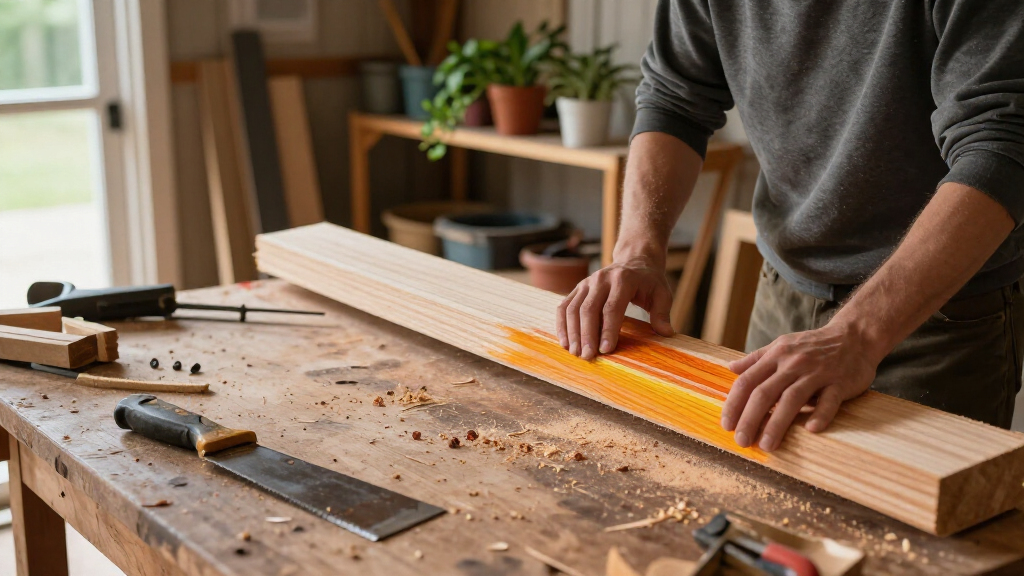
Paint on the ends of lumber can help limit cracking as freshly cut wood dries, and mills or retailers may also use colors to identify products. There is no standard U.S. color code, so shoppers should not rely on the paint alone to determine a board’s grade, species or length.
Painted lumber ends can help reduce drying cracks and may identify a mill or retailer’s products, but paint colors do not follow a standard U.S. code, according to a Family Handyman report drawing on forestry research and industry sources. That means shoppers cannot reliably determine a board’s size, grade or species from its end color alone.
When freshly cut lumber dries, its exposed end grain can lose moisture faster than the board’s sides. That uneven drying can contribute to cracks, known as end checks. The U.S. Department of Agriculture’s Forest Service and Forest Products Laboratory say end coatings are typically used to help prevent those defects during lumber drying. The coating slows moisture loss through the ends; it does not stop the wood from drying.
The report describes a second use: identifying lumber products. Mills, producers and retailers may use colors as internal codes for products, species, grades or brands. U-C Coatings, a lumber-paint manufacturer, says end paints can serve identification purposes. But practices differ by company, so the same color can carry different meanings from one supplier to another.
One cited example is Dunn Lumber’s signature blue-end studs, where blue identifies the retailer’s product line. That does not mean every blue-ended board is the same length, grade or type. Family Handyman also cites a Reddit discussion in which commenters gave varying explanations for blue-painted 2×4 ends, illustrating why a color by itself can be ambiguous.
Why End Paint Can Mislead Shoppers
For people buying lumber, the main practical point is that end paint is not a substitute for product information. A color may offer a clue about how a supplier sorts or markets its stock, but it is not a dependable, nationwide label. Treating a blue, red or green mark as proof of a board’s dimensions or grade could lead to buying the wrong material for a project.
Shoppers should check the board’s printed or tagged product details, including its dimensions and grade, and ask the lumber yard if an end color is meaningful in that store’s inventory. They should still inspect boards for straightness, knots and other visible defects. The paint may have been applied for drying, identification or both; the report does not establish one explanation for every painted board.
Popular right now

Vitamix Propel Series 510 Professional-Grade Blender, 3 Programs, Black

Vitamix Propel Series 750 Professional-Grade Blender, 4 Programs, Black

Samsung 48-Inch S90H OLED 4K Smart TV (2026)
As an affiliate, we earn on qualifying purchases.
Two Reasons Mills Paint Board Ends
The article identifies drying control and product identification as separate reasons for painting lumber ends. End grain can release moisture more quickly than the rest of a board, and coatings are used to slow that loss so wood dries more evenly. The Forest Products Laboratory research cited in the report links end coatings with efforts to prevent drying defects that can reduce lumber’s value.
Timber Custom Woods describes a related use for logs and slabs, saying their ends are painted to slow drying and help prevent cracking and checking. Separately, manufacturers and retailers can choose colors for their own sorting or branding systems. The examples in the report do not indicate a shared code across those businesses; they show why a color’s meaning depends on its source.
“End coatings are typically used to help prevent end checks on sawn lumber during the drying process.”
— USDA Forest Service and Forest Products Laboratory research, as quoted in Family Handyman
What a Color Cannot Tell You
The report does not provide a universal meaning for any paint color, because no standard U.S. code is identified. It also does not establish what a particular mark means at every mill or lumber yard. A color may refer to a product, brand or internal sorting system, but the meaning depends on the supplier.
For a specific board, it may not be clear from the paint alone whether the coating was applied to limit drying defects, identify the product, or do both. The report also gives no basis for determining a board’s grade, species or dimensions from its end color. Those details need to be checked on the product label or confirmed with the seller.
Check the Board and Ask the Seller
Before buying, shoppers can compare the board with the project’s required size and grade, inspect it for straightness and visible defects, and ask store staff whether the paint color identifies a local product. If the seller cannot confirm its meaning, the safest reading is that the color alone does not establish the board’s specifications.
The report does not announce a new industry standard or a change to lumber labeling. The next useful information for any individual purchase is supplier-specific: what that mill or retailer uses its end markings to indicate.
Key Questions
Why are some lumber ends painted?
Paint or another coating can slow moisture loss through end grain while lumber dries, helping reduce cracking. It can also identify a mill’s or retailer’s products.
Does blue paint mean a board has a particular length or grade?
Not universally. The report says there is no standard U.S. color code; a blue mark’s meaning can vary by supplier.
Does end paint stop wood from drying?
No. The coating is described as slowing moisture loss at the ends so the wood can dry more evenly; it does not stop drying.
How should I identify a board’s grade and dimensions?
Check the board’s tag or other product information, and ask the lumber yard to confirm details. Do not rely on end color alone to identify grade, species or size.
Source: rss