
TL;DR
A craft demonstration shared on the Peabody Essex Museum’s YouTube channel shows how to make a hanging sculpture from painted plastic bottles, cord and scissors. The project creates decorative art, not a light fixture; the article describing the project suggests adding fairy lights but does not address their safety or suitability.
The Peabody Essex Museum’s YouTube channel has shared a demonstration showing how to turn empty plastic bottles into a colorful hanging sculpture, using paint, scissors and cord. The accompanying Hunker article presents the project as a way to make decorative art from household packaging; the described result is a sculpture rather than a conventional chandelier.

Get business pricing on tools and workshop supplies
- Business-only prices and quantity discounts
- Tax-exempt purchasing
- Multiple users, one account, clear invoices
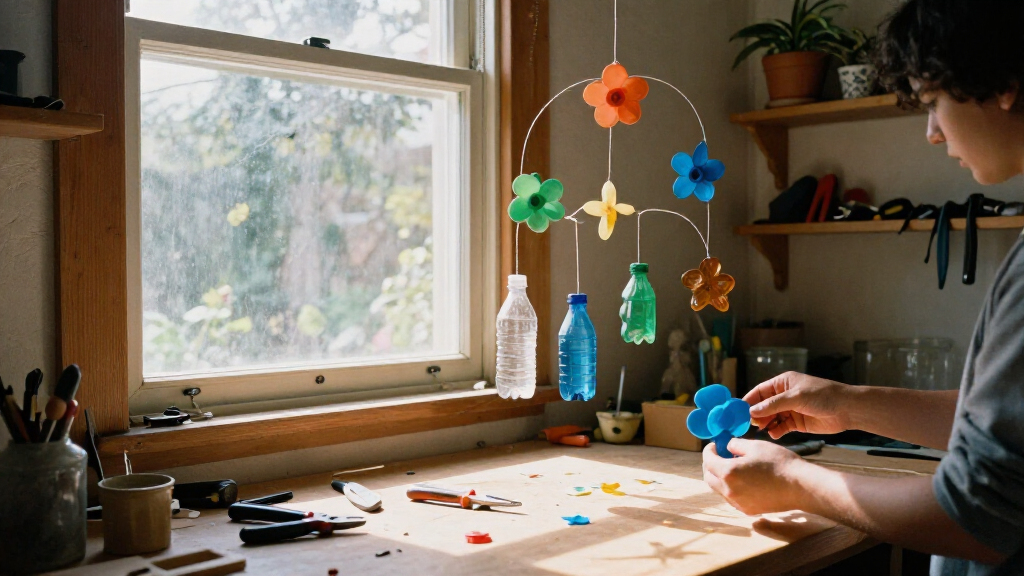
According to the Hunker article describing the museum demonstration, the process begins with removing the bottles’ labels and painting their exteriors with a product that adheres to plastic. After the paint dries, the maker cuts off each bottle’s base and cuts the remaining plastic into a spiral, stopping before the section narrows toward the neck. Each bottle becomes a long, spring-like strip.
The article says the spiraled bottles are threaded together through their necks using strong cord. The necks nest together while the cut plastic spreads outward. Tying the cord into a loop creates a point from which the piece can be hung. The demonstration uses a rainbow palette; the article also suggests trying other color combinations, including pink and purple, blue and green, or red and orange.
The Hunker article further suggests experimenting with other plastic packaging, such as straws, takeout cups and lids, or larger juice containers. It mentions threading fairy lights through the sculpture for a glow, but the article does not establish that the craft is designed or tested as a standard electrical light fixture.
Can Plastic Bottles Become Hanging Art?
A Peabody Essex Museum demonstration shows how painted bottles, cord and scissors become a colorful hanging sculpture. The project is decorative art, not a tested light fixture.
From bottle to sculpture
The Hunker article describes a simple sequence using common craft tools.
Remove labels and paint the bottles with paint made to adhere to plastic.
Remove each base, then cut the bottle into a spring-like strip, stopping before the neck narrows.
Thread the bottle necks together with strong cord and tie a loop for hanging.
Make the look your own
Color and packaging choices can change the sculpture’s appearance.
Choose a palette
The demonstration uses rainbow colors; the article also suggests pink and purple, blue and green, or red and orange.
Try other packaging
Straws, takeout cups and lids, or larger juice containers are suggested alternatives.
Artwork or light fixture?
The described construction makes a hanging sculpture; lighting and installation are not established.
- Painted plastic bottles strung on cord
- A hanging decorative sculpture
- Fairy lights as an optional idea
- Electrical and heat safety with lights
- Weight capacity and durability
- A ceiling attachment or mounting method
A Sculpture Made From Packaging
The Hunker article presents the project as a way to combine reuse and home decoration using common craft tools. The described steps rely on painted packaging and hand-cut shapes rather than specialist equipment. This describes the project’s materials and method, not its environmental impact, durability or cost compared with buying a decoration.
The article also points to room for personal choices: makers can change the colors, bottle shapes and arrangement. Those options do not establish how the sculpture will perform over time; outcomes depend on the materials used and how long the finished piece remains in use.
There is an important distinction between appearance and function. Although the article compares the piece to a chandelier, the described construction creates a hanging artwork. The article suggests adding lights but does not provide electrical ratings, heat limits or an installation method. Anyone considering lights should check the light strand’s instructions and suitability for the intended setup.
Popular right now

Sony BRAVIA 6 77-Inch OLED 4K HDR Smart Google TV with Gemini (K-77A60)

Ninja CM401 Specialty Coffee Maker with 10-Cup Carafe and Fold-Away Frother

Apple AirPods Pro (1st Generation) with MagSafe Charging Case
As an affiliate, we earn on qualifying purchases.
From Museum Demo to Home Craft
The Hunker article compares the project’s appearance with colorful, sculptural blown-glass chandeliers associated with artist Dale Chihuly. This is presented as inspiration for the shape and vivid palette, not as a claim that plastic bottles reproduce the materials, technique or status of Chihuly’s work.
The article lists plastic bottles, acrylic paint made to adhere to plastic, paintbrushes, scissors and cord as materials. It names a FolkArt paint kit as one possible product, but the central method is to paint the containers, cut them into spirals and string them together; the article does not present that brand as essential.
Lighting and Installation Questions
The Hunker article does not provide a publication date for the museum video or report testing of the sculpture’s weight capacity, long-term durability or performance in different indoor conditions. It also does not specify how much cord to use or how to secure the finished piece to a ceiling or other support.
Although the article suggests fairy lights as an addition, it does not identify a type of light strand or report an assessment of heat or electrical safety. It also does not explain how suggested alternatives—such as straws, lids and takeout containers—might affect the sculpture’s shape or stability.
Choices Before Hanging the Piece
For anyone following the Hunker article’s account of the demonstration, the practical steps are to choose bottles, use paint suitable for plastic, let the paint dry, and cut each bottle carefully before threading the pieces together. The finished sculpture should be hung from a support appropriate to its weight; the article does not specify a mounting system.
People who want to add lights should check the light strand’s instructions and suitability for the materials and installation, rather than treating the sculpture as a ready-made electrical fixture. The Peabody Essex Museum video is the source of the visual walkthrough, while the Hunker article provides the project description and materials. Neither source, as described in the article, provides testing or performance information.
Source: Hunker
Key Questions
What do I need to make the hanging sculpture?
The Hunker article lists plastic bottles, plastic-compatible acrylic paint, paintbrushes, scissors and strong cord. It mentions fairy lights as an optional addition, not a required part of the sculpture.
How are the bottles turned into spirals?
According to the Hunker article, after painting and drying each bottle, cut off its base. Cut the remaining plastic into a spiral, stopping before the bottle narrows toward the cap. The resulting strip should spread out like a spring.
Can the finished piece be used as a chandelier?
The Hunker article describes a hanging sculpture. It suggests fairy lights as an optional way to add a glow, but does not establish that the piece is a tested or conventional electrical light fixture.
Can I use plastic packaging other than bottles?
The Hunker article suggests trying materials such as straws, takeout cups and lids, or family-sized juice containers. It does not provide specific instructions for cutting or attaching each material.
Source: hunker.com