
To choose the right interfacing weight without guessing, evaluate your fabric’s weight, drape, and project goals. Light fabrics need delicate, lightweight interfacing to maintain softness, while heavier fabrics require sturdier options for structure. Always consider how the interfacing will influence the final look and feel, and test on scrap fabric if possible. By understanding these factors, you can select the perfect interfacing for a professional finish—more guidance awaits if you keep exploring.

Get business pricing on tools and workshop supplies
- Business-only prices and quantity discounts
- Tax-exempt purchasing
- Multiple users, one account, clear invoices
Key Takeaways
- Assess your fabric’s weight and drape to determine whether lightweight, medium, or heavyweight interfacing is needed.
- Match the interfacing’s weight to your project’s desired structure—softer for fluid garments, stiffer for tailored pieces.
- Consult manufacturer’s instructions and test on scrap fabric to ensure compatibility and desired outcome before sewing.
- Consider the garment’s purpose and how the interfacing will affect its appearance and durability during selection.
- Use industry standards or guidelines to select interfacing weights, avoiding guesswork and ensuring professional results.
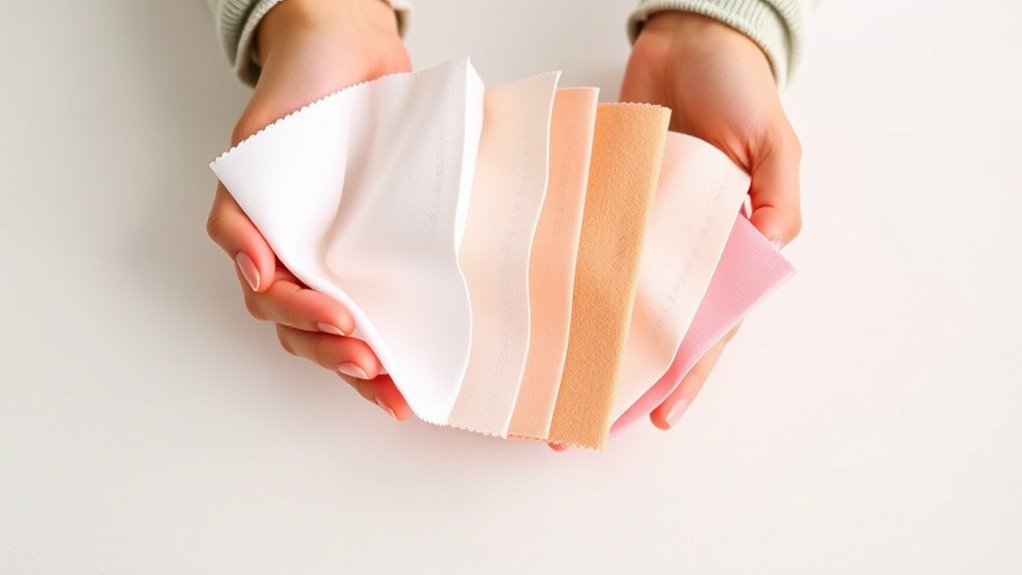
Selecting the right interfacing weight is essential for achieving professional-looking sewing projects. When you choose the correct weight, you ensure your fabric maintains its shape, resists wrinkling, and provides the desired structure. The key is understanding how different weights influence fabric stability, which directly impacts your sewing techniques and the final outcome. Interfacing isn’t one-size-fits-all; using the wrong weight can make your project look stiff, floppy, or poorly finished. That’s why it’s vital to assess your fabric and project needs before making a selection.
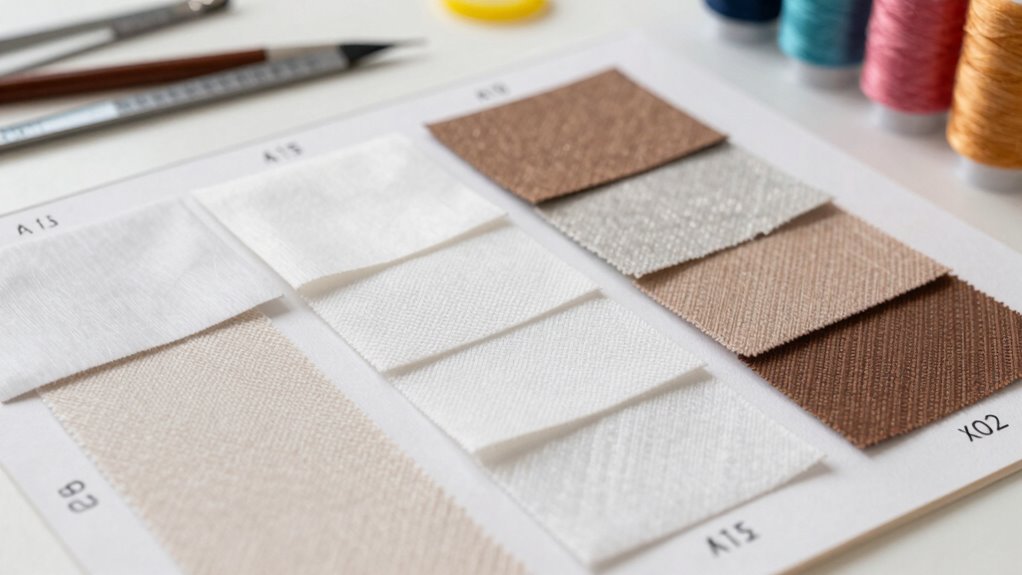
Start by considering your fabric’s weight and drape. Light-weight fabrics like chiffon or silk require a lightweight interfacing to preserve their softness and fluidity. Conversely, heavy fabrics such as denim or canvas need a sturdier interfacing to support their weight without sagging or losing shape. Think about what you want your finished piece to look and feel like. If you’re making a structured blazer, a heavy or firm interfacing will give you the stability you need. For a softer, more flexible blouse, a light or medium-weight interfacing will work better.
Choose lightweight interfacing for delicate fabrics; heavier options support structured garments like blazers.
Your sewing techniques also play a role in choosing an appropriate interfacing weight. When you use delicate fabrics, you’ll want to be gentle with your sewing techniques to avoid puckering or distorting the fabric. A lighter interfacing will be easier to handle and less likely to cause issues during sewing. On the other hand, thicker or stiffer interfacing can require stronger stitches or specific techniques to ensure it adheres evenly and stays in place. Carefully read the manufacturer’s instructions on the interfacing package, as some types require special preparation, such as steaming or pressing, to achieve maximum fabric stability. Additionally, choosing the appropriate body jewelry materials can influence how well the interfacing adheres and how comfortable the final garment feels. Testing your chosen interfacing on a scrap piece of fabric helps you determine whether the weight and sewing techniques will achieve the desired finish.
lightweight interfacing for delicate fabrics
As an affiliate, we earn on qualifying purchases.
As an affiliate, we earn on qualifying purchases.
Frequently Asked Questions
Can Interfacing Weight Affect Garment Durability?
Yes, interfacing weight can affect garment durability. A heavier interfacing adds fabric stiffness, providing more support and structure, which helps your garment withstand wear and tear. If you choose the right weight, sewing precision becomes easier, resulting in strong seams and fewer puckers. Conversely, using too light or too heavy interfacing can compromise durability, causing the fabric to lose shape or tear over time.
How Do I Test Interfacing Weight Before Sewing?
Testing interfacing weight is like giving it a quick handshake. You can do this by cutting a small piece of your interfacing and ironing it onto a scrap fabric similar to your project. Check if it adheres well and feels sturdy without puckering or stiffening excessively. Consider different interfacing types and fabric compatibility to guarantee your chosen weight supports your garment’s structure and drapes nicely.
Is Heavier Interfacing Always Better for Stability?
Heavier interfacing isn’t always better for stability, especially if your fabric stretches or is difficult to sew. If your fabric has stretch, a lighter, fusible interfacing might provide enough support without adding bulk or causing sewing difficulty. Consider the fabric’s properties and project needs. Using too heavy interfacing on stretchy or delicate fabrics can make sewing tricky and compromise the final look. Always test to find the right balance.
Can I Mix Different Interfacing Weights in One Project?
Think of your project as a garden; mixing different interfacing weights is like planting both tall sunflowers and delicate daisies. You can mix interfacing material in sewing techniques to add stability and flexibility where needed. Just guarantee the weights complement each other and serve your project’s purpose. Carefully balance the layers, so the heavier interfacing supports structure, while lighter ones maintain drape and softness.
How Does Interfacing Weight Impact Fabric Drape?
Interfacing weight directly impacts your fabric’s drape by influencing its stiffness and seam support. A lighter weight creates a softer, more flexible drape, ideal for delicate projects, while a heavier weight adds stiffness and structure. If you want a crisp finish, choose a heavier interfacing; for a flowing look, opt for a lighter one. Matching interfacing weight to your fabric guarantees the desired drape and proper seam support.
medium weight fusible interfacing for garments
As an affiliate, we earn on qualifying purchases.
As an affiliate, we earn on qualifying purchases.
Conclusion
Think of choosing interfacing weight like selecting the right armor for a knight. Too light, and it won’t protect; too heavy, and it’ll slow you down. By understanding your project’s needs and the fabric’s strength, you’re crafting your own suit of armor—perfectly balanced. With this knowledge, you’ll confidently pick the right interfacing weight every time, ensuring your creation is both sturdy and beautiful. Now, go conquer your sewing projects with the armor of expertise!
heavyweight interfacing for structured jackets
As an affiliate, we earn on qualifying purchases.
As an affiliate, we earn on qualifying purchases.
interfacing testing fabric scraps
As an affiliate, we earn on qualifying purchases.
As an affiliate, we earn on qualifying purchases.
Fall Picks
fall essentials
As an affiliate, we earn on qualifying purchases.