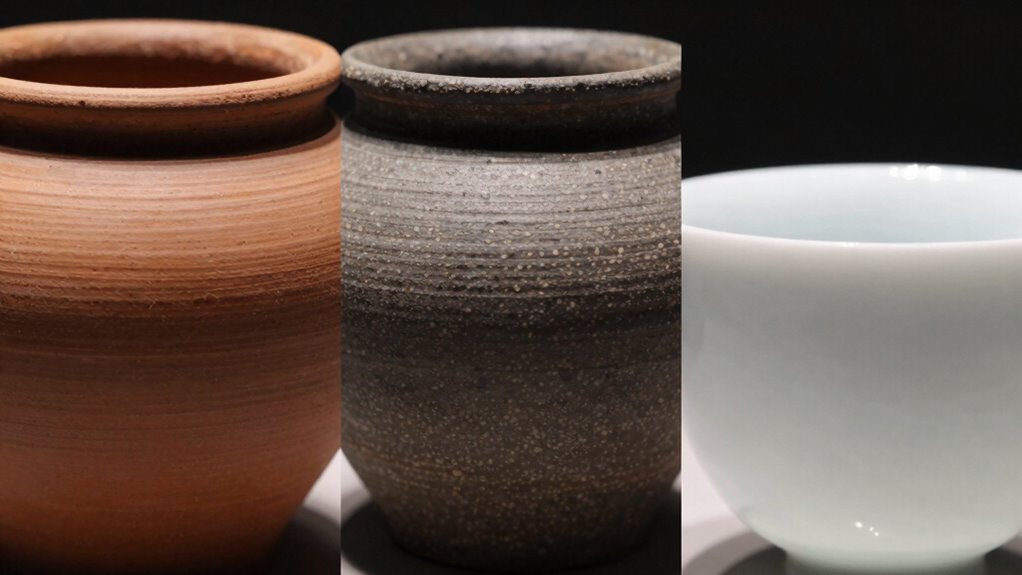

Choosing between earthenware, stoneware, and porcelain depends on what you want from your ceramics. Earthenware is lighter and more decorative but fragile, fired at lower temperatures. Stoneware is sturdier and resistant to chipping, perfect for daily use. Porcelain is both strong and elegant, with a smooth, translucent surface for fine pieces. Each type has its own look and feel, so exploring these differences can help you make the best choice for your projects.
Key Takeaways
- Earthenware is lightweight, porous, and fired at low temperatures, ideal for decorative or non-heavy use.
- Stoneware is durable, dense, and fired at high temperatures, perfect for functional items like mugs and plates.
- Porcelain is the most refined, smooth, and strong, fired at very high temperatures for fine, durable ware.
- Higher firing temperatures increase strength and reduce porosity across all clay types.
- Choose clay based on use, durability, finish, and firing capabilities, with porcelain being the most elegant and sturdy.
What Is Earthenware and How Is It Made?
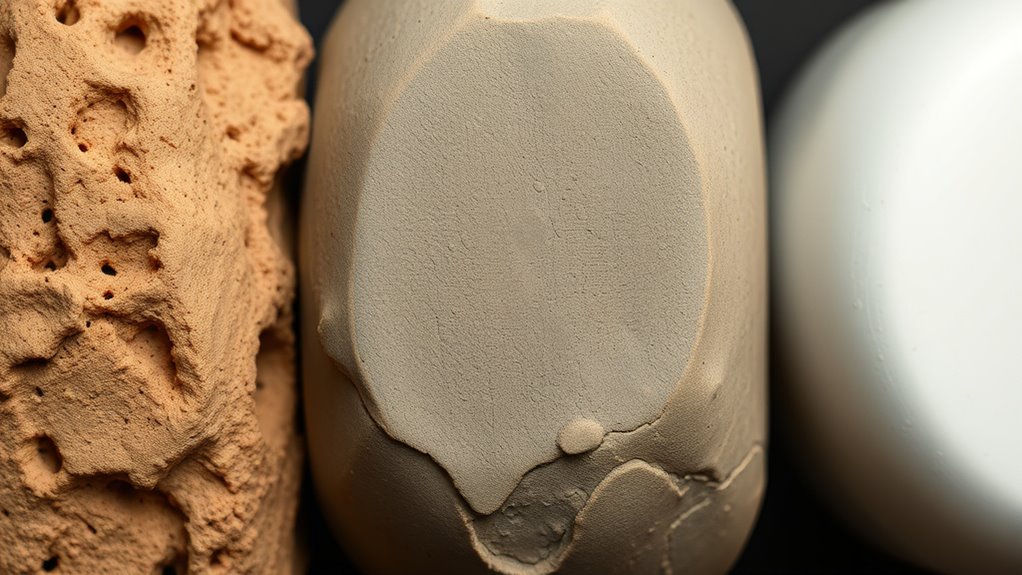
Have you ever wondered what makes earthenware different from other types of pottery? The key lies in how it’s made. Earthenware is crafted from clay that’s shaped and then glazed using various glazing techniques to add color and texture. These glazes are applied before firing, which is usually done at relatively low temperatures—around 1,000 to 1,150°C (1,832 to 2,102°F). This firing process melts the glaze and fuses it to the surface, creating a smooth, often glossy finish. Because of these lower firing temperatures, earthenware remains porous unless sealed, making it lightweight and somewhat fragile. The combination of specific glazing techniques and controlled firing temperatures defines earthenware’s unique look and feel. Additionally, firing temperature can be crucial for verifying such details about materials and craftsmanship in various contexts. Understanding the porosity of earthenware is important for proper usage and care of these ceramics, especially since quality control processes can help ensure consistency in production. Furthermore, the type of clay used significantly influences the final characteristics of earthenware.
The Characteristics of Stoneware Explained
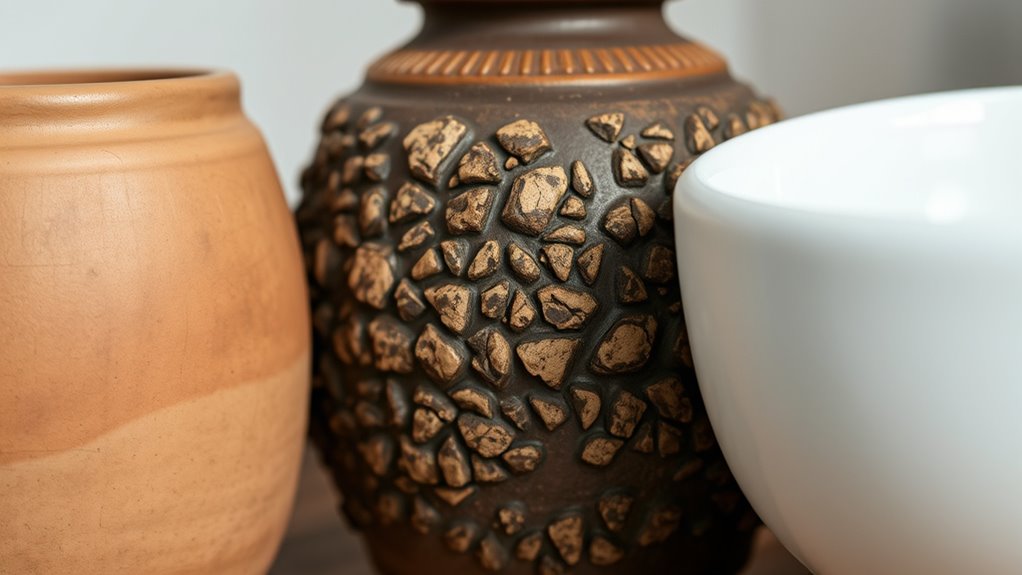
Unlike earthenware, stoneware is known for its durability and sturdiness, making it a popular choice for functional pottery. Its strength comes from higher firing temperatures, usually between 2200°F and 2400°F, which vitrifies the clay and creates a non-porous surface. This vitrification also influences glazing techniques; stoneware often features thick, glossy glazes that enhance its robustness. You can experiment with various glazing methods, such as layering or adding textures, because the dense surface holds glazes well. The firing process ensures that the glaze melts smoothly, resulting in a durable, chip-resistant finish. Overall, the combination of high firing temperatures and versatile glazing techniques makes stoneware ideal for everyday use, from mugs to dinnerware, that needs to withstand regular wear and tear. Additionally, horsepower of electric dirt bikes plays a role in the performance of some modern pottery tools, especially in powering specialized equipment used in studio processes.
Porcelain: The Elegant and Strong Choice
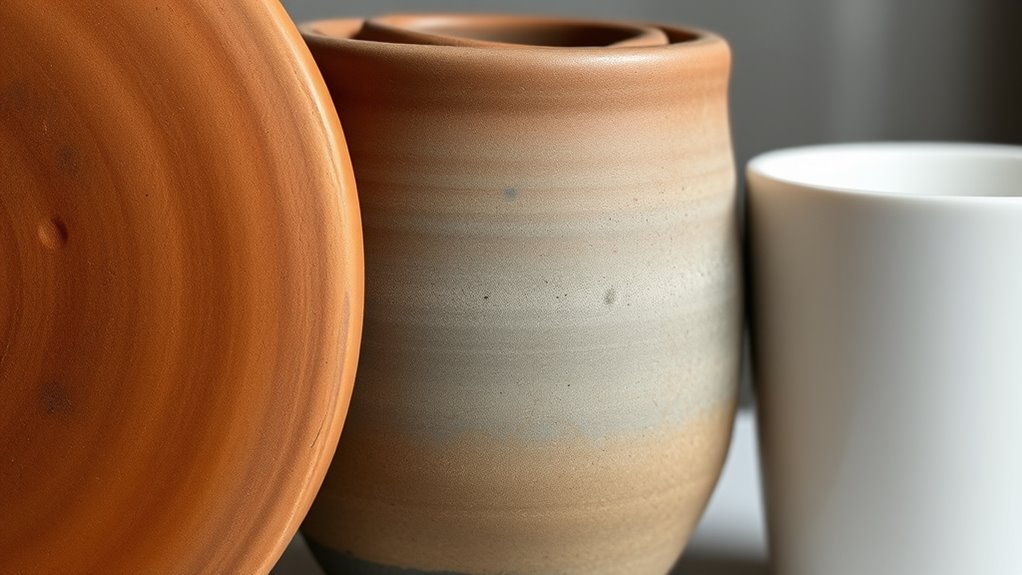
Porcelain stands out as an elegant and strong choice in ceramic pottery due to its delicate appearance and remarkable durability. Its smooth, translucent surface results from advanced glazing techniques, which enhance both aesthetics and functionality. Achieving porcelain’s signature strength involves firing at high temperatures, typically between 1200°C and 1400°C, which vitrifies the clay and creates a dense, non-porous material. This process guarantees porcelain resists chipping and cracking better than other types. Its refined look and resilience make it popular for fine dinnerware and decorative pieces. When working with porcelain, you’ll often use specific glazing techniques to highlight its translucence and smooth finish. The combination of high firing temperatures and expert glazing techniques produces a material that’s both elegant and enduring. Understanding vitrification is key to appreciating porcelain’s durability, and firing techniques also plays a crucial role in achieving the ideal balance of strength and beauty in porcelain pieces. Furthermore, mastering ceramic composition can further enhance the performance and appearance of porcelain items. Additionally, precise control over temperature regulation during firing is essential to prevent defects and ensure optimal results.
Comparing Durability and Uses of Each Clay Type
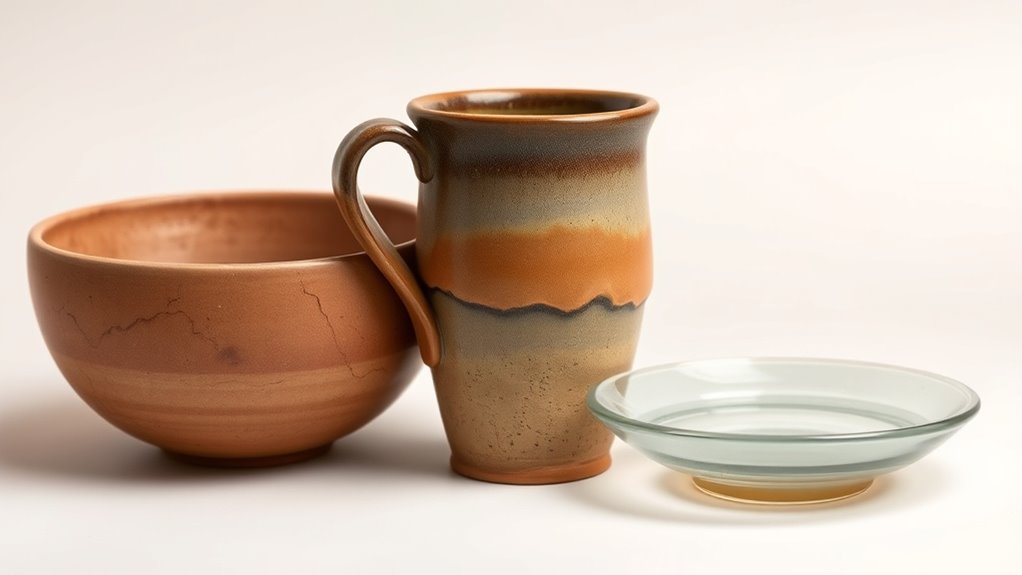
When comparing the durability and uses of earthenware, stoneware, and porcelain, it’s clear that each type offers distinct advantages suited to different applications. Earthenware, fired at lower temperatures, is relatively porous and best for decorative pieces or items that don’t require heavy use. Its glazing techniques can enhance strength and waterproofing, but it remains more fragile. Additionally, earthenware’s porosity makes it more susceptible to water absorption if not properly glazed, which can affect its longevity. Stoneware, fired at higher temperatures, is more durable, resistant to chipping, and ideal for functional ware like plates and mugs. Its robustness allows for a wider range of glazing techniques, often producing textured finishes. Firing temperature plays a crucial role in determining the final strength and suitability of each clay type. Porcelain, fired at the highest temperatures, is the strongest and most chip-resistant, perfect for fine dinnerware. Its smooth surface limits glazing options but ensures longevity and elegance in everyday use. Additionally, understanding the firing process and temperature ranges helps in selecting the right clay type for specific durability needs.
Tips for Choosing the Right Clay for Your Projects
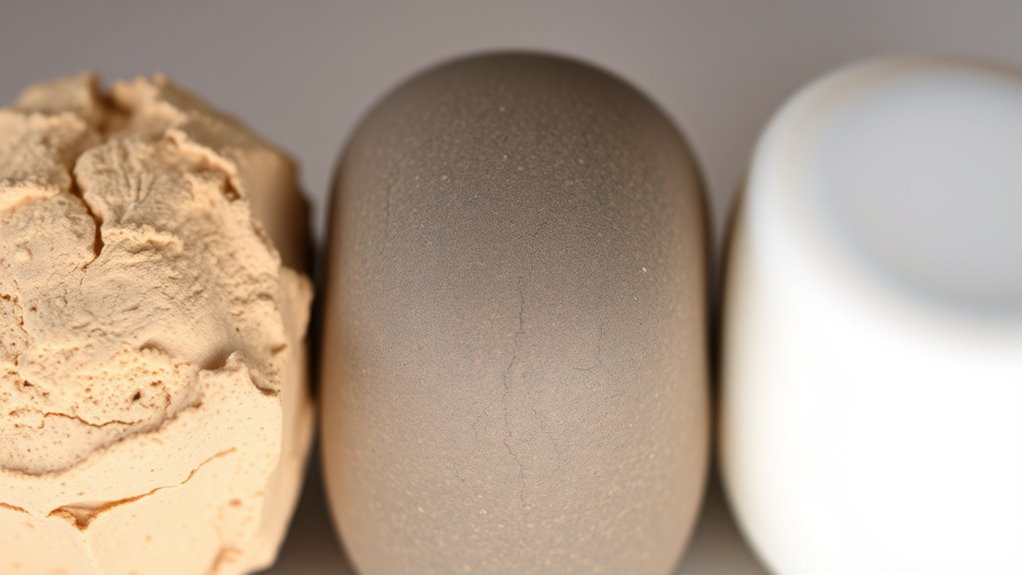
Choosing the right clay for your project starts with understanding your specific needs and the final look you want to achieve. Consider how glazing techniques will influence your choice, as different clays react uniquely to glazes. Firing temperatures are also essential—earthenware requires lower temps, while stoneware and porcelain need higher ones. Think about the clay’s porosity and strength after firing, which affect durability and usability. To help decide, keep these tips in mind:
- Match clay type to your glazing techniques for best results
- Choose a firing temperature suited to your kiln’s capabilities
- Consider the final appearance—porcelain for smooth, white surfaces, earthenware for rustic finishes
- Evaluate the project’s durability needs when selecting clay type
Frequently Asked Questions
Can These Clay Types Be Combined in One Project?
Yes, you can combine clay types in one project, but you need to take into account clay blending techniques and mixed clay compatibility. Start by testing small amounts to see how they bond and behave together. Some clays may fuse well, while others can crack or separate. Proper mixing and understanding the different firing temperatures are essential to ensure your project holds together and develops the desired finish.
Which Clay Type Is Best for Beginner Pottery?
If you’re a beginner, earthenware’s your best bet—easy to prepare and forgiving when it comes to glazing techniques. It’s like the training wheels of clay, helping you learn without the frustration of cracking or warping. You won’t need fancy tools or complex firing. Jump in, experiment, and enjoy the process. Soon enough, you’ll master your craft, all while having fun with simple clay preparation and glazing!
How Do Firing Temperatures Affect Clay Strength?
Firing temperature effects the clay strength relationship substantially. When you fire clay at higher temperatures, it becomes denser and stronger, reducing porosity. Lower temperatures result in weaker, more porous clay that’s easier to break. So, if you want durable pottery, firing at the right temperature is key. It enhances clay’s strength, ensuring your piece withstands use and time. Always match your clay type’s ideal firing range for the best results.
Are There Eco-Friendly Options Among These Clays?
You might be surprised, but eco-friendly options are definitely available. Biodegradable clay and recycled ceramic options are gaining popularity because they reduce waste and environmental impact. These materials often come from sustainable sources or repurposed waste, making them a smart choice if you’re conscious of your ecological footprint. Choosing these options doesn’t compromise quality; instead, it adds a meaningful layer to your creative process.
How Do I Properly Store Unused Clay?
To properly store unused clay, you should wrap it tightly in plastic or place it in an airtight storage container to prevent it from drying out. This clay preservation method keeps the moisture locked in, making it ready for your next project. Guarantee the container is sealed well and store it in a cool, dry place. Regularly check the clay for dryness or cracks before use.
Conclusion
Choosing the right clay is like picking the perfect brush for your masterpiece—each type offers unique beauty and strength. Earthenware’s rustic charm, stoneware’s versatility, and porcelain’s elegance are your palette’s tools. By understanding their differences, you can craft pieces that stand the test of time, like a well-tuned symphony. Trust your instincts, experiment boldly, and let your creativity flow through the clay, creating art that’s as resilient as it is beautiful.